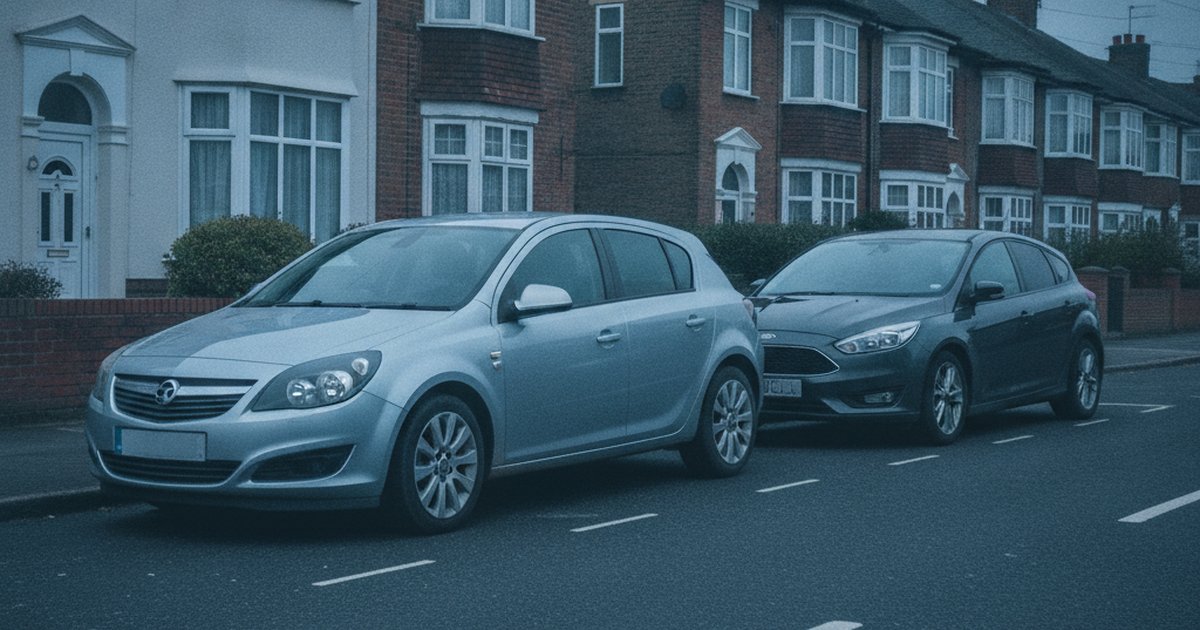
The Vauxhall Astra and Ford Focus have spent two decades fighting over the same buyers: fleet managers, first-car parents, and anyone who wants a hatchback that a garage in any postcode can fix without ordering parts from Germany. Between them, our database holds 13,460,644 MOT tests covering both models across the shared 2010-2021 production window. That's not a sample, it's most of the cars on the road.
Both are built to a price, both get thrashed by company car drivers, and both have reputations that owners will defend to the death in pub arguments. MOT data doesn't care about brand loyalty, though. It just counts what breaks, when, and how often. So we ran the numbers.
The short version: The Ford Focus beats the Vauxhall Astra on reliability across 13,460,644 combined MOT tests, with a real gap in overall pass rate. The Focus also starts life more dependably at its first MOT. The Astra isn't a bad car, but on this evidence it's the second choice, not the class leader.
The Data Verdict
The Ford Focus is the more reliable car, by 17 points
Like-for-like comparison across the years both cars were on sale (2010-2021), from 13,460,644 real DVSA MOT tests. Scores out of 1000, higher is better.
Head-to-Head: The Numbers (2010-2021)
| Metric | Vauxhall Astra | Ford Focus |
|---|---|---|
| Reliability score (/1000) | 533 | 550 |
| MOT pass rate | 78.9% | 80.1% |
| First MOT pass rate (age 3) | 85.3% | 87.6% |
| Average defects per test | 1.68 | 1.61 |
| Typical annual mileage | 7,350 mi | 7,315 mi |
| MOT tests analysed | 5,878,217 | 7,582,427 |
| Vehicles tracked | 541,888 | 748,735 |
Pass Rate and Score, Year by Year
| Year | Vauxhall Astra pass (score) | Ford Focus pass (score) | Stronger |
|---|---|---|---|
| 2010 | 75.6% (554) | 75.0% (529) | Vauxhall Astra |
| 2011 | 76.6% (540) | 76.5% (539) | Even |
| 2012 | 77.2% (536) | 78.1% (554) | Ford Focus |
| 2013 | 78.6% (539) | 77.9% (510) | Vauxhall Astra |
| 2014 | 78.5% (485) | 80.5% (543) | Ford Focus |
| 2015 | 80.4% (495) | 84.2% (607) | Ford Focus |
| 2016 | 83.9% (558) | 85.5% (602) | Ford Focus |
| 2017 | 85.5% (542) | 87.4% (593) | Ford Focus |
| 2018 | 85.5% (520) | 87.2% (556) | Ford Focus |
| 2019 | 86.8% (516) | 86.5% (512) | Even |
| 2020 | 88.7% (507) | 88.4% (551) | Ford Focus |
| 2021 | 88.9% (520) | 88.0% (568) | Ford Focus |
Shared years only. Ford Focus data also covers 2022-2023, covered in the full year-by-year guides below.
What Actually Fails on Each
Recorded defects and advisories per 100 MOT tests by DVSA inspection category, 2010-2021. A test can record more than one defect.
Vauxhall Astra
- Tyres, wheels and suspension: 56.9 per 100 tests typically around 66,000 miles
- Brakes: 32.7 per 100 tests typically around 65,500 miles
- Lights and electrics: 18.4 per 100 tests typically around 69,500 miles
- Other: 14.7 per 100 tests typically around 66,000 miles
- Visibility (wipers, washers, windscreen): 10.5 per 100 tests typically around 70,000 miles
Ford Focus
- Tyres, wheels and suspension: 65.6 per 100 tests typically around 66,000 miles
- Brakes: 24.2 per 100 tests typically around 65,500 miles
- Lights and electrics: 22.1 per 100 tests typically around 70,500 miles
- Other: 14.1 per 100 tests typically around 66,000 miles
- Visibility (wipers, washers, windscreen): 8.3 per 100 tests typically around 69,500 miles
The Best Year to Buy Each
Reliability scores are age-adjusted: each year is judged against other cars of the same age. So when an older year out-scores a newer one, it means it holds up unusually well for its age, not that it will need less work than a much newer car. How our scores work.
Why Does the Ford Focus Come Out Ahead?
The Focus wins this comparison, and it's not close enough to call a tie. Across every shared model year, it posts a higher first-MOT pass rate than the Astra, which tells you something about how each car leaves the factory and survives its first three years of depreciation-fuelled neglect. A car that passes its first MOT more often is a car whose early ownership (leases, PCP deals, company fleets) is doing less damage before the warranty even runs out.
The gap isn't enormous on paper, 1.2 percentage points on overall pass rate, but multiplied across millions of tests that's a real number of cars failing that didn't need to. The Focus also edges the Astra on defects per test, meaning the average Focus MOT throws up slightly fewer separate problems than the average Astra MOT. Neither car is fragile. This is a contest between two solid, high-volume hatchbacks, and the Focus just degrades a little more gracefully.
What Do the Defect Categories Actually Tell You?
Both cars fail MOTs for the same basic reason: tyres, wheels and suspension. Unsurprising, given how many of these cars spend their lives on potholed British B-roads doing school runs and sales-rep motorway miles. The Focus actually racks up a higher rate of suspension-related defects than the Astra, which is a mild surprise given its reputation for sharper handling. It's likely a side effect of the eagerness with which drivers push it, and the resulting wear on bushes and joints.
Where the Astra loses ground is brakes. Its brake defect rate is noticeably higher than the Focus's, and that matters more than it sounds, since brake issues are the kind of fault that can tip into a dangerous defect rather than a minor advisory. The Focus, meanwhile, picks up more lights and electrics faults than the Astra, a familiar Ford trait if you've ever had a Focus dashboard light up for no obvious reason. Neither pattern is alarming on its own, but if you're choosing between the two, factor in that an Astra is statistically more likely to need brake work, while a Focus is more likely to nag you about a bulb or sensor.
One category is genuinely lopsided: emissions and leaks. The Astra's rate here is more than double the Focus's. If you're looking at a diesel Astra, particularly one that's spent its life on short trips, keep an eye on this specifically. It's the kind of defect that's cheap to ignore and expensive to fix once it's failed.
Which Years Should You Actually Buy, and Which Should You Avoid?
For both cars, 2017 stands out as the strongest year within this shared window, posting the best age-adjusted score for each model. That's not a coincidence. By 2017 both the Astra and Focus were late into their generations, with early build issues ironed out and mature engine lineups. If you can find a well-kept 2017 example of either car, you're buying into the sweet spot.
The early-2010s cars tell a more cautionary story. Both models show their weakest scores in the 2013-2014 window rather than at the very start of the range, which points to mid-cycle running changes or facelift-related niggles rather than simple wear from age. Don't assume older year groups that still score reasonably are automatically the safer buy just because they've clocked more miles without drama; check the specific year against the data rather than going on gut feel.
Frequently Asked Questions
Is the Ford Focus more reliable than the Vauxhall Astra?
On MOT data across 13,460,644 combined tests, yes. The Focus has a higher overall pass rate, a better first-MOT pass rate, and fewer defects per test on average. The gap isn't massive, but it's consistent across the shared production years.
What's the most common reason both cars fail their MOT?
Tyres, wheels and suspension, by a wide margin for both models. That's typical for high-mileage family hatchbacks rather than anything specific to either car.
Should I worry about brakes on an Astra?
It's worth checking more carefully than you might on a Focus. The Astra's brake defect rate is noticeably higher, and brake faults are more likely to escalate into a dangerous defect rather than sit as a minor advisory.
Which model year is the safest buy for either car?
2017 scores best for both the Astra and the Focus in our age-adjusted data. Both were mature into their generations by then, with early teething problems long sorted.
Are diesel Astras worse for emissions failures?
The Astra's emissions and leaks defect rate is more than double the Focus's, and diesel models doing mostly short trips are the ones most likely to be affected. Worth checking specifically before buying.
Our Verdict
If you're choosing between these two on reliability alone, buy the Focus. The data backs it up consistently: better first-MOT pass rate, fewer defects per test, and a lower brake failure rate than the Astra. That's not a marginal edge you can wave away as noise across 13 million-plus tests.
That doesn't make the Astra a bad car. It's a solid, ordinary hatchback that does what most owners need. But if the two are priced similarly and you've no strong badge preference, the numbers point one way. Whichever you choose, a 2017 model year is your best bet, and if it's a diesel Astra, get the emissions system checked before you buy rather than after it fails.
A reliable model is only half the story. The exact Vauxhall Astra or Ford Focus you are looking at could be clocked, on outstanding finance, or a past write-off. Check the specific car before you commit.
Neither of these cars is a lemon. Millions of them are still doing the school run and the motorway commute without drama. But if you're picking one over the other purely on the numbers, the Focus has the edge, and it's not by a whisker. Check the specific year, check the brakes on any Astra, and check the emissions system on any diesel before you hand over money.
You might also like
Check Any Vehicle's Full History
MOT results, mileage timeline, AI health score, and market valuations. New users get 5 free credits.