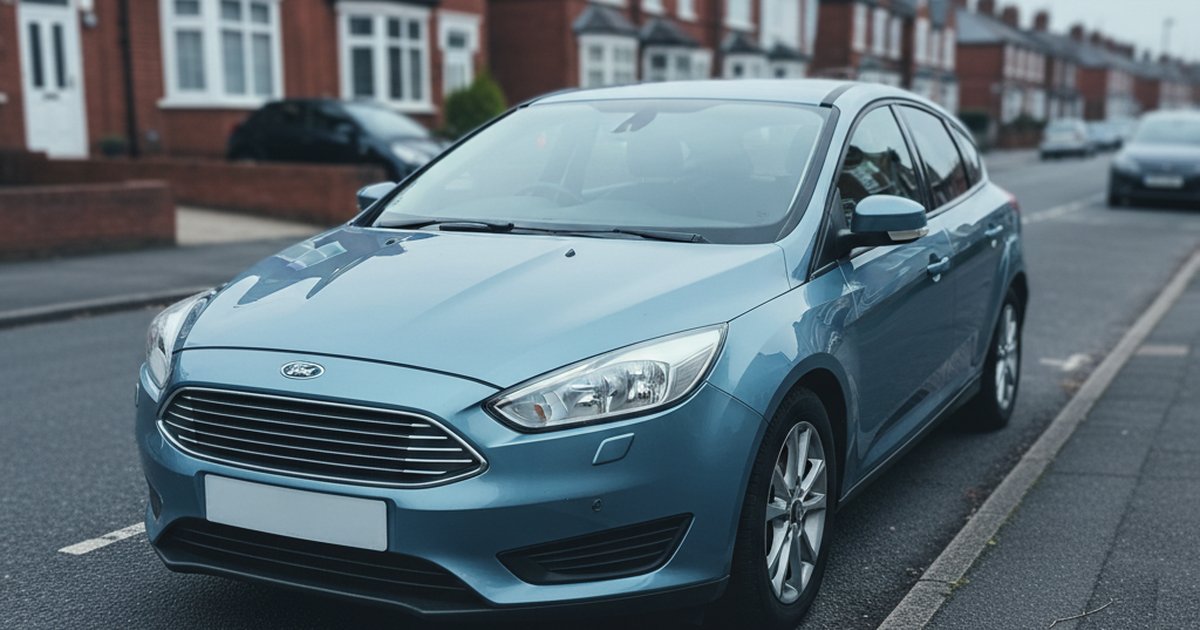
The Ford Focus has been Britain's workhorse for over two decades. Millions of UK drivers have trusted one to get them to work, ferry the kids about, or rack up motorway miles. But not all Focus generations are created equal.
We've analysed 7,590,048 MOT tests covering 754,372 Ford Focus vehicles registered between 2010 and 2023. The data reveals stark differences between petrol and diesel variants, identifies the golden years worth targeting, and exposes which models to avoid. If you're shopping for a used Focus, this is the guide that will save you from buying someone else's problem.
TL;DR: The 2015-2017 petrol Focus models are your sweet spot, with pass rates hitting 88.5% and reliability scores around 620/1000. Early diesels (2010-2013) are trouble, showing pass rates in the low 70s and wearing through suspension bushes at alarming rates. If you need a diesel, stick to 2015 onwards.
Which fuel type should you choose?
The diesel versus petrol debate has a clear winner in the Focus. Across every single model year in our dataset, petrol variants outperform their diesel siblings on MOT pass rates. The gap ranges from 3 percentage points in the best years to nearly 6 points in the worst.
Petrol Focus owners average around 6,500 miles annually. These are gentle-use cars, often driven by owners who need something reliable for local trips and the occasional longer journey. Diesel drivers, by contrast, clock up 8,500-9,700 miles per year. They work these cars harder.
The difference shows in the defect patterns. Diesel models consistently flag suspension bushes as a major issue, with some years seeing over a quarter of tests catching excessively worn components. Petrol versions suffer the same problem, but at lower rates. The extra weight of the diesel engine and higher annual mileage takes its toll on front-end components.
If your annual mileage sits below 10,000 miles, buy the petrol. You'll enjoy better reliability, lower maintenance costs, and avoid the diesel particulate filter headaches that plague low-mileage diesel drivers. Only consider diesel if you're genuinely doing 12,000+ miles annually on longer trips.
What are the best years to buy?
The 2014-2017 petrol Focus models represent the sweet spot. The 2015 petrol achieves an 85.5% pass rate with a reliability score of 631/1000. That's exceptional for a mass-market family hatchback approaching a decade old. Current examples typically show around 66,000 miles, making them affordable without being worn out.
These mid-decade cars benefit from Ford ironing out the early Mk3 teething troubles while avoiding the complexity creep of later models. First MOT pass rates hover around 89-93%, proving they left the factory properly sorted. As they age, they degrade gracefully rather than falling off a cliff.
Key point: The 2017 petrol Focus posts an 88.5% pass rate with just 1.1 defects per test. Compare that to the 2010 diesel at 72.7% with 2.3 defects per test. Six model years separate them, but the gap in real-world reliability is vast.
For diesel buyers, the same 2015-2017 window applies, but the scores are lower. The 2015 diesel hits 82.8% pass rate and 580 reliability score. Still respectable, but you're paying diesel money for petrol-level reliability. Unless you genuinely need the fuel economy, it's a hard sell.
The newest models (2020-2023) show strong pass rates, but reliability scores tell a different story. Sample sizes are smaller, and these cars haven't faced the test of time yet. A 90% pass rate on a three-year-old car should be the baseline, not a selling point.
Which years should you avoid?
The 2010-2013 diesels are where Ford Focus ownership turns sour. The 2010 diesel manages just a 72.7% pass rate with a reliability score of 466/1000. These cars are now picking up 2.3 defects per test on average, and suspension bushes are failing at eye-watering rates.
Walk into any MOT bay in the country and mechanics will tell you the same story: early Mk3 Focus diesels eat rear suspension bushes. The data backs them up. The 2010 diesel shows 24.3% of tests catching excessively worn suspension components. That's not a maintenance item; that's a design weakness.
The 2013 diesel follows the same pattern. Despite being three years newer, it still limps to just 76.1% pass rate. Over 31% of tests flag tyres worn to the legal limit, suggesting owners are running these cars on a tight budget and deferring maintenance.
Even the petrol models from this era underperform. The 2010 petrol achieves 76.2% pass rate and a 563 reliability score. That's not terrible, but why settle for mediocre when later models offer substantially better prospects for similar money?
According to AA breakdown data, diesel particulate filter failures spike in these early Euro 5 diesel engines when used for short journeys. The MOT records confirm the pattern: these are expensive cars to run if you're not using them as intended.
How does mileage affect reliability?
Current mileage tells you where the car has been, but annual mileage reveals how it's been used. The diesel models show typical current mileages 25,000-30,000 miles higher than equivalent petrol versions. A 2015 diesel sits around 92,000 miles today, while the petrol equivalent shows 66,000.
The thing is, those diesel miles are often motorway miles. Higher annual mileage (8,000-10,000 vs 6,000-6,500 for petrols) suggests longer trips at steady speeds. That's actually easier on an engine than the stop-start urban grind many petrol Focus owners subject their cars to.
The irony is that diesel models still underperform on reliability despite racking up 'easier' miles. The problem isn't how they're driven; it's the additional mechanical complexity and the susceptibility to DPF issues when ownership patterns change.
Key point: A 2015 petrol Focus with 80,000 miles will likely be more reliable than a 2015 diesel with 80,000 miles, even though the diesel has averaged fewer miles per year. The petrol's simpler design wins out.
When evaluating any used Focus, check the DVSA MOT history for mileage consistency. A diesel showing 5,000 miles annually for the past three years is a red flag. That's a car being used for school runs when it should be doing distance work, and the DPF will be silently clogging.
What common problems should you expect?
Tyres dominate the defect lists across all Focus variants. Between 20-35% of tests catch tyres worn close to the legal limit or showing edge wear. This is partly down to owner behaviour (people defer tyre replacement), but the edge wear pattern suggests alignment issues are common.
Front suspension components wear predictably on all versions, but diesels suffer worse. Rear trailing arm bushes are the specific weakness. They're not expensive parts, but labour costs mount up. Budget £200-300 for a full set replacement on a diesel, and expect to do it every 60,000-80,000 miles if you're covering distance.
Brake wear follows fuel type. Petrol models flag brake pad issues at 10-15% of tests. Diesels push that to 15-20%. Again, this tracks with higher annual mileage and more aggressive use patterns. Discs corrode on lightly-used examples, particularly 2014-2017 cars showing low annual mileage.
The dangerous defect rates are worth noting. The 2010-2012 cars hover around 50% - meaning half of all vehicles have had at least one dangerous defect flagged at some point. That's frightening. By 2017, this drops to 26-30% for petrols, though diesels still sit in the low 30s. Newer doesn't always mean safer in the Focus range; it means owners actually maintain them properly while they're still on finance.
What Car? owner satisfaction surveys consistently flag clutch wear on diesel models, particularly dual-mass flywheel failures. The MOT data doesn't directly capture this (clutches aren't MOT test items), but it explains why older diesel examples are so cheap on the used market.
Petrol vs diesel: the numbers laid bare
Compare like-for-like across the critical 2015 model year. The petrol version: 85.5% pass rate, 631 reliability score, 1.2 defects per test, 32.6% dangerous defect rate. The diesel: 82.8% pass rate, 580 reliability score, 1.4 defects per test, 37.9% dangerous defect rate.
The diesel variant loses on every single metric. You're paying more to buy it (historically, diesels commanded a premium), spending more on maintenance (that 0.2 extra defects per test adds up), and still ending up with a less reliable car.
The only justification for diesel is fuel economy. If you're covering 15,000+ miles annually on longer trips, the fuel savings might offset the reliability penalty. For everyone else - the vast majority of Focus buyers - the petrol is the rational choice.
First MOT pass rates tell the early-life story. The 2015 petrol achieves 89.5% at its three-year test. The diesel manages 85.4%. Ford put these cars through the same quality processes, yet the diesel starts life nearly 5 percentage points behind. That gap never closes; if anything, it widens as the cars age.
What do the generations reveal?
The early Mk3 Focus (2011-2014) suffered from first-generation problems. Ford was transitioning to more complex emissions equipment, refining the suspension geometry, and cost-cutting on components. The result: reliability scores in the 460-590 range for most variants.
The mid-life refresh (2014-2017) brought meaningful improvements. Reliability scores climb to 580-630 for petrols. This wasn't marketing fluff; Ford genuinely addressed the weak points. Suspension bushes used better materials, brake components improved, and the quality control tightened.
The Mk4 Focus (2018 onwards) represents a different philosophy. Ford prioritised technology and refinement over longevity. Early reliability scores look decent, but these cars haven't been tested by time and high mileage yet. The 2018 petrol shows a 556 reliability score despite being much newer than the 2015 petrol's 631 score. That should concern you.
Key point: Newer isn't always better. The 2015 petrol Focus is more reliable than the 2018 petrol Focus according to our MOT data. Sometimes the sweet spot is finding the generation where the manufacturer had perfected the design before adding complexity.
This pattern appears across the industry, but it's particularly stark in the Focus. The 2014-2017 models represent peak Focus: mature enough to be debugged, simple enough to be reliable, old enough to be affordable. That's your target.
Found a year you like? A good year still hides a clocked odometer, outstanding finance or a past write-off. Before you hand over any money, check the exact Ford Focus.
Frequently asked questions
Which Ford Focus year is most reliable?
The 2015 petrol Focus achieves the highest reliability score at 631/1000 with an 85.5% MOT pass rate. The 2016 and 2017 petrol models follow closely behind with scores around 620.
Should I buy a diesel or petrol Ford Focus?
Choose petrol unless you cover 15,000+ miles annually. Petrol models consistently outperform diesels on pass rates (3-6 percentage points higher) and require fewer repairs. Diesel models suffer from DPF issues and higher suspension wear.
What are common MOT failures on Ford Focus?
Tyres worn to legal limits appear in 20-35% of tests, rear suspension bushes fail frequently (especially on diesels), and brake components wear predictably. Edge wear on tyres suggests alignment issues are common across the range.
What mileage is too high for a used Ford Focus?
Petrol models remain reliable past 100,000 miles if maintained. For diesels, avoid anything approaching 120,000 miles as expensive failures (clutch, turbo, DPF) become likely. Check MOT history for consistent mileage patterns.
Are early Mk3 Ford Focus models reliable?
No. 2010-2013 models show pass rates of 72-77% for diesels and 76-79% for petrols, with reliability scores under 570. Later Mk3 cars (2014-2017) are substantially better with scores reaching 630.
Our Verdict
The Ford Focus remains one of Britain's most popular used buys, but the data proves you need to be selective. Target 2015-2017 petrol models for the best reliability, avoid early diesels regardless of price, and always check the complete MOT history before handing over money. A low-mileage 2015 petrol Focus will likely outlast a newer diesel that's been thrashed on short journeys.
Before you buy any used Focus, run the registration through PlateInsight. We'll show you the full MOT history, show recurring problems, and flag any hidden damage. Every new user gets 5 free vehicle checks to make smarter buying decisions. Don't gamble on a used car when the data can tell you exactly what you're getting.
You might also like
Check Any Vehicle's Full History
MOT results, mileage timeline, AI health score, and market valuations. New users get 5 free credits.