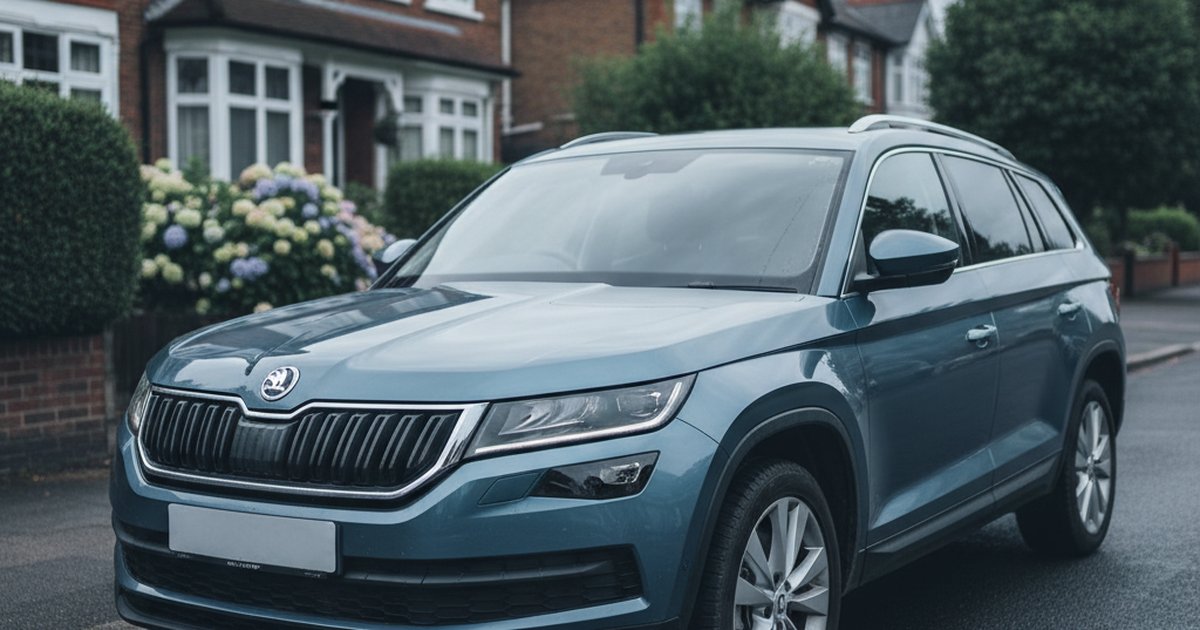
The Skoda Kodiaq arrived in 2017 as the Czech brand's first large 7-seat SUV, built on the VW Group's MQB platform. It has been a sales success in the UK, offering space and practicality at a lower price than German rivals. But how does it hold up when the warranty expires?
We analysed 166,959 MOT tests across 38,286 Kodiaq vehicles to answer that question. The data shows significant differences between model years and engine choices that every prospective buyer needs to know. Early diesels from 2017 deliver the best reliability scores, while newer petrol models show a troubling downward trend that contradicts expectations.
TL;DR: Early 2017-2018 Kodiaqs are the sweet spot for reliability, with diesel variants scoring 704/1000 and petrol reaching 724/1000. Avoid 2019-2022 petrol models which slump to 559-617/1000 despite being newer. Suspension bushes and brake pads are the primary wear items across all years.
Should you choose petrol or diesel?
The diesel Kodiaq is the more consistent choice. Across the range, diesel models maintain scores between 636 and 737, with older examples performing just as well as newer ones. The 2017 diesel sits at 704/1000 despite an average current mileage of 76,766 miles. Owners clock up 9,300-13,809 miles annually depending on model year, which matches the typical long-distance family use these cars see.
Petrol variants start strong but fade badly. The 2017 petrol hits a peak of 724/1000, but by 2019 this drops to 617/1000, and the 2020-2022 petrol models sit at just 559-595/1000. That's a reliability decline of 165 points in five years. Petrol Kodiaqs average 7,893-8,390 miles per year, which suggests they're used for lighter, more suburban driving, yet they're wearing out faster than heavily-used diesels.
The DVSA MOT data shows both engines share similar defect patterns: tyres, brake pads, and suspension bushes dominate failure lists. The reliability gap isn't about specific component weaknesses. It more likely comes down to build quality variations or updates to the petrol drivetrain that haven't worked out.
Which model years offer the best value?
The 2017 and 2018 model years are the ones to target. These early cars were built before Skoda made whatever changes undermined later petrol reliability, and they've accumulated enough mileage to prove their durability. First MOT pass rates of 92.9-94.6% confirm they were well-assembled from the start.
The 2017 petrol scores 724/1000 despite now showing a median 65,216 miles, while the 2018 diesel holds 702/1000 at 68,978 miles. These cars have been worked hard over six to seven years and are still delivering pass rates around 90%. That's exactly what you want to see in used car data.
Depreciation advantage: 2017-2018 Kodiaqs are now old enough to have dropped significantly in price, yet young enough to avoid the expensive failures that plague cars beyond 10 years old. You're buying at the bottom of the depreciation curve while reliability is still strong.
The 2021-2022 models show decent pass rates (90-91%) but reliability scores have fallen to 559-590 for petrol variants. You'll pay thousands more for a newer car that our data suggests won't last as long. The 2023 entries have too few tests (126-293) to draw reliable conclusions, though early indicators look better for diesel.
What goes wrong on a Kodiaq?
Tyres are the number one issue across every model year, appearing in 19-27% of tests. This isn't surprising given the Kodiaq's weight (up to 2 tonnes when loaded with seven occupants), but it's worth factoring into running costs. Expect to replace tyres every 20,000-25,000 miles based on the wear patterns reported.
Suspension bushes cause more serious problems. Rear suspension arm pins and bushes feature in 13-19% of tests across 2019-2021 models. The MOT data specifically flags 'bottom arm rear bush' and 'rear bush bonding failing' as common failures. This is a wear item that requires specialist replacement, not a DIY job for most owners. Budget £300-500 for parts and labour when these fail.
Brake pads wear faster than you'd expect, showing up in 14-22% of tests even on relatively low-mileage examples. The 2022 petrol data is particularly concerning: 22.3% of tests flagged pads wearing thin on both sides. Given these cars average just 27,678 miles, that's premature wear. The weight of the vehicle and the fitment of larger wheels on higher trims both contribute to accelerated brake component wear.
Dangerous defect rates are worth noting. The 2017 models show 19.7-21.8% of vehicles have had at least one dangerous defect flagged during their MOT history. This drops to 4.2-8.8% for 2021-2022 cars, which is partially explained by age and mileage, but still suggests the early cars developed more serious faults over time. According to AA guidance, dangerous defects include tyre ply exposure and severely worn brakes, both common on Kodiaqs.
Why do newer petrol models score lower?
The reliability scores for petrol Kodiaqs tell an unusual story. Normally you'd expect newer cars to score higher than older ones, at least until they reach 8-10 years old. Yet the 2020-2022 petrol models score 559-595/1000 compared to 724/1000 for the 2017 petrol variant.
Current mileage doesn't explain this. The 2020 petrol sits at 41,808 miles versus 65,216 for the 2017 petrol. The newer car has covered 24,000 fewer miles yet scores 129 points lower for reliability. Pass rates are similar (90.4% vs 90.7%), so it's not that newer cars are failing MOTs more often. They're just accumulating defects at the same rate despite being younger.
The defects-per-test metric is telling. Both 2017 and 2020 petrol models average 1.3 defects per test, meaning testers are finding the same number of problems on cars separated by three years and 24,000 miles of use. This points to either inferior components fitted to later models or changes in manufacturing quality.
Skoda hasn't issued any major recalls for Kodiaq petrol engines according to government recall data, so this isn't about a specific defect campaign. It more likely reflects a gradual drop in build standards as production ramped up and cost-cutting took effect. The diesel variants don't show the same pattern, holding 636-737 scores across 2019-2023, which suggests the issue is specific to the petrol drivetrain or the components paired with it.
How many miles do Kodiaq owners cover?
Diesel Kodiaq owners are serious about distance. Annual mileage ranges from 9,300 to 13,809 miles per year, with the 2023 diesel owners averaging nearly 14,000 miles annually. These are motorway cruisers being used for exactly the long-distance family trips the car was designed for.
Petrol owners cover significantly less ground, averaging 7,893-8,390 miles per year. That's barely more than half the distance of diesel drivers, yet the petrol cars are wearing out faster. This should concern anyone considering a petrol Kodiaq, if gentle use at low annual mileage still results in reliability scores of 559-617/1000, what happens when you actually work the car hard?
The current median mileages are revealing. A 2017 diesel typically shows 76,766 miles on the clock right now, while a 2018 diesel sits at 68,978 miles. These are well-used family vehicles that have proven their durability over sustained high-mileage use. Compare this to the 2020 petrol at 41,808 miles or the 2022 petrol at just 27,678 miles, these are barely run-in vehicles showing wear patterns you'd expect on much older cars.
Do Kodiaqs pass their first MOT?
First MOT pass rates range from 89.4% to 97.1%, which is decent but not exceptional. The 2017 petrol achieves 94.6% while the 2018 diesel manages 92.9%. These are solid figures that suggest good initial build quality, though not quite matching premium rivals like the Volvo XC90 which typically exceeds 96%.
The gap between first MOT pass rate and overall pass rate is telling. For the 2018 diesel, first MOT pass was 90.6% but overall pass rate is now 90.1%. That's remarkably consistent, the car hasn't deteriorated significantly between age 3 and age 6. The 2018 petrol tells a different story: 91.8% first MOT pass drops to 90.2% overall, a smaller decline than diesel but starting from a higher baseline.
The 2019 models show more concerning trends. The diesel first MOT pass rate of 89.9% compared to overall 88.6% suggests these cars are ageing faster. The petrol version at 91.3% first MOT and 90.0% overall follows a similar pattern. These gaps indicate that Kodiaqs do develop more faults as they age, though the rate of decline is gradual rather than catastrophic.
What should you check before buying?
Start with the rear suspension. Get under the car and inspect the lower suspension arm bushes for perishing, cracking, or separation. The MOT data shows this is the most expensive common failure, and it's progressive, once one bush starts to fail, others usually follow within 12 months. If the seller has recent receipts for bush replacement, that's a good sign someone has already absorbed this cost.
Check all four tyres carefully, not just tread depth but wear pattern. Uneven wear on the inside edge appears repeatedly in the MOT data and suggests alignment issues or worn suspension components. If the car has mismatched tyres or budget brands, walk away, the data shows Kodiaqs are hard on tyres, and cheap rubber won't last 15,000 miles.
Brake pad thickness is critical. Even on 2022 models with under 30,000 miles, 22.3% of tests flagged thin pads. Ask to see recent MOT advisories, if pads were noted as wearing thin 6 months ago and haven't been replaced, factor £200-300 for a full brake service into your offer.
Review the full MOT history on the government website before viewing. Look for patterns of repeated advisories that suggest neglected maintenance. A Kodiaq with annual mileage above 12,000 that's never had brake pads or tyres replaced is hiding deferred costs you'll face immediately.
Diesel particulate filters: High-mileage diesels may have had DPF problems if used for short journeys despite the high annual average. Check for dashboard warning lights and ask about regeneration cycles. A blocked DPF costs £1,500-2,000 to replace.
Found a year you like? A good year still hides a clocked odometer, outstanding finance or a past write-off. Before you hand over any money, check the exact Skoda Kodiaq.
Frequently asked questions
What is the most reliable Skoda Kodiaq model year?
The 2017 petrol Kodiaq scores 724/1000 for reliability across 22,482 tests, making it the highest-scoring variant. The 2017 diesel follows closely at 704/1000. Both early model years significantly outperform newer alternatives.
Are Skoda Kodiaq diesels more reliable than petrols?
Yes, diesel Kodiaqs maintain consistent reliability scores of 636-737 across all model years, while petrol variants decline from 724 (2017) to just 559 (2022). Diesels also handle higher annual mileage better, averaging 9,300-13,809 miles per year.
What are the common problems with Skoda Kodiaq?
Rear suspension arm bushes fail in 13-19% of tests on 2019-2021 models. Tyres wear quickly, appearing in 19-27% of tests across all years. Brake pads wear prematurely, even on low-mileage examples. These are the three main maintenance costs to budget for.
How many miles does a Skoda Kodiaq last?
The 2017 diesel models currently average 76,766 miles with a reliability score of 704/1000 and 89.8% MOT pass rate, proving durability beyond 70,000 miles. Expect 150,000+ miles from a well-maintained diesel with regular servicing.
Should I buy a high-mileage Skoda Kodiaq?
Yes, if it's a diesel. The data shows 2017-2018 diesels maintain strong reliability at 68,000-76,000 miles. Avoid high-mileage petrols as these score poorly even at moderate mileage. Always verify full service history and check suspension bushes before purchase.
Our Verdict
The Skoda Kodiaq demonstrates that newer doesn't always mean better. Early diesels from 2017-2018 offer the best balance of proven reliability, high-mileage durability, and current affordability. If you're considering a Kodiaq, check its complete history using PlateInsight, we give you 5 free vehicle checks to analyse MOT records, mileage patterns, and defect history across any model. The data clearly shows which cars to buy and which to avoid.
You might also like
Check Any Vehicle's Full History
MOT results, mileage timeline, AI health score, and market valuations. New users get 5 free credits.