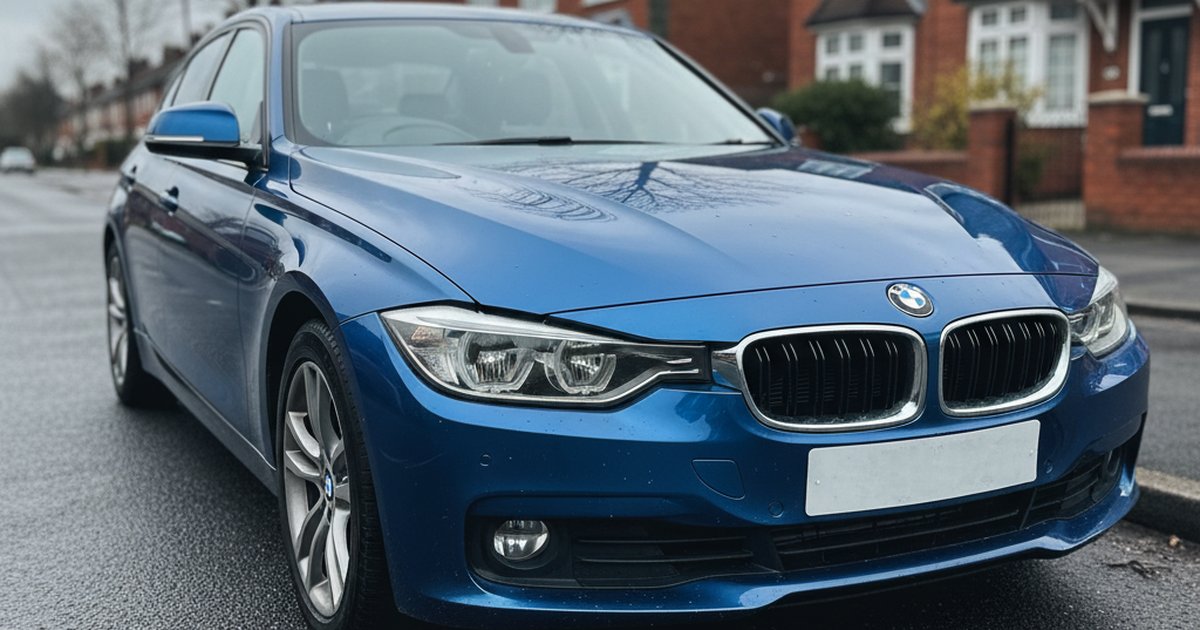
The BMW 3 Series is the default choice for used executive saloon buyers, but choosing the wrong year can cost you thousands in repairs. We've analysed 2,928,041 MOT tests covering 274,149 vehicles to identify which generation, engine, and model year deliver the best ownership experience.
The data reveals a clear split between the outgoing F30 generation (2012-2019) and the newer G20 (2019-present). More surprisingly, petrol versions consistently outperform diesels across almost every metric, despite BMW's reputation for strong oil-burners. The dangerous defect rates tell a particularly stark story: nearly half of all 2010-2011 diesels have been flagged with dangerous issues at some point, compared to just 15.9% of 2020 petrols.
Here's what the numbers say about buying a used 3 Series.
TL;DR: 2015 petrol F30s are the sweet spot at 736/1000 reliability with an 88.7% pass rate and just 1.0 defects per test. Avoid 2018-2020 plug-in hybrids (498-558/1000) and early diesels (2010-2012 score 625-698/1000 with 44-47% dangerous defect rates). Post-2019 G20 models look solid on paper but haven't aged enough for meaningful analysis.
Which generation delivers better reliability: F30 or G20?
The F30 generation (2012-2019) has matured enough to show its true colours. Peak reliability arrives in 2014-2015 for petrol models, where you'll find pass rates of 86.8-88.7% and reliability scores of 728-736/1000. By contrast, the G20 (2019-present) sits in that awkward phase where most examples are still under three years old or just entering the MOT cycle.
What's immediately obvious from the data: F30 petrols age gracefully. A 2015 petrol F30 averages just 1.0 defects per test and holds a 30.1% dangerous defect rate - half the rate of equivalent diesels. The same year's diesel manages only 684/1000 with 1.2 defects per test and a 37.6% dangerous rate.
The G20 diesels tested so far (mostly 2019-2020 examples) show 87.6% pass rates and around 605/1000 reliability, which looks respectable until you notice they're still relatively young with median mileages of 52,000-59,000. F30 petrols at similar ages were posting 88-90% pass rates. The DVSA MOT data suggests G20s aren't meaningfully better than late F30s, just newer.
Track record matters: F30s built between 2014-2016 have now survived 8-10 years on UK roads with pass rates still above 85%. That's the kind of durability you can bank on.
Should you buy petrol or diesel? The data settles it
Every single model year shows the same pattern: petrol 3 Series pass MOTs more often, rack up fewer defects, and record lower dangerous failure rates than their diesel equivalents. The gap is substantial.
Take 2014 as an example. The petrol version scores 728/1000 with an 86.8% pass rate and 1.1 defects per test. The diesel manages just 661/1000, passes at 83.4%, and averages 1.4 defects per test. More concerning, 39.8% of diesel tests have flagged dangerous defects versus 32.1% for petrol. That's not a rounding error - it's a fundamental reliability difference.
The defect lists tell the rest of the story. Diesels consistently show more serious suspension and shock absorber issues. The 2011 diesel data flags shock absorbers with 'light misting of oil or limited damping effect' in 10.6% of tests - a critical defect. Petrols report the same issue at just 7.2%.
Annual mileage explains some of this. Diesel owners average 8,800-9,900 miles per year compared to 6,200-7,600 for petrol drivers. Higher mileage means harder use, more frequent servicing requirements, and more opportunities for things to fail. But even accounting for use patterns, petrols prove more robust. If you're shopping for a used 3 Series and don't cover serious motorway miles, the petrol is the obvious choice.
Which specific years should you target?
2015 petrol F30: The single best year in the dataset at 736/1000 reliability. Pass rate of 88.7%, just 1.0 defects per test, and a 30.1% dangerous defect rate - the lowest for any F30. These cars average 68,131 miles on the clock with gentle 6,216 miles per year usage. You're buying into a known quantity that's proven it can last.
2014 petrol F30: Nearly as good at 728/1000 with an 86.8% pass rate. Slightly higher mileage (73,534 median) but still incredibly consistent. First MOT pass rate of 89.2% proves these were well-built from day one.
2016 petrol F30: Scores 708/1000 with an 88.5% pass rate. Only 66,182 miles on average and showing minimal degradation. The defect rate increases marginally to 1.0 per test, but it's splitting hairs at this level.
Diesel buyers have slimmer pickings. The 2015 diesel achieves 684/1000 (52 points behind the petrol equivalent) with an 85.8% pass rate. It's the least problematic diesel year, but you're still facing 37.6% dangerous defect rates and higher running costs if anything serious breaks.
Why 2015 wins: BMW had ironed out early F30 teething issues by this point, but the cars hadn't yet entered the complexity creep of later models. You get modern safety and tech without the fragile electronics of 2017+ examples.
Which years should you steer clear of?
2010-2011 diesels: These early F30 diesels score just 688-698/1000 with dangerous defect rates of 45.7-47.1%. That means nearly half of all examples have been cited for safety-critical issues. Suspension arm ball joints appear in 11.6% of 2010 diesel tests - a moderate severity defect that's expensive to fix. Pass rates hover around 79-80%, meaning one in five tests ends in failure.
2012 diesel: Drops to 625/1000 reliability - the lowest score for any mainstream diesel 3 Series year. Pass rate of 79.7% and 1.6 defects per test. Tyre wear appears on a staggering 26.4% of tests, suggesting alignment and suspension problems are endemic to this vintage. Current examples sit at 121,000 miles and climbing - you're buying someone else's problem.
2018-2020 plug-in hybrids (330e): The data here is damning. Reliability scores of 498-558/1000 make these the worst-performing 3 Series variants by a country mile. The 2018 hybrid manages only 86.1% pass rate despite averaging just 75,210 miles. Dangerous defect rates of 33.0-35.5% for what should be nearly-new cars. Tyre wear dominates (33% of tests), but you're also seeing exposed ply and cords (9.1% of 2018 tests) - evidence of poor maintenance or underlying suspension issues.
Hybrid ownership appears to attract either high-mileage company car users who don't maintain them properly, or drivers who can't exploit the battery range and end up hauling dead weight. Either way, the MOT results speak clearly: avoid these unless you fancy rolling the dice on expensive battery and charging system repairs outside warranty.
What actually fails on a used 3 Series?
Tyre wear appears on 20-33% of all MOT tests across every year and engine type. This isn't random - BMWs wear through front tyres aggressively due to weight distribution and sporting suspension geometry. Inner or outer edge wear points to geometry issues or poor maintenance. Budget £600-800 for a pair of quality rubber every 15,000-20,000 miles.
Brake pads flag up on 7-11% of tests across the board. That's routine consumption for a heavy executive car with powerful brakes, but it climbs to 11-12% for post-2015 models with larger brake packages. Factor in £200-400 for front pads and £150-300 for rears when negotiating price.
The more serious defects reveal themselves in early diesels. Suspension arm ball joints (11.6% of 2010 diesel tests) and shock absorbers with oil misting (10.6% of 2011 diesels) are expensive fixes. A full suspension refresh with arms, bushes, and dampers can hit £1,500-2,500 depending on whether you're replacing OEM or going aftermarket.
According to RAC breakdown statistics, electrical faults and emissions system failures are increasingly common on diesels beyond 100,000 miles - issues that don't always show on MOTs until they leave you stranded. That's another argument for targeting lower-mileage petrol examples.
How are owners actually using these cars?
Annual mileage patterns reveal two distinct ownership profiles. Diesel buyers rack up 8,800-10,000 miles per year - sensible for motorway commuters exploiting the efficiency. Petrol owners average just 6,200-7,600 miles annually, suggesting these are second cars or weekend drivers.
Current median mileages confirm the trend. A 2015 diesel sits at 95,617 miles versus 68,131 for the petrol equivalent. By the time you're shopping, you're looking at diesels nudging 110,000-120,000 miles compared to petrols at 80,000-90,000. Higher miles mean you're buying closer to expensive service intervals: diesel particulate filter replacements, dual-mass flywheel changes, turbo rebuilds.
The 2020-2021 G20 models show annual mileages spiking to 9,560-10,081 miles even for petrols - likely reflecting company car use or PCP deals that incentivise higher mileage allowances. These cars haven't lived the pampered lifestyle of earlier petrol F30s, which may explain why their reliability scores (559-604/1000) don't match the 2014-2016 F30 petrol peak.
What this means for buyers: A 2015 petrol F30 at 75,000 miles has realistically got another 50,000-75,000 miles of reliable service if maintained properly. The same age diesel at 110,000 miles is entering the expensive zone where major components start expiring.
How well do they scrub up from new?
First MOT pass rates (at age three) reveal initial build quality before wear and tear takes over. Petrol F30s consistently achieve 86-90% first-time passes, with 2017 petrols hitting 93.0% - exceptional for any mainstream manufacturer. Diesels lag at 83.8-88.6%, suggesting either more complex systems with more failure points, or harder initial use.
The gap between first MOT performance and overall pass rates tells you how well these cars age. A 2014 petrol passes its first test at 89.2% but overall sits at 86.8% - minimal degradation. The 2012 diesel starts at 83.8% and drops to 79.7% overall, showing accelerated decline. That's a four-percentage-point drop versus 2.4 points for petrol.
G20 models tested so far show first MOT passes of 85-88%, broadly in line with late F30s. Not spectacularly better, despite being newer and theoretically more advanced. This data comes from gov.uk MOT records, and it suggests BMW hasn't revolutionised durability - they've just maintained parity.
Found a year you like? A good year still hides a clocked odometer, outstanding finance or a past write-off. Before you hand over any money, check the exact BMW 3 Series.
Frequently asked questions
Is a high-mileage 3 Series diesel worth buying?
Only if it's a 2015-2016 model with full service history. These years score 684-699/1000 and can handle 100,000+ miles, but budget for DPF, flywheel, and turbo work beyond 120,000 miles. Avoid anything pre-2013 or with patchy maintenance records.
Are G20 3 Series more reliable than F30s?
Not based on current data. G20 diesels from 2019-2020 score 601-605/1000 versus 684-736/1000 for 2014-2016 F30 petrols. G20s are newer with lower miles but show no meaningful reliability improvement. Wait for more MOT history before paying a premium.
Why do 3 Series fail MOTs so often on tyres?
Weight distribution and aggressive camber settings wear tyres unevenly, particularly on the inner or outer edges. Appears in 20-33% of all tests. This is normal for the platform but signals deferred maintenance if wear is extreme. Always inspect tyre condition when viewing.
Should I avoid the 330e plug-in hybrid?
Yes. Reliability scores of 498-558/1000 are the worst in the 3 Series range. High mileage, poor maintenance, and complex hybrid systems create expensive failures. Dangerous defect rates of 33-35% for cars under five years old tell the story.
What's the best budget for a reliable used 3 Series?
Target £12,000-16,000 for a 2014-2016 petrol F30 with 60,000-80,000 miles and full history. You'll get proven reliability (700-736/1000 scores) without the depreciation hit of newer G20 models. Avoid anything under £8,000 unless you're prepared for immediate repairs.
Our Verdict
The numbers make the case clearly: petrol F30s from 2014-2016 represent the sweet spot for used 3 Series buyers. You get proven reliability above 700/1000, pass rates approaching 90%, and ownership costs that won't bankrupt you. Diesels make sense only for high-mileage drivers who can justify the efficiency gains against higher repair costs, and even then you should target 2015-2016 examples exclusively.
Before you commit, check any prospective purchase through PlateInsight. Our database covers all 2,928,041 MOT tests analysed here, giving you the specific history of the exact car you're viewing. New users get 5 free vehicle checks - use them to avoid the 498/1000 hybrids and tired early diesels lurking in classified ads. Buy the wrong one, and you'll be funding your mechanic's next holiday.
You might also like
Check Any Vehicle's Full History
MOT results, mileage timeline, AI health score, and market valuations. New users get 5 free credits.