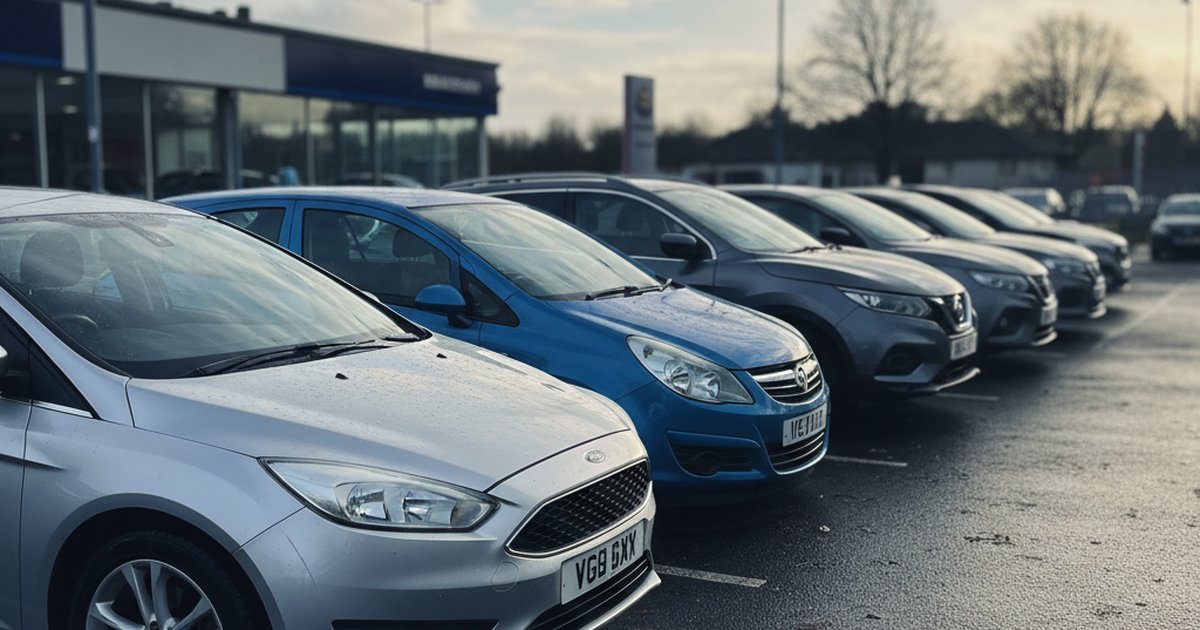
The family saloon is not dead. While SUVs hog the showroom spotlight, hundreds of thousands of buyers still choose a proper four-door sedan each year. They want boot space without the bulk, comfort without the crossover price premium, and reliability they can count on for the school run and motorway miles alike.
We pulled MOT data on 2,244 saloon cars spanning 9,517 tests to find out which models actually hold up. This is not a beauty contest or a power-to-weight analysis. This is cold, hard failure data from DVSA MOT records, showing you which saloons sail through their annual inspections and which leave you stranded at the test centre with a list of advisories as long as your arm.
The results surprised us. German premium brands do not dominate as you might expect. Japanese workhorses punch well above their price point. And one British nameplate, written off by many as past its prime, actually puts up a serious fight.
TL;DR: Toyota Avensis models occupy the top three reliability spots, with the 2016 Business Edition achieving a 97.8% pass rate. Ford Mondeo Econetic variants beat most BMWs. The Skoda Superb sits second overall, proving VAG Group quality without the Audi price tag.
Why Do Toyota Avensis Models Dominate This List?
Five of the top nine positions belong to Toyota Avensis variants. This is not a statistical fluke. The Avensis was built for exactly this use case: high-mileage company car drivers who need a diesel saloon that will not let them down between service intervals.
The standout performer, the 2016 Business Edition Plus, currently sits at around 94,000 miles and averages 9,689 miles annually. These are steady, motorway-heavy journeys. The kind of use pattern that should expose any weak points in a design. Yet the first MOT pass rate hits 98.8%, dropping only marginally to 97.8% overall. Owners are not babying these cars. They are working them hard, and they hold up.
Compare that to the 2015 Icon Business Edition, which sits at 114,961 miles with similar annual use. Even at higher mileage, it maintains a 94.1% pass rate. This is what engineering for durability looks like. Toyota built the Avensis with fleet buyers in mind, which means over-engineering the bits that wear out on normal cars: suspension bushes, brake components, exhaust systems.
The Avensis never won awards for excitement. Automotive journalists found it dull. But we are not measuring 0-60 times here. We are measuring whether your saloon will pass its MOT without drama, and on that metric, the Avensis is king.
Is the Skoda Superb the Best Value Premium Saloon?
Slotting into second place, the 2018 Skoda Superb SE Technology proves you do not need an Audi badge to get Volkswagen Group quality. At 96.4% pass rate and 1000/1000 reliability score, it matches the best Japanese competition while offering significantly more interior space and a more upmarket feel.
These Superbs average 14,780 miles annually, the highest of any car in our top ten. That is serious motorway work. Yet they maintain their near-perfect MOT record. Current examples sit around 96,570 miles, which for a 2018 car means heavy fleet use or serious road warriors. The first MOT pass rate of 95.1% is marginally lower than the overall figure, suggesting these cars actually improve with age rather than deteriorating. That is unusual and speaks to proper run-in engineering.
Skoda has long been the sensible choice for people who want VAG Group reliability without the premium badge tax. The Superb takes that philosophy and applies it to the executive saloon segment. You get the same platform and powertrain as an Audi A6 or VW Passat, but at a lower purchase price. The MOT data confirms the engineering is identical where it counts.
How Does the Ford Mondeo Compete Against Premium Rivals?
Four Mondeo variants make our top fifteen, which is a far better showing than the car's reputation might suggest. The 2016 Titanium Econetic sits fourth overall with a 95.2% pass rate, ahead of multiple BMW 3 Series variants.
Ford's Econetic sub-brand focused on fuel economy and emissions, but the engineering improvements carried over to reliability. These diesel Mondeos sit around 106,000 miles currently and average just 8,861 miles per year. That is gentle use for a diesel saloon, suggesting many were company cars that have since moved into private hands where they do lighter duties.
The pattern repeats across Mondeo variants: high first MOT pass rates (the 2015 Titanium Econetic hit 98.6%), strong overall pass rates, and mileage figures suggesting these were fleet workhorses now enjoying easier retirement. According to What Car? owner satisfaction data, Mondeo owners consistently rate the car higher than the automotive press gave it credit for.
The Mondeo was never cool. It was the car sales reps drove, the unmarked traffic car, the minicab. But that ubiquity came from proven dependability. Our MOT data backs up what fleet managers already knew: a well-maintained Mondeo will do the miles without fuss.
Do BMW 3 Series and Audi A6 Live Up to Their Premium Image?
The BMW 318d Sport sits fifth overall with a 94.8% pass rate. Respectable, but not exceptional. It trails three Toyota variants and a Skoda. The 320d xDrive M Sport does fractionally better at 95.0%, while the 330d xDrive M Sport drops to 93.1%. These are solid performers, but they are not class leaders.
What you are paying for with a BMW is not superior MOT reliability. You are paying for driving dynamics, brand prestige, and residual values. The 318d currently sits around 98,500 miles with annual use of 9,102 miles. These are not hard-worked fleet cars anymore. They are in private hands, likely second or third owners, doing moderate mileage. The first MOT pass rate of 93.1% is notably lower than the overall 94.8%, suggesting these cars need a proper inspection once they hit three years old.
The Audi A6 S line TDI Ultra tells a similar story. At 92.6% pass rate, it is the lowest-ranked car in our top ten. But look at the sample size: 1,682 tests across 400 vehicles. This is by far the largest dataset in our analysis, which makes the results more robust. These A6s average 109,660 miles currently and put in 10,172 miles annually. They are still working hard, and they are showing more wear than the Japanese competition.
The German premium brands offer excellent engineering, but they are optimised for performance and refinement, not necessarily for maximum MOT pass rates. Parts are more expensive when they do fail. Service intervals matter more. These are not cars you can neglect and expect to pass inspection without drama.
Why Does the VW Passat Rank Lower Than Expected?
The Volkswagen Passat SE Business sits fourteenth overall with a 91.6% pass rate. This is the same VAG Group platform that underpins the second-placed Skoda Superb, so why the gap?
Mileage tells part of the story. These Passats average 125,999 miles currently, the highest of any car in our analysis. Annual use is 11,243 miles, which suggests continued hard work rather than semi-retirement. The first MOT pass rate of 94.1% is decent, but the overall figure drops 2.5 percentage points as the cars age and accumulate miles. That degradation is steeper than we see with the Toyota or Skoda equivalents.
The Passat is not a bad car. With 1,923 tests across 441 vehicles, this is robust data from a popular model. But it is optimised differently than the Superb. The Passat targets company car drivers chasing low BIK rates and strong residuals. The Superb targets private buyers who want space and quality. Those different priorities show up in the MOT data as the cars age past their fleet years.
If you are buying a used Passat, budget for inspection costs. These are well-engineered cars, but they accumulate issues faster than Japanese rivals as mileage climbs. The RAC breakdown data shows similar patterns with VAG Group diesels: reliable when maintained properly, but less forgiving of neglect than Toyota equivalents.
Are Diesel Saloons Still the Sensible Choice?
Every single car in our top fifteen is diesel-powered. This is not bias in our data selection. This reflects what buyers actually chose in the 2015-2018 period when these cars were sold new. Saloon buyers wanted diesel torque for motorway miles and company car tax benefits.
The question now is whether those diesels still make sense as used buys. The answer depends entirely on your use case. If you cover 10,000+ miles annually, mostly motorway or A-road work, a diesel saloon remains the most economical choice. Our data shows these powertrains hold up well when worked properly. The Toyota and Ford diesel engines in particular show no significant reliability degradation even past 100,000 miles.
But if you are doing 6,000 miles a year, mostly short urban trips, avoid diesels entirely. You will clog the DPF, face expensive regeneration issues, and likely fail your MOT on emissions. The technology needs regular long runs to stay healthy. Our analysis excluded petrol saloons not because they are unreliable, but because the market is overwhelmingly diesel in this segment and year range.
The broader question is whether saloons themselves still make sense. The body style is disappearing from manufacturer lineups. But the used market is full of excellent examples at bargain prices, precisely because demand has shifted to SUVs. If you need boot space, rear legroom, and good motorway manners, a well-chosen saloon offers more car for your money than any crossover equivalent.
Which Saloon Should You Actually Buy?
Budget matters, but so does intended use. If you want the most reliable saloon regardless of badge, buy a 2015-2016 Toyota Avensis diesel. Any variant will do, but the Business Edition models were specced for fleet use and tend to have full service histories. Expect to pay less than a German equivalent with similar mileage, and budget far less for maintenance. These cars are dull but dependable. They will pass MOT after MOT with minimal drama.
If you need more space and refinement but still want Japanese reliability, consider the Skoda Superb. The 2018 SE Technology offers near-premium quality at mid-market prices. Higher annual mileage in our data shows these are cars people trust for serious journeys. The Superb is what you buy when you have outgrown the Octavia but refuse to pay Audi money for the same engineering.
For drivers who value handling and driving engagement, the BMW 318d offers the best balance of reliability and dynamics in the premium segment. It is not the most reliable car in our list, but 94.8% pass rate is perfectly respectable. You are making a small reliability trade-off for significantly better steering feel and chassis balance than any Japanese rival. Just ensure you buy one with complete service history and budget for higher parts costs.
The Ford Mondeo is the value champion here. Prices are rock-bottom because the model has been discontinued and the badge lacks prestige. But the Econetic diesel variants deliver reliability that punches far above their current market value. These are excellent cars for high-mileage drivers on a budget. Just avoid high-spec Titanium X models with complicated electronics. The simpler Zetec and base Titanium specs are more robust.
A reliable model is only half the story. The exact car you buy could be clocked, on finance, or a past write-off. Check it before you commit.
Frequently asked questions
What is the most reliable saloon car in the UK according to MOT data?
The 2016 Toyota Avensis Business Edition Plus diesel achieves the highest pass rate at 97.8%, with a first MOT pass rate of 98.8%. It currently averages 94,380 miles with annual use of 9,689 miles, proving durability under real-world conditions.
Are BMW 3 Series saloons reliable compared to Japanese rivals?
BMW 3 Series models achieve respectable 93-95% pass rates but trail Toyota Avensis variants by 2-4 percentage points. The 318d Sport sits fifth overall at 94.8%. You pay for driving dynamics and badge prestige, not superior MOT reliability.
Should I buy a diesel saloon?
Yes, if you cover 10,000+ miles annually on motorways and A-roads. All top fifteen cars in our analysis are diesels that hold up well past 100,000 miles. Avoid diesels for low-mileage urban use due to DPF clogging risks.
Is the Skoda Superb more reliable than the VW Passat?
Yes. Despite sharing platforms, the Superb achieves 96.4% pass rate versus 91.6% for the Passat. The Superb handles higher annual mileage (14,780 vs 11,243 miles) while maintaining better MOT performance.
Why do Ford Mondeo models rank so highly for reliability?
The Econetic diesel variants were engineered for fleet use and prove exceptionally durable. The 2016 Titanium Econetic achieves 95.2% pass rate, outperforming most BMW variants. Low current prices make these excellent value for high-mileage buyers.
Our Verdict
The saloon car market rewards buyers who ignore badge snobbery and focus on engineering substance. Toyota builds cars that work. Skoda delivers VAG Group quality at sensible prices. Ford's unglamorous Mondeo quietly does the job for a fraction of premium rivals' cost. The MOT data does not lie: reliability correlates more with design philosophy than price point.
Before you commit to any used saloon, check its specific MOT history with PlateInsight's free vehicle check. You get five free credits to examine actual test records, not just aggregate statistics. A well-maintained Passat beats a neglected Avensis every time. The data in this guide shows you which models are engineered for durability. Your job is confirming the specific car you are viewing lived up to that potential.
You might also like
Check Any Vehicle's Full History
MOT results, mileage timeline, AI health score, and market valuations. New users get 5 free credits.