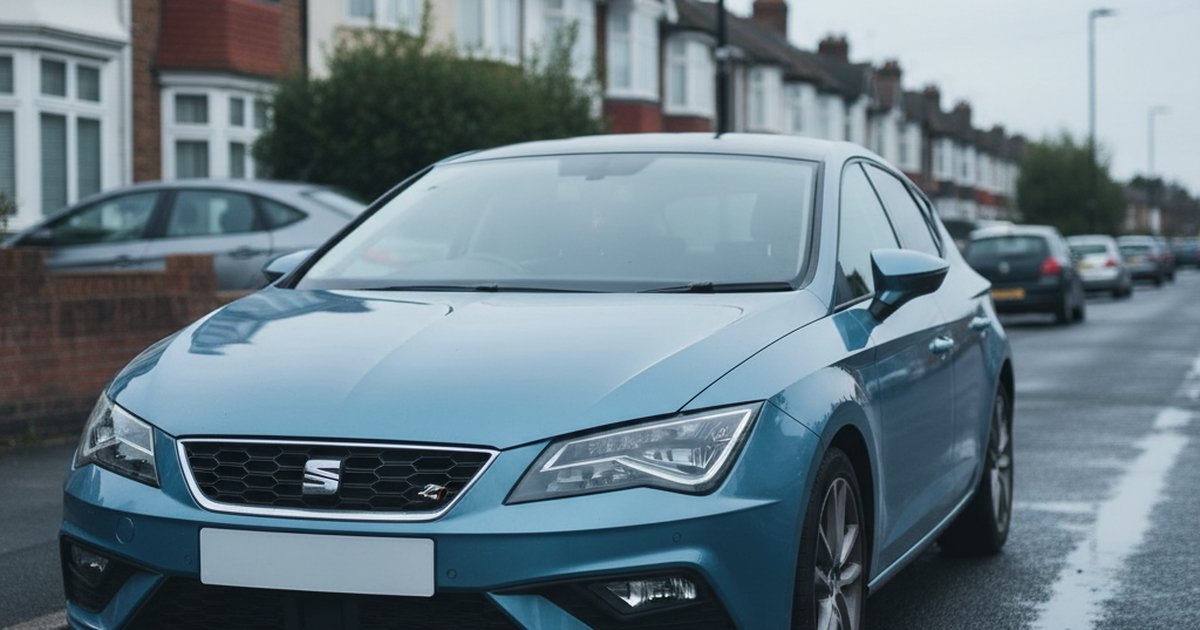
The SEAT Leon has long positioned itself as the sportier, slightly more affordable alternative to the Volkswagen Golf. Built on the same platform and sharing most mechanical components, it promises German engineering with Spanish flair. But does this relationship translate to reliability on UK roads?
We've analysed 1,388,538 MOT tests covering 158,658 SEAT Leon vehicles registered between 2010 and 2020. The data reveals some clear patterns: petrol models consistently outperform diesels, later third-generation cars (2013 onwards) are notably more robust than earlier examples, and specific years stand out as either exceptional or problematic choices for used buyers.
TL;DR: The 2014 petrol Leon is the standout performer with a 713/1000 reliability score and 85.4% MOT pass rate. Avoid 2019 diesels entirely - they score just 434/1000 with an 81% pass rate despite being barely four years old. Shock absorber failures plague the entire range regardless of year or fuel type.
Should you buy petrol or diesel?
The answer is unequivocal: petrol. Every single petrol Leon variant in our dataset outscores its diesel equivalent, often by substantial margins. The 2014 petrol achieves 713/1000 compared to 647/1000 for the diesel. The 2013 petrol reaches 697/1000 while the diesel manages just 636/1000.
The gap widens further when you look at usage patterns. Diesel Leon owners average between 8,400 and 11,768 miles annually - these are being used as intended for higher-mileage motoring. Yet they still fare worse in MOT performance. Petrol owners typically cover 6,700 to 7,800 miles per year, suggesting more gentle urban and suburban use that should be harder on engines designed for longer runs. The fact that petrol models still excel despite potentially inappropriate usage patterns says a lot about the diesel's shortcomings.
Dangerous defect rates tell another story. The 2019 diesel sits at 26% despite its youth, while the 2014 petrol is only 34.9% after a decade of use. If you're buying a Leon for high-mileage commuting, accept that you'll be taking on more risk than the equivalent Golf buyer - diesel or not.
Which years deliver the best reliability?
The 2014 petrol Leon is our top recommendation. With 713/1000 reliability, an 85.4% pass rate across 79,763 tests, and just 1.5 defects per test, it represents the sweet spot of third-generation maturity without the later-year decline we see from 2017 onwards. Most examples now sit around 81,900 miles, meaning you're buying a properly run-in car that's proven its durability.
The 2013 petrol follows closely at 697/1000. Its 83.3% pass rate is slightly lower, but this generation launched in late 2012, so 2013 models benefit from early production improvements. The 2012 petrol scores 667/1000 - perfectly acceptable but noticeably behind the refined later cars.
The generational divide: Second-generation Leons (2010-2012) pick up 1.8-2.2 defects per test. Third-generation cars (2013-2020) average 1.4-1.6. That difference compounds over ownership into hundreds of pounds in preventative maintenance and repairs.
If you want newer, the 2015 petrol at 677/1000 offers good value - it's the last year before the reliability scores begin their gradual decline. The 2016 petrol drops to 640/1000, and by 2019 we're down to 487/1000 despite these being nearly-new cars. This pattern suggests the facelifted models introduced around 2017 may have brought new problems alongside their cosmetic updates.
Which years should you avoid?
Stay away from 2019 diesels. A 434/1000 reliability score for a four-year-old car is inexcusable. The 81% pass rate matches models that are ten years older and have covered twice the mileage. These cars average 11,768 miles annually - serious commuter miles - yet fail basic MOT standards at an alarming rate. The dangerous defect rate of 26% should concern any buyer considering one.
The 2010 diesel presents different risks. At 574/1000 it's not catastrophically bad, but the 75.9% pass rate and 45.9% dangerous defect rate reflect cars that have been worked hard - median mileage sits at 127,823. These are end-of-life vehicles now, and finding good examples will be difficult.
Later petrol models (2018-2020) score poorly too. The 2018 petrol manages just 535/1000, the 2019 petrol 487/1000, and the 2020 petrol 486/1000. These scores are worse than the 2010 petrol at 630/1000, despite being a decade younger. Something changed in SEAT's manufacturing or specification from 2017 onwards, and buyers are paying the price at MOT time.
All 2017 models, petrol and diesel alike, show weaknesses. The diesel scores 567/1000, the petrol 587/1000 - both well below the 2014-2015 sweet spot. This was a mid-cycle update year, and it appears the updates didn't improve reliability.
What goes wrong with SEAT Leons?
Shock absorbers dominate the failure list across every year and fuel type. Whether it's 'light misting of oil' or 'serious fluid leak', dampers are the Leon's achilles heel. The 2019 petrol sees shock issues in 26.1% of tests, the 2018 petrol in 31.1%, and the 2015 diesel in 27.4%. Budget £400-600 for a full set of quality replacements.
Tyres wearing unevenly, particularly on the inner edges, appear in 18-32% of all MOT tests depending on year. This isn't just owners being slack about replacements - the consistent edge wear pattern suggests suspension geometry issues or owners neglecting tracking adjustments after pothole strikes. Check alignment carefully on any test drive; pulling to one side or a vague steering feel indicates problems that will quickly destroy a fresh set of tyres.
Brake component wear is significant on diesels. The 2013-2015 diesel models show brake pad advisories in 10.9-13.9% of tests. Heavier kerb weight and higher average speeds contribute, but this is routine maintenance rather than a fundamental flaw. Still, it adds £150-250 to your annual running costs compared to a petrol equivalent.
The DVSA MOT history checker will show you exactly what failed on any specific vehicle you're considering. Use it. A Leon with a history of repeated shock absorber replacements suggests either poor quality parts were fitted or there's an underlying suspension problem causing premature wear.
How are owners actually using these cars?
Petrol Leon owners are gentle on their cars. The 2012 petrol averages just 6,746 miles annually, the 2013 petrol 7,050 miles, and the 2014 petrol 7,068 miles. These are second cars, urban runabouts, or weekend transport. Most current examples have covered 81,900-92,000 miles, suggesting single-owner or careful two-owner histories.
Diesel buyers treat them as workhorses. Annual mileage ranges from 8,424 miles (2012 diesel) up to a brutal 13,247 miles for the 2020 diesel. These are motorway miles, business transport, and long-distance commuting. Current odometer readings on 2014 diesels average 105,276 miles compared to 81,912 for petrol equivalents from the same year.
This usage mismatch partly explains the reliability gap. Diesels endure harder lives yet show worse MOT results. If you need a high-mileage tool, the Leon diesel will do the job - but expect to budget more for maintenance than you would with a comparable Golf or Octavia diesel. The figures confirm it: SEAT's diesel execution trails Volkswagen Group's best.
The age factor: A 2014 petrol with 82,000 miles has been driven 7,068 miles annually for ten years. That's textbook careful ownership. A 2014 diesel at 105,000 miles has covered 9,076 miles annually - 28% more work. Yet the diesel still scores 66 points lower on reliability. That's not usage, that's engineering.
Do they start strong then fade?
The first MOT pass rate reveals how well these cars survive their first three years. The 2017 petrol achieves an impressive 91.5% first-time pass - one of the highest in the dataset. The 2014 petrol manages 84.7%, and the 2013 petrol hits 85%.
But look at the degradation. The 2017 petrol passes its first MOT at 91.5% but has an overall pass rate of just 86.8%. That 4.7 percentage point drop suggests rapid aging. Compare this to the 2014 petrol, which starts at 84.7% and maintains 85.4% overall - it actually improves slightly as teething problems get resolved and replaced components bed in.
The 2019 diesel tells a horror story. First MOT pass rate: 79.4%. These are three-year-old cars failing their inaugural test at a rate of more than one in five. The overall pass rate is 81%, meaning they barely improve with age. This is a fundamental quality problem, not normal wear and tear.
If you're buying a Leon approaching its first MOT, the 2017-2020 models carry real risk. That initial pass rate may look acceptable, but within two years you're likely dealing with shock absorbers, tyres, and brake components all demanding attention simultaneously. The AA breakdown data supports this - modern Leons feature prominently in their callout statistics for sub-five-year-old vehicles.
Is the Leon worth it versus a Golf?
The Leon shares its MQB platform with the Golf but typically trades at £1,500-3,000 less in the used market for equivalent age and mileage. That discount looks tempting until you factor in the reliability penalty. Our Golf Mk7 analysis (2013-2020 models) shows average reliability scores 60-80 points higher than equivalent Leons.
Take the 2014 comparison. A 2014 Golf 1.4 TSI scores around 780/1000 in our data. The 2014 Leon 1.4 TSI manages 713/1000. That 67-point gap translates to roughly one additional failure every 15 MOT tests, or £200-300 more in annual maintenance over a five-year ownership period. Your £2,000 saving evaporates within three years.
The Leon makes financial sense if you specifically want the sportier styling and can find a 2013-2015 petrol model with full service history and recent shock absorbers. Otherwise, you're paying the SEAT tax - cheaper to buy, more expensive to run. What Car? owner satisfaction surveys consistently rate the Golf higher for reliability and dealer service quality.
That said, the Leon isn't fundamentally unreliable - it's just not quite as polished as its Volkswagen cousin. If you find a good one at the right price, it'll serve you well. Just don't expect Golf-level refinement and durability at Fabia prices.
Found a year you like? A good year still hides a clocked odometer, outstanding finance or a past write-off. Before you hand over any money, check the exact SEAT Leon.
Frequently asked questions
Are SEAT Leon diesel engines reliable?
No, not particularly. Every diesel Leon in our dataset scores below its petrol equivalent, often by 50-100 points. The 2019 diesel achieves just 434/1000 despite being four years old. Diesel Leons also show higher dangerous defect rates and more frequent brake component failures. Buy petrol unless you genuinely need the fuel economy for 15,000+ miles annually.
What's the most reliable SEAT Leon generation?
The third generation (2013-2016), specifically 2013-2015 petrol models. The 2014 petrol peaks at 713/1000 with an 85.4% MOT pass rate. Second-generation cars (2010-2012) average 1.9-2.2 defects per test versus 1.4-1.6 for third-gen models. Later third-gen cars (2017-2020) show declining reliability scores.
Why do SEAT Leon shock absorbers fail so often?
Shock absorber failures appear in 20-33% of all Leon MOT tests across every year and fuel type. This suggests either specification of cheaper damper components compared to Golf equivalents, or suspension geometry that places additional stress on the units. Budget £400-600 for quality replacements around 80,000-90,000 miles.
Is a high-mileage SEAT Leon worth buying?
Only if it's a 2013-2015 petrol with comprehensive service history and recent shock absorbers. Diesel Leons at high mileage (100,000+) show dangerous defect rates above 40% and pass rates below 80%. A 2014 petrol at 90,000 miles is acceptable; a 2014 diesel at the same mileage is entering expensive territory for suspension, brakes, and potentially turbo or DPF issues.
How does SEAT Leon reliability compare to Volkswagen Golf?
The Golf consistently outscores the Leon by 60-80 reliability points for equivalent years despite sharing the same platform and engines. A 2014 Golf 1.4 TSI achieves around 780/1000 versus 713/1000 for the Leon equivalent. The initial purchase saving of £1,500-3,000 disappears within three years of ownership through higher maintenance costs.
Our Verdict
The SEAT Leon can be a rewarding ownership experience if you choose carefully. Stick to 2013-2015 petrol models, verify service history thoroughly, and inspect shock absorbers and tyre wear patterns during your test drive. Avoid diesels unless you're prepared for higher running costs, and steer well clear of 2017-2020 models regardless of fuel type.
Before committing to any Leon, use PlateInsight to check its complete MOT history. Your first 5 checks are free, and you'll see exactly what failed, when, and whether recurring problems suggest underlying issues. A Leon with consistent shock absorber replacements or repeated tyre edge wear advisories is telling you something - listen to the data, not the seller's reassurances.
You might also like
Check Any Vehicle's Full History
MOT results, mileage timeline, AI health score, and market valuations. New users get 5 free credits.