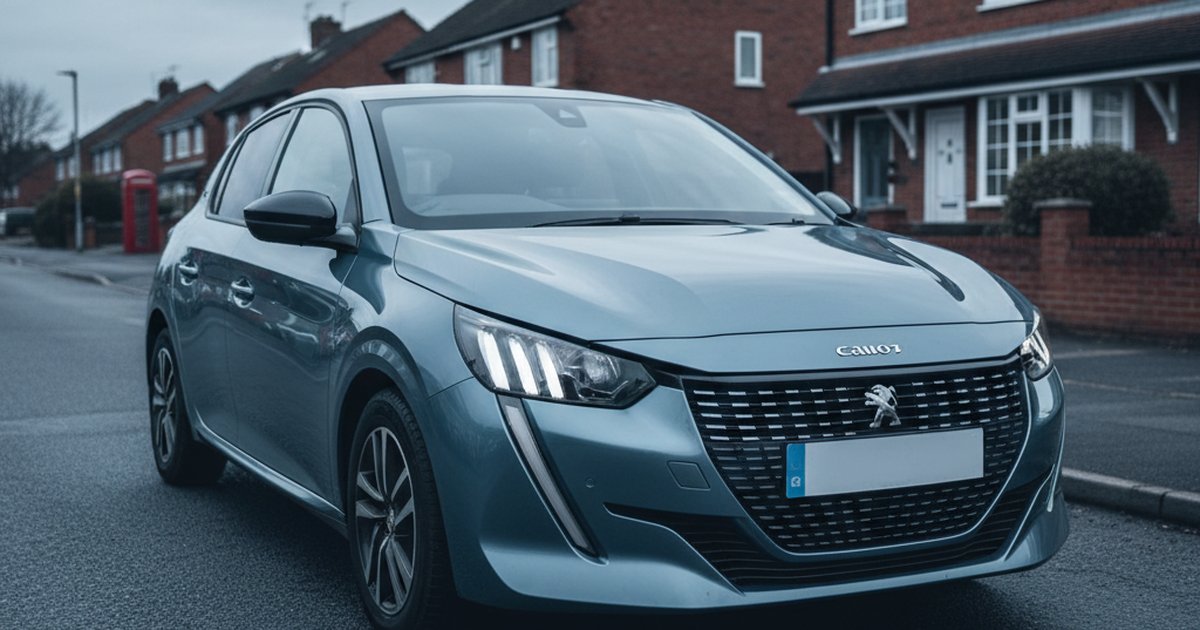
The Peugeot 208 has been a sales phenomenon since 2012, combining French style with supermini practicality. Over 189,000 of these cars have now accumulated 1,797,486 MOT tests in the UK, giving us an unprecedented view of which model years hold up and which develop expensive habits. Our analysis of this complete dataset reveals some surprises: the petrol and diesel versions tell wildly different reliability stories, and the electric e-208 brings its own complications.
This is not guesswork based on owner surveys or anecdotal forum posts. We've analysed every single MOT test recorded for the 208 from 2012 to 2022, tracking pass rates, defect patterns, and real-world mileage behaviour. The data shows clear winners and clear losers, with some years showing dangerous defect rates above 40% while others cruise through testing with minimal drama.
TL;DR: Buy a 2015-2016 petrol 208 for the best reliability (497-504 scores). The 2012 diesels look cheap but 42% have dangerous defects flagged. Electric e-208s score poorly (228-314) despite low mileage, suggesting early quality issues despite their youth.
Which Peugeot 208 Years Are Most Reliable?
The sweet spot for used 208 buyers sits squarely in 2015-2016 for petrol models. The 2016 petrol achieves a reliability score of 504 out of 1000, with an 83.6% pass rate and a first MOT pass rate of 90.1%. That first MOT figure matters because it shows the car arrives at age three in good shape, then maintains that standard. The 2015 petrol isn't far behind at 497, and both years average under 1.6 defects per test.
Compare this to the 2012 launch year petrols, which score just 445 and show 2.0 defects per test. The improvement reflects Peugeot ironing out early production issues and sorting supplier quality. By 2015, the 208 had matured into a properly sorted product.
Annual mileage tells another story about why these cars hold up well. Petrol 208 owners average just 5,262-5,356 miles per year across the 2015-2016 vintages. These are gentle-use cars, often second vehicles or urban runabouts, which partly explains their strong MOT performance. Low stress equals long life.
Peak reliability: The 2016 petrol 208 combines the best MOT record with eight years of production refinement. Its 28.7% dangerous defect rate is the lowest you'll find among high-mileage model years, a full 11 percentage points better than the 2012 cars.
Should You Buy a Diesel 208?
The diesel 208 consistently underperforms its petrol sibling across every model year, and the gap is substantial. Take 2016: the petrol scores 504 for reliability, the diesel just 395. That's a 109-point chasm. Pass rates follow the same pattern, with the 2016 diesel at 79.0% versus 83.6% for petrol.
The problem gets worse as you go back. The 2012 diesel 208 shows a dangerous defect rate of 42.0%, meaning four in ten cars have had a serious safety issue flagged during testing. Brake discs feature heavily in the defect lists, often described as 'in such a condition that it is seriously weakened'. Suspension components also wear faster, with ball joints and bushes appearing in the top defects for multiple diesel years.
Why the diesel penalty? Higher annual mileage plays a role. Diesel 208 owners average 7,126-7,392 miles per year compared to 5,390-5,750 for petrols. That's 30-40% more distance covered, meaning more wear on brake components, suspension bushes, and tyres. The cars work harder.
But there's also a component quality question. The 2015 diesel shows 17.9% of tests flagging brake discs as 'seriously weakened', nearly double the petrol's brake disc defect rate. Peugeot may have specced different brake components for the diesel models to handle the extra torque and weight, and those parts haven't aged as gracefully.
Our advice: unless you absolutely need diesel fuel economy and cover serious motorway miles, stick with petrol. The reliability gap is too wide to ignore, and cheap diesel 208s in classified ads are cheap for good reason.
What Goes Wrong with the 208?
Tyres dominate the defect lists across all 208 variants, appearing in 15-30% of tests depending on year and fuel type. 'Worn close to legal limit/worn on edge' is the most common failure, particularly affecting the inner or outer edges rather than even tread wear. This points to tracking and alignment issues. When you test drive a 208, check for uneven tyre wear patterns and ask when the alignment was last checked.
Brake discs are the second major weakness. From 2012 through 2019, brake disc wear appears in 12-22% of tests, often noted as 'worn, pitted or scored'. The discs aren't catastrophically failing, but they're degrading faster than competitors. Budget £150-250 per axle for replacement when buying an older 208.
Exhaust mounting problems spike in certain years. The 2013 and 2014 petrols show exhaust mounting defects in 15-16% of tests. These are cheap fixes (under £50 typically) but annoying, and they point to rust or poor-quality mounting hardware. Listen for rattles from underneath when test driving.
Suspension wear varies by fuel type. Diesel models consistently show higher rates of suspension arm ball joint and bush wear, likely due to the extra weight and torque from the diesel engine. The 2013 diesel, for instance, shows suspension arm wear in 16.8% of tests. Factor in £200-400 for suspension work on any diesel 208 over 60,000 miles.
The good news: none of these are catastrophic failure modes. These are wear items, age-related deterioration, and maintenance neglect. A well-maintained 208 avoids most of these issues, which is why first MOT pass rates sit at 86-92% across most years. The cars arrive at age three in decent shape; it's the subsequent years of deferred maintenance that cause the problems.
How Do Electric e-208s Perform?
The electric e-208 data reveals a troubling pattern. Despite being the newest cars in the dataset with the lowest mileage (just 9,405-10,792 miles currently), the e-208 scores 228-314 for reliability, far below even the worst diesel years. The 2020 e-208 manages only 82.0% pass rate with a dangerous defect rate that, while low at 6.4%, shouldn't exist at all on three-year-old cars with barely 10,000 miles.
The defect profile differs from combustion models. Windscreen wiper effectiveness appears in 13.4% of 2020 e-208 tests, suggesting quality control issues with basic components. Brake discs still feature, but given these cars use regenerative braking heavily, conventional brake wear should be minimal. The fact that brake disc issues still appear points to either poor component quality or owners who don't drive enough to keep the brakes exercised.
That last point matters. Electric 208 owners average just 1,543-2,478 miles per year, far below even the gentle-use petrol models. These are city cars being used for very short trips, and that creates its own problems. Brakes corrode from disuse. Tyres age out before wearing out. Components seize from sitting idle.
Sample size warning: We're working with limited data here (234-237 vehicles for the e-208) compared to 22,000+ for mature petrol years. Early production electric cars often show teething troubles that get resolved in later batches. But right now, the data doesn't support paying a premium for an early e-208.
Which 208 Years Should You Avoid?
The 2012 diesel 208 tops our avoid list. With a 42.0% dangerous defect rate and reliability score of just 442, these early diesels have aged poorly. Brake problems, suspension wear, and tyre issues combine to make ownership expensive. The cars are now 12 years old with typical odometer readings around 94,000 miles, and they're tired.
Any 2020-2022 e-208 deserves caution. The data shows these electric models scoring 228-330 for reliability despite youth and low mileage, suggesting fundamental quality issues. Until we see data from newer production batches, the early electric 208s look like a gamble.
The 2014 diesel also underperforms, scoring just 437 versus 472 for the equivalent petrol. Combined with annual mileage over 7,000 and current odometer readings around 85,000, these diesels are entering expensive maintenance territory. Suspension components, brake discs, and wear items will all need attention soon.
Be wary of any 208 showing uneven tyre wear patterns. The prevalence of edge wear in the MOT data (appearing in 17-28% of tests depending on year) suggests this is a characteristic issue rather than owner neglect. Factor in frequent alignment checks and premature tyre replacement when budgeting running costs.
How Does Mileage Affect 208 Reliability?
The annual mileage gap between petrol and diesel 208s reveals two distinct ownership profiles. Petrol models average 5,262-5,750 miles per year across 2012-2019, suggesting urban use, school runs, and local shopping. These cars spend their lives doing short journeys at low speeds, which explains both the low mileage accumulation and the relatively gentle wear patterns.
Diesel models cover 7,126-8,372 miles annually, a 30-40% increase. That extra distance translates directly into accelerated wear on suspension bushes, brake components, and tyres. The data backs this up: diesel 208s consistently show higher defect rates for these wear items.
Current mileage tells an interesting story about depreciation. A typical 2015 petrol 208 now shows around 58,000 miles, while the diesel equivalent has covered 82,000. That 24,000-mile difference means the diesel has been working harder for longer, and it shows in the MOT results. When shopping, a 2015 diesel at 80,000+ miles has different prospects than a 2015 petrol at 55,000.
The sweet spot appears to be petrols with 40,000-60,000 miles from 2015-2017. These cars have covered enough distance to prove reliability but haven't accumulated the mileage where major components start failing. Check the DVSA MOT history to verify mileage progression and spot any patterns of repeated failures.
What About First MOT Performance?
First MOT pass rates reveal which model years left the factory in best condition. The 2017 petrol 208 achieves an impressive 92.9% first-time pass rate, meaning fewer than one in twelve cars had any defects at age three. That's exceptional and suggests 2017 represented a quality peak for Peugeot's production processes.
The gap between first MOT and overall pass rate tells you how fast the car degrades. Take the 2012 petrol: it starts at 86.5% for first MOT but drops to 76.2% overall. That's a 10.3 percentage point fall, suggesting rapid deterioration after age three. Compare to the 2016 petrol, which goes from 90.1% first MOT to 83.6% overall, just a 6.5 point drop. The newer car maintains its condition better over time.
Diesel models show worse degradation patterns. The 2015 diesel starts at 84.2% first MOT pass but falls to 78.6% overall, while the 2015 petrol holds much tighter (89.3% to 82.2%). This reinforces the message that diesel 208s age less gracefully than petrols, likely due to higher stress from increased mileage and torque.
When buying used, prioritise cars from years with strong first MOT rates (2015-2017 petrols) because they demonstrate both good factory quality and slower degradation rates. A car that passes its first MOT cleanly and holds that standard is worth a premium over one that scraped through at age three and has been declining since.
Found a year you like? A good year still hides a clocked odometer, outstanding finance or a past write-off. Before you hand over any money, check the exact Peugeot 208.
Frequently asked questions
What is the most reliable Peugeot 208 year?
The 2016 petrol 208 achieves the highest reliability score at 504 out of 1000, with an 83.6% MOT pass rate and only 28.7% of vehicles showing dangerous defects. The 2015 petrol comes close at 497, making both years excellent used buys.
Are diesel Peugeot 208s reliable?
No, diesel 208s consistently score 50-100 points lower for reliability than equivalent petrol models. They show higher defect rates for brakes and suspension, partly due to covering 30-40% more miles annually. The 2012 diesel has a particularly poor 42% dangerous defect rate.
What are the common problems with Peugeot 208?
Uneven tyre wear (affecting 15-30% of tests), brake disc deterioration (12-22% of tests), and exhaust mounting failures (15-16% on 2013-2014 models) are the main issues. Diesel models add suspension component wear to this list due to higher stress from increased mileage.
How many miles do Peugeot 208 owners typically cover?
Petrol 208s average just 5,262-5,750 miles per year, suggesting gentle urban use. Diesel models cover significantly more at 7,126-8,372 miles annually, which accelerates wear on brakes, suspension, and tyres.
Is the electric e-208 reliable?
Current data suggests no. Despite being the newest cars with barely 9,000-10,000 miles covered, the 2020-2022 e-208 models score just 228-314 for reliability, far below combustion equivalents. Early production quality issues appear responsible, though sample sizes are limited.
Our Verdict
The Peugeot 208 is a good buy if you do your homework. Stick with 2015-2016 petrol models for the best balance of reliability, proven quality, and affordable pricing. Avoid early diesels and treat electric versions with caution until more data emerges. Before buying any used 208, run a comprehensive vehicle history check. PlateInsight gives you 5 free vehicle checks backed by the complete UK MOT database, so you can verify mileage history, spot patterns of repeated failures, and make sure you're buying one of the good ones. The data shows which 208s last and which don't. Use it.
You might also like
Check Any Vehicle's Full History
MOT results, mileage timeline, AI health score, and market valuations. New users get 5 free credits.