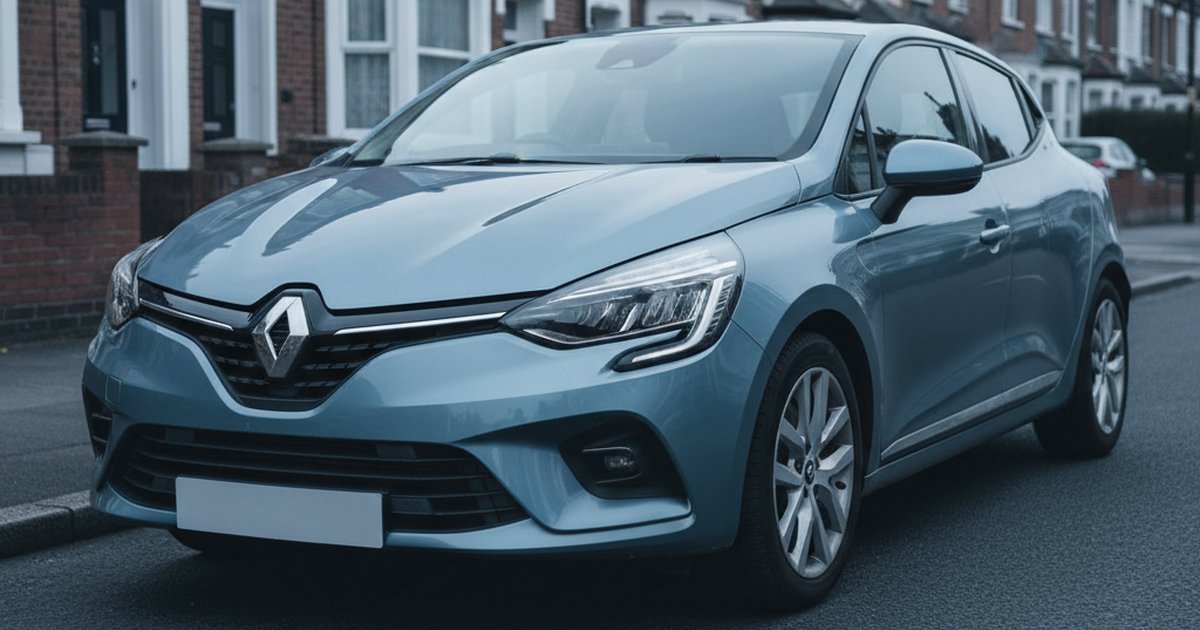
The Renault Clio has been Britain's favourite French supermini for decades, but not all model years are created equal. We've crunched the numbers on 2,554,176 MOT tests across 223,118 Clios to find out which vintages deliver solid reliability and which ones will drain your wallet.
The data reveals some stark differences. While the best petrol Clios achieve pass rates above 80%, the weakest years struggle to get 70% of cars through their MOT first time. Diesel versions fare consistently worse across every year, with dangerous defect rates pushing above 50% in some cases. This isn't just statistical noise - it translates to real-world costs and hassle when you're standing in the garage forecourt.
Using PlateInsight's database of 261 million MOT records from DVSA data, we can show you exactly which Clios to hunt for and which to walk away from.
TL;DR: The 2013 petrol Clio scores 399/1000 for reliability with a 75.3% pass rate - the strongest performer in our dataset. Avoid the 2010 and 2015 diesels, which score just 270/1000 and 243/1000 respectively, with dangerous defect rates exceeding 50%.
Which years are most reliable?
The 2013 petrol Clio stands out as the pick of the bunch. With a reliability score of 399/1000 and a 75.3% MOT pass rate, it represents the sweet spot where Renault got the formula right. These cars average just 1.9 defects per test - meaningfully lower than the worst performers.
The 2019 petrol model runs it close at 355/1000, but with far fewer vehicles in the dataset, we have less confidence in its long-term durability. The 2017 and 2018 petrol versions also perform well, both clearing 340/1000, suggesting the fourth-generation Clio improved consistently through its production run.
The pattern is clear: newer petrol Clios are markedly better. The 2016-2019 petrol models all achieve pass rates above 77%, compared to sub-72% for the 2010-2012 vintages. Owners of newer cars face dangerous defect rates below 30%, while the 2010-2011 models push close to 50%. That's not marginal - it's the difference between a car that sails through its MOT and one that needs serious attention every year.
Mileage tells the story: Petrol Clios average just 5,600 miles per year across all model years. These are gentle-use urban cars, predominantly driven by cautious owners doing school runs and shopping trips. The low annual mileage partially explains why even older examples remain viable buys - they simply haven't been thrashed.
Should you avoid diesel Clios entirely?
Yes, probably. The diesel numbers are brutal. Every single diesel model year scores below 340/1000 for reliability, with most languishing in the 240-280 range. The 2015 diesel bottoms out at 243/1000 - worse than any petrol equivalent by a considerable margin.
Dangerous defect rates tell the real story. Diesel Clios consistently breach 50% across 2010-2015 model years. Over half of these cars develop at least one dangerous fault during their MOT lifetime. The DVSA MOT data flags brake pipe corrosion as a persistent issue, with over 16% of diesel tests catching corroded pipes - often flagged as critical defects.
Diesel owners also drive harder. Annual mileage averages 7,300 miles for diesels versus 5,700 for petrols. That's 28% more miles per year, which compounds wear on suspension components and brakes. The data shows diesel Clios pick up 2.0-2.3 defects per test compared to 1.4-2.1 for petrols. Small differences add up when you're facing annual MOT bills.
The only marginally acceptable diesel is the 2019 model at 326/1000, but even this trails the equivalent petrol by 29 points. Unless you're doing serious mileage, the diesel makes no financial sense.
What are the common problems?
Tyres dominate the defect lists across all model years. Between 20-33% of MOT tests flag tyres worn close to the legal limit, with diesel versions at the higher end of that range. This isn't a design flaw - it's owners running tyres into the ground before replacement. Budget accordingly.
Brake pipe corrosion emerges as a serious issue on 2013-2017 models, particularly diesels. The data shows 14-17% of tests catching corroded pipes, often graded as critical defects requiring immediate attention. This is a structural corrosion problem, not routine wear, and it's expensive to fix properly. Northern and coastal drivers face worse outcomes due to road salt exposure.
Coil spring failures plague 2011-2013 models, with 10-13% of tests catching fractured or broken springs. This affects both petrol and diesel variants equally. Replacement is relatively cheap, but it's an indicator of how hard these cars have been used - springs don't break from gentle driving.
Age-related decline: First MOT pass rates start strong at 84-86% for most years, but overall pass rates drop 10-15 percentage points by the time cars reach their teens. The 2010 petrol has an 83.8% first MOT pass rate but only 69.8% overall - these cars age poorly.
Suspension wear is endemic. Ball joints, bushes, and arms all feature heavily in the defect data, particularly on diesels. The harder usage shows through in higher mileage and more aggressive driving patterns.
How do petrol and diesel versions compare?
Petrol wins decisively. Across every single model year from 2010-2019, the petrol variant scores higher for reliability - typically by 30-60 points. The gap is smallest on newer models (2017-2019) and widest on the disastrous 2015 diesel, which scores 46 points below its petrol equivalent.
Pass rates follow the same pattern. Petrol Clios consistently achieve 2-4% higher pass rates than diesels in the same year. That might sound marginal, but when you're buying a ten-year-old car, 2% represents the difference between 75% pass rate (acceptable) and 73% (problematic).
The defect-per-test metric reveals how much more maintenance diesels demand. The 2011 diesel averages 2.3 defects per test versus 2.1 for the petrol. Over a decade of ownership, that compounds into significantly higher servicing costs. AA breakdown data confirms diesels require more frequent professional attention.
Current mileage readings show diesels sitting 25,000-35,000 miles higher than petrols of the same age. A 2014 diesel typically shows 86,803 miles versus 69,488 for the petrol. Higher mileage means more worn components, more frequent failures, and lower resale values.
Which years should you avoid?
The 2010-2012 diesels are deeply problematic. All three score below 280/1000, with dangerous defect rates above 50%. The 2010 diesel manages just 270/1000 - abysmal for a supermini that should be cheap to run. Owners face an average of 2.2 defects per test, and with these cars now well into their teens, the problems will only multiply.
The 2015 diesel scores an appalling 243/1000, the worst in our entire dataset. Three-quarters of these cars fail to pass their MOT, and the dangerous defect rate hits 50.5%. Brake pipe corrosion affects over 16% of tests - this is a car that actively wants to fail its MOT.
Early petrol models (2010-2012) aren't terrible, but they're mediocre. Scores of 278-307/1000 and pass rates below 72% mean you're buying into regular garage visits. When a 2013 petrol costs similar money but scores 399/1000, why would you settle for less?
The diesel trap: Many buyers chase cheap diesel Clios for their supposed economy. Our data shows these cars average 7,300 miles per year versus 5,700 for petrols. Unless you're matching that usage pattern, the diesel premium makes no sense - and you're inheriting a car with worse reliability across every metric.
What should you look for when buying?
Target 2013 or 2016-2019 petrol models. These represent the reliability peaks in our dataset, with scores consistently above 300/1000 and pass rates pushing 80%. The 2013 offers excellent value as the oldest 'good' year, while 2017-2019 examples will feel more modern despite costing more.
Brake pipes are your inspection priority. Crawl underneath with a torch and check for surface rust or flaking on the brake lines running along the rear axle. If you see anything questionable, walk away. Replacement costs £300-500 depending on the extent of corrosion, and it's often a sign of poor maintenance throughout the car's life.
Check tyre condition obsessively. With 20-30% of Clios failing MOT on tyre-related defects, you need to see even wear across all four corners. Inner edge wear suggests suspension problems, while perished sidewalls indicate the car has been standing unused for extended periods. Budget £250-350 for a full set of mid-range tyres if needed.
Verify the actual mileage against the median for that year. A 2016 petrol should show around 54,000 miles currently. Anything significantly below that might sound appealing, but very low mileage often correlates with irregular servicing and deteriorated rubber components. Anything well above suggests harder use than typical for this model.
Run a free PlateInsight check before viewing any Clio. Our database will show you the actual MOT history, not the seller's version of events. Look for patterns of recurring defects - a car that repeatedly fails on the same component is telling you it has a chronic problem the owner can't be bothered to fix properly.
Found a year you like? A good year still hides a clocked odometer, outstanding finance or a past write-off. Before you hand over any money, check the exact Renault Clio.
Frequently asked questions
What is the most reliable Renault Clio year?
The 2013 petrol Clio scores 399/1000 for reliability with a 75.3% MOT pass rate, making it the strongest performer in our analysis of 223,118 vehicles. The 2019 petrol is close behind at 355/1000.
Are diesel Clios reliable?
No. Diesel Clios score 30-60 points lower than petrol equivalents across every model year. Dangerous defect rates exceed 50% for 2010-2015 diesels, with brake pipe corrosion affecting over 16% of tests.
What are the common problems with Renault Clios?
Brake pipe corrosion affects 14-17% of 2013-2017 models. Coil spring failures appear in 10-13% of 2011-2013 tests. Tyre wear is endemic, with 20-33% of all tests flagging tyres at or near legal limits.
How many miles do Clio owners typically drive per year?
Petrol Clios average 5,600 miles per year while diesels average 7,300 miles annually. The low usage on petrol models makes them ideal for urban buyers who prioritise reliability over fuel economy.
Should I buy a Clio with over 100,000 miles?
Only if it's a diesel with full service history. Petrol Clios rarely reach 100,000 miles (median current mileage is 42,000-83,000 depending on year). High-mileage petrols are statistical outliers with unknown usage patterns.
Our Verdict
The Renault Clio can be a solid supermini choice, but only if you buy the right year. Stick with 2013 or 2016-2019 petrol models, avoid diesels entirely unless you genuinely need one, and inspect brake pipes thoroughly on any car you view. The numbers are plain: some Clios sail through MOTs while others become money pits.
Before you buy any used Clio, run a full vehicle check on PlateInsight. We'll show you the complete MOT history, highlight recurring defects, and give you the reliability score based on real-world data from 261 million tests. New users get 5 free credits - enough to check several cars before making your decision. Make it count.
You might also like
Check Any Vehicle's Full History
MOT results, mileage timeline, AI health score, and market valuations. New users get 5 free credits.