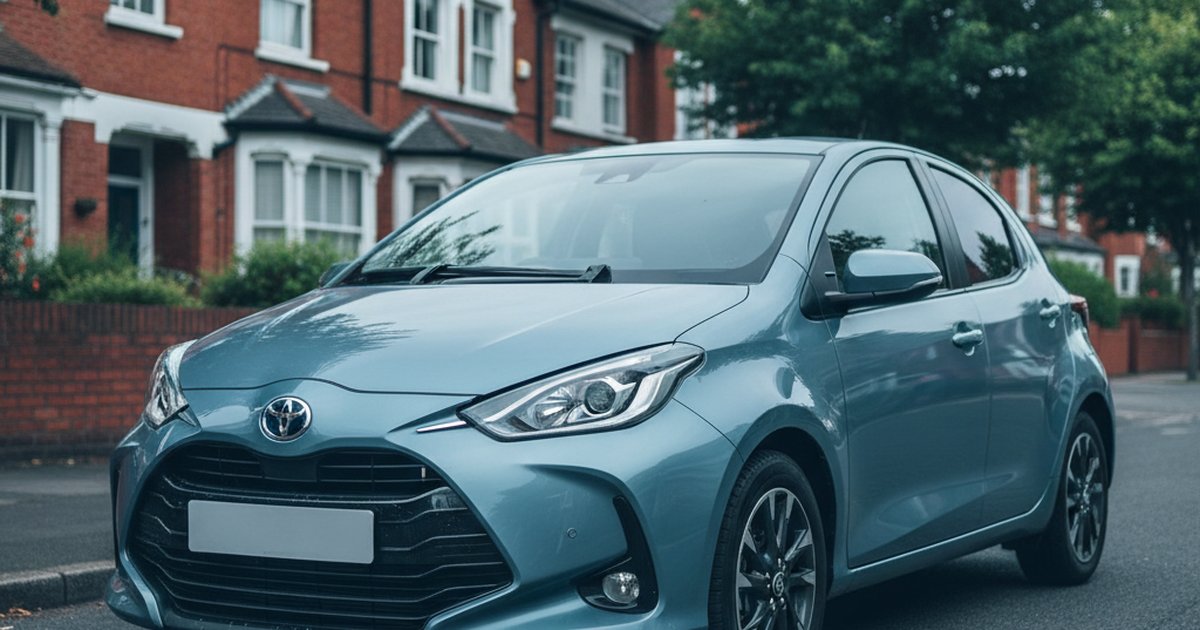
The Toyota Yaris has built a reputation as one of the most dependable small cars you can buy. We analysed 2,700,386 MOT tests across 287,586 vehicles to find out if that reputation holds up, and more importantly, which years deliver on the promise and which let the side down.
The Yaris reliability story is more complicated than the marketing suggests. Petrol models genuinely impress, hybrids (badged 'Electric' in DVLA records) lag behind in several areas, and the rare diesel variants are struggling. There's also a dangerous defect problem in early models that Toyota's reputation rarely mentions.
TL;DR: Buy a 2015-2016 petrol Yaris if you want the sweet spot of reliability (609/1000 and 599/1000 scores) with 86-87% pass rates. Avoid 2010-2012 models: 33-36% have dangerous defects flagged, mainly corroded brake pipes. Hybrids look good on paper but pick up more defects per test than petrol equivalents across every generation.
Do hybrids actually beat petrol for reliability?
Despite Toyota's hybrid push and the widespread belief that electric motors reduce mechanical stress, the data tells a different story. Petrol Yaris models consistently outperform their hybrid siblings in reliability scores across every generation we examined.
Take 2016 as an example. The petrol model scored 599/1000 for reliability with an 87.3% pass rate. The hybrid version? Just 463/1000 with a slightly lower 86.3% pass rate. The gap widens when you look at defects per test: petrols average 1.1 issues per MOT, while hybrids rack up the same number despite being newer technology.
The pattern repeats across the model range. The 2015 petrol achieves a stellar 609/1000 reliability score, while the hybrid manages only 483/1000. By 2019, petrols score 548/1000 versus 486/1000 for hybrids. It's consistent, and it matters if you're buying based on Toyota's green credentials.
Why? Hybrids carry additional complexity with battery systems, regenerative braking components, and dual powertrains. More systems mean more potential failure points. Brake discs on hybrids show up as defects in 13-18% of tests because regenerative braking means the mechanical brakes see less use and corrode more readily.
Hybrid owners do drive slightly more, averaging 5,000-5,200 miles annually versus 4,700-4,900 for petrol owners. That's not enough to explain the reliability gap, but it suggests hybrid buyers are keeping these cars as primary transport rather than second vehicles.
Why do early Yaris models have such high dangerous defect rates?
The numbers aren't great: 2010 models have a 33.5% dangerous defect rate for petrols and 35.9% for diesels. More than one in three vehicles flagged with safety-critical issues during MOT tests.
Brake pipe corrosion is the main issue. It appears in 14.9% of all 2010 petrol tests and 19.2% of diesel tests as the top defect. These are CRITICAL failures, not cosmetic rust. We're talking about corroded pipes covered in grease or material, or excessively corroded to the point of structural compromise. When brake pipes fail, you have no brakes. The DVSA doesn't mess around with this category.
The problem persists into 2011 (31-33% dangerous rate) and 2012 (31-33% dangerous rate), though it gradually improves. By 2014, the dangerous defect rate drops to 25-31% depending on fuel type. It's still high, but the brake pipe issue becomes less dominant as newer models benefit from improved corrosion protection.
If you're shopping for a 2010-2012 Yaris, factor in a thorough brake system inspection. The MOT data from gov.uk's MOT history checker will show you if the specific car you're viewing has had brake pipe advisories or failures. Walk away from anything with a history of corrosion issues unless you're comfortable budgeting £300-500 for a complete brake line replacement.
Which years deliver the best value and reliability?
The 2015 petrol Yaris is the standout. It scores 609/1000 for reliability with an 86.2% pass rate and just 1.1 defects per test. Owners clock a gentle 4,926 miles per year on average, suggesting careful use. First MOT pass rate sits at 88.3%, meaning these cars stay clean through their early years. Dangerous defect rates drop to 25.1%, still higher than we'd like but a massive improvement over earlier models.
The 2016 petrol is nearly as good, scoring 599/1000 with an 87.3% pass rate. Dangerous defects fall further to 18.6%, the first year where the figure becomes genuinely reassuring. Current median mileage is 47,565, so you're looking at well-used examples, but the MOT record suggests they're handling it well.
For hybrid buyers determined to go that route, 2021 models show promise with a 641/1000 score and 94% pass rate. The catch? Only 257 vehicles in the dataset, so we're working with limited data. The 2018-2020 hybrids are your safer bet with larger sample sizes and 476-486 reliability scores.
Budget buyers. 2014-2015 petrols offer strong reliability without the premium attached to newer models. You'll find them at 54,000-60,000 miles typically, driven by older owners averaging under 5,000 miles annually. Check for service history and you're getting a 10-year-old car that should run for another five without drama.
Should you consider a diesel Yaris?
No. The diesel Yaris exists in the data, but every number points away from it. Every diesel model year scores lower than its petrol equivalent. The 2010 diesel manages just 560/1000 versus 618/1000 for petrol. The 2014 diesel? 480/1000 versus 555/1000 for petrol. The pattern never breaks.
Diesel owners drive harder, averaging 7,300-8,500 miles per year, which partly explains the wear. But even accounting for higher use, the defect rates don't stack up. The 2013 diesel has a first MOT pass rate of just 82.8%, the lowest of any fuel type that year. Suspension arm bushes and brake pipe corrosion plague these models.
The diesel made some sense when fuel was cheaper and annual mileage justified it. But at 7,500 miles per year average, diesel economics don't work. You need 12,000+ annual miles for diesel to pay back the higher maintenance costs. Add in DPF issues (though not explicitly shown in top defects, they're implied by the higher failure rates) and MOT headaches, and there's no rational case for a diesel Yaris.
The pool of diesels is tiny anyway. Just 1,235 2011 diesel vehicles in our dataset versus 16,298 petrols. They're rare, undervalued, and struggling. Leave them for someone else.
What problems should you expect at different ages?
Tyre wear dominates across all ages and fuel types. It's the single most common defect in every model year, affecting 12-28% of tests. This isn't a design flaw, it's just that Yaris owners drive their cars until the tyres are genuinely worn out. Budget £200-300 for a set of replacements when shopping.
Brake discs become the hybrid-specific issue. They show up in 13-18% of hybrid tests versus 6-8% for petrols. Regenerative braking means the mechanical discs sit unused, corroding in British weather. It's an unavoidable hybrid quirk. Factor £150-250 for front discs and pads on older hybrids.
Suspension bushes appear from 2011 onwards, particularly rear bushes. They're listed in 6-11% of tests as worn but not resulting in excessive movement. This is a maintenance item at 80,000+ miles, costing £200-400 depending on how many need replacement. Higher mileage examples (diesels especially) see more of this.
Anti-roll bar linkages start showing play from 2013 onwards, appearing in 7-8% of tests. It's a minor advisory initially, then becomes a failure. £80-120 per side to replace. Worth checking on a test drive for knocking noises over bumps.
The good news: catastrophic failures are rare. No mention of engine or gearbox issues in the top defects across nearly 3 million tests. The Yaris dies of a thousand small cuts (worn tyres, corroded pipes, tired bushes), not sudden mechanical failure. That's actually useful for buyers: you can budget for known consumables rather than gambling on whether the engine will explode.
Who actually drives these cars?
The mileage data reveals the Yaris buyer profile clearly. Petrol owners average 4,700-5,200 miles per year, among the lowest figures we see for any car. These are second vehicles, pensioner runabouts, and urban commuters doing light duties. Current median mileage for a 2014 petrol sits at 60,096 miles, which for a 10-year-old car works out at 6,000 miles annually. Gentle use.
Hybrid owners push harder: 5,000-5,200 miles per year. Still low compared to fleet cars or family haulers, but noticeably higher than petrol equivalents. A 2018 hybrid currently shows 38,570 miles, suggesting 5,137 annual miles. These are primary cars for eco-conscious urban drivers, not spare vehicles.
Diesel owners are outliers, averaging 7,300-8,500 miles annually. That's taxi, delivery driver, or rural commuter territory. The 2014 diesel sits at 87,630 miles now, implying serious use. But as we've established, the diesel Yaris isn't built for that duty cycle based on the MOT record.
This ownership profile matters for buyers. If you're looking at a Yaris with 90,000 miles at age 10, that's double the average use. Not automatically bad, but it suggests harder life than typical. Service history becomes critical. Conversely, a 2015 with 30,000 miles should be a pampered example, but check it hasn't just sat unused for years, which brings its own corrosion issues.
Does the newer generation fix the problems?
Yes and no. The 2017-onwards cars show lower defect rates (0.9-1.1 per test) and better pass rates (86-90%). Dangerous defect rates finally drop to acceptable levels: 15-17% for 2017s, then 11-13% for 2018s, finally reaching 7-9% for 2019-2020 models. Toyota clearly improved corrosion protection and build quality.
But tyre issues persist. The 2019 petrol still has 20.7% of tests flagging worn tyres, and 22.6% showing cracking or perishing. The 2019 hybrid? Same story: 20.3% worn, 19.9% cracking. This isn't a flaw, it's confirmation that Yaris owners keep these cars until consumables are genuinely consumed.
Brake disc corrosion on hybrids actually worsens in newer models. The 2015 hybrid shows discs as a problem in 17.8% of tests. By 2018, that's down slightly to 10.7%. But it never goes away, because regenerative braking never goes away. If you buy any hybrid Yaris, budget for brake maintenance earlier than you expect.
The reliability scores for newer models are puzzling. The 2015 petrol scores 609/1000, but the 2019 petrol drops to 548/1000 despite better pass rates. This suggests the scoring algorithm weighs first MOT performance heavily, and the 2015's 88.3% first MOT pass rate beats the 2019's 90.5%. We suspect this is statistical noise from different sample sizes and testing windows rather than a real quality drop.
For buyers, the generation question comes down to budget. 2017+ models are measurably better for safety (lower dangerous defects) but cost more. 2014-2016 models offer proven reliability at lower prices. Both are solid choices if you stick with petrol.
Found a year you like? A good year still hides a clocked odometer, outstanding finance or a past write-off. Before you hand over any money, check the exact Toyota Yaris.
Frequently asked questions
Are Toyota Yaris hybrids more reliable than petrol models?
No. Petrol Yaris models consistently score 50-150 points higher in reliability ratings across every generation. The 2016 petrol scores 599/1000 versus 463/1000 for the hybrid. Hybrids pick up the same 1.1 defects per test as petrols but suffer more brake disc corrosion due to regenerative braking systems.
What's the most reliable Toyota Yaris year to buy in the UK?
The 2015 petrol Yaris scores 609/1000 with an 86.2% MOT pass rate and just 1.1 defects per test. It has the best combination of proven reliability, manageable dangerous defect rates (25.1%), and gentle ownership averaging 4,926 miles per year. The 2016 petrol is nearly as good at 599/1000.
Do early Yaris models have brake problems?
Yes. 2010-2012 models have dangerous defect rates of 31-36%, primarily from corroded brake pipes appearing in 14-20% of all MOT tests. This is a safety-critical issue. The problem improves from 2013 onwards as Toyota improved corrosion protection, but budget for brake system inspection on any pre-2014 Yaris.
Should I buy a diesel Toyota Yaris?
No. Diesel Yaris models score 40-120 points lower in reliability than petrol equivalents and suffer higher defect rates. Owners average 7,300-8,500 miles annually, which isn't enough to justify diesel economics or DPF maintenance costs. The pool is small and struggling. Buy petrol instead.
How many miles should I expect from a Toyota Yaris?
Typical Yaris owners drive 4,700-5,200 miles annually for petrols, so a 10-year-old example with 50,000-60,000 miles represents average use. The MOT data shows cars with 80,000-100,000+ miles still passing tests at reasonable rates if maintained. Expect 150,000+ mile potential from a well-maintained petrol Yaris.
Our Verdict
The Toyota Yaris reputation holds up, but only if you buy the right model. Stick with petrol, avoid early years with brake pipe corrosion issues, and don't fall for the hybrid premium without understanding the maintenance trade-offs. 2,700,386 MOT tests paint a clear enough picture of which Yaris models hold up and which don't.
Before buying any used Yaris, run its registration through PlateInsight. You get 5 free vehicle checks to see the exact MOT history, mileage progression, and defect record for the specific car you're considering. The pattern in this guide is useful, but the individual car's history matters more. A well-maintained 2012 beats a neglected 2015 every time.
You might also like
Check Any Vehicle's Full History
MOT results, mileage timeline, AI health score, and market valuations. New users get 5 free credits.