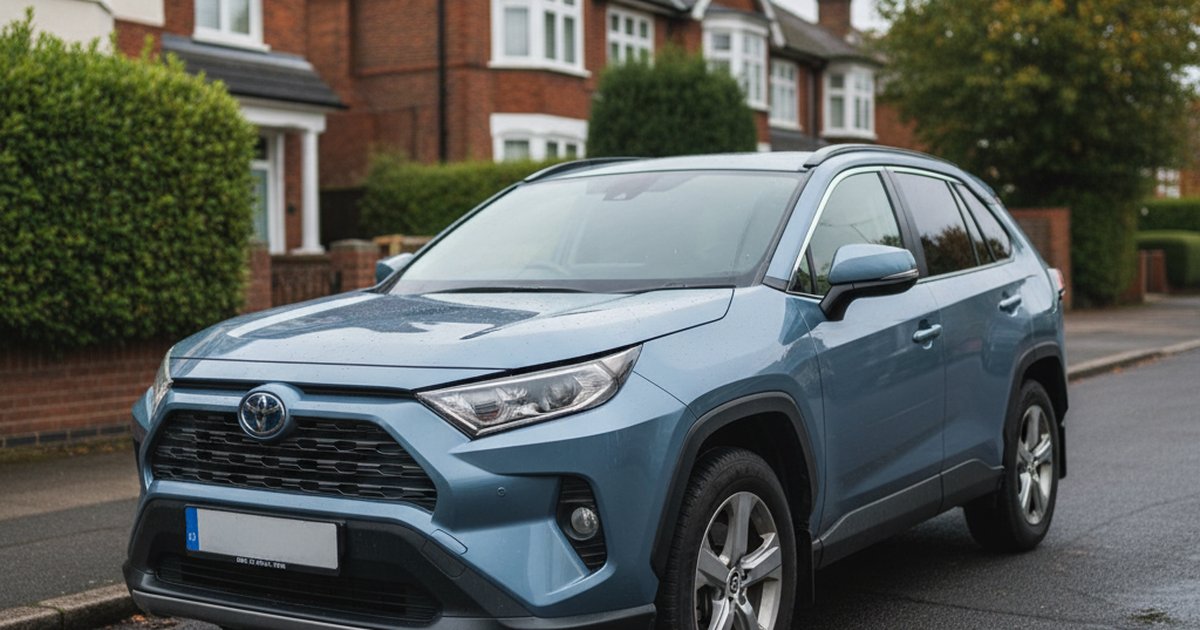
The Toyota RAV4 has become Britain's hybrid SUV of choice, but not all model years deliver the bulletproof reliability Toyota's reputation promises. We've analysed 467,815 MOT tests across 79,639 RAV4s to separate the genuinely dependable models from the ones you should leave on the forecourt.
The story the data tells is stark. The fourth-generation hybrid RAV4s from 2019 onwards are a different beast to the diesel-heavy third generation. While early diesels scrape through with pass rates in the low 80s and alarmingly high dangerous defect rates, the later hybrids sail through MOTs at over 92%. This is not a subtle difference.
What the data also reveals is a persistent tyre wear problem across every generation. Whether diesel, petrol or hybrid, RAV4s chew through tyres on the edges at rates far higher than comparable SUVs. Factor this into your running costs.
TL;DR: Buy a 2019-2022 hybrid RAV4 for 92.3% pass rates and minimal defects (0.6-0.7 per test). Avoid 2010-2015 diesels with dangerous defect rates hitting 38% and reliability scores languishing in the 650-730 range. The 2016-2018 hybrids occupy an awkward middle ground with lower reliability scores (516-565) despite decent pass rates.
What Makes the Hybrid RAV4s So Much More Reliable?
The shift to hybrid powertrains in 2016 marks a clear dividing line in RAV4 reliability. The 2019-2022 hybrid models average just 0.6 to 0.7 defects per MOT test compared to 1.7-1.8 defects on the 2010-2013 diesels. That's not incremental improvement, it's a different engineering philosophy.
The dangerous defect rate tells an even sharper story. Those 2010-2011 diesels show dangerous defects on 35-38% of vehicles at some point in their MOT history. By 2019, the hybrid RAV4 has brought this down to 7.5%, and by 2022 it's just 1.3%. The DVSA MOT data shows this is far better than the SUV class average.
Simpler hybrid systems mean fewer things break. No turbochargers to clog, no dual-mass flywheels to fail, no diesel particulate filters to throw tantrums. The hybrid RAV4 uses a naturally aspirated petrol engine paired with electric motors. Conventional wisdom says more complexity equals more problems, but Toyota's hybrid tech has been battle-tested since the Prius arrived in 1997. It works.
Key point: Annual mileage patterns support the reliability story. The 2019 hybrids average 8,370 miles per year compared to 6,931 miles for the 2010 diesels. Owners who depend on their cars daily choose the hybrids and drive them harder without consequence.
Which Diesel RAV4 Years Should You Avoid?
Every diesel RAV4 from 2010 to 2018 carries significant risk. The 2015 diesel stands out as particularly problematic with a reliability score of just 659 despite being one of the newest third-generation models. Nearly a quarter of all MOT tests on 2015 diesels flag tyres below the legal limit, and 15% need brake pads.
The 2012 diesel shift is the highest-volume disaster in the dataset with 19,018 tests across 1,524 vehicles. These cars currently sit at around 93,600 miles and they're falling apart. Reliability score of 674, pass rate of 83.4%, and that persistent 37.2% dangerous defect rate. Suspension bushes fail at 13.7% of tests. This is not a car ageing gracefully.
What about the later diesels? The 2017-2018 models show marginal improvements but you're still looking at dangerous defect rates above 15% and reliability scores in the 598-640 range. Compare that to a 2017 hybrid at 521 (admittedly lower than ideal but with better MOT outcomes where it matters) and the choice becomes obvious.
The fundamental problem is these diesels were built for high mileage fleet work but UK buyers use them for school runs. At 6,700-8,300 miles per year, diesel particulate filters never regenerate properly. Short journeys kill diesels. The MOT data proves it.
What Are the Best Hybrid RAV4 Years to Buy?
The 2019 hybrid is the sweet spot. Pass rate of 92.3%, just 0.7 defects per test, dangerous defect rate of only 7.5%, and 9,411 vehicles in the dataset giving you plenty of choice on the used market. These cars currently show around 47,300 miles and owners are covering 8,370 miles annually. They're being used properly and holding up brilliantly.
The 2020 and 2021 hybrids maintain nearly identical performance (92.3% and 92.5% pass rates respectively) with even lower dangerous defect rates as the cars age into their first MOTs. The 2021 model drops to just 3.0% dangerous defects. This is What Car? award-winning reliability in action.
The 2022 models show the best first MOT pass rate at 94.6%, though the reliability score of 669 sits higher than the 2019-2021 models (613-628 range) due to the limited test history. Give these another year and the scores will normalise downward, which counterintuitively is good as reliability scoring accounts for vehicle age.
Tyre warning: Even these excellent hybrids destroy tyres. The 2019 model flags tyre issues on 23.1% of tests. Budget £600-800 annually for rubber if you're covering typical mileage. The RAV4's weight (1,650-1,700kg depending on spec) and torque delivery wear edges aggressively.
Why Do 2016-2018 Hybrids Show Lower Reliability Scores?
The data shows a peculiar anomaly. The 2016-2018 hybrid RAV4s score between 516 and 565 for reliability despite posting respectable pass rates (88.0-88.4%). This seems to contradict the narrative that hybrids are categorically better.
The explanation lies in suspension issues specific to these model years. The data flags 'suspension arm pin or bush worn but not resulting in excessive movement' on trailing arms at rates of 14.7-15.1% of tests. This is a known weak point on early fourth-generation RAV4s that Toyota appears to have addressed by 2019.
These cars also show higher tyre wear even by RAV4 standards. The 2016 hybrid flags tyre issues on 24.0% of tests versus 23.1% for the 2019 model. Small difference, but at this volume it indicates the original suspension geometry was suboptimal.
Should you avoid 2016-2018 hybrids entirely? No. An 88% pass rate still beats most of the competition. But if you're choosing between a 2018 hybrid and a 2019 hybrid at similar money, the data says take the 2019. You'll spend less time at the MOT centre and the tyre shop.
Are Petrol-Only RAV4s a Viable Option?
The non-hybrid petrol RAV4s are rare birds in this dataset but they perform surprisingly well when you find them. The 2012 petrol posts an 87.3% pass rate with a reliability score of 794, the highest in the entire dataset. Just 1.3 defects per test and a 22.2% dangerous defect rate half that of the equivalent diesel.
These petrol models sit at lower mileages (70,390 currently for 2012 examples) and get driven gently at just 5,479 miles per year. They're clearly second cars or lifestyle purchases rather than workhorses. This usage pattern massively favours reliability.
The 2014 and 2016 petrols continue this trend with reliability scores above 710 and pass rates touching 90%. If you can find one at the right price and you don't need hybrid economy, they're solid purchases. The problem is supply. Just 212 of the 2012 models in our dataset versus 1,524 diesels. You'll struggle to find one locally.
Later petrols (2018-2019) show lower reliability scores in the 527-587 range, likely due to limited test history rather than actual problems. The pass rates remain strong at 87-89%. These are perfectly acceptable cars being dragged down statistically by low sample sizes.
What Actually Fails on RAV4 MOT Tests?
Tyres dominate the failure list across every model year without exception. Between 12.1% and 24.9% of all MOT tests flag tyres worn close to the legal limit or wearing unevenly on the edges. This is the RAV4's Achilles heel.
The pattern is consistent: heavy vehicle, powerful torque delivery (especially on hybrids), and suspension geometry that loads the tyre edges. Owners who don't rotate tyres religiously or check pressures monthly will get caught. The RAC breakdown data confirms this is a common callout for RAV4 owners.
Brake pads feature heavily, particularly on diesels where 10-15% of tests need them. The hybrids use regenerative braking which extends pad life, but you'll still see brake warnings on 5-15% of tests depending on model year. Budget for pads every other MOT.
Suspension bushes are the third major item. Trailing arm bushes on the 2016-2018 hybrids fail at 14-15% of tests. The 2013-2015 diesels show swinging arm bush wear at similar rates. These are £200-400 jobs at an independent garage, more at a main dealer. Not catastrophic but factor it in when you're negotiating price on a used example.
The good news: no endemic failures. No head gaskets, no turbocharger replacements, no dual-mass flywheel carnage. The RAV4's problems are all routine maintenance items you can see coming. This is why the hybrid models score so well overall despite the tyre issue.
What Mileage Should You Expect on a Used RAV4?
Current median mileages drop predictably with model year, but the annual mileage patterns tell a more interesting story. The diesels get driven hardest at 7,700-8,300 miles per year, which makes sense as they were bought by people who thought they needed a diesel for long journeys but actually do the school run.
The hybrids from 2019-2022 sit at 8,100-8,400 miles annually, slightly higher than the diesels. These are cars being used as intended: daily drivers covering typical family mileage without fuss. The owners trust them enough to rack up miles.
The petrol models tell a different story entirely. Annual mileage ranges from 5,479 to 6,710 miles depending on year. These are genuinely low-use vehicles, probably owned by people who wanted a RAV4 specifically rather than any old SUV and were prepared to accept worse fuel economy for better reliability.
For a 2019 hybrid, you should expect to see 45,000-50,000 miles now (late 2024/early 2025). Anything under 40,000 suggests limited use which isn't necessarily good for a hybrid battery. Anything over 60,000 is high but not problematic if the service history is complete. The MOT data shows these cars handle mileage better than their diesel predecessors.
Found a year you like? A good year still hides a clocked odometer, outstanding finance or a past write-off. Before you hand over any money, check the exact Toyota RAV4.
Frequently asked questions
What is the most reliable Toyota RAV4 year in the UK?
The 2012 petrol RAV4 scores highest at 794/1000 for reliability, but the 2019-2021 hybrids offer better real-world dependability with 92.3% pass rates, just 0.6-0.7 defects per test, and dangerous defect rates under 8%. The 2019 hybrid is the best buy for most people.
Should I avoid diesel RAV4 models?
Yes. Diesel RAV4s from 2010-2018 show dangerous defect rates of 15-38% and reliability scores between 598-730. UK buyers typically cover 6,700-8,300 miles annually, which causes DPF problems. The hybrids are categorically better.
Why do RAV4s fail MOTs on tyres so often?
The RAV4's 1,650-1,700kg weight and suspension geometry cause aggressive edge wear. Across all model years, 12-25% of MOT tests flag tyre issues. Budget £600-800 annually for replacements and rotate tyres every 6,000 miles to extend life.
What mileage is too high for a used RAV4 hybrid?
The 2019 hybrids in our dataset average 47,300 miles currently with owners covering 8,370 miles per year. A 2019 model with under 60,000 miles and full service history is fine. The MOT data shows these hybrids handle higher mileages better than earlier diesels.
Are 2016-2018 RAV4 hybrids worth buying?
They're acceptable but not ideal. Reliability scores of 516-565 reflect suspension bush problems affecting 14-15% of tests. Pass rates of 88% are decent but the 2019 onwards models solve these issues and post 92%+ pass rates for similar money on the used market.
Our Verdict
The RAV4's reputation for reliability is deserved, but only if you buy the right generation. The MOT data from 467,815 tests makes the choice clear: go hybrid, go 2019 onwards, and budget for tyres. Everything else is detail.
Before you commit to any used RAV4, run a PlateInsight check. Our database pulls live MOT history, mileage validation, and spec confirmation so you know exactly what you're buying. New users get 5 free vehicle checks. Use them wisely.
You might also like
Check Any Vehicle's Full History
MOT results, mileage timeline, AI health score, and market valuations. New users get 5 free credits.