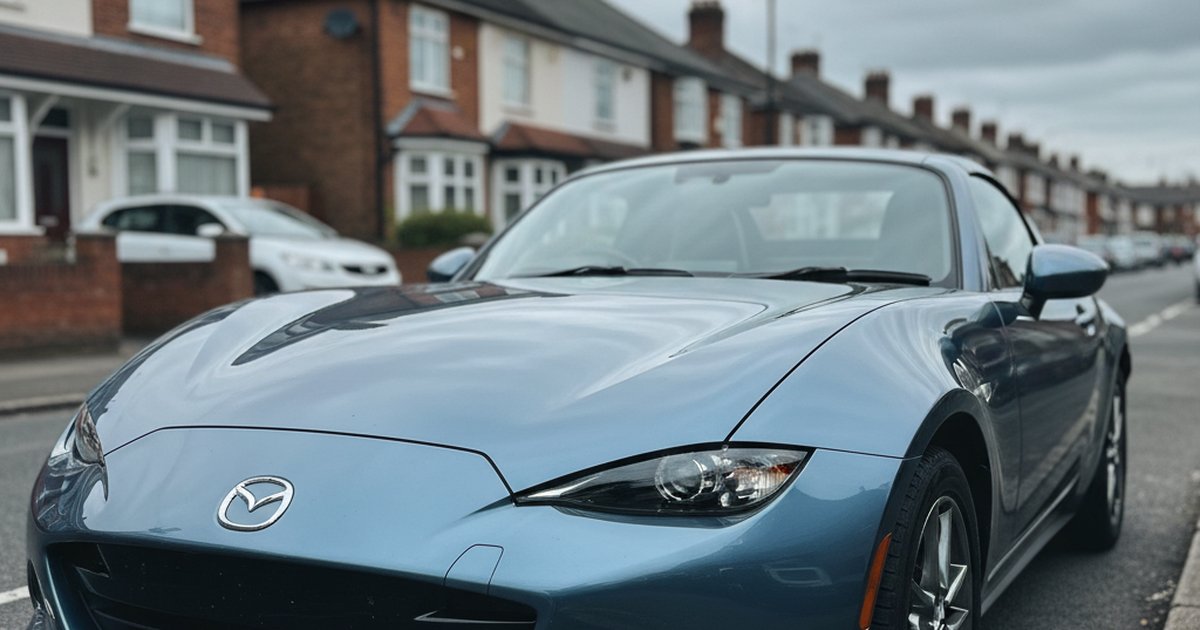
The Mazda MX-5 has survived every other affordable sports car because it's simple, light, and fun. But can a roadster with the roof down really be dependable? We've analysed 362,089 MOT tests across 38,615 MX-5s to find out whether this icon of affordable performance holds up to real-world ownership.
The data reveals something unexpected: MX-5 owners barely drive them. Annual mileage averages just 3,500 miles across all generations. These are weekend toys, not daily drivers. That gentle use translates into surprisingly strong MOT pass rates, though there are specific issues you need to know about - particularly around tyres and brake discs.
We're comparing the NC generation (2006-2015) against the ND (2015-present) to see whether Mazda's lighter, more modern take on the formula is actually more reliable than the older car.
TL;DR: MX-5s pass their MOTs at rates between 84-95% depending on age, with newer ND models performing better. All generations suffer from tyre perishing due to low annual mileage (around 3,500 miles/year) and brake disc wear. The 2017-2019 ND models hit the sweet spot for reliability before post-2020 examples show early tyre bulging issues.
NC vs ND: Which Generation Is More Reliable?
The third-generation NC MX-5 (2006-2015) shows pass rates climbing from 83.9% for 2010 models to 89.7% for the final 2015 cars. The fourth-generation ND (2015-present) starts at 89.7% and rises to 94.6% for 2021 models. On paper, the newer car is more reliable.
But dig deeper and you'll find the ND's advantage isn't as clear-cut as those numbers suggest. First MOT pass rates tell a different story: NC models from 2011-2013 achieved 93.3% first-time passes, while equivalent-age ND cars from 2017-2019 managed 93.7-94.9%. The improvement is marginal.
Ownership profile matters more than engineering: Both generations are driven gently - NC averages 3,460 miles/year, ND sits at 3,650 miles/year. These low mileages mean neither generation gets thrashed, which explains why both perform well despite being rear-wheel-drive sports cars.
The ND does show one clear advantage: dangerous defect rates drop from 24-28% on NC models to 12-20% on early ND cars, falling to just 8% by 2019. Mazda improved build quality and safety compliance with the newer chassis, even if absolute reliability scores remain similar.
Where the ND falls down is post-2020. The 2020 and 2022 models show reliability scores of 616/1000, lower than any NC generation. Tyre bulging appears in over 20% of 2020 MOT tests - a specific issue we'll address later. If you want an ND, buy pre-2020.
What Actually Fails on an MX-5?
Every generation, every year, every model shows the same top three defects: tyres, tyres, and brake discs. This isn't coincidence - it's the consequence of owning a lightweight sports car that sits in the garage for weeks at a time.
Tyre perishing affects 9-24% of all MOT tests depending on model year. The rubber degrades from age, not use. When you're averaging 3,500 miles annually, tyres reach five or six years old with plenty of tread left but cracked sidewalls. The AA recommends replacing tyres over six years old regardless of tread depth, and MX-5 data proves why.
Brake discs appear in 8-16% of tests across all years. Again, this is a low-mileage issue. Discs corrode when the car sits unused, especially in the British climate. Surface rust scores the disc face, creating the 'worn, pitted or scored' advisory you'll see on older MX-5 MOT histories.
The 2019-2020 ND models show an alarming spike in tyre bulging (17-22% of tests) caused by sidewall separation. This appears to be a specific batch issue with OEM-fitted tyres rather than a chassis problem, but it's expensive to fix and a safety concern. Check any 2019-2020 MX-5 for recent tyre replacement before buying.
What's missing from this list? Engine problems, gearbox failures, electrical gremlins. The MX-5 drivetrain is bulletproof. Your money goes on consumables, not catastrophic repairs.
Which Years Should You Avoid?
Three model years stand out for the wrong reasons: 2014, 2018, and 2020-2022. All show reliability scores in the 616-642 range, well below the 650+ you'll find elsewhere in the MX-5 range.
The 2014 NC model scores just 642/1000 despite a respectable 88.1% pass rate. Defects per test match other NC years at 1.2, but the dangerous defect rate sits at 24.5%. This is the final year of NC production, and quality control appears to have slipped as Mazda transitioned to the ND platform.
The 2018 ND drops to 620/1000 - the lowest score of any MX-5 in our dataset. Tyre perishing affects 18.5% of tests, higher than any other year. These early ND cars are now hitting 5-6 years old, and if they're still on original tyres (likely given the low annual mileage), you're looking at immediate replacement costs.
Post-2020 quality concerns: The 2020 and 2022 models score 616/1000 despite being nearly new cars. Sample sizes are smaller (599 and 422 tests respectively), but the tyre bulging issue is real and affects over 20% of 2020 examples.
Buy a 2015-2017 ND instead. The 2016 model achieves 663/1000 with a 90.5% pass rate and just 18.5% dangerous defects - the best balance of performance and dependability in the ND range. For NC buyers, 2012-2013 cars offer 93.3% first MOT pass rates before age-related issues accumulate.
Does Low Mileage Help or Hurt?
MX-5s aren't daily drivers. Current mileage drops from 59,272 on 2010 models to just 13,427 on 2022 cars - lower than almost any other sports car. Annual mileage across all years averages 3,400-4,200 miles. That's barely 80 miles a week.
Conventional wisdom says low mileage preserves a car. The MX-5 proves otherwise. Those long periods of inactivity cause more problems than they prevent.
Tyres perish rather than wear out. Brake discs corrode between uses. Seals dry out. Fluids degrade. The RAC notes that cars driven infrequently often develop more problems than those used regularly, and our MOT data confirms it. The average MX-5 picks up 1.0-1.3 defects per test despite low miles - comparable to much higher-mileage mainstream cars.
There's a sweet spot around 5,000-7,000 miles annually. Cars driven this much get regular use without being thrashed. Below 3,000 miles/year and you're looking at storage-related deterioration. The 2010-2013 NC models averaging 3,400-3,650 miles show higher dangerous defect rates (24-28%) than you'd expect for cars with under 60,000 total miles.
When buying a used MX-5, prioritise service history and recent use over low mileage. A 50,000-mile car driven 7,000 miles annually will be in better condition than a 30,000-mile garage queen averaging 2,000 miles a year.
Are MX-5s Expensive to Maintain?
The good news: mechanical problems are rare. The bad news: you'll spend money on consumables.
Tyres need replacing every 4-6 years regardless of tread depth due to perishing. Four decent tyres for an MX-5 cost £300-400. Brake discs wear and corrode faster than harder-driven cars because they don't get hot enough to burn off surface rust. Front discs cost £80-150 for aftermarket parts, plus labour.
These aren't catastrophic costs, but they're unavoidable. Every MX-5 in our dataset shows tyre and brake issues as the dominant failure modes. Budget £500-700 annually for maintenance even if you're barely driving the car - most of that will be consumables, not repairs.
The MX-5's simplicity works in your favour elsewhere. No complex electronics, no turbos, no dual-clutch gearboxes. The naturally aspirated engines (1.8 and 2.0-litre in NC, 1.5 and 2.0-litre in ND) are understressed and reliable. Gearbox problems are almost non-existent in our MOT data.
Service intervals are every 12 months or 12,500 miles, whichever comes first. For most MX-5 owners, that's annual servicing. Mazda dealer labour isn't cheap, but independent specialists are plentiful and experienced with these cars. Expect £200-300 for a standard service, £400-500 if you need brake fluid and coolant changes.
Compared to other sports cars, the MX-5 is cheap to run. Compared to a Fiesta, it's expensive - because age matters more than mileage.
What About Rust and Structural Issues?
MOT advisories for corrosion appear less frequently than you'd expect on a roadster. The NC generation shows some underbody rust on 2010-2012 models, but it's not endemic. The ND uses more advanced corrosion protection and shows even fewer rust-related failures.
Where you do see structural issues is around the rear wheelarches and sills on NC cars over ten years old. This isn't catastrophic - it's advisory-level surface corrosion rather than structural failure. The gov.uk MOT checker will show you specific advisory notes for any car you're considering.
The soft-top mechanism is robust. Failed roof motors appear in fewer than 1% of MOT tests, and most issues are drainage-related rather than mechanical. Clear the drain tubes annually and the roof will outlast the rest of the car.
Suspension bushes deteriorate with age, showing up as advisories on 2010-2013 NC models. This is wear, not design failure, and replacement costs £200-400 depending on which bushes need changing. The ND suspension uses better materials and shows fewer advisory notes for bush wear even on 2015-2017 cars.
The key point: MX-5s don't rot away like older Japanese roadsters. Mazda learned from the original MX-5's rust reputation and engineered both NC and ND generations to resist corrosion. You'll get advisories, but you're unlikely to face welding bills.
Found a year you like? A good year still hides a clocked odometer, outstanding finance or a past write-off. Before you hand over any money, check the exact Mazda MX-5.
Frequently asked questions
Is the Mazda MX-5 a reliable sports car?
Yes, with caveats. MX-5s achieve 84-95% MOT pass rates depending on age, better than most sports cars. However, low annual mileage (3,400-4,200 miles/year) causes tyre perishing and brake disc corrosion. Mechanical reliability is excellent, but consumable costs are higher than mileage alone would suggest.
Which is more reliable, NC or ND MX-5?
The ND generation shows marginally better reliability with pass rates of 89-95% versus 84-90% for NC models. Dangerous defect rates drop from 24-28% (NC) to 8-20% (ND). However, post-2020 ND models show quality concerns with reliability scores of 616/1000, so buy 2015-2019 ND or 2012-2013 NC.
What are common MX-5 MOT failures?
Tyre perishing (9-24% of tests), tyre wear (10-15% of tests), and brake disc corrosion (8-16% of tests) dominate all model years. These are age-related consumable issues, not mechanical failures. Engine and gearbox problems are rare across 362,089 MOT tests analysed.
Should I buy a low-mileage MX-5?
Low mileage helps less than you'd think. MX-5s averaging under 3,000 miles/year develop storage-related problems like tyre perishing and brake corrosion. Look for cars driven 5,000-7,000 miles annually with regular service history rather than garage-kept examples with ultra-low miles.
Are 2019-2020 MX-5s reliable?
The 2019 ND shows 631/1000 reliability with 93% pass rate - acceptable but not exceptional. The 2020 model drops to 616/1000 with tyre bulging affecting 21.9% of tests, suggesting OEM tyre quality issues. Check any 2019-2020 MX-5 for recent tyre replacement before buying.
Our Verdict
The MX-5 proves a sports car can be dependable if you accept that age matters more than mileage. Buy a 2015-2017 ND for the best balance of modern refinement and proven reliability, or save money with a 2012-2013 NC if you're comfortable with slightly higher consumable costs.
Check any used MX-5's complete MOT history with PlateInsight before buying. Our database covers 362,089 tests across 38,615 vehicles, giving you the full story of how the previous owner treated the car. You get 5 free vehicle checks to see exact failure reasons, advisory notes, and mileage progression. Use them to avoid problem cars and find the well-maintained examples that will actually deliver the reliability these numbers promise.
You might also like
Check Any Vehicle's Full History
MOT results, mileage timeline, AI health score, and market valuations. New users get 5 free credits.