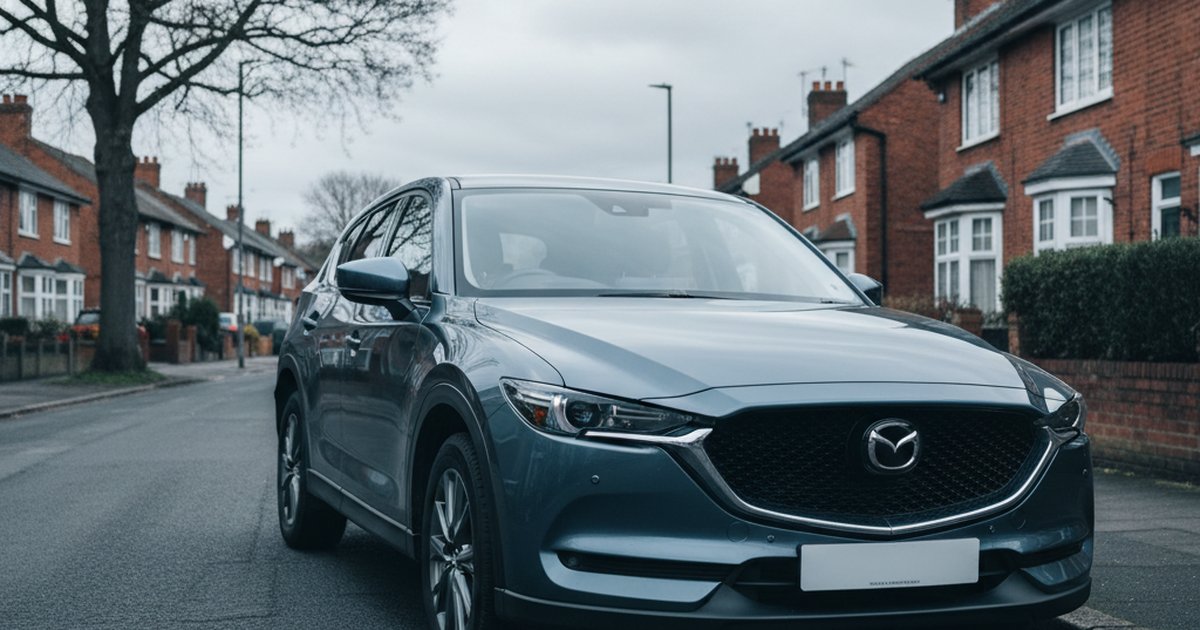
The Mazda CX-5 has carved out a solid reputation in the compact SUV sector, but not all model years deliver the same dependability. We've analysed 461,173 MOT tests covering 60,363 vehicles to answer the question every used buyer asks: which years actually hold up?
The short answer: petrol models from 2017-2018 lead the pack, while certain diesel years show concerning defect patterns. But the story gets more interesting when you dig into what actually fails and why. Most CX-5s rack up around 7,000-8,000 miles annually, suggesting they're bought for family duties rather than hardcore commuting. That modest use helps explain the generally strong MOT performance, though some years benefit more than others.
TL;DR: 2017-2018 petrol CX-5s deliver the strongest reliability with 88.6-89.3% pass rates and fewer defects per test (1.2-1.3). Avoid 2015-2016 diesels which score just 587-600/1000 and show persistent suspension wear. First-generation petrols (2012-2014) surprise with 81.7-84.8% pass rates despite age.
Which Fuel Type Wins: Petrol or Diesel?
The petrol versus diesel debate tilts decisively towards petrol across most model years. Look at 2017: petrol achieves 88.6% pass rate with a reliability score of 632/1000, while diesel manages 87.4% with 610/1000. The gap widens further in 2018, where petrol hits 89.3% versus diesel's 87.5%.
What's driving this difference? Petrol models average 1.2-1.3 defects per test in these peak years, compared to 1.4-1.5 for diesels. The diesel variants also show higher rates of dangerous defects throughout their lifespan. By 2016, diesel CX-5s were flagging dangerous issues in 32.8% of tests, while petrol stayed at 31.6%.
There's a mileage story here too. Diesel owners clock higher annual distances, particularly visible in 2019 where diesel averages 9,004 miles yearly versus petrol's 7,344. Higher use means more wear, and the MOT data proves it. Brake discs and pads wear faster on diesels, appearing as top defects more frequently.
Ownership insight: Petrol CX-5s consistently deliver 1-2% better pass rates than equivalent diesel years, with fewer serious defects. Unless you genuinely need diesel's fuel economy for high mileage, petrol is the safer bet.
Which Years Should You Avoid?
The 2015-2016 diesel window represents the CX-5's weakest period. The 2015 diesel scores just 600/1000 for reliability, the lowest in the entire dataset. Its 83.8% pass rate looks acceptable until you realise that's matched by 2012 models with five more years of wear. The 2016 diesel barely improves at 587/1000.
What's failing? Suspension bushes dominate the defect lists. On 2015 diesels, anti-roll bar linkage issues appear in 12.4% of tests, while brake components fail in 15.9%. By 2016, brake discs join the party at 13.1% of tests. The dangerous defect rate sits stubbornly above 32% for both years.
These aren't catastrophic failures, but they represent expensive MOT prep work. Replacing suspension bushes and brake components adds up quickly, particularly at main dealer prices. Given that similar-age petrols perform better, there's no compelling reason to choose these diesel years.
The 2021 petrol deserves mention too, though for different reasons. With only 122 tests from 51 vehicles, the sample size is too small to trust. Its 556/1000 reliability score looks alarming, but represents normal first-MOT jitters rather than fundamental problems. Wait another year or two before judging this cohort.
Which Early Models Still Perform Well?
Here's where the CX-5 earns respect: the 2012-2014 petrols refuse to die gracefully. A 2012 petrol with 97,596 miles showing still passes 81.7% of tests. The 2014 petrol pushes that to 84.8%, managing just 1.6 defects per test despite a decade of use.
Compare this to many mainstream rivals where first-generation models become money pits by year eight. The What Car? owner satisfaction surveys consistently rank Mazda above average for build quality, and the MOT data confirms it. These early CX-5s wear their age better than expected.
The trick is understanding what does wear out. Tyres appear in 20-24% of tests across all early years, but that's routine maintenance. Suspension bushes need attention around the 100,000-mile mark, but they're predictable and not wallet-crushing. Anti-roll bar linkages develop play, appearing in 14-19% of tests, but rarely cause failures.
First MOT pass rates tell the story clearly. The 2012 diesel hit 90.1% on its maiden test, dropping to 82.1% overall by 2024. That 8-point decline over 12 years is gentle degradation, not collapse. Plenty of models lose 15-20 points over similar periods.
What Actually Fails on MOT Tests?
Tyres dominate across every single model year, accounting for 19-28% of all defects. This isn't a CX-5 problem; it's an owner problem. People run tyres to the legal limit and beyond, then act surprised when the tester notices. The good news: tyres are consumables, not reliability indicators.
The more interesting pattern emerges in suspension wear. Early diesels (2012-2015) show anti-roll bar linkage issues in 12-19% of tests. Later models (2016 onwards) shift to rear suspension arm bushes and ball joints. This suggests Mazda addressed the anti-roll bar weakness but introduced new vulnerability in the rear suspension mounts.
Brake components represent the third consistent theme. Pads appear in 10-18% of tests across all years, while discs show up in 13-14% by the mid-teens. The pattern is more severe on diesels, where harder use and higher mileages accelerate wear. Nothing shocking here, but budget £300-400 for a full brake refresh around 60,000 miles.
The dangerous defect rates deserve attention. Early models (2012-2013) flag dangerous issues in 39-45% of tests. By 2020, this drops to 10-11%. Some of this reflects age, but it also shows Mazda's incremental improvements. Newer CX-5s simply have fewer components at risk of dangerous failure.
Where's the Sweet Spot for Buyers?
The 2017-2018 petrol models hit the reliability peak. They combine mature engineering with low enough mileages to avoid major wear. The 2017 petrol sits at 59,460 miles currently, achieving 88.6% pass rate with just 1.3 defects per test. That's genuinely impressive for a seven-year-old SUV.
The 2018 petrol pushes even harder: 89.3% pass rate, 1.2 defects per test, and dangerous issues in only 19.1% of tests. These represent the last pre-facelift models before Mazda updated the range, meaning you get proven reliability without paying the premium for the refreshed version.
Budget-conscious buyers should look at 2014 petrols. At 84.8% pass rate with 81,740 miles showing, they offer strong performance at lower prices. Yes, you'll face higher maintenance costs than newer examples, but the fundamental reliability remains solid. Just factor in suspension bush replacement and brake work in your first year of ownership.
Buying strategy: Target 2017-2018 petrols with 50,000-70,000 miles for the best balance of reliability and value. Service history matters more than mileage with these engines. A well-maintained 70,000-mile example beats a neglected 40,000-miler every time.
How Does Mileage Affect Long-Term Reliability?
The annual mileage figures reveal interesting ownership patterns. Diesel CX-5s from 2019 average 9,004 miles yearly, while equivalent petrols manage just 7,344. This 1,660-mile gap might seem small, but over five years it compounds to 8,300 extra miles of wear.
Higher mileage doesn't automatically mean poor reliability, but it does accelerate component wear. The data shows diesel models consistently rack up more brake and suspension defects, directly correlating with their higher use. By contrast, petrol models with their gentler duty cycles maintain better pass rates despite similar age.
Current mileage readings tell their own story. A 2016 diesel typically shows 80,285 miles, while the petrol equivalent sits at 65,152. That 15,000-mile difference represents an extra year of normal driving, which translates to earlier replacement of wear items. When you're buying used, these gaps matter for budgeting future maintenance.
The DVSA data available via gov.uk's MOT checker shows individual vehicle histories. Use this to verify claimed mileages and check for MOT failure patterns. A CX-5 that fails consistently on similar issues suggests neglected maintenance rather than fundamental unreliability.
Do Generation Differences Matter for Reliability?
Mazda refreshed the CX-5 significantly in 2017, though calling it a second generation stretches the definition. The changes brought improved interior quality and tweaked suspension geometry, but the core mechanicals evolved rather than revolutionised.
The MOT data reveals minimal reliability impact from the update. The 2016 petrol achieves 86.1% pass rate, while 2017 hits 88.6%. That's a 2.5-point improvement, but it comes with 6,000 fewer miles on average. Strip out the mileage difference and the generations perform similarly.
Where the refresh does help: dangerous defect rates drop noticeably. Pre-2017 models flag dangerous issues in 31-35% of tests. Post-2017 drops to 24-27%, and by 2020 it's down to 10-11%. This suggests better corrosion protection and more durable brake components, though it could also reflect lower average age.
The defects-per-test metric shows clearer improvement. First-generation models (2012-2016) average 1.5-1.8 issues per MOT. Refreshed versions (2017-2020) drop to 1.0-1.4. Mazda clearly refined the details, even if the fundamental architecture stayed constant. For buyers, this means less time spent fixing niggles on later cars.
What Should You Budget for Maintenance?
The defect patterns point to predictable maintenance costs. Every CX-5, regardless of year, needs tyres every 25,000-30,000 miles based on the wear rates shown. Budget £600-800 for four mid-range tyres.
Brake work hits around 60,000-70,000 miles for most examples. Discs and pads together cost £400-600 at independent specialists, more at main dealers. Diesel models need this work slightly earlier due to higher mileages and harder use.
Suspension bushes become relevant on higher-mileage examples, particularly 2012-2015 models. Anti-roll bar linkages cost £150-250 per corner including labour. Rear suspension arm bushes run £300-400 for both sides. Not crippling, but not trivial either.
The RAC breakdown data suggests CX-5s remain mechanically sound between MOTs, with most failures involving batteries or minor electrical issues rather than major component breakdowns. This aligns with the MOT evidence: the car wears gradually rather than failing catastrophically.
Factor £600-800 annually for maintenance and MOT prep on models over five years old. Newer examples (2018-2020) might manage £400-500. These figures assume independent garage rates and exclude major repairs like clutches or turbos, which remain rare according to the data.
Found a year you like? A good year still hides a clocked odometer, outstanding finance or a past write-off. Before you hand over any money, check the exact Mazda CX-5.
Frequently asked questions
Are Mazda CX-5 diesels less reliable than petrols?
Yes, consistently. Petrol models deliver 1-2% better pass rates across equivalent years, with fewer defects per test. Diesel variants show more brake and suspension wear due to higher average mileages (typically 1,000-2,000 miles more annually). The gap is most pronounced in 2015-2016 where diesels score 587-600/1000 compared to petrols at 623-689/1000.
Which Mazda CX-5 year has the best reliability?
2017-2018 petrol models lead with 88.6-89.3% pass rates and just 1.2-1.3 defects per test. These represent the mature first-generation engineering before significant age-related wear sets in. They currently average 50,000-60,000 miles, leaving plenty of usable life.
What are the most common MOT failures on a CX-5?
Tyres dominate at 19-28% of all defects across every year, though this reflects poor owner maintenance rather than vehicle fault. Genuine reliability issues centre on suspension bushes (12-19% of tests on early models) and brake components (10-18%). Anti-roll bar linkages need attention on 2012-2015 models particularly.
Is a high-mileage CX-5 worth buying?
Yes, if service history is comprehensive. The data shows 2012 petrols with 97,000+ miles still achieving 81.7% pass rates. The car wears gradually rather than failing catastrophically. Budget for suspension bush replacement and brake work on anything above 80,000 miles, but the fundamental reliability holds.
How does the 2017 facelift affect reliability?
Modestly. Pass rates improve 2.5% from 2016 to 2017, though lower mileages account for some of this. The bigger gain is in dangerous defect rates, which drop from 31-35% pre-2017 to 24-27% after. Defects per test also fall from 1.5-1.8 to 1.0-1.4, suggesting better detail engineering.
Our Verdict
The Mazda CX-5 delivers exactly what its reputation promises: steady, unglamorous reliability without drama. The 2017-2018 petrols represent the peak of this dependability, while diesel buyers should be more selective about model years. Early examples remain viable if you accept higher maintenance costs as the trade-off for lower purchase prices.
Before committing to any CX-5, check its complete MOT history using PlateInsight. Our database of 261 million records from the DVSA reveals the full story behind any registration. You get 5 free vehicle checks to verify mileage progression, identify recurring defects, and spot potential red flags. Because buying the right year matters, but buying the right specific car matters more.
You might also like
Check Any Vehicle's Full History
MOT results, mileage timeline, AI health score, and market valuations. New users get 5 free credits.