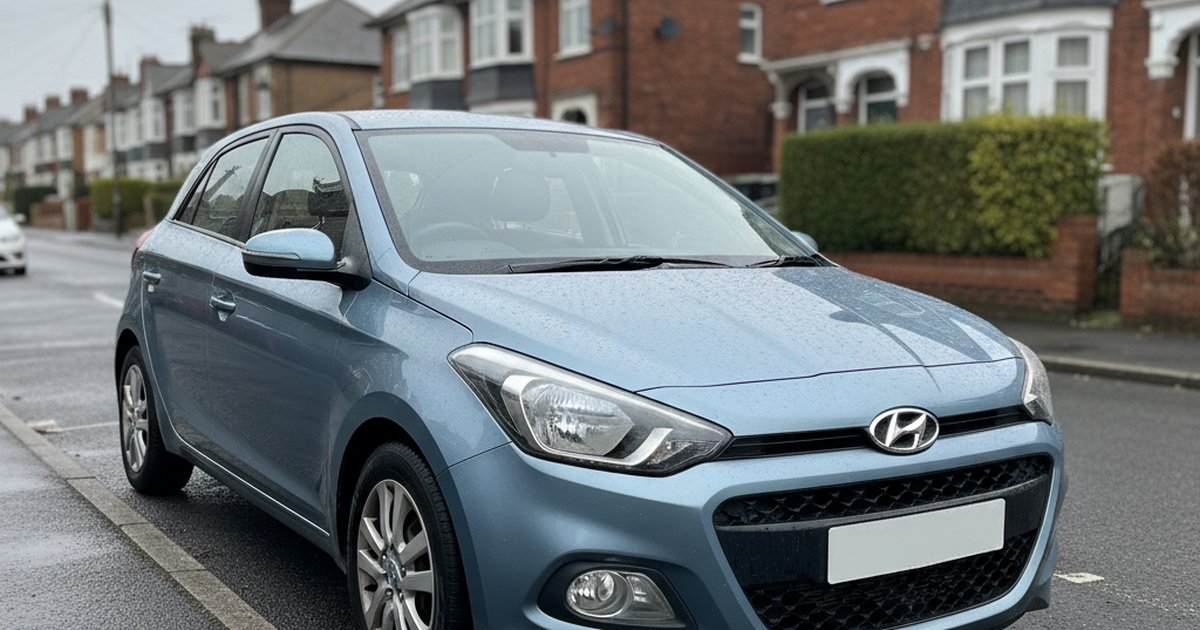
The Hyundai i20 is the supermini that sensible people buy when they want a Fiesta but can't face the Ford dealer experience. It's functional, well-equipped, and cheaper to insure than most rivals. But which year should you actually buy? We've analysed 1,234,802 MOT tests across 121,609 i20s to find out which model years hold up and which ones rot from underneath while you sleep.
The data reveals a clear winner: 2015 petrol models deliver a reliability score of 629 out of 1000, with an 86.2% MOT pass rate and just 1.2 defects per test. Compare that to the 2012 diesel at 361/1000, and you start to see why diesel i20s are best left for someone else to worry about. The gap between petrol and diesel reliability isn't subtle. It's a chasm.
TL;DR: Buy a 2015 or 2016 petrol i20 for the best reliability (629/1000 and 612/1000 respectively). Avoid early diesels (2010-2013) which score as low as 343/1000 and suffer dangerous defect rates above 46%. Annual mileage averages just 5,500 miles for petrols but over 7,500 for diesels, telling you exactly how these cars are used.
Should You Buy Petrol or Diesel?
Petrol. Next question.
Every single diesel i20 in our dataset scores lower than its petrol equivalent from the same year. The 2015 diesel manages a respectable 537/1000, but that's still 92 points behind the petrol. Earlier diesels are grim: the 2012 diesel scores 361/1000 against the petrol's 448/1000. The 2013 diesel collapses to 343/1000.
The dangerous defect rate tells the real story. Petrol i20s from 2010 show a 44.2% rate of vehicles with at least one dangerous defect flagged. That's high, but the diesel equivalent sits at 48.4%. By 2012, the diesel rate is 46.7% while petrols have dropped to 38.4%. This isn't marginal. It's structural.
Diesel i20 owners also drive harder. The median annual mileage across diesel models averages around 7,500 miles compared to 5,500 for petrols. These are higher-stress vehicles covering more ground, and the MOT data confirms they wear out faster. Unless you're doing 15,000 miles a year and need the fuel economy, there's no reason to buy a diesel i20.
Which Years Should You Avoid?
Steer clear of 2010-2013 models, particularly diesels. The 2010 diesel scores 432/1000 with a 73.4% pass rate and 2.3 defects per test. Brake pipe corrosion affects 14.8% of tests. The 2011 diesel drops to 395/1000, and by 2013 you're looking at 343/1000. These cars are now ancient in supermini terms, sitting at over 85,000 miles on average, and they're falling apart.
The 2012 petrol deserves special mention for all the wrong reasons. It scores just 448/1000, well below the 2011 petrol at 526/1000 and the 2013 at 447/1000. The first MOT pass rate drops to 86.9% from 91.2% the year before. Something changed in the 2012 model year, and owners have paid for it at every subsequent MOT.
Brake pipe corrosion: This is the i20's Achilles heel across all early models. Brake pipes corroded or covered in grease appear in 15-23% of MOT tests from 2010-2014. If you're buying an older i20, budget £300-500 for brake line replacement.
The dangerous defect rate on 2010-2012 models hovers between 38-48%. Nearly half of all early i20s have had a dangerous defect flagged at some point. That's not a quirk of the data. That's a fleet of aging cars with serious safety issues.
What Are the Best Years to Buy?
The 2015 petrol i20 is the sweet spot. Reliability score of 629/1000, pass rate of 86.2%, and just 1.2 defects per test. The dangerous defect rate drops to 28.2%, which is almost civilised by i20 standards. First MOT pass rate hits 90.9%, meaning these cars were genuinely reliable when new and have stayed that way. Current median mileage sits at 60,485 miles, leaving plenty of life if you're buying now.
The 2016 petrol runs it close at 612/1000 with an 86.9% pass rate and 1.1 defects per test. Dangerous defects fall further to 23.9%. These are the facelift models with better interior materials and updated infotainment, and the MOT data confirms the mechanical improvements weren't just marketing talk.
The 2014 petrol is worth considering if you want to save money. It scores 525/1000 with an 81.6% pass rate and 1.5 defects per test. That's a meaningful step up from 2013 (447/1000) and suggests Hyundai fixed whatever went wrong in 2012-2013. These are currently showing around 61,000 miles and represent decent value if the price is right.
Post-2017 models are expensive and haven't had enough MOT tests to build a complete reliability picture, but early signs are good. The 2019 petrol scores 575/1000 with a 90% pass rate and the lowest dangerous defect rate in the dataset at 10.4%. Annual mileage remains low at 5,882 miles, confirming these are gentle-use cars owned by sensible people who don't thrash superminis.
What Goes Wrong With the i20?
Tyres wear out. That's the headline. Across nearly every model year, 'tyre worn close to legal limit' appears in 14-30% of MOT tests. The i20 has light steering and a soft suspension setup that chews through front tyres if you don't rotate them. Budget £200 every 18 months for a pair of front tyres, or you'll be the person failing an MOT on tread depth.
Brake pipe corrosion dominates the 2010-2014 models. It's a CRITICAL defect, meaning the MOT tester has deemed it dangerous, and it affects 13-23% of tests depending on year and engine. This isn't just surface rust. These are brake lines that have corroded to the point where they're unsafe. According to the DVSA MOT history checker, brake pipe failure is one of the most common dangerous defects across all vehicle types, but the i20 seems particularly vulnerable.
Brake discs wear faster on diesels. The 2012 diesel sees brake disc issues in 11% of tests, and by 2014 it's 15% for discs in such condition they're seriously weakened. Diesels cover more miles and brake harder, and the i20's braking system isn't overbuilt. Factor in replacement discs and pads every 30,000 miles on a diesel, sooner if it's seen urban driving.
Tyre damage from perishing or cracking affects 10-26% of tests across all years, peaking on the 2019 models at 26.1%. This is what happens when you buy cheap tyres and leave a car parked outside. The i20's target buyer doesn't always run premium rubber, and it shows in the MOT data. Spend the extra £20 per tyre on Michelin or Continental, especially if you're buying a newer model.
How Much Do Owners Drive These Cars?
Not much. Petrol i20 owners average just 5,200-5,900 miles a year across all model years. This is a car bought for the school run, supermarket trips, and occasional motorway journeys. It's not a sales rep special or a courier van. That low annual mileage partly explains why even older petrols hold up reasonably well in the MOT data. They're not being thrashed.
Diesel owners tell a different story. Annual mileage sits at 6,900-10,000 miles depending on year, with the 2018 diesel hitting 10,038 miles per year. These are higher-mileage drivers who bought the diesel for fuel economy, and they've worked the cars harder. That shows up in lower reliability scores and higher defect rates across the board.
Current median mileage for a 2015 petrol sits at 60,485 miles. For a nine-year-old car, that's genuinely low. Compare it to a 2015 diesel at 83,477 miles, and you can see why the petrol scores 629/1000 while the diesel manages 537/1000. Less use means less wear. It's not complicated.
Is the Facelift Worth the Premium?
The 2015 facelift brought updated styling, a better dashboard, and improved build quality. The MOT data confirms the mechanical changes worked. Pre-facelift models (2012-2014) score 361-525/1000. Post-facelift petrols from 2015-2016 score 612-629/1000. That's not placebo. That's measurable improvement in reliability.
Dangerous defect rates drop from 38.4% on 2012 petrols to 28.2% on 2015 models, then down to 23.9% by 2016. Hyundai fixed the brake pipe corrosion issues, improved rust protection, and generally built a better car. The facelift isn't just cosmetic. It's structural.
You'll pay around £1,500-2,000 more for a 2015 model versus a 2013 equivalent at similar mileage. Given the reliability difference and lower maintenance costs, that premium pays for itself within two years. Unless you're on a strict budget, buy the facelift.
Found a year you like? A good year still hides a clocked odometer, outstanding finance or a past write-off. Before you hand over any money, check the exact Hyundai i20.
Frequently asked questions
What is the most reliable Hyundai i20 year?
The 2015 petrol i20 is the most reliable, scoring 629 out of 1000 with an 86.2% MOT pass rate and just 1.2 defects per test. It has the lowest maintenance burden and a dangerous defect rate of 28.2%, significantly better than earlier models.
Should I buy a diesel Hyundai i20?
No, unless you're doing over 15,000 miles a year. Every diesel i20 scores lower than its petrol equivalent, with reliability scores ranging from 343-537/1000 compared to 448-629/1000 for petrols. Diesel models also show higher dangerous defect rates and cover harder annual mileage.
What are common problems with the Hyundai i20?
Brake pipe corrosion affects 13-23% of MOT tests on 2010-2014 models. Tyre wear is universal, appearing in 14-30% of tests across all years. Brake disc wear is common on diesels, affecting 11-15% of tests. Budget for brake line replacement (£300-500) on older models.
How many miles do Hyundai i20 owners drive per year?
Petrol i20 owners average 5,200-5,900 miles annually, making these gentle-use cars. Diesel owners cover 6,900-10,000 miles per year, with 2018 diesel models averaging over 10,000 miles. The lower mileage on petrols contributes to their better reliability scores.
Is the 2015 Hyundai i20 facelift better than pre-facelift models?
Yes, significantly. The 2015 facelift scores 629/1000 compared to 448/1000 for the 2012 pre-facelift. Dangerous defect rates drop from 38.4% to 28.2%, and defects per test fall from 1.9 to 1.2. Hyundai fixed the brake pipe issues and improved build quality.
Our Verdict
The i20 is proof that Hyundai knows how to build a reliable supermini when it wants to. Buy a 2015-2016 petrol and you'll get a car that passes MOTs without drama, costs pennies to run, and won't embarrass you at traffic lights. Buy an early diesel or a 2012 petrol and you'll spend more on brake pipes than the car is worth. Check any potential purchase on the DVSA MOT history checker before handing over money, and use PlateInsight's 5 free credits to verify the MOT history and spot any recurring defects.
You might also like
Check Any Vehicle's Full History
MOT results, mileage timeline, AI health score, and market valuations. New users get 5 free credits.