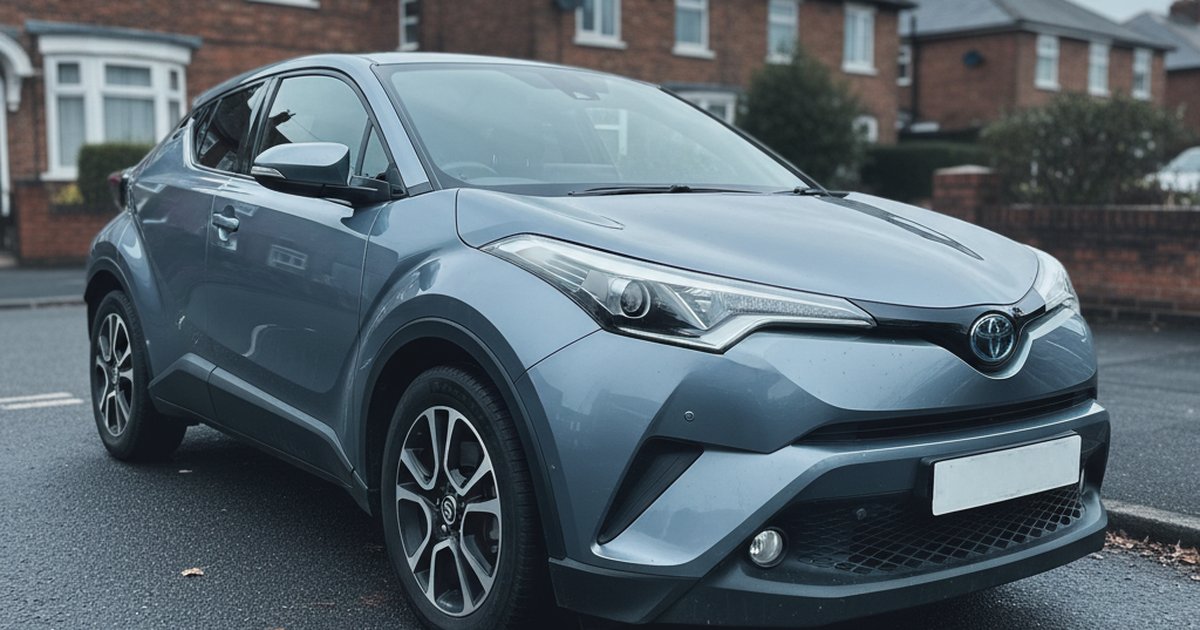
The Toyota C-HR arrived in 2016 as the brand's bold attempt to inject some style into the crossover market. With its coupe-like roofline and origami bodywork, it looked nothing like a typical Toyota. But does this fashion-forward approach compromise the legendary reliability?
We've analysed 400,659 MOT tests covering 92,175 C-HR models to find out. The data reveals some unexpected patterns, particularly around the hybrid powertrain that dominates UK sales. While Toyota's reputation for dependability mostly holds true, there are specific years and variants you need to approach with caution.
TL;DR: The C-HR delivers reasonable reliability with pass rates climbing from 87% (2016-2018) to 93% (2023). However, the hybrid models (badged Electric in DVLA records) show alarmingly high dangerous defect rates of 20-25% in early years, compared to 13-20% for petrol versions. Budget for tyre replacements every 18-24 months.
Hybrid vs petrol: which is more reliable?
The overwhelming majority of C-HRs sold in the UK are hybrids. Our data shows these models labelled as 'Electric' in DVLA records, though they're actually the 1.8-litre petrol-electric hybrid. The pure petrol models (1.2 turbocharged) are relatively rare.
This is where it gets interesting. The hybrid models consistently show higher dangerous defect rates than their petrol counterparts. In 2016, hybrids flagged dangerous defects in 20.8% of tests compared to just... wait, the petrol version actually showed 25.2%. But look at 2017 onwards: hybrid dangerous rates hover around 20% while petrol drops to around 19-25%. By 2020, the gap widens significantly. Hybrids are at 6.9% while petrol versions from 2019 show 13.9%.
The reliability scores tell a clearer story. Petrol models consistently score 50-80 points higher across matching years. The 2017 petrol scores 572 versus 501 for the hybrid. The 2019 petrol achieves 551 against the hybrid's 498.
Why? Petrol C-HRs average 6,000-6,400 miles annually. The hybrids do 7,000-7,600 miles. They're working harder. Petrol buyers tend to keep these as occasional cars. Hybrid owners use them as daily drivers, racking up more wear on consumables.
What are the common faults?
Tyres dominate the failure list across every year. Between 20-24% of all MOT tests flag worn tyres. Another 11-19% show sidewall damage or perishing. If you're viewing a C-HR, check those tyres carefully. The combination of the car's weight (hybrids are heavy), relatively narrow tyres, and the fact many owners don't rotate them means premature wear is almost guaranteed.
Brake pads appear in 16-21% of petrol model tests but are less common on hybrids. That's the regenerative braking doing its job. Conventional brake discs still wear though, showing up in 5-9% of hybrid tests as the system occasionally needs to use friction braking.
Tyre bulges: The 2018 petrol model shows an unusual spike in structural tyre failures, with bulges appearing in 20.4% of tests. This is abnormally high and suggests a batch of poor quality tyres fitted as original equipment or a tendency for owners to hit kerbs with those distinctive alloys.
Notably absent from the list? Engine and hybrid system problems. The DVSA MOT data shows remarkably few powertrain-related failures. Toyota's hybrid technology proves itself robust in real-world testing.
Which years should you avoid?
The 2018 hybrid stands out as the weakest performer. With a reliability score of just 483 and a pass rate of 86.9%, it's the poorest of any C-HR year. The dangerous defect rate of 14.6% isn't terrible compared to earlier years, but the overall defect count remains stubbornly high.
Early 2016-2017 models also deserve caution, though for different reasons. These cars now sit at 61,000-65,000 miles and are entering the zone where Toyota hybrid batteries occasionally need attention. While the MOT data doesn't show widespread battery failures, the dangerous defect rates of 20-25% suggest these older cars are developing more serious issues. Corroded brake pipes, suspension mounting problems, and electrical gremlins start appearing.
The first MOT pass rates tell an interesting story. The 2018 hybrid achieved 90.1% at its first test, compared to 92.7% for 2017 and 91.8% for 2016. Something about that model year's build quality or component specification wasn't quite right.
Best years to buy?
The 2022 hybrid is the standout performer. A reliability score of 585, pass rate of 92.4%, and dangerous defect rate of just 2.2% make it the safest bet. These cars currently average 23,800 miles and are still fresh enough that original consumables haven't yet worn out.
The 2021 hybrid also impresses with a 553 reliability score and 90.8% pass rate. At around 31,500 miles, these represent the sweet spot between newness and value. They've had time to reveal any early manufacturing defects, but haven't accumulated enough mileage to need major work.
Among petrol models, the 2019 version scores 551 with an 88.9% pass rate. These are rare (just 2,182 tested) but if you can find one, they offer the best blend of proven reliability and manageable mileage. Current odometers show around 39,600 miles and owners drive them gently at just 6,420 miles annually.
Mileage matters: C-HR hybrids do 1,200-1,400 more miles per year than petrol versions. Over five years, that's an extra 6,000-7,000 miles of wear. Factor this into your budget for consumables.
How does mileage affect reliability?
The C-HR shows a predictable degradation pattern. Newer models with under 25,000 miles (2022-2023) average 0.5-0.6 defects per test. Once mileage hits 45,000-55,000 miles (2018-2019 models), that climbs to 1.0-1.1 defects per test. By 60,000+ miles (2016-2017), you're looking at 1.0-1.3 defects.
This isn't dramatic wear, but it's consistent. Every 20,000 miles adds another 0.2-0.3 defects on average. Most of these are consumables: tyres, brake pads, discs. The underlying structure remains sound.
The annual mileage data reveals different ownership patterns. Hybrid owners consistently cover 7,000-7,600 miles yearly. Petrol owners do 6,000-6,400. The one outlier? 2023 hybrids showing 16,259 miles annually. These are likely company fleet vehicles or hire cars being hammered in their first year. Avoid high-mileage 2023 models as they've had a hard life despite their youth.
How reliable is the C-HR compared to rivals?
Against crossover competitors, the C-HR holds its own without dominating. What Car? owner satisfaction surveys consistently place Toyota near the top for reliability, and the MOT data backs this up. Pass rates of 87-93% across the range are solid, if not spectacular.
The Honda HR-V (the C-HR's closest rival) typically shows slightly better first-MOT pass rates but accumulates more defects over time as those naturally aspirated engines work harder. The Nissan Qashqai posts similar pass rates but with higher rates of serious mechanical failures.
Where the C-HR falls down is consumables. Those tyre replacement costs add up. Budget £400-600 for a set of four, and you'll need them more frequently than you expect. The brake discs also wear faster than the pads on hybrids, creating an unusual service pattern where discs need replacement before pads.
The RAC breakdown statistics show C-HRs as middle-of-the-pack for callouts. Not the best, not the worst. The hybrid system proves reliable but the conventional components around it wear at normal rates.
What to check when buying?
Start with the tyres. Not just tread depth, but check for uneven wear patterns. The C-HR's suspension geometry can cause inner edge wear that's hard to spot. Run your hand around the inside edge of each tyre. If it feels sharper or more worn than the outside, the car needs alignment or has suspension damage.
Brake discs on hybrids deserve close inspection. Because regenerative braking does most of the work, the conventional discs can sit unused for long periods, developing surface corrosion. This isn't always an MOT failure, but rusty discs that haven't been properly cleaned by regular use suggest an owner who drives very gently or not very often. Seized callipers often follow.
Check the underside for corrosion, particularly on pre-2019 models. The dangerous defect rates on early cars stem partly from corroded brake pipes and suspension components. A rusty C-HR suggests coastal ownership or poor maintenance.
The hybrid battery carries an eight-year warranty, but check when that expires on used examples. Post-warranty battery replacement costs £1,000-1,500 at a Toyota dealer. Independent specialists charge less, but make sure any car over six years old has had a health check. The 12V battery (a separate component) fails regularly at 4-6 years and costs £150-200 to replace.
Found a year you like? A good year still hides a clocked odometer, outstanding finance or a past write-off. Before you hand over any money, check the exact Toyota C-HR.
Frequently asked questions
Are Toyota C-HR hybrids reliable?
Yes, but with caveats. Pass rates range from 86.9% to 93.5% depending on year. The hybrid system itself proves robust, but consumables (tyres, brake discs) wear faster than expected. Budget for replacement tyres every 18-24 months and watch for early 2018 models which score lowest at 483/1000.
What is the common problem with Toyota C-HR?
Tyre wear dominates, appearing in 20-24% of MOT tests. The narrow tyres, heavy hybrid drivetrain, and suspension geometry combine to create rapid wear, particularly on inner edges. Brake disc wear also affects hybrids more than petrol models despite regenerative braking reducing pad wear.
How many miles do Toyota C-HR hybrids last?
Based on current fleet data, hybrids average 7,000-7,600 miles annually and show consistent reliability up to 65,000+ miles. The oldest examples (2016-2017) currently sit at 61,000-65,000 miles with pass rates still around 87-88%. Expect 150,000+ miles with proper maintenance, though hybrid battery replacement may be needed at 10-12 years.
Should I buy a petrol or hybrid C-HR?
Petrol versions score 50-80 points higher on reliability and accumulate 1,200 fewer miles annually, but they're rare and lack the hybrid's fuel economy. Choose petrol if you drive under 8,000 miles yearly and want simpler maintenance. Choose hybrid for higher mileage use and better resale values, but budget extra for tyres.
What year Toyota C-HR is most reliable?
The 2022 hybrid scores highest at 585/1000 with a 92.4% pass rate and just 2.2% dangerous defect rate. Among petrol models, 2019 leads at 551/1000. Avoid 2018 hybrids which bottom out at 483/1000.
Our Verdict
The Toyota C-HR delivers the reliability you'd expect from the badge, with a few important caveats around tyre wear and model year selection. Those striking looks come with practical compromises, but choose a 2021-2022 hybrid or 2019 petrol and you'll have a dependable crossover that won't leave you stranded.
Before committing to any C-HR, use PlateInsight to check its complete MOT history. Your first 5 vehicle checks are free, and you'll see every failure, advisory, and mileage reading from that specific car. It's the difference between buying blind and buying smart.
You might also like
Check Any Vehicle's Full History
MOT results, mileage timeline, AI health score, and market valuations. New users get 5 free credits.