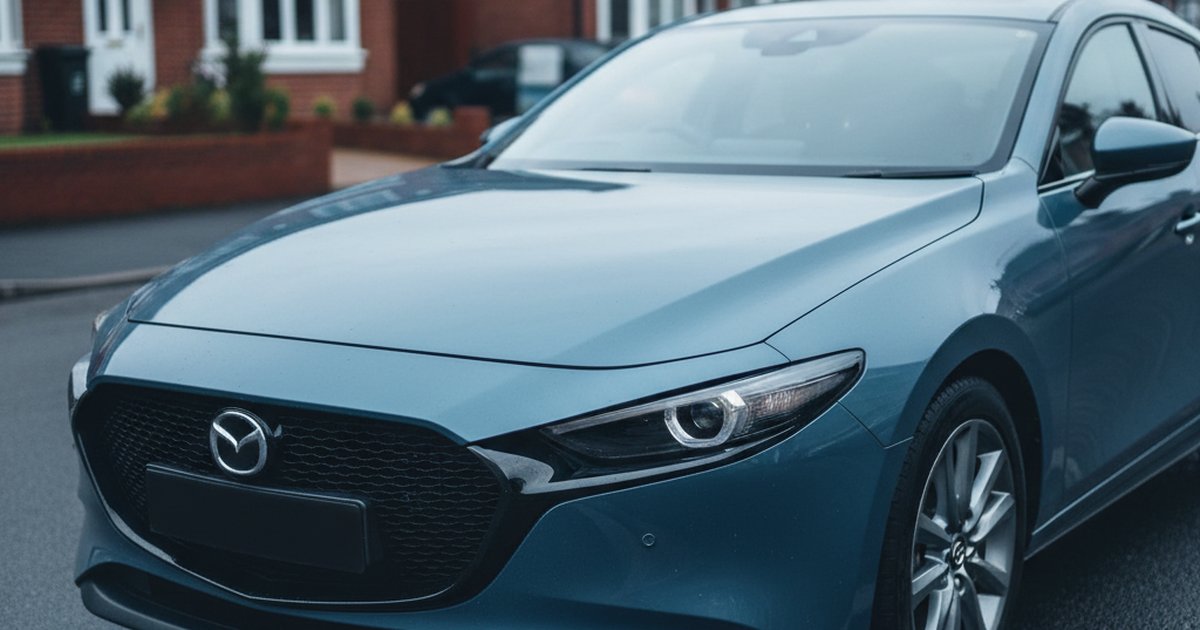
The Mazda 3 is one of those cars that serious drivers appreciate but the general public overlooks. While everyone queues for a Golf or a Focus, this Japanese hatchback quietly goes about delivering a sharper drive, better build quality, and, according to our analysis of 843,211 MOT tests across 90,232 vehicles, generally stronger reliability too.
But not all Mazda 3s are created equal. Our data, drawn from DVSA MOT records, reveals a clear reliability hierarchy across model years. Some vintages sail through MOTs with minimal fuss. Others develop expensive habits around suspension bushes, corroded brake pipes, and premature tyre wear. For used buyers, knowing which years to target, and which to swerve, can mean the difference between a brilliant bargain and a money pit.
TL;DR: The 2012-2013 petrol Mazda 3s are the sweet spot, combining strong pass rates (81-83%) with lower defect counts and excellent value. Avoid diesel versions entirely, they score 50-100 points lower on reliability, suffer worse corrosion, and cost more to fix. Post-2017 cars show cleaner MOT records but haven't aged enough to prove long-term durability.
Which Mazda 3 Years Are Most Reliable?
The 2012-2013 petrol models are the reliability champions. The 2013 petrol scores 656/1000, the highest in the entire dataset, and maintains an 83.4% pass rate despite an average age of over a decade. More tellingly, it averages just 1.6 defects per test, substantially lower than the 2.0-2.1 defects that plague the 2010-2011 cars.
The 2012 petrol isn't far behind at 651/1000. These cars benefit from Mazda's mid-generation quality improvements without the early teething issues of the 2010 launch year. They're also reaching the age where initial owners have moved on, meaning you can pick up well-maintained examples with full service histories at sensible prices.
The ownership profile matters: Mazda 3 owners average just 6,200-6,400 miles annually across most petrol years. These are gentle-use cars, often second vehicles or careful commuters. That low annual mileage partly explains why they age well, unlike fleet-hammered diesels covering 8,000+ miles per year.
The 2018-2019 petrols show promise with pass rates hitting 87.9% and 90.7% respectively, but they haven't endured enough winters yet. Corrosion and suspension wear typically emerge after year seven or eight. We're sceptical about declaring newer cars 'reliable' when they haven't faced the rust test.
Should You Avoid Mazda 3 Diesel Models?
Yes, categorically. Every single diesel year scores 50-100 points lower than its petrol equivalent. The 2016 diesel manages just 461/1000, the worst score in the entire dataset, while the 2016 petrol scores a respectable 502/1000.
The reasons are mechanical and usage-related. Diesel owners cover 8,000-9,000 miles annually compared to 6,200-6,400 for petrol drivers. That extra use accelerates wear on suspension components, particularly anti-roll bar linkages and lower arm bushes. The 2012 diesel shows suspension arm wear in 27.5% of tests, a pattern that repeats across all diesel years.
Worse, diesels develop corrosion faster. Sub-frame corrosion appears in 12-16% of diesel tests versus similar rates in petrols, but brake pipe corrosion, a critical safety issue, affects diesels harder. The dangerous defect rate for 2013 diesels hits 52.6%, the highest figure across all variants. That's one in two diesels flagging a dangerous fault at some point.
The fuel economy advantage doesn't justify the risk. Modern Mazda Skyactiv petrol engines return respectable real-world figures, and you won't spend hundreds fixing corroded diesel particulate filters or seized turbo actuators. Unless you're covering 15,000+ miles annually, and given most Mazda 3s don't, the petrol is always the smarter buy.
What Are Common Mazda 3 MOT Failures?
Tyre wear dominates the failure list, appearing in 20-29% of tests depending on year. Inner edge wear is particularly common, suggesting alignment issues or failed suspension bushes throwing the geometry off. This isn't a catastrophic problem, tyres are wear items, but budget £400-500 for four decent replacements if you're buying a car with original rubber.
Anti-roll bar linkages are the mechanical weak point. The 2010 petrol shows excessive play in these components in 20% of tests, and the issue persists through to 2013. Replacement costs £150-250 per side at an independent garage. Listen for clunking over speed bumps during test drives, that's your warning sign.
Brake pipes corrode, especially on 2014-2016 models. Excessive corrosion appears in 14-17% of tests for these years, and this is a critical safety issue. UK winters salt the roads, and Mazda's brake pipe coating wasn't as robust as it should have been. A full brake pipe replacement costs £400-600. Always inspect the pipes during a pre-purchase check, or budget for a comprehensive replacement if they look crusty.
The dangerous defect trend: Older Mazda 3s (2010-2016) show dangerous defect rates of 40-50%. That sounds alarming, but context matters. Most dangerous defects are corroded brake components or worn suspension parts, serious, but detectable in advance. The newer cars (2017+) drop to 23-37%, reflecting better materials and less exposure to salt.
Sub-frame corrosion is routine but not structural. It appears in 12-16% of tests as surface rust, rarely progressing to serious weakening. Scottish and coastal buyers should inspect underneath more carefully, but for most of the UK this is minor.
How Does Mileage Affect Mazda 3 Reliability?
Current median mileages tell an interesting story. The 2010 petrol sits at 98,505 miles, high enough to reveal long-term durability, yet still well within the lifespan of a well-maintained Japanese engine. These cars are proving they can do serious mileage without falling apart, which is more than you can say for equivalent Fords or Vauxhalls.
Compare that to the 2010 diesel at 116,524 miles. That extra 18,000 miles might not sound like much, but it represents two extra years of wear on suspension, brakes, and steering components. Diesels age faster because they work harder. The annual mileage gap confirms it: 8,446 miles per year for diesels versus 6,572 for petrols.
There's a sweet spot around 60,000-80,000 miles for 2012-2014 cars. At this mileage they've depreciated substantially from new, yet haven't accumulated enough wear to cause expensive failures. The 2016 petrol at 61,248 miles is ideal, old enough to be affordable, young enough to have plenty of life left. We'd happily run one to 150,000 miles with routine maintenance.
Avoid high-mileage diesels completely. Anything over 100,000 miles has likely experienced turbo wear, DPF issues, and the inevitable dual-mass flywheel shudder. Petrols tolerate high mileage far better, particularly the naturally aspirated Skyactiv engines from 2012 onwards.
Are First-Generation Mazda 3s Worth Buying?
The first-generation cars (2004-2009) aren't covered in this dataset, which focuses on 2010-2023 models. But the second-generation 2010-2013 cars, the oldest in our data, still represent excellent value if you choose wisely.
The 2010 petrol shows its age with just a 78.3% pass rate and 2.0 defects per test. That's significantly worse than the 2012-2013 models, and reflects early production quality plus accumulated wear from 14 years on UK roads. First MOT pass rates were strong (90.7%), suggesting these cars degraded noticeably after their initial three-year warranty period expired.
If you're shopping sub-£3,000, a 2010-2011 petrol can work, but budget £500-800 for immediate repairs (suspension bushes, brake pipes, tyres). At this price point, a full AA or RAC inspection is essential. You're buying potential problems, so know what you're getting into.
Alternatively, stretch budget to £5,000-6,000 and get a 2012-2013 petrol. The reliability improvement is substantial, 651-656 scores versus 630, and you'll likely avoid the expensive suspension work that plagues earlier cars. This is the generation that proved Mazda could build a Golf-rivalling hatchback without the German price tag.
When Did Mazda Improve the 3?
The third-generation car arrived in 2014, bringing updated styling, better interior materials, and Mazda's i-ELOOP energy recovery system on higher-spec models. Our data shows mixed results. The 2014 petrol scores just 597/1000, lower than the outgoing 2013 at 656/1000. Early teething issues, perhaps, or more likely the statistical noise of a new model accumulating its first MOT tests.
By 2017, things improved. The facelifted third-generation car shows an 84.4% pass rate and drops to just 1.5 defects per test. Brake pipe corrosion is less prevalent, dangerous defect rates fall to 29.8%, and the overall ownership experience becomes noticeably cleaner.
The current fourth-generation model (2019+) is too new to assess fairly. Pass rates look excellent, 90.7% for the 2019 petrol, 92.4% for the 2022, but these cars haven't faced the seven-to-ten-year corrosion test that separates good Japanese cars from truly great ones. We're suspicious of declaring any car 'reliable' before it's weathered at least eight UK winters.
The brake pad pattern: From 2014 onwards, worn brake pads appear as a top-three defect in nearly every year. This isn't a fault, it's normal wear, but it suggests owners are stretching service intervals too far. Mazda recommends pad changes every 30,000-40,000 miles depending on driving style. If you're buying a 2014-2016 car, check pad thickness before committing.
Which Mazda 3 should you buy?
For outright reliability and value, the 2012-2013 petrol is unbeatable. You'll pay £4,000-6,000 for a tidy example with reasonable mileage, and you're buying a car that's already proven it can handle UK conditions without falling apart. The 83-84% pass rates and 1.6-1.8 defects per test are genuinely impressive for cars over a decade old.
If you want something newer with more kit, the 2017-2018 petrols are the next step up. Pass rates climb to 84-88%, dangerous defect rates halve to around 23-30%, and you get better safety tech, improved infotainment, and a more refined drive. Prices sit around £8,000-11,000, which is strong value compared to equivalent Golfs or Focuses.
Avoid all diesels unless you have a specific high-mileage use case (20,000+ miles annually, mostly motorway). Even then, the reliability gap is substantial enough that we'd recommend looking at a Toyota Auris diesel instead, they handle mileage better.
Forget the newest cars (2020+) if you're chasing reliability value. Yes, pass rates hit 90-94%, but you're paying £15,000+ for cars that haven't been tested by time. The 2012-2013 sweet spot offers 85% of the reliability for 40% of the cost. That's the PlateInsight recommendation, backed by 843,211 MOT tests.
Found a year you like? A good year still hides a clocked odometer, outstanding finance or a past write-off. Before you hand over any money, check the exact Mazda 3.
Frequently asked questions
Is the Mazda 3 more reliable than a Volkswagen Golf?
Generally yes, particularly the 2012-2013 petrol models which score 651-656/1000. Equivalent-age Golfs tend to suffer more electrical issues and DSG transmission problems. The Mazda uses simpler mechanicals that age better.
What mileage is too high for a Mazda 3?
For petrols, 120,000-150,000 miles is acceptable if service history is complete. For diesels, avoid anything over 100,000 miles due to turbo, DPF, and flywheel wear. Annual mileage matters more than total, look for cars doing under 7,000 miles per year.
Do Mazda 3s rust badly?
Sub-frame surface corrosion is common (12-16% of tests) but rarely structural. Brake pipe corrosion is more serious, particularly on 2014-2016 models where it appears in 14-17% of tests. Always inspect underneath before buying.
Are Mazda 3 suspension parts expensive?
Anti-roll bar linkages cost £150-250 per side at independent garages. Lower arm bushes run £200-300 per side. Not cheap, but far less than equivalent German parts. Budget £400-600 for comprehensive suspension refresh on older cars.
Which Mazda 3 engine is best?
The 2.0 Skyactiv-G petrol from 2012 onwards offers the best balance of performance, economy, and reliability. Avoid the 1.6 diesel and 2.2 diesel entirely, they score consistently lower and develop expensive faults.
Our Verdict
The Mazda 3 is one of the UK's best-kept secrets in the used hatchback market. While everyone chases Golfs and Focuses, you can buy a demonstrably more reliable car for less money, provided you stick to our 2012-2013 petrol recommendation and avoid the diesel trap. Our analysis of over 843,000 MOT tests: this is a genuinely dependable car when you buy the right year.
Before you commit to any Mazda 3, run its registration through PlateInsight. You'll get the complete MOT history, mileage verification, and specific defect alerts that could save you thousands. Your first 5 checks are free, no credit card required. Then go find yourself a 2012 2.0 petrol with full service history and enjoy one of the best-driving, most reliable hatchbacks for under £6,000.
You might also like
Check Any Vehicle's Full History
MOT results, mileage timeline, AI health score, and market valuations. New users get 5 free credits.