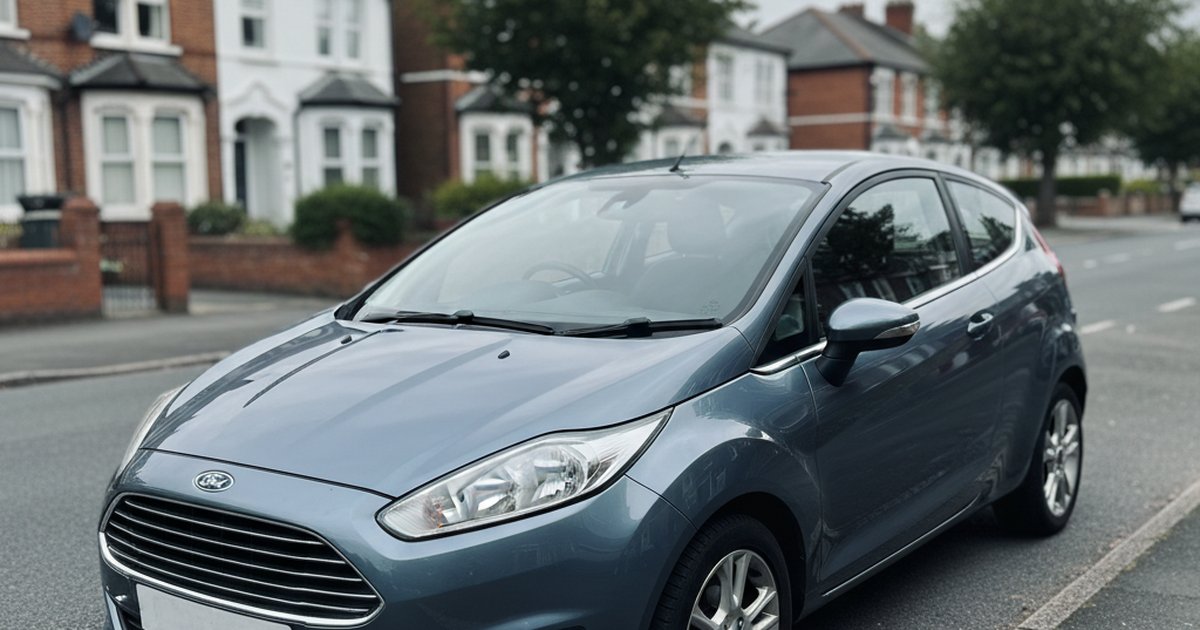
The Ford Fiesta is Britain's best-selling car for good reason. Over 11.5 million MOT tests across 1.1 million vehicles give us the most comprehensive picture of real-world reliability you'll find anywhere. We've analysed every test from 2010 to 2023, covering the Mk6, Mk7, and Mk7.5 generations.
The data tells a clear story: buy petrol, avoid diesel, and target 2017-2019 if you want the sweet spot between age and reliability. The 1.0 EcoBoost models from 2018 score an impressive 542 out of 1000, while the diesels from the same era struggle with suspension wear and consistently higher defect rates.
This analysis uses MOT data from the DVSA, the definitive source for UK vehicle history. Every claim here is backed by actual test results, not showroom promises.
TL;DR: Buy a 2018-2019 petrol Fiesta (reliability score 542 and 520 respectively). Avoid diesels from any year, particularly 2014-2016 models which score just 315-291. The 2017 facelift brought measurable improvements: pass rates jumped from 79.5% to 84.8% for petrol models.
Ford Fiesta: Quick Answers
Which Ford Fiesta years should you avoid? Avoid all diesel Fiestas from 2014-2016 (reliability scores 315-291 out of 1000) and the 2015-2016 petrol models (418 and 379). These years show the highest rates of suspension ball joint wear and tyre tread failures at MOT.
What is the best year Ford Fiesta to buy? The 2018 petrol Fiesta is the most reliable year, scoring 542 out of 1000 with an 87.7% MOT pass rate. The 2019 petrol (520) and 2022 petrol (531) are strong alternatives. All three are 1.0 EcoBoost Mk7.5 models.
What are the best and worst Ford Fiesta years at a glance? Best: 2018 petrol (542), 2022 petrol (531), 2019 petrol (520). Worst: 2016 diesel (291), 2015 diesel (315), 2014 diesel (329). Petrol beats diesel in every single model year.
How long do Ford Fiestas last? Petrol Fiestas typically cover 5,400-6,100 miles per year and still pass MOTs reliably past 120,000 miles. Diesel Fiestas rack up 7,700-11,100 miles annually and accumulate suspension and tyre wear far faster, shortening usable lifespan by roughly 30-40%.
Is the Ford Fiesta reliable? Yes — if you buy petrol. The 2018-2022 petrol Mk7.5 Fiestas average 87-91% MOT pass rates, comfortably above the UK small-car average. Diesel Fiestas sit well below average and should be avoided at any price.
Should you buy petrol or diesel?
The diesel Fiesta is a poor buy. Every single diesel year scores lower than its petrol equivalent, often dramatically so. The 2014 diesel manages just 315 out of 1000, while the 2014 petrol scores 476. That gap widens further in 2016: diesel at 291, petrol at 379.
Diesels average 2.1 to 2.4 defects per test across the range, compared to 1.8 or fewer for petrols. Suspension arm ball joints wear excessively on diesels, appearing in the top three defects for nearly every diesel year. On the 2013 diesel, 17% of tests flag this issue. The 2016 diesel sees ball joint problems in 11.7% of tests.
The mileage pattern explains some of this. Diesel owners cover 7,700 to 11,000 miles annually, while petrol owners average just 5,500 to 6,100 miles. Higher mileage accelerates wear, but the diesels still underperform even accounting for use. The 2019 diesel, despite doing 10,363 miles per year, scores a respectable 583 thanks to Ford's later improvements. Still, the equivalent petrol from 2018 doing fewer miles scores similarly at 542, proving you don't need the diesel.
Tyre wear is worse on diesels too. The 2016 diesel shows tyres worn close to the legal limit in 33.4% of tests. The petrol manages 28.8%. Diesel Fiestas are heavier, which accelerates tyre and suspension wear.
Ownership reality: Diesel Fiestas cost more to maintain and break more often. Unless you're covering 15,000+ miles annually, the fuel savings don't justify the repair bills.
Which years are the most reliable?
The 2018 petrol Fiesta is the standout. A reliability score of 542, pass rate of 87.7%, and just 1.1 defects per test makes it the best overall buy. The 2019 petrol is nearly as good at 520, with an 88.2% pass rate. These Mk7.5 models benefited from Ford's final refinements before discontinuation.
The 2017 facelift marks a clear dividing line. Pass rates jump from 79.5% (2016) to 84.8% (2017) for petrol models. Dangerous defect rates drop from 31.4% to 25.5%. The average defects per test fall from 1.4 to 1.3. Ford addressed suspension and tyre issues that plagued earlier cars.
The 2010-2013 Mk6 models are getting old now, with median mileages between 73,000 and 88,000 miles. Pass rates hover around 75-78%, which is acceptable but unremarkable. The 2011 petrol (519 reliability score) is the pick of this generation if budget forces you into an older car.
The 2014-2016 period is the weakest stretch. Reliability scores slide from 476 (2014 petrol) to 379 (2016 petrol). The 2015 petrol scores just 418, the lowest of any petrol year except 2016 and 2020. Ball joint wear becomes prevalent: 9.8% of 2015 tests flag this issue. These mid-generation cars lack the early Mk6 robustness and the later Mk7.5 improvements.
Which years should you avoid?
Any diesel from 2014-2016 is a nightmare. The 2016 diesel scores just 291, the lowest of any Fiesta we've analysed. Pass rate is 74.9%, with 1.8 defects per test and a dangerous defect rate of 39.7%. Nearly 12% of tests find worn suspension ball joints. Tyre wear close to the legal limit appears in 33.4% of tests.
The 2014 diesel (315 reliability score) and 2015 diesel (325) are only marginally better. These are high-mileage cars now, with the 2014 showing a median of 99,914 miles. Sub-frame bushes wear prematurely: 15.8% of 2014 diesel tests flag this issue.
The 2020 petrol is an anomaly worth mentioning. Despite being newer, it scores just 460, well below the 2018-2019 models. The first MOT pass rate drops to 83.2%, compared to 88.8% for 2018. This was a COVID-year car with production disruptions, and it shows. Avoid this specific year if you're buying nearly new.
Red flag: The 2016 diesel combines low reliability (291), high mileage use (8,293 miles/year), and a dangerous defect rate approaching 40%. This is a car that will cost you.
What goes wrong most often?
Tyres dominate the failure list across all years. Between 18% and 33% of tests flag tyres worn close to the legal limit, depending on year and fuel type. This is partly routine maintenance that owners defer, but the high rates on diesels (31-33%) versus petrols (23-29%) suggest the extra weight accelerates wear.
Coil springs fracture or corrode on 2010-2012 models. This appears in 11-14% of tests from these years. It's a moderate cost repair (£100-200 per corner) but common enough to factor into negotiation if you're buying a Mk6.
Suspension ball joints are the Fiesta's Achilles heel, especially on diesels. The 2010 diesel sees this in 15.7% of tests, the 2011 diesel in 15.6%, and it continues through the range. Replacement costs £150-300 depending on whether you need the full arm or just the joint. RAC breakdown data confirms suspension issues as a common Fiesta complaint.
Brake pads wear thin on newer models, appearing in the top three defects for 2017-2022 cars. This is routine maintenance, but the 2018 petrol flags it in 11.7% of tests, suggesting the EcoBoost models are harder on brakes than expected. Budget £80-120 for a set of fronts.
From 2017 onwards, tyre damage (bulges, cuts, perishing) becomes more common than mechanical failures. This reflects the low-profile tyres fitted to later models. The 2022 petrol shows tyre tears in 6.7% of tests. These are often impact damage from potholes, not manufacturing defects.
Is the 1.0 EcoBoost engine reliable?
The 1.0 EcoBoost three-cylinder engine appears across most 2013-2023 models and proves more reliable than its early reputation suggests. The 2018 petrol, predominantly EcoBoost, scores 542 with an 87.7% pass rate. The 2019 petrol maintains this at 520.
Early EcoBoost models (2013-2015) had well-documented coolant issues, but these rarely cause MOT failures. The MOT checks roadworthiness, not coolant hoses. What the data does show is that EcoBoost Fiestas have lower defect rates than older naturally aspirated petrols. The 2018 model averages just 1.1 defects per test, compared to 2.0 for the 2010 petrol.
The dangerous defect rate tells the real story. The 2018 EcoBoost petrol sits at 22.3%, while the 2010 naturally aspirated petrol is at 51.5%. Newer EcoBoost cars have better suspension geometry, improved brake systems, and less corrosion. The engine itself doesn't appear in the top defects for any year.
Mileage patterns support EcoBoost durability. The 2018 petrol shows a median current mileage of 43,899 with 6,068 miles covered annually. These are six-year-old cars being used moderately, and they're holding up well. What Car? owner satisfaction surveys rate the 1.0 EcoBoost as above average for reliability in the supermini class.
The caveat: the 2020 petrol (predominantly EcoBoost) scores just 460 despite being newer. This appears to be a model-year issue rather than an engine problem, as the 2021 and 2022 petrols recover to 508 and 531 respectively.
How are Fiestas actually used?
Petrol Fiestas are gentle-use cars. Annual mileage across petrol models ranges from 5,473 (2022) to 6,100 (2019) miles per year. Most owners cover around 5,600 miles annually, suggesting urban commuting, school runs, and occasional longer trips. This low-mileage use partly explains the strong MOT performance: less stress, fewer failures.
Diesel Fiestas tell a different story. Owners average 7,700 to 11,097 miles annually, nearly double the petrol figures. The 2020 diesel tops the chart at 11,097 miles per year. These are cars bought for motorway commutes or high-mileage work use. The problem is that Fiestas aren't built for this. They're superminis designed for urban use, and the diesels show accelerated wear as a result.
Current mileage reveals the age profile. The 2010 diesel shows 118,523 miles, while the 2010 petrol shows 88,698 miles. Both are 14-year-old cars, but the diesel has covered 30,000 more miles. This mileage gap persists across all years: diesels always show higher odometer readings.
The 2017-2019 petrols hit a sweet spot. Current mileages range from 37,674 (2019) to 48,091 (2017), meaning plenty of life left. Annual use remains modest at 5,600-6,100 miles. These are five to seven-year-old cars with 40,000-50,000 miles, ideal for a second owner looking for five more years of reliable motoring.
Do newer Fiestas start strong?
First MOT pass rates reveal build quality. The 2017 petrol achieves 91.1% at its first test, the highest of any year. This drops to 88.8% for 2018 and 87.9% for 2019, still strong but showing slight degradation. The 2012 petrol manages 89.5% at first MOT, suggesting Mk6 build quality was solid initially.
The gap between first MOT and overall pass rate tells you how quickly cars deteriorate. The 2015 petrol passes its first test at 85.9% but overall passes are just 79.4%, a 6.5 percentage point drop. This suggests the 2015 models age poorly compared to others.
The 2018 petrol bucks this trend. First MOT: 88.8%, overall: 87.7%. Just a 1.1 point drop, meaning these cars maintain their condition better than earlier models. The 2019 petrol shows a similar pattern: 87.9% first MOT, 88.2% overall. These later Mk7.5 models actually improve slightly as they age, likely because early fixes were done under warranty.
Diesels consistently underperform at first MOT. The 2014 diesel achieves just 78.9%, compared to 84.9% for the equivalent petrol. The 2016 diesel manages 78.3% versus 85.8% for the petrol. Diesels are problematic from day one, not just as they age.
Found a year you like? A good year still hides a clocked odometer, outstanding finance or a past write-off. Before you hand over any money, check the exact Ford Fiesta.
Frequently asked questions
What is the most reliable Ford Fiesta year?
The 2018 petrol Fiesta scores highest at 542 out of 1000, with an 87.7% MOT pass rate and just 1.1 defects per test. The 2019 petrol is nearly as good at 520. Both are 1.0 EcoBoost models from the final Mk7.5 generation.
Should I buy a diesel or petrol Fiesta?
Buy petrol. Every diesel year scores lower than its petrol equivalent, often by 100+ points. The 2016 diesel scores just 291 compared to 379 for the petrol. Diesels average 2.1-2.4 defects per test versus 1.8 or fewer for petrols, with significantly higher suspension and tyre wear.
Is the 1.0 EcoBoost engine reliable?
Yes. The 2018 EcoBoost petrol scores 542 with an 87.7% pass rate. Early coolant issues (2013-2015) rarely cause MOT failures. Dangerous defect rates are just 22.3% for 2018 EcoBoost models compared to 51.5% for 2010 naturally aspirated petrols.
What are the common problems with Ford Fiestas?
Tyres worn close to the legal limit appear in 18-33% of tests. Suspension ball joints wear excessively, especially on diesels (15-17% of tests). Coil springs fracture on 2010-2012 models (11-14% of tests). Brake pads wear thin on 2017+ models (8-12% of tests).
How many miles do Ford Fiestas typically cover per year?
Petrol Fiestas average 5,400-6,100 miles annually, suggesting urban use. Diesel Fiestas cover 7,700-11,100 miles per year, nearly double. The 2020 diesel averages 11,097 miles annually. Low-mileage petrol models last longer and have fewer MOT issues.
Which Ford Fiesta years should I avoid?
Avoid all diesels from 2014-2016 (reliability scores 315-291). Also avoid the 2020 petrol (460 score, 83.2% first MOT pass), which underperforms despite being newer. The 2015-2016 petrols (418-379 scores) are the weakest petrol years.
Our Verdict
The Ford Fiesta's story is written in 11.5 million MOT tests. Buy a 2018-2019 petrol and you're getting Britain's best-selling car at its peak. Avoid the diesels and you'll save thousands in suspension and tyre replacements. Petrol EcoBoost models from 2017 onwards are the reliable choice.
Before you buy any Fiesta, check its complete MOT history on PlateInsight. We give you 5 free vehicle checks with no registration required. Enter the registration number and you'll see every test, every failure, every advisory from that specific car's history. The difference between a well-maintained example and a neglected one can be worth £2,000 in repairs.
You might also like
Check Any Vehicle's Full History
MOT results, mileage timeline, AI health score, and market valuations. New users get 5 free credits.