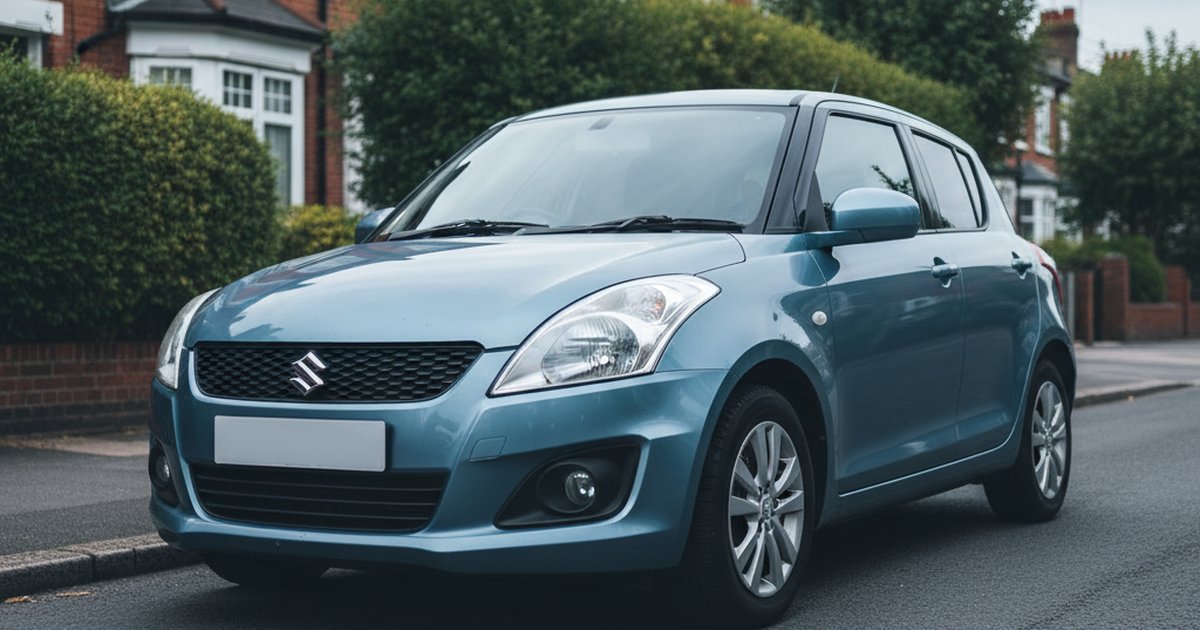
The Suzuki Swift has quietly built a reputation as one of the more dependable superminis you can buy. But does the hard data back this up? We've analysed 958,480 MOT tests across 98,718 Swift vehicles to find out whether this Japanese city car genuinely offers the reliability that owners claim, or whether its reputation flatters to deceive.
The answer is nuanced. While the Swift does deliver solid reliability overall, there's a significant split in the data. Petrol versions consistently outperform their diesel counterparts, sometimes by a considerable margin. And there's one defect that appears with alarming frequency across nearly every model year, which we'll address in detail.
TL;DR: Petrol Swifts are genuinely reliable city cars with pass rates climbing from 76% (2010) to 90% (2020). Diesel versions lag behind with consistently lower scores and higher defect rates. The Swift's Achilles heel is brake pipe corrosion, affecting up to 33% of tests on some diesel models.
Why do diesel Swifts lag behind petrol versions?
The reliability gap between petrol and diesel Swifts is substantial. Take the 2012 model year: petrol versions achieved an 80.4% pass rate with a reliability score of 594, while diesel counterparts managed just 76.0% with a score of 451. This pattern repeats across every year where both fuel types were available.
The difference isn't marginal. Diesel Swifts consistently pick up more defects per test. A 2012 diesel Swift averages 2.4 defects per MOT, compared to 1.9 for the petrol equivalent. By 2014, diesel models still show 2.1 defects per test while petrols have dropped to 1.6.
Current mileage figures tell part of the story. Diesel owners average around 7,200 miles annually, while petrol drivers clock closer to 5,800 miles per year. This suggests diesel Swifts work harder, which accelerates wear. But the gap in pass rates exceeds what mileage alone would explain. The diesel engine itself appears less suited to the Swift's lightweight chassis and typical usage patterns.
Key point: Dangerous defect rates for diesel Swifts regularly exceed 42%, compared to 25-35% for most petrol versions from the same years. This isn't just about reliability, it's a safety consideration.
What's the deal with brake pipe corrosion?
Brake pipe corrosion is the Swift's chronic weakness. It appears as the top or second-most common defect across every single model year from 2010 to 2017. On 2012 diesel models, corroded brake pipes feature in 33% of all MOT tests. Even on the better-performing 2017 petrol versions, it still affects 8.3% of tests.
This isn't random. The Swift's brake pipes are evidently vulnerable to UK road salt and moisture. Testers frequently note pipes 'covered in grease or other material', suggesting owners or mechanics have attempted remedial action. The problem persists regardless, particularly on older examples.
From 2018 onwards, brake pipe issues diminish significantly. Newer Swifts show this defect dropping out of the top three faults entirely. Suzuki appears to have addressed the problem, possibly through improved coating or pipe routing. But if you're buying a pre-2018 Swift, this is the area requiring closest inspection.
The DVSA MOT history checker will show whether previous tests flagged brake pipe corrosion. If they did, ask for evidence of replacement with upgraded parts. Original pipes will simply corrode again.
Which Swift years offer the best reliability?
The 2012-2014 petrol Swifts represent the sweet spot. The 2012 petrol model achieves a reliability score of 594 with an 80.4% pass rate, while 2013 and 2014 maintain similar performance. These cars benefit from post-facelift improvements but haven't yet accumulated the high mileage that degrades older examples.
Current median mileage for 2012-2014 petrols sits around 66,000-79,000 miles. That's reasonable for a 10-12 year old car, particularly when owners average under 6,000 miles annually. These are gentle-use vehicles, often second cars or urban runabouts. The low annual mileage partly explains why MOT pass rates remain respectable despite the cars' age.
Post-2017 models show marginal improvements in pass rates, climbing to 86.7% by 2017 and reaching 90.4% by 2020 for petrol versions. However, the reliability scores tell a different story. The 2017 petrol Swift scores just 530, compared to 594 for the 2012 model. This reflects the first MOT pass rate, which drops from 89.1% (2012) to 91.3% (2017), then back to 89.2% (2018). The improvements aren't as dramatic as the raw pass rates suggest.
Key point: First MOT pass rates remain remarkably consistent across all years at 87-91%, suggesting the Swift's build quality hasn't improved dramatically over time. What changes is how well the cars hold up after that initial three-year period.
Which years should you avoid?
Any diesel Swift from any year. The data is unambiguous. The best-performing diesel Swift (2011 with a 517 reliability score) still underperforms the worst petrol year. Diesel versions show consistently higher defect rates, more dangerous failures, and lower pass rates.
Among petrol versions, 2010 models deserve caution. With a pass rate of 75.7% and reliability score of 507, they're significantly below the Swift average. These early examples now carry median mileage around 85,000 miles and the brake pipe corrosion issue affects 25.7% of tests. The suspension bushes also perish frequently, appearing in nearly 20% of tests.
The 2010 model year also shows the highest dangerous defect rate of any petrol Swift at 42.2%. That matches the diesel figures and suggests these earliest examples have reached the point where critical components are failing. At 14-15 years old with 85,000+ miles, that's not surprising, but it means you're buying a car that needs immediate attention or will soon.
For diesel buyers determined to ignore our advice, avoid the 2012 and 2014 models specifically. These show dangerous defect rates above 42% and the 2012 diesel has brake pipe corrosion in 33% of tests. The 2014 diesel manages just a 413 reliability score, the worst figure in our entire dataset.
How does the hybrid Swift perform?
Suzuki introduced mild-hybrid versions (listed as 'Electric' in MOT records) from 2017 onwards. These show respectable but not exceptional performance. The 2017 hybrid achieves an 88.5% pass rate with a reliability score of 507, compared to 86.7% and 530 for the conventional petrol equivalent.
First MOT pass rates for hybrids are notably strong at 95.8% (2017), dropping to 91.3% (2018), then climbing to 92.7% (2019). This suggests the hybrid drivetrain itself is reliable when new. However, reliability scores remain in the 507-573 range across all hybrid years, no better than conventional petrols.
The hybrid's defining characteristic is slightly higher annual mileage. Hybrid owners average 6,080-6,520 miles per year, compared to 5,494-5,861 for conventional petrols from the same years. This likely reflects the hybrid's improved fuel economy making longer journeys more economical. Current median mileage figures confirm hybrid owners drive more: a 2018 hybrid shows 45,046 miles compared to 41,996 for the conventional petrol.
Hybrid Swifts share the same routine tyre issues as petrols, with cracking and wear featuring prominently. Brake pipe corrosion appears less frequently, affecting 9.2% of 2017 hybrid tests compared to 8.3% for conventional petrols. The hybrid system itself generates few MOT failures, which is reassuring given the technology's complexity.
What are the most common issues beyond brake pipes?
Tyre issues dominate recent Swift MOT failures. From 2015 onwards, worn or damaged tyres account for over 40% of all flagged defects when you combine 'worn close to legal limit' and 'slightly damaged or cracking'. This isn't a Swift-specific problem, but the frequency is notable.
The tyre cracking issue deserves attention. On 2018-2020 models, between 26-36% of tests flag tyres with cracking or perishing. Testers often note 'cracking between treads' affecting all four tyres simultaneously. This suggests either the Swift's suspension geometry causes uneven loading, or owners fit budget tyres that age poorly. Either way, budget for tyre replacement sooner than you might expect.
Suspension bushes feature prominently on pre-2014 models. Rear arm bushes perish and split, affecting 12-20% of tests on 2010-2011 examples. This is routine wear on a 10+ year old supermini, but it's worth checking during inspection. Worn bushes affect handling and cause uneven tyre wear, compounding the tyre issues mentioned above.
From 2017 onwards, brake pad wear enters the top three defects. This replaces suspension issues as the primary non-tyre fault. It's routine maintenance rather than a design flaw, but the frequency (8-9% of tests) suggests Swift brake pads wear faster than some rivals. The car's light weight and responsive brakes probably contribute to this.
What type of owner buys a Swift?
The mileage data reveals the Swift's role as a gentle-use urban car. Across all petrol models from 2010-2020, annual mileage averages just 5,200-6,000 miles per year. That's significantly below the UK average of around 7,400 miles annually according to RAC figures.
This ownership pattern benefits reliability. Cars driven less accumulate less wear. A 2015 Swift with 59,000 miles sounds high until you realise that's spread over nine years. Compare this to a Ford Fiesta, where annual mileage typically exceeds 8,000 miles, and you understand why Swifts maintain decent pass rates despite being fundamentally less sophisticated than German rivals.
The low mileage also suggests Swift owners aren't using these cars for commuting motorway distances. These are second cars, urban runabouts, or vehicles for drivers who don't cover much ground. This usage profile is ideal for a small, naturally aspirated petrol engine but terrible for a diesel, which needs regular long runs to prevent DPF and EGR issues.
Current mileage figures support this. Even 2010 petrols, now 14 years old, show median odometer readings around 85,000 miles. That's low for a car of this age. It means you're buying a vehicle that's spent most of its life doing short trips in town, which has both advantages (less mechanical stress) and disadvantages (more cold starts, potential for oil contamination).
Found a year you like? A good year still hides a clocked odometer, outstanding finance or a past write-off. Before you hand over any money, check the exact Suzuki Swift.
Frequently asked questions
Are Suzuki Swifts reliable long-term?
Petrol Swifts show solid long-term reliability with pass rates climbing from 76% (2010) to 90% (2020). The main concern is brake pipe corrosion on pre-2018 models, which affects up to 25-33% of tests. Diesel versions are significantly less reliable with scores typically 100 points lower than petrol equivalents.
What is the most common problem with Suzuki Swift?
Brake pipe corrosion is the chronic issue, appearing as the top defect across model years 2010-2017. From 2018 onwards, tyre cracking and wear become the primary concerns, affecting 40%+ of tests when combined. Suspension bush wear is common on pre-2014 models.
Should I buy a diesel or petrol Swift?
Buy petrol. Diesel Swifts show 5-10% lower pass rates, 100+ points lower reliability scores, and dangerous defect rates consistently above 38%. Even the best diesel year (2011, score 517) underperforms the worst petrol year. The fuel economy saving doesn't justify the reliability penalty.
What mileage is too high for a Suzuki Swift?
Swift owners average just 5,200-6,000 miles annually, so high mileage examples are rare. A 2012 model typically shows around 79,000 miles now. Above 100,000 miles, pass rates drop noticeably and brake pipe corrosion becomes almost guaranteed on pre-2018 models. Diesel versions show 95,000-100,000 typical mileage due to harder use.
Are Suzuki Swift hybrids reliable?
Hybrid Swifts show 88-90% pass rates with reliability scores of 507-573, matching conventional petrols. First MOT pass rates are strong at 92-96%, suggesting good initial quality. However, hybrids show no meaningful reliability advantage over conventional petrols despite the added complexity of mild-hybrid technology.
Our Verdict
The Suzuki Swift's reputation for reliability is largely deserved, provided you stick to petrol versions and avoid early examples with corroded brake pipes. The 2012-2014 petrol models offer the best combination of proven reliability and current value, while post-2017 versions show marginal improvements in pass rates offset by less compelling reliability scores.
Before you commit to any Swift, check its MOT history using PlateInsight. Our database of 261 million MOT records will reveal whether brake pipe corrosion has been an ongoing issue, how many advisories have been ignored, and whether the car's test history matches the seller's claims. New users get 5 free vehicle checks, enough to compare several Swifts and find one with a genuinely clean history.
You might also like
Check Any Vehicle's Full History
MOT results, mileage timeline, AI health score, and market valuations. New users get 5 free credits.