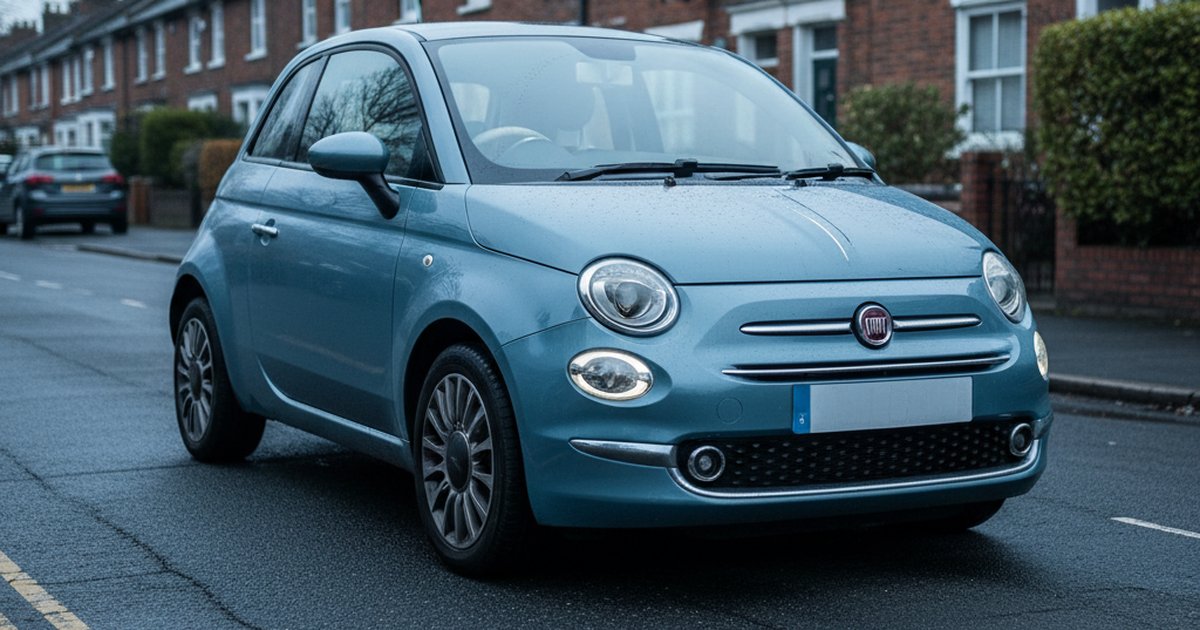
The Fiat 500 is a fashion statement first, practical city car second. But beneath the retro styling and designer trim levels lies a question that matters more than colour choices: will it actually pass its MOT?
We've analysed 3,023,347 MOT tests across 284,937 Fiat 500s registered between 2010 and 2021. The verdict is mixed. While newer examples perform well, early cars reveal alarming patterns that should make any used buyer pause. The dangerous defect rate on some model years exceeds 50%, meaning more than half of these cars have been flagged for issues that pose an immediate risk to road safety.
This is not a car you can buy on looks alone. Year selection matters enormously, and the diesel versions tell a particularly worrying story.
TL;DR: Buy a 2018-2020 petrol Fiat 500 and you'll likely be fine (447-489 reliability score, 86-89% pass rate). Buy anything from 2010-2012, especially diesel, and you're gambling on suspension wear, spring corrosion, and dangerous tyre neglect. Avoid all diesel variants.
Why Are Diesel Fiat 500s So Unreliable?
The diesel 500 is a textbook example of a car that shouldn't exist. Tiny city cars and diesel engines make poor bedfellows, and the MOT data proves it. Every single diesel model year scores worse than its petrol equivalent, often dramatically so.
Take 2010: the diesel variant manages just a 316 reliability score versus 407 for petrol. The 2014 diesel limps to 342 while the petrol hits 401. Even the best diesel year (2015, with a 437 score) barely matches mediocre petrol years. These engines cover more miles annually (6,000-7,200 vs 4,500-5,000 for petrol), suggesting harder use, but the real killer is parts quality and design compromises.
Diesel examples show consistently higher dangerous defect rates. The 2012 diesel records a frankly terrifying 64% dangerous defect rate. Suspension bushes wear excessively, springs corrode faster, and tyres degrade more rapidly. The top defects tell a story of neglected maintenance on cars that were likely bought for economy, then run into the ground.
The diesel 500 was marketed as a frugal urban solution. In practice, it's an expensive mistake waiting to happen. Parts are no cheaper, failures are more frequent, and resale values reflect the reality. What Car? owner reviews confirm chronic reliability issues with these engines.
What Makes 2010-2012 Models So Problematic?
The launch generation Fiat 500s (2010-2012) share a common affliction: they rust. Coil spring corrosion appears in the top three defects for every single one of these model years, affecting 11-15% of MOT tests. For context, this issue barely features on 2018-2020 cars.
Suspension components fare even worse. The 2011 petrol sees ball joints flagged as excessively worn in 16% of tests. The 2012 petrol pushes that to 17%. These are not wear-and-tear items that degrade slowly, they're safety-critical parts failing prematurely. When suspension bushes collapse or ball joints seize, you lose steering control.
The dangerous defect rates confirm the severity: 54% for 2010 petrol, 56% for 2010 diesel, 51% for both 2011 variants. These are cars where more than half have presented an immediate safety risk at some point in their MOT history. DVSA MOT data shows this is among the highest failure rates for any supermini from this era.
Current mileage readings (73,000-93,000 miles depending on variant) suggest these cars are reaching end-of-life. With 15 years of road salt, condensation, and minimal maintenance, the structural integrity is questionable. Unless you're buying from an enthusiast with full service history and recent suspension replacement, walk away.
Which Years Offer the Best Reliability?
The 2018-2020 petrol Fiat 500s represent the sweet spot. The 2020 model achieves a 489 reliability score with an 89% pass rate, the best performance in the entire dataset. The 2019 follows closely at 468/87%, and 2018 hits 447/86%. These are cars that work.
What changed? Build quality improved incrementally from 2013 onwards, but the real difference is age and mileage. A 2018 car with 36,000 miles (current median) simply hasn't had time to develop the corrosion and wear patterns that plague earlier examples. Suspension bushes are still pliable, springs haven't been cycling through freeze-thaw for a decade, brake discs haven't rusted through multiple Welsh winters.
The defect profile shifts tellingly. Tyres worn close to the limit still top the charts (21-23% of tests) because 500 owners clearly hate spending money on rubber, but spring corrosion vanishes. Ball joint wear drops to 15% or less. Dangerous defect rates plummet: 19% for 2018, 14% for 2019, under 10% for 2020.
Annual mileage remains consistent at 4,500-4,700 miles regardless of year. These are Saturday shopping cars, not daily commuters. That gentle use pattern, combined with modern rust protection and better suspension bushes, explains the dramatic reliability improvement. If you're buying a used 500, aim for 2017 or newer and you'll avoid most of the horror stories.
Why Do Fiat 500 Owners Ignore Tyre Safety?
Tyre defects dominate the MOT failure list across every single model year. Between 18% and 31% of all tests flag tyres worn close to the legal limit or worn on edges. That's not a design flaw, that's owner negligence on an industrial scale.
The pattern is consistent and damning. The 2014 diesel sees tyres worn to the limit in 29% of tests. The 2015 petrol hits 30%. The 2017 diesel peaks at 37%. These are failures waiting to happen, and they're entirely preventable. A £40 tyre check would catch every single one before the MOT station does.
Edge wear specifically suggests under-inflation or suspension misalignment, both of which reduce grip and increase stopping distances. When you combine this with the high suspension wear rates on older models, you get a car that handles unpredictably and stops slowly. That's why dangerous defect rates correlate so strongly with tyre issues in the data.
The 500 attracts style-conscious buyers who view cars as appliances. They service them when the warning light appears (maybe), replace tyres when they fail MOT (reluctantly), and ignore everything else. This ownership profile explains much of the poor reliability showing. The car is capable of better, but buyers don't maintain it properly.
If you're buying used, check tyre tread depth, look for uneven wear, and factor £200-300 for a full set into your budget. Assume the seller has done nothing proactive.
How Many Miles Should a Fiat 500 Have?
Fiat 500 owners cover remarkably few miles. Annual mileage across all petrol models sits between 4,500 and 5,000 miles. That's urban pottering, not real driving. A 2015 car today shows around 52,000 miles, a 2017 sits at 42,000, a 2019 carries just 29,000.
Low mileage sounds appealing, but it creates different problems. Cars that cover 5,000 miles annually spend 360 days a year parked, often outdoors. Moisture condenses in the exhaust, brake discs rust, suspension bushes perish from UV exposure rather than wear. The MOT defect lists confirm this: brake disc corrosion features heavily (12-16% of tests on newer cars), not from hard use but from sitting still.
Diesel variants show higher annual mileage (6,000-7,200 miles), suggesting buyers who actually needed the economy. These cars work harder but fare worse in MOT tests, confirming that diesel technology in a city car is fundamentally flawed. The extra torque stresses suspension components more severely, and the emissions equipment adds failure points.
When evaluating a used 500, compare the odometer to these medians. A 2016 petrol with 70,000 miles has covered 50% more than average and may show accelerated wear. Conversely, a 2014 with 35,000 miles has barely moved and could be hiding seized calipers or perished hoses. According to Auto Trader listings, low-mileage examples often command premium prices, but the MOT data suggests you're paying for problems deferred, not prevented.
Do Fiat 500s Pass Their First MOT?
The first MOT happens at age three, when the manufacturer's warranty has typically expired and the car faces independent scrutiny for the first time. This test reveals factory quality better than any later MOT because wear hasn't yet masked design flaws.
The 2017 petrol achieves a 93% first-time pass rate, the strongest showing in the dataset. Work backwards through model years and performance declines: 90% for 2018, 89% for 2020, 86% for 2015, 84% for 2013, 83% for 2012. The 2010 diesel manages just 72%.
That 21-percentage-point spread tells you everything about factory quality evolution. Early 500s left the showroom with marginal components that failed within three years. Later cars benefited from running changes, better corrosion protection, and lessons learned from warranty claims. The gap between first MOT and overall pass rate is equally instructive. The 2010 petrol passes its first test at 81% but overall achieves just 73%, an 8-point degradation. The 2018 petrol drops only 5 points (90% to 86%).
Translation: older 500s deteriorate faster. The components that survive three years don't survive ten. If you're shopping for a 2011-2013 example, assume it's already past the reliability cliff and budget for comprehensive replacement of bushes, springs, and brake components.
What Should You Check Before Buying?
The MOT data points to specific inspection priorities. Start with suspension. Lie down, look under the car, and check the rear suspension arm bushes for cracks or displacement. These fail consistently across all model years. If they're original on a 2010-2014 car, they're overdue for replacement at £300-400 for the pair.
Examine coil springs for corrosion, particularly on 2010-2014 models where this features in 12-15% of tests. Surface rust is cosmetic, but if you can see material loss or cracks, walk away. Spring failure at motorway speed kills people. Check brake discs for deep scoring or pitting, flagged in 12-16% of tests on most years. Scoring is cheap to fix (£150 for discs and pads), but if the seller hasn't addressed it, what else have they ignored?
Tyres require scrutiny beyond tread depth. Run your hand around the inner edge of each tyre, feeling for uneven wear. Edge wear appears in 18-31% of tests depending on year, indicating alignment issues or neglected pressure checks. Budget £250 for four tyres and £80 for four-wheel alignment if you spot problems.
Request the full MOT history from gov.uk and read every advisory. A car with clean MOTs but escalating advisories (slight bush wear becomes moderate bush wear becomes excessive bush wear) is telling you it's been maintained reactively, not proactively. Multiple advisory-free MOTs followed by a massive failure list suggests the owner found a friendly tester, then reality intervened.
Service history matters more on a 500 than most cars because the ownership profile skews toward people who view servicing as optional. An independently serviced car with stamped book and receipts is worth £500 more than one with no history, regardless of what the seller claims about 'always serviced on time.'
Found a year you like? A good year still hides a clocked odometer, outstanding finance or a past write-off. Before you hand over any money, check the exact Fiat 500.
Frequently asked questions
Which Fiat 500 year has the best MOT pass rate?
The 2020 petrol Fiat 500 achieves an 88.6% pass rate with a 489 reliability score, the strongest performance in our dataset. The 2019 follows at 87.3% (468 score) and 2018 at 85.6% (447 score).
Are diesel Fiat 500s reliable?
No. Every diesel model year scores worse than its petrol equivalent, often by 50-100 points. The 2012 diesel shows a 64% dangerous defect rate. Diesel 500s cover more miles (6,000-7,000/year vs 4,500-5,000 for petrol) but suffer more suspension wear, spring corrosion, and tyre issues.
What are the most common Fiat 500 MOT failures?
Tyres worn to the legal limit appear in 18-31% of tests depending on year. Suspension arm bushes worn excessively affect 13-19% of tests on older models. Coil spring corrosion hits 11-15% of 2010-2012 cars but rarely appears on 2017+ models.
How many miles do Fiat 500 owners typically cover?
Annual mileage averages 4,500-5,000 miles for petrol models and 6,000-7,200 for diesels. A 2015 petrol typically shows 52,500 miles today, a 2018 around 36,000 miles. These are low-use urban cars, not daily drivers.
Should I buy a 2011 Fiat 500?
Only with caution. The 2011 petrol scores 397 reliability with a 74% pass rate, but shows 73,500 miles typically and 51% dangerous defect rate. Check suspension bushes, spring corrosion, and tyre condition carefully. Budget £500-800 for immediate repairs on most examples.
Our Verdict
The Fiat 500 divides neatly into cars you can trust (2017-2020 petrol) and cars you should avoid (everything diesel, most 2010-2014). If you're buying on style alone, prepare for expensive MOT failures. If you're buying on data, stick to newer petrol models with full service history and recent MOT certificates showing minimal advisories.
Before you commit, run the registration through PlateInsight. You'll see the complete MOT history, exact mileage progression, and every defect ever recorded. We give you 5 free vehicle checks to start, no card required. The difference between a 2012 with clean history and one hiding multiple suspension failures is worth thousands. Check first, buy confidently.
You might also like
Check Any Vehicle's Full History
MOT results, mileage timeline, AI health score, and market valuations. New users get 5 free credits.