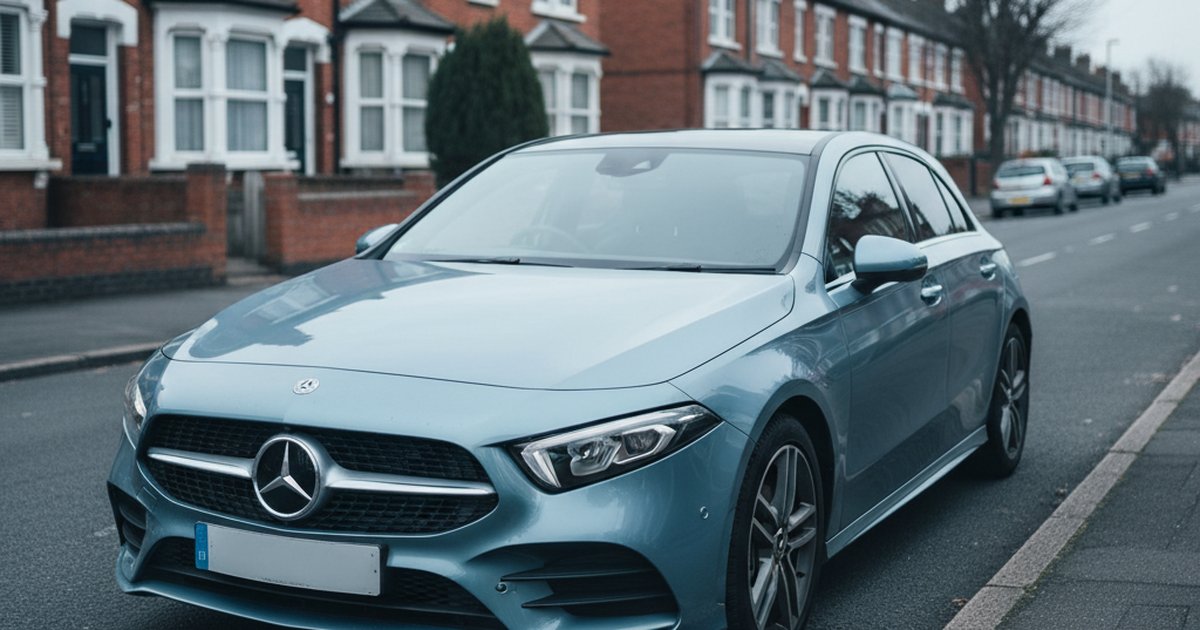
The Mercedes A-Class promised to bring premium badge appeal to buyers who couldn't stretch to a C-Class. Two generations dominate the used market: the W176 (2012-2018) and the newer W177 (2018-present). Our analysis of 1,875,172 MOT tests across 217,678 vehicles reveals which variant actually delivers on that promise of German reliability, and which ones leave owners facing expensive repair bills.
The numbers tell a complicated story. Petrol versions consistently outperform their diesel counterparts, sometimes by significant margins. But there's a specific sweet spot in the range that buyers should target, and several years that are best left on the forecourt. We've analysed failure patterns, dangerous defect rates, and ownership profiles to work out which A-Class represents a genuine bargain and which ones are money pits waiting to happen.
TL;DR: The 2013 petrol A-Class is the standout performer with a reliability score of 684/1000 and an 84.2% pass rate. Avoid early diesels (2010-2012) with their alarming 37-41% dangerous defect rates and corrosion issues. Post-2017 models improve significantly, but petrol versions still edge ahead for reliability.
Which Generation Performs Better: W176 or W177?
The W176 generation (2012-2018) shows wildly variable performance depending on the year and engine choice. Early examples suffer from chronic brake pipe corrosion, with 2010-2012 models flagging this issue in up to 20% of MOT tests. The W177 generation (2018 onwards) arrives with notably lower dangerous defect rates, particularly in petrol form where the 2018 model year drops to just 23.9% compared to 34-36% for equivalent W176s.
The surprise is that the mid-range W176 models from 2013-2015 in petrol form actually rival or exceed the newer W177 for overall reliability scores. The 2013 petrol sits at 684/1000, comfortably ahead of the 2018 petrol's 572/1000. This suggests Mercedes sorted the W176's early teething troubles by 2013, then the W177 arrived with its own fresh set of issues to iron out.
Ownership patterns differ markedly. W176 diesels were hammered hard, averaging 7,700-8,190 miles annually. The W177 diesels continue this trend at 8,454 miles per year. Petrol versions attract gentler use across both generations, sitting at 5,900-6,800 miles annually. If you're buying used, this matters. A diesel A-Class has likely lived a harder life than its petrol equivalent.
Should You Buy Petrol or Diesel?
Petrol wins, and it's not even close. Across every model year in our dataset, petrol A-Classes outscore their diesel siblings for reliability. The gap is substantial: 2015 petrols achieve 646/1000 versus 538/1000 for diesels. That's a 108-point swing in a market where every point counts.
The dangerous defect story is even more damning for diesel buyers. Early diesels (2010-2012) show dangerous defect rates of 37-41%, meaning roughly two in every five vehicles had at least one critical safety issue flagged. Petrol versions from the same years sit at 33-36%, still poor but noticeably better. By 2017, petrols drop to a more acceptable 30.3% while diesels remain stubbornly high at 36.0%.
The ownership profile tells you why: diesel A-Class buyers rack up 7,700-8,800 miles annually versus 4,600-7,100 for petrol models. Higher mileage means more wear, more MOT failures, and more expensive repairs on already complex diesel emissions systems. The DVSA data confirms diesel A-Classes pick up 1.4-1.8 defects per test versus 0.9-1.4 for petrols.
Unless you're genuinely covering 15,000+ miles annually, the diesel's fuel economy advantage won't offset its reliability handicap and the looming spectre of DPF and EGR failures. According to RAC breakdown data, diesel particulate filter failures alone account for a significant proportion of modern diesel issues.
Which Are the Best Years to Buy?
The 2013 petrol A-Class stands alone as the sweet spot. With a reliability score of 684/1000, an 84.2% pass rate, and just 1.2 defects per test, it represents the W176 at its best. First MOT pass rate hits 91.1%, meaning buyers were satisfied in those important early ownership years. Current examples sit around 75,000 miles, making them viable prospects if you find one with full service history.
The 2015 and 2016 petrol models run it close, scoring 646/1000 and 626/1000 respectively. Pass rates climb to 86.3% and 86.8%, and these cars have covered fewer miles (63,000-60,000 on average). They're entering the age bracket where prices become genuinely affordable, but haven't yet descended into banger territory where deferred maintenance becomes a gamble.
For those wanting newer metal, the 2017 petrol deserves consideration. It scores 586/1000 with an impressive 87.7% pass rate, and the dangerous defect rate finally drops below 31%. The shift from W176 to W177 happens during 2018, so 2017 represents the most refined version of the older platform before Mercedes reset the clock with a new model.
Want to verify the MOT history before buying? Check any vehicle's complete record through the DVSA's free online checker using just the registration plate.
Which Years Should You Avoid?
The 2010-2012 diesel models are automotive masochism. Reliability scores languish in the 517-557 range, dangerous defect rates peak at 37-41%, and brake pipe corrosion appears in up to 20% of MOT tests. These cars are now 12-14 years old with 78,000-92,000 miles showing. Any initial value advantage has evaporated, replaced by the certainty of expensive repairs on corroded brake lines and worn suspension components.
Even the 2010-2012 petrol versions struggle, though less dramatically. They score 560-596/1000, which sounds middling until you compare them to the 684/1000 achieved just one year later in 2013. The 33-36% dangerous defect rates suggest Mercedes hadn't yet refined the W176's corrosion protection or component quality in those early years.
The 2020 petrol model appears in our data with just 299 tests across 93 vehicles, scoring a surprisingly low 397/1000. The sample size is small and these are very young cars, but the early signs aren't promising. First MOT pass rate drops to 82.8%, well below the 88-91% typical for petrol A-Classes. This could be teething troubles with the facelifted W177, or it could indicate quality issues. Either way, it's not the bargain it should be given the age.
Current mileage tells the story: a 2012 diesel sits at 78,915 miles on average after covering 5,578 miles annually, while a 2015 diesel shows 82,934 miles from 7,784 miles per year. These aren't cars winding down gracefully. They're being worked hard right to the end.
What Are the Most Common Problems?
Tyre wear dominates the MOT failure list across all years, appearing in 23-34% of tests. This isn't a Mercedes-specific issue, but it's worth noting the pattern: inner edge wear suggests alignment problems or owners deferring proper tyre rotation. On premium alloy wheels with low-profile rubber, replacement costs sting harder than on a Fiesta.
Brake pipe corrosion tells the real story of A-Class build quality. It appears in 9-20% of tests on early models (2010-2012), flagged as a critical safety issue. Mercedes-Benz claims premium engineering, but these brake lines corrode like they're from a budget manufacturer. The problem diminishes on post-2013 models, suggesting improved corrosion protection or better materials, but it never fully disappears.
Brake pad wear is the third recurring theme, appearing in 8-13% of tests. Again, not unusual for any car, but the frequency suggests owners are stretching service intervals. At 7,000-8,000 miles annually on diesel versions, pads should last years. Their premature wear points to harder driving or lower-quality replacement parts fitted during budget servicing.
Diesel models add their own special failures: DPF issues don't appear explicitly in the top three defects, but the higher overall failure rates and defect counts (1.4-1.8 per test versus 0.9-1.4 for petrols) suggest they're lurking in the background. The AA confirms that diesel particulate filter problems remain one of the most common breakdown causes for modern diesels.
How Hard Are Owners Driving These Cars?
The A-Class splits into two distinct ownership camps. Petrol models average 4,600-7,100 miles annually, suggesting urban commuters, second cars, or buyers who simply like the badge but don't need the miles. These gentler usage patterns directly correlate with better reliability scores and lower defect rates.
Diesel buyers, by contrast, are racking up serious distance. The 2013-2018 diesel models average 7,700-8,450 miles per year. That's not motorway rep territory, but it's heavy enough to stress emissions systems, suspension, and brakes. Current mileages on 2013-2015 diesels now exceed 82,000-101,000 miles. At this age and distance, you're buying someone else's problems.
The correlation between annual mileage and reliability is stark. Compare the 2015 petrol (5,986 miles/year, score 646/1000) with the 2015 diesel (7,784 miles/year, score 538/1000). Both cars left the same factory, but the harder-worked diesel scores 108 points lower. This pattern repeats across every model year.
Interestingly, the 2017-2019 models show converging mileage patterns. Petrol annual mileage creeps up to 6,314-7,138 miles while diesel stays flat at 7,826-8,823 miles. This suggests newer A-Class buyers are using their cars more actively regardless of fuel type, possibly because improved refinement makes the petrol versions more usable for longer trips.
What Should You Pay for a Good Example?
A 2013 petrol A-Class with 70,000-80,000 miles and full service history should command a premium over equivalent diesel models, and rightly so given the 684/1000 reliability score. Look for examples around £6,000-£8,000, and don't be tempted by sub-£5,000 diesels from the same year unless you fancy funding a garage's Christmas party.
The 2015-2016 petrol models sit in the £8,000-£12,000 bracket depending on mileage and specification. These represent genuinely good value: depreciation has done its worst, but the cars haven't yet descended into the death spiral of deferred maintenance. With 60,000-70,000 miles showing, they've got plenty of life left if properly maintained.
For newer W177 models (2018-2019), expect £15,000-£20,000 for petrol versions with 40,000-50,000 miles. The reliability scores are lower than you'd hope for such recent cars, so demand comprehensive service history and check the MOT record thoroughly using PlateInsight's database before committing.
Watch out for high-mileage diesels: a 2014 diesel with 120,000 miles might look cheap at £5,000-£6,000, but you're buying into 8,190 miles of annual use, a 44.9% dangerous defect rate, and inevitable DPF/emissions system failures. The initial saving evaporates the moment you face a £2,000 repair bill.
According to What Car? owner satisfaction data, A-Class buyers consistently rate running costs as disappointing compared to premium rivals. Factor this into your budget. Mercedes servicing isn't cheap, and independent garages often charge premium rates for diagnostic work on complex modern systems.
Found a year you like? A good year still hides a clocked odometer, outstanding finance or a past write-off. Before you hand over any money, check the exact Mercedes A-Class.
Frequently asked questions
Is the Mercedes A-Class reliable according to MOT data?
It depends entirely on the year and fuel type. The 2013 petrol scores 684/1000 for reliability with an 84.2% pass rate, making it genuinely dependable. Early diesels (2010-2012) score just 517-557/1000 with dangerous defect rates of 37-41%. Petrol versions consistently outperform diesels by 80-110 reliability points across all model years.
Which A-Class engine is most reliable?
Petrol engines win across every model year in our dataset. The 2013 petrol achieves the highest reliability score at 684/1000, while even the best diesel (2013 at 590/1000) can't match it. Petrols also show lower dangerous defect rates (23-36% versus 27-47% for diesels) and fewer defects per test (0.9-1.4 versus 1.1-1.8).
What are the common problems with the W176 A-Class?
Brake pipe corrosion appears in 9-20% of tests on 2010-2012 models, flagged as critical. Tyre wear (inner edge) affects 23-29% of tests, suggesting alignment issues or deferred rotation. Brake pad wear occurs in 8-13% of tests. Diesel models add DPF and emissions system failures, reflected in their higher overall defect rates of 1.4-1.8 per test versus 0.9-1.4 for petrols.
Should I buy a high-mileage diesel A-Class?
No. Diesel A-Classes average 7,700-8,450 miles annually versus 4,600-7,100 for petrols, and this harder use shows in reliability scores that trail petrols by 80-110 points. A 2014 diesel with 120,000 miles faces a 44.9% dangerous defect rate and inevitable DPF failures. The initial saving vanishes the moment you face a £1,500-£2,000 emissions system repair.
How many miles do A-Class owners typically drive per year?
Petrol owners average 4,600-7,100 miles annually, suggesting gentle urban use or second-car duty. Diesel owners rack up 7,700-8,450 miles per year, pushing these cars harder and explaining the worse reliability scores. The 2013 diesel averages 8,100 miles annually, contributing to its current median mileage of 101,542 miles.
Our Verdict
The Mercedes A-Class promised affordable premium motoring, and the best examples deliver exactly that. The 2013 petrol variant stands out as the sweet spot, combining a 684/1000 reliability score with manageable running costs and current availability around £6,000-£8,000. But choose poorly, particularly among early diesels or high-mileage examples, and you'll discover why that cheap Mercedes stayed cheap.
Before buying any A-Class, check its complete MOT history using PlateInsight. Our database of 261 million MOT records will reveal if that tempting bargain has been hiding expensive failures or dangerous defects. Every user gets 5 free vehicle checks to start. Don't gamble on a premium badge when the data can show you exactly what you're buying.
You might also like
Check Any Vehicle's Full History
MOT results, mileage timeline, AI health score, and market valuations. New users get 5 free credits.