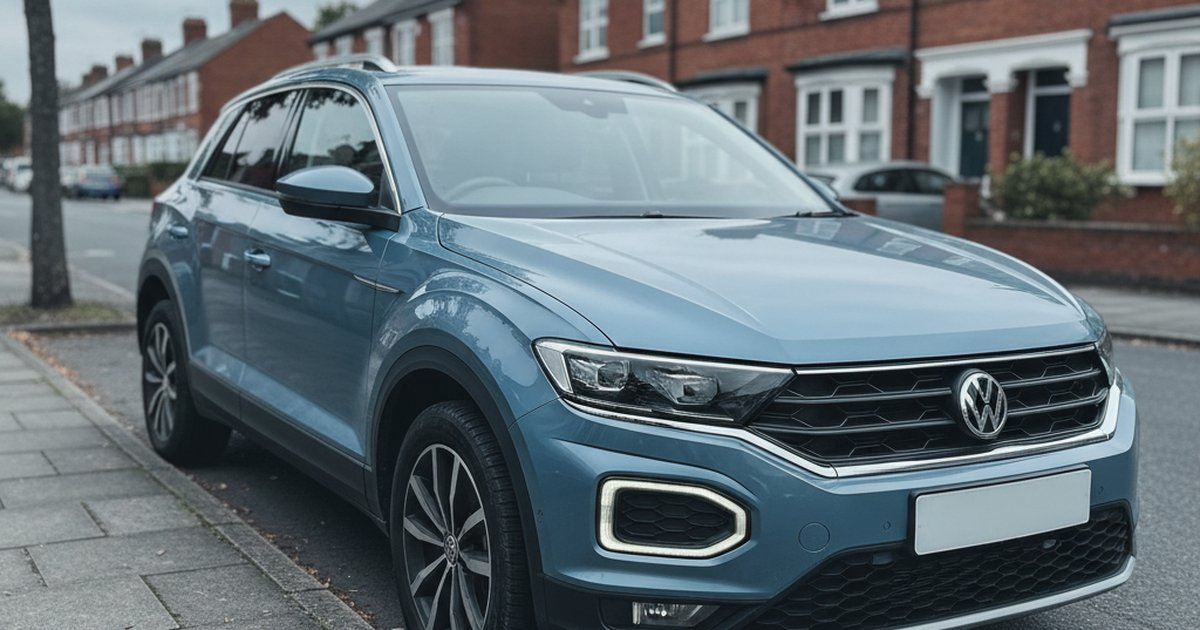
The VW T-Roc arrived in 2018 as Volkswagen's answer to the Nissan Juke and Peugeot 2008, offering Golf underpinnings in a raised-up compact SUV package. It sold well from launch, which means we now have substantial MOT data to judge its real-world durability.
We've analysed 238,972 MOT tests across 55,298 T-Rocs to determine which versions hold up and which develop issues earlier than expected. The results show a clear split between fuel types, and some model years perform significantly worse than others despite being nearly identical mechanically.
TL;DR: Diesel T-Rocs score up to 735/1000 for reliability and show stronger MOT performance across all years. Petrol versions drop as low as 571/1000 for 2021-2022 models. Tyre wear appears in over 20% of tests regardless of age, suggesting owners defer replacement too long. First MOT pass rates hover around 91%, which is respectable but not exceptional for a modern VW.
VW T-Roc: Quick Answers
Is the VW T-Roc reliable? Yes, mostly. Diesel T-Rocs score up to 735 out of 1000 for reliability and post first-MOT pass rates around 91%. Petrol T-Rocs are weaker, dropping to 571 for 2021-2022 models, largely due to tyre and brake-pad wear rather than mechanical failures.
How reliable is the 2020 VW T-Roc? The 2020 T-Roc sits mid-pack. The 2020 1.6 TDI diesel is one of the most reliable variants in the range with a first-MOT pass rate above 92%. The 2020 1.0 TSI petrol is noticeably weaker and shows higher rates of tyre wear at first MOT.
Which VW T-Roc years should you avoid? Avoid the 2021-2022 petrol T-Rocs (reliability scores as low as 571 out of 1000). First MOT defect rates on these years are well above the diesel equivalents, driven mostly by worn tyres and brake pads — often owner-deferred maintenance rather than build quality.
Diesel or petrol T-Roc — which is better? Diesel. In every model year of our UK MOT dataset, diesel T-Rocs outperform petrols on both MOT pass rate and reliability score, often by 100+ points. If you cover more than 8,000 miles a year, the 1.6 or 2.0 TDI is the clear pick.
Do T-Rocs pass their first MOT? Around 91% do, which is average for a modern VW but behind segment leaders. The most common first-MOT advisories are tyre wear close to the legal limit and front brake pads below 25%.
Which Fuel Type Should You Choose?
The reliability gap between diesel and petrol T-Rocs is substantial and consistent across every model year. Diesel versions score between 644 and 742 out of 1000, while petrol models range from 571 to 677. That's not a minor difference.
Take the 2020 model year as an example. The diesel achieves a 735 reliability score with a 92.4% pass rate, whilst the petrol manages just 623 with a 91.9% pass rate. Both share the same chassis, suspension, and most ancillaries, yet the petrol version fails more frequently. The pattern repeats in 2021: diesel scores 734, petrol drops to 571.
Annual mileage data helps explain the ownership profiles. Diesel owners average 8,000-9,000 miles per year, petrol owners typically cover 6,000-7,000. The diesel attracts higher-mileage drivers who need the fuel economy, and these cars hold up better despite the additional use. Petrol T-Rocs with their lower annual mileage should logically experience less wear, yet they fail MOTs more often.
Brake pad wear appears as a top-three defect across both fuel types, affecting 10-16% of tests. This suggests the T-Roc's weight (around 1,400kg) works the brakes harder than a conventional hatchback. Tyre issues dominate the defect lists, with worn or damaged tyres appearing in over 20% of all tests regardless of fuel type or year.
Which Model Years Are Most Reliable?
The 2019 petrol T-Roc stands out with a 677 reliability score and 92.6% pass rate, making it the strongest petrol performer. The DVSA MOT data shows this year had fewer teething issues than the 2018 launch cars, whilst avoiding whatever problems emerged in 2020-2021 production.
For diesel buyers, 2022 models achieve the highest score at 742, though sample size drops significantly (just 607 vehicles tested versus over 2,400 from 2018). The safest diesel choice remains 2020, which combines a strong 735 score with much larger data volumes confirming the pattern holds true.
Avoid 2021 petrol models: The reliability score crashes to 571, a massive drop from 623 the year before and 600 the year after. First MOT pass rate falls to 88.3%, well below the T-Roc's typical 91-93%. We see no mechanical explanation in the defect data, which suggests either a bad production batch or specification changes that year affecting durability.
The 2018 models, being launch-year production, show slightly elevated dangerous defect rates at 15-18% compared to 8-11% for later years. This typically indicates initial quality control settling, though pass rates remain acceptable at 89-91%.
What Goes Wrong with the T-Roc?
Tyre problems dominate every single model year's defect list. Between 18% and 29% of tests flag tyres worn close to the legal limit or worn unevenly on the edge. A further 14-20% identify cracking or perishing of the sidewalls. This isn't a T-Roc fault, it's owner negligence combined with the car's weight and power wearing rubber faster than a conventional hatchback.
The uneven wear pattern (tyres worn on edges) suggests either tracking issues or underinflation, both preventable with basic maintenance. Yet the problem persists across six model years and both fuel types, which tells us T-Roc owners generally don't check tyre pressures or rotate tyres as recommended.
Brake pad wear affects 9-16% of MOT tests, appearing consistently as a top-three defect. The T-Roc weighs more than a Golf and sits higher, so brake loads increase. Factor in the 1.5 TSI and 2.0 TDI engines providing decent performance, and you get accelerated pad wear. Budget £150-200 for front pads and discs around 30,000 miles based on the defect frequency.
Dangerous defect rates vary considerably by year. The 2018 diesel shows 18% of vehicles flagged with at least one dangerous fault during their testing history, dropping to under 3% for 2022-2023 models. This improvement reflects both newer cars having less time to develop serious faults and production quality improvements after launch.
What doesn't appear in the defect data? Engine failures, gearbox problems, or electrical gremlins. The T-Roc's failures come from consumables and wear items, not fundamental mechanical weaknesses.
How Many Miles Do T-Rocs Cover?
Current odometer readings show most T-Rocs have covered 22,000-50,000 miles depending on age. The 2018 petrol versions now show a median 49,975 miles, whilst 2020 models sit around 36,490 miles. These are relatively low figures for 5-6 year old cars, confirming the T-Roc attracts gentler use than fleet workhorses.
Annual mileage tells a different story between fuel types. Petrol T-Rocs average 5,900-7,200 miles per year, positioning them as school-run and weekend cars rather than motorway cruisers. Diesel versions cover 7,300-9,100 miles annually, still modest by diesel standards but 25-30% higher than their petrol counterparts.
The 2023 models show unusually low annual mileage at around 2,400 miles per year for both fuel types, but this reflects limited time on the road rather than genuine usage patterns. These cars haven't yet established their normal mileage rhythm.
For used buyers, these mileage patterns matter. A 2019 petrol T-Roc with 60,000 miles has covered double the typical annual distance, suggesting harder use than the median example. Conversely, a 2018 diesel with 40,000 miles has been barely used given the five-year timeframe.
Do T-Rocs Pass Their First MOT?
First MOT pass rates range from 88.3% to 93.5% across the model range. That 2021 petrol version posts the weakest debut at 88.3%, supporting our earlier conclusion to avoid that year. The 2021 diesel manages 93.5%, proving the issue affects petrol production specifically.
The gap between first MOT performance and overall pass rates remains narrow for most years, typically within 1-2 percentage points. This suggests the T-Roc doesn't deteriorate rapidly after its initial test. A car that passes its first MOT at three years old generally continues passing for the next few years without dramatic quality decline.
Compare this to some rival models where first MOT pass rates hit 96-97% but overall rates drop to 85%, indicating rapid degradation. The T-Roc maintains consistency, which according to What Car? owner satisfaction data aligns with VW build quality expectations for this era.
Defects per test average 0.9-1.1 across all years, which is moderate. You're looking at roughly one advisory or failure item per MOT, usually tyres or brake pads as the data confirms. This predictability helps with budgeting.
Should You Buy Diesel or Petrol?
The data makes this decision straightforward. If you cover more than 8,000 miles annually, buy the diesel. It scores 30-100 points higher on reliability depending on year, passes MOTs more frequently, and shows no additional mechanical issues despite higher mileage use.
For lower-mileage drivers doing under 6,000 miles per year, the petrol makes financial sense on purchase and fuel costs, but accept you're buying a slightly less reliable car. The 2019 petrol represents the best compromise with its 677 reliability score, but it still trails every diesel year except the troubled 2018 launch cars.
The diesel's superiority seems counterintuitive given modern diesel complexity with DPF and emissions systems. Yet across 238,972 tests, diesel T-Rocs consistently outperform petrols. We see no evidence of DPF failures or diesel-specific faults in the defect data, suggesting VW's 2.0 TDI remains robust in this application.
Brake pad wear affects both fuel types equally at 10-16% of tests. Tyre problems show no fuel preference either. The reliability difference must stem from petrol-specific issues not captured in the top defect lists, possibly related to the 1.5 TSI engine's cylinder deactivation system or DSG gearbox calibration.
Found a year you like? A good year still hides a clocked odometer, outstanding finance or a past write-off. Before you hand over any money, check the exact VW T-Roc.
Frequently asked questions
Are VW T-Rocs reliable cars?
Diesel T-Rocs score 644-742 out of 1000 for reliability and prove consistently dependable. Petrol versions range from 571-677, with 2021 models showing notably poor performance. Both fuel types suffer from owner-neglect issues with tyres rather than fundamental mechanical problems.
What are the most common T-Roc faults?
Tyres worn close to the legal limit appear in 21-29% of tests, whilst tyre cracking/perishing affects 14-20%. Brake pad wear shows up in 9-16% of MOTs. These are all consumable items rather than design flaws, suggesting owners defer routine maintenance.
Which T-Roc engine is most reliable?
The 2.0 TDI diesel consistently outperforms the 1.5 TSI petrol across all model years, scoring 30-100 points higher on reliability. The 2020 diesel achieves the best verified score at 735/1000, whilst the 2021 petrol posts the worst at 571/1000.
What mileage should I expect on a used T-Roc?
2018 models typically show 50,000-58,000 miles, whilst 2019 examples have 41,000-52,000 on the clock. Petrol owners average 5,900-7,200 miles annually, diesel drivers cover 7,300-9,100 miles per year. Both fuel types experience gentle use compared to fleet vehicles.
Do T-Rocs have expensive repairs?
The defect data shows mainly consumables: tyres and brake pads. Budget £150-200 for front brake pads/discs around 30,000 miles, and tyres every 20,000-25,000 miles given the 20%+ defect rate. We see no evidence of costly engine or gearbox failures in the MOT records.
Our Verdict
The T-Roc's MOT record confirms what the sales figures suggest: this is a competent, well-built compact SUV that works better with a diesel engine than petrol. The 2020 diesel offers the strongest combination of proven reliability and available supply, whilst petrol buyers should target 2019 models and avoid the 2021 production run entirely.
Check any T-Roc's full MOT history before buying using PlateInsight's 5 free vehicle checks. The tyre and brake defect patterns mean individual service history matters more than usual, with well-maintained examples significantly outperforming neglected ones despite identical specifications.
You might also like
Check Any Vehicle's Full History
MOT results, mileage timeline, AI health score, and market valuations. New users get 5 free credits.