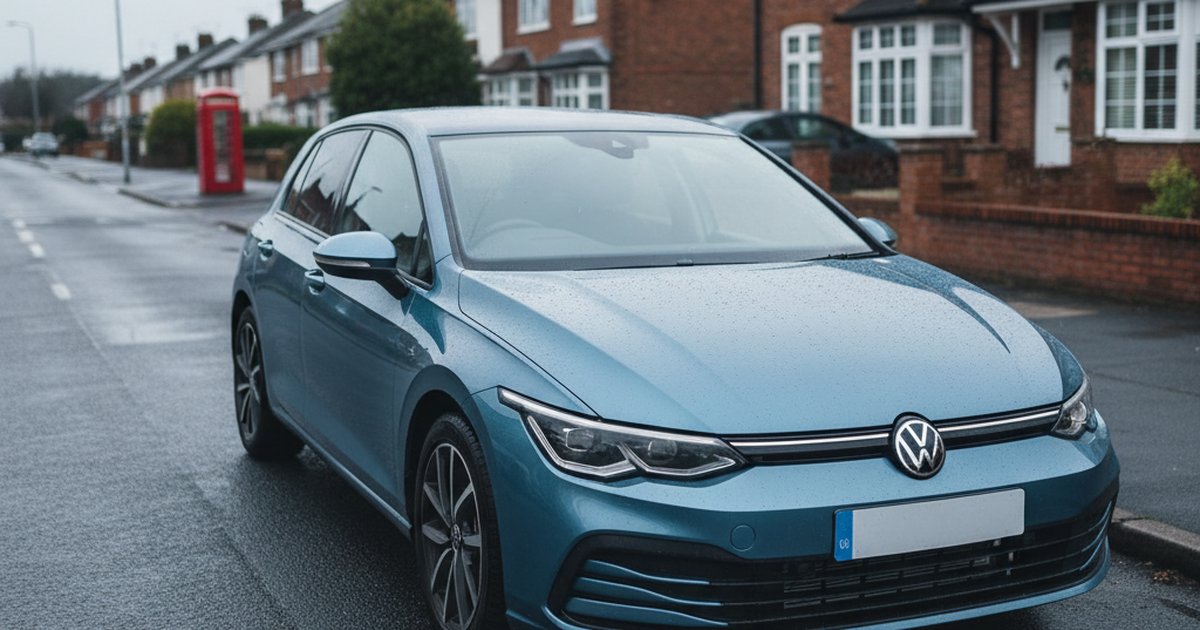
The Volkswagen Golf remains Britain's default hatchback choice, with good reason. But our analysis of 6,089,937 MOT tests across 648,107 vehicles reveals stark differences between model years, fuel types, and ownership patterns that should inform your buying decision.
The data shows a clear split: petrol Golfs consistently outperform their diesel siblings by 3-5 percentage points on MOT pass rates, and the dangerous defect gap is even more pronounced. If you're shopping for a used Golf, choosing the right year and fuel type matters far more than most buyers realise.
TL;DR: Buy a 2013-2014 petrol Golf (85-87% pass rates, around 73,000 miles now) and avoid pre-2012 diesels (dangerous defect rates above 44%). The e-Golf looks tempting but shows surprisingly poor reliability scores despite strong first MOT performance.
Should You Buy Petrol or Diesel?
The answer is unambiguous: petrol. Every single model year in our dataset shows petrol Golfs passing MOTs at higher rates than their diesel equivalents. The 2014 petrol achieves 87.2% against the diesel's 84.0%. The 2017 petrol hits 89.3% while the diesel manages just 87.0%.
But the real story lies in dangerous defects. Pre-2013 diesel Golfs show dangerous defect rates above 44%, meaning nearly half have flagged at least one serious safety issue during their MOT history. The 2010 diesel sits at 45.5%, the 2011 at 44.7%, the 2012 at 44.4%. Compare that to petrol models from the same years: 39.2%, 37.1%, and 33.9% respectively. Still high, but meaningfully better.
Diesel Golf owners also drive harder. The average diesel covers 8,500-9,700 miles annually versus 6,200-6,900 for petrol models. Higher mileage means more wear on suspension bushes and shock absorbers, which explains why these components dominate the diesel defect lists. The DVSA MOT data confirms suspension arm bushes appear in 14-16% of diesel tests but barely appear in petrol failures.
Ownership profile matters: Petrol Golf buyers average just 6,200 miles annually. These are gentle-use cars, often second vehicles or urban runabouts. Diesel buyers are covering 8,500+ miles, suggesting motorway commutes and harder lives.
Which Years Offer the Best Value?
The 2013-2014 petrol Golfs represent the sweet spot. The 2013 achieves an 85.6% pass rate with just 1.3 defects per test, while the 2014 hits 87.2% with 1.2 defects per test. These are now sitting at 73,000-76,000 miles, well within their serviceable life, and priced realistically in the used market.
The 2015 petrol is even stronger on paper (88.2% pass rate) but costs more for marginal gains. The 2012 petrol at 82.9% offers budget appeal but the dangerous defect rate of 33.9% gives us pause. That four-point improvement from 2012 to 2013 reflects Volkswagen's mid-cycle refresh and is worth paying for.
Diesel buyers should look at 2015-2017 models if they must go oil-burner. The 2015 diesel manages 85.3% with a dangerous defect rate of 33.1%, finally dipping below the psychologically important 35% threshold. But frankly, with petrol versions from the same year hitting 88.2%, we struggle to recommend any diesel Golf unless you genuinely need the extra torque for towing or rack up 15,000+ miles annually.
According to What Car? owner satisfaction data, diesel Golf buyers frequently cite DPF issues and EGR valve failures as frustrations. Our MOT data supports this: shock absorber problems (often EGR-related in diesels due to increased vibration) plague 22-23% of 2013-2015 diesel tests.
Which Years Should You Avoid?
Steer clear of 2010-2012 diesel Golfs. The numbers are damning: pass rates below 81%, dangerous defect rates above 44%, and suspension bushes wearing out faster than they should. The 2011 diesel shows 16.4% of tests flagging excessively worn rear bushes, a failure rate we don't see in any petrol equivalent.
The 2010 diesel deserves special mention for averaging 2.0 defects per test, the joint-highest in the entire dataset alongside the 2011 diesel. These cars are now at 128,000 miles and showing their age badly. At 14 years old, they're entering the expensive maintenance phase where multiple components fail simultaneously.
Surprisingly, the newest models underperform. The 2021 petrol (admittedly on limited data of just 283 tests) shows a reliability score of just 516/1000, the lowest of any mainstream petrol Golf. This reflects first-MOT-age cars where manufacturing defects and early-life issues surface. The 2023 petrol sits at 602/1000. Both should improve as the sample size grows, but it's a reminder that newest does not always mean best.
Is the e-Golf Worth Buying?
The e-Golf presents a paradox. First MOT pass rates look strong: 91.8% for 2015 models, 90.4% for 2017, 89.3% for 2020. But reliability scores tell a different story: 604/1000 for 2015, 523/1000 for 2017, 568/1000 for 2020. Even the newest 2020 e-Golf scores worse than a 2013 petrol model (734/1000).
The problem is tyres. Nearly 30% of e-Golf MOT tests flag tyre wear issues, significantly higher than petrol models (17-22%). This reflects the instant torque of electric motors causing more aggressive inner-edge wear, plus the extra 300kg of battery weight stressing the front tyres. The 2016 e-Golf shows 29.7% of tests catching tyres worn to the legal limit or with inner-edge wear, and brake disc issues appear in 25.3% of tests.
The dangerous defect rate concerns us: 36.1% for both 2015 and 2016 e-Golfs, higher than equivalent petrol models. Brake disc wear appears in 22-25% of tests, likely due to regenerative braking allowing conventional discs to corrode from lack of use. RAC breakdown data confirms this as a common EV issue.
Battery concerns: The e-Golf reliability scores factor in age-related degradation, but our data doesn't capture battery health directly. At 78,000-82,000 miles and 7-8 years old, early e-Golfs may be approaching expensive battery replacement territory.
What Goes Wrong Most Often?
Tyres dominate every Golf's defect list, appearing in 17-27% of tests depending on model and fuel type. This is partly routine wear, but the data shows specific patterns. Diesel Golfs suffer inner-edge wear (likely alignment issues from worn suspension bushes), while e-Golfs wear tyres faster overall due to weight and torque.
Shock absorbers are the next major concern, appearing in 11-23% of tests. The critical severity rating means these failures prevent the car passing until fixed. Petrol models show 'light misting of oil' in 11-18% of tests, while diesels escalate to 'limited damping effect' in 12-23% of tests. This degradation pattern suggests diesel owners push their cars harder or defer maintenance longer.
Brake disc wear affects 11-16% of tests across all fuel types, but the e-Golf suffers disproportionately at 22-25%. Standard Golfs wear discs through use; e-Golfs corrode them through lack of use as regenerative braking does the work. It's a perverse outcome of efficiency.
Suspension bushes plague older diesels specifically. The 2011-2012 diesels show 16.4% of tests catching worn rear bushes, double the rate of petrol equivalents. This reflects both higher annual mileage (8,500 vs 6,200) and potentially harder driving styles. Fix costs run £200-400 depending on which bushes need replacement.
How Hard Are Owners Driving These Cars?
The mileage data reveals distinct ownership tribes. Petrol Golf buyers are doing 6,200-7,200 miles annually. These are school-run cars, urban commuters, second vehicles. Current odometers sit at 43,000-95,000 miles depending on age, suggesting many lead pampered lives.
Diesel owners rack up 8,300-9,700 miles yearly, with 2018-2019 diesels hitting the top end at 9,400-9,700. These cars earn their keep on motorways, which should suit a diesel. But the MOT data shows suspension and shock absorber failures undermining this advantage. High mileage exposes marginal build quality.
The e-Golf sits between the two at 7,300-8,400 miles annually, suggesting these appeal to environmentally conscious buyers doing moderate mileage. At 59,000-82,000 miles currently, they're not exactly low-use city cars. This contradicts the common perception that EVs do limited miles.
One surprise: the newest petrol Golfs (2018-2023) show increasing annual mileage of 6,900-7,700 miles, up from 6,200 in 2013-2015. Buyers are driving them more, possibly because improved refinement and equipment levels make longer trips more appealing. Or possibly indicating these are now family-only cars as second-car ownership declines.
Found a year you like? A good year still hides a clocked odometer, outstanding finance or a past write-off. Before you hand over any money, check the exact VW Golf.
Frequently asked questions
What is the most reliable VW Golf year?
The 2014 petrol Golf shows the strongest combination of 87.2% MOT pass rate, just 1.2 defects per test, and 27% dangerous defect rate. The 2013 petrol runs it close at 85.6% pass rate with a class-leading reliability score of 734/1000.
Should I buy a diesel or petrol Golf?
Petrol. Every model year shows petrol Golfs passing MOTs 3-5 percentage points higher than diesels, with dangerous defect rates 5-8 points lower. Unless you genuinely need a diesel for high mileage (15,000+ annually) or towing, petrol is the smarter choice.
Are e-Golfs reliable?
Not according to our MOT data. Despite strong first MOT pass rates (87-91%), reliability scores sit at just 503-604/1000, well below petrol equivalents. Tyre wear affects 28-30% of tests, brake disc corrosion hits 22-25%, and dangerous defect rates reach 36%.
What mileage is too high for a used Golf?
Petrol Golfs remain viable to 100,000+ miles if well maintained. Diesels start showing suspension and shock absorber problems above 90,000 miles. Our data shows 2010-2012 diesels now at 115,000-128,000 miles with pass rates below 81%, suggesting this is where major component failures accelerate.
Which Golf model years have DPF problems?
While MOT data doesn't directly record DPF failures, 2010-2015 diesels show elevated shock absorber and emissions-related defect rates consistent with DPF and EGR issues. The 2013-2014 diesels flag shock absorber problems in 22-23% of tests, often a symptom of DPF regeneration causing increased vibration.
Our Verdict
The Golf remains a sensible used buy if you choose carefully. Stick to 2013-2015 petrol models, expect to replace tyres and shock absorbers as routine maintenance, and you'll have a dependable hatchback that should sail through MOTs. Avoid the temptation of cheap diesels from 2010-2012, because the dangerous defect rates above 44% and suspension problems make them poor value however affordable they seem.
Before you commit to any used Golf, run the registration through PlateInsight. You'll get the complete MOT history, mileage verification, and see exactly which defects that specific car has accumulated. We give you 5 free credits to start, enough to check several candidates and find the cleanest example. Better to walk away from a lemon now than discover its MOT history after you've bought it.
You might also like
Check Any Vehicle's Full History
MOT results, mileage timeline, AI health score, and market valuations. New users get 5 free credits.