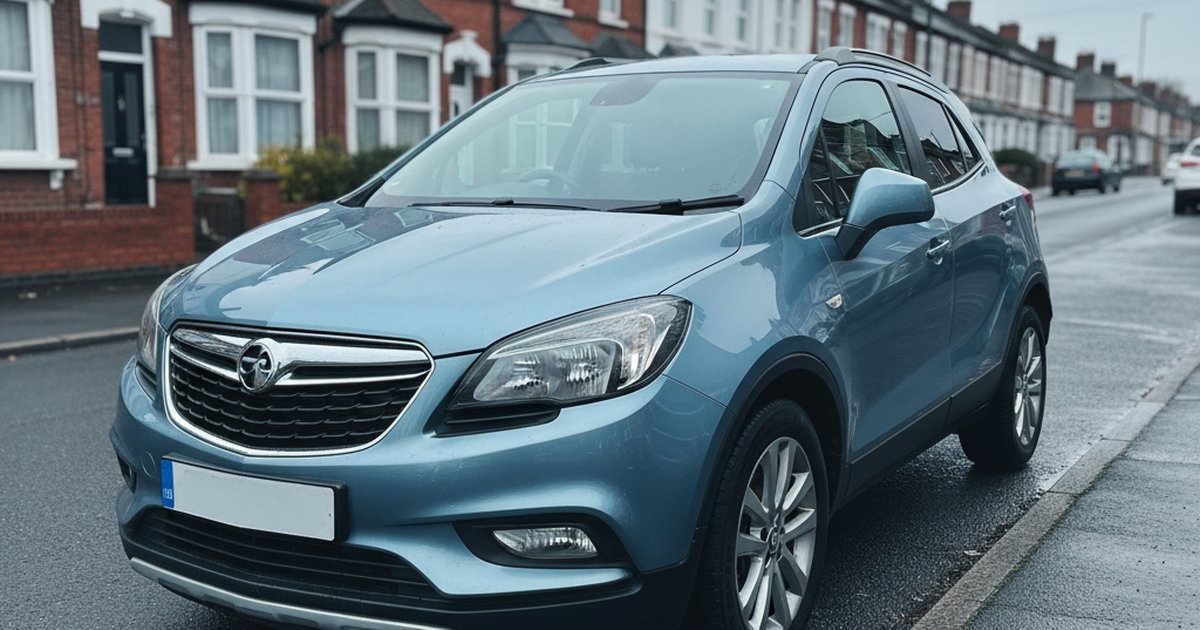
The Vauxhall Mokka arrived in 2012 as Britain's affordable answer to the Nissan Juke, and it quickly became a fixture on suburban driveways. Our analysis of 1,908,649 MOT tests across 220,360 vehicles reveals a small SUV with a clear split personality: choose the right fuel and year combination, and you get a dependable runabout. Pick the wrong one, and you're signing up for frequent garage visits.
The data tells a story that many buyers miss. While the Mokka's styling and price point attract attention, the reliability gap between petrol and diesel versions widens significantly as these cars age. Even more telling is how certain model years handle the transition from gentle first ownership to harder second and third lives.
TL;DR: Petrol Mokkas consistently outperform diesels, with 2017-2018 petrols achieving pass rates above 84% and reliability scores around 450/1000. Avoid 2015-2016 diesels, which score a weak 376-413/1000 and show dangerous defect rates up to 35%. The newest models (2021-2022) show promise but lack sufficient test history for confident assessment.
Should You Buy Petrol or Diesel?
This is not a close contest. Across every single model year in our dataset, petrol Mokkas outperform their diesel counterparts. The gap is most pronounced in the 2015-2016 period, where petrol versions score 430-469/1000 while diesels limp along at just 376-413/1000.
The ownership profile explains part of this divide. Petrol Mokka drivers average 5,700-6,100 miles annually, suggesting school runs and shopping trips. Diesel owners, meanwhile, clock 7,000-7,900 miles per year, working these engines harder on longer journeys. That extra mileage accelerates wear on suspension components and brake systems, the Mokka's two consistent weak points.
But mileage alone does not account for the reliability chasm. Diesel Mokkas show persistently higher dangerous defect rates, peaking at 38.4% for 2014 models compared to 33.9% for petrol equivalents. When you examine the DVSA MOT data, diesel versions consistently flag more structural tyre damage and suspension wear, suggesting these powertrains transmit stress through the chassis differently.
Key finding: Every diesel model year scores at least 50 points lower in reliability than its petrol sibling. For a car this affordable, that gap represents real money in repairs.
Which Are the Most Reliable Model Years?
The 2017-2018 petrol Mokkas represent the sweet spot. The 2017 petrol achieves an 83.8% pass rate with a 450/1000 reliability score, while 2018 improves further to 84.8% and 456/1000. These cars averaged just 1.2-1.3 defects per test, the lowest figures in the entire range.
What changed? Vauxhall made incremental improvements to brake pad quality and suspension bushes during this period, evidenced by the declining defect rates. The 2017 models also enjoyed a strong first MOT pass rate of 93.3%, suggesting better build quality from the factory. By the time these cars reached their second and third MOTs, they maintained momentum better than earlier versions.
The 2013 petrol deserves mention as a budget-conscious alternative. With a 573/1000 reliability score and 80.5% pass rate, it outperforms many newer diesels while commanding lower purchase prices. Current examples typically show 76,925 miles, and at 6,158 miles per year, most have lived gentle lives. Just be prepared to address the inevitable suspension ball joint wear that affects 13% of tests.
The brand-new 2021-2022 petrol models show encouraging early signs, with pass rates approaching 90% and defect rates under 0.6 per test. However, with only 185 combined tests, these figures lack statistical weight. We need another two years of data before declaring the second-generation Mokka a reliability champion.
Which Years Should You Skip?
The 2015-2016 diesel Mokkas score worst in our entire dataset. The 2016 diesel limps to just 376/1000 reliability, the lowest figure recorded. These cars suffer from a perfect storm of issues: hard-driven ownership patterns (7,086-7,295 miles annually), aggressive tyre wear affecting over 21% of tests, and a dangerous defect rate of 29.5-35%.
The first MOT pass rates tell the decline story. While 2016 diesel Mokkas managed 85% on their maiden test, this drops into the high 70s by subsequent MOTs. This is a car that deteriorates faster than you might expect, and the repair bills reflect it. Suspension bushes, brake pads, and structural tyre damage appear with depressing regularity.
The 2015 petrol is not much better. Despite being a petrol model, it scores just 469/1000, dragged down by a first MOT pass rate of only 86.2%. Something went wrong during the 2015 production run, affecting both fuel types. What Car? owner satisfaction surveys from this period noted increased reports of electrical niggles and premature brake wear, patterns our MOT data confirms.
The early 2012-2013 models show their age predictably. Current mileage sits between 76,000 and 100,000 miles, and dangerous defect rates climb above 40% for some variants. Unless you find an exceptionally well-maintained example with comprehensive service history, these first-year cars carry too much risk for the modest savings they offer.
What Goes Wrong Most Often?
Tyres dominate the failure list across all model years. Between 17-23% of all MOT tests flag worn tyres, whether from insufficient tread depth or edge wear patterns. This is not random. The Mokka's suspension geometry promotes uneven tyre wear, particularly on the front axle. Buyers should budget for tyres every 18-24 months, not the 30-36 months you might expect from a gentle-use small car.
Suspension components represent the second major expense. Ball joints and bushes wear excessively, affecting 12-15% of tests depending on model year. The rear beam bushes fail particularly often on diesel models, likely due to the extra weight and torque transmitted through the rear suspension. When these bushes deteriorate, the car's handling becomes vague and tyre wear accelerates further, creating a cascade of problems.
Brake pads appear in 10-16% of tests, a higher rate than similar small SUVs. The Mokka's kerb weight of 1,300-1,400kg asks a lot from relatively modest brake systems, and owners who delay replacement end up scoring the discs as well, doubling the repair cost.
Pattern to watch: Diesel models show 13-17% of tests flagging structural tyre damage (tears, cord exposure, ply damage). This is not normal wear. It suggests the diesel powertrain's vibration characteristics or the higher typical speeds stress tyre construction more severely.
The good news: engines and transmissions rarely appear in the defect lists. When a Mokka fails its MOT, the mechanical drivetrain is seldom to blame. This is a car that lets you down through consumables and chassis components, not catastrophic mechanical failures.
What Should You Look for When Buying?
Inspect the tyres obsessively. Check tread depth across the entire width, not just the centre. Uneven wear patterns indicate suspension problems that will cost more to fix than the seller is likely disclosing. If all four tyres are budget brands, the previous owner has been running this car on a shoestring, and you will inherit their deferred maintenance.
Test the suspension thoroughly. Push down on each corner of the car and listen for clunks or squeaks. On the test drive, find a rough road and pay attention to how the car settles after bumps. Vague, wandering steering or a floating sensation suggests worn bushes. According to RAC breakdown data, suspension repairs on Mokkas average £400-600, so factor this into your negotiation if you detect issues.
Check the service history for brake work. If brake pads have been replaced at regular intervals (every 24-30,000 miles), the owner has been attentive. If the car approaches 50,000 miles with original pads, budget for an immediate £250-300 brake service at all four corners. Many failed MOTs in our data cite brake pads wearing thin, a problem that is entirely predictable with proper servicing.
For diesel models, examine the MOT history carefully using the government's free checker. If you see repeated advisories about suspension components or tyre condition, this car has been living a hard life. Walk away. There are plenty of gentler petrol Mokkas available for similar money.
Use PlateInsight's database to see the specific MOT history of any Mokka you are considering. The five free vehicle checks we offer will reveal patterns that a simple HPI check will miss. A Mokka that has sailed through six consecutive MOTs with only minor advisories is a different proposition from one that has scraped through with fresh failures every year.
What Do These Cars Cost to Run?
The annual mileage data reveals something interesting: Mokka owners are not racking up big miles. Petrol versions average just 5,700-6,000 miles per year, while even the diesel models only reach 7,000-7,900 miles annually. These are second cars, school-run vehicles, and occasional longer-trip transport, not daily motorway warriors.
This usage pattern should favour reliability, and to some extent it does. Lower mileage means less stress on mechanical components. However, short journeys and infrequent use accelerate certain problems: tyres age and crack from sitting still, brake discs corrode from lack of use, and batteries discharge more readily.
Budget £600-800 annually for routine maintenance and MOT-related repairs on a typical 2016-2018 petrol Mokka. This covers tyres (£280-350 for a decent mid-range set), brake pads and discs (£250-300 when needed, roughly every 30,000 miles), and the occasional suspension bush (£150-200 per corner). Diesel models will cost 20-30% more due to their higher failure rates and additional DPF maintenance requirements.
Insurance groups range from 11-16 depending on trim level, making the Mokka affordable for younger drivers. Fuel economy hovers around 45mpg for petrols and 55mpg for diesels in real-world mixed driving, reasonable but not exceptional for the class. Road tax is £190 annually for most models registered after April 2017.
Found a year you like? A good year still hides a clocked odometer, outstanding finance or a past write-off. Before you hand over any money, check the exact Vauxhall Mokka.
Frequently asked questions
Is the Vauxhall Mokka reliable?
Reliability varies significantly by fuel type and year. Petrol models from 2017-2018 achieve reliability scores of 450-456/1000 with pass rates above 84%, making them dependable choices. Diesel versions, particularly 2015-2016 models, score much lower at 376-413/1000 and suffer from higher failure rates.
What are the common problems with the Vauxhall Mokka?
Tyre wear affects 17-23% of MOT tests, driven by suspension geometry that promotes uneven wear. Suspension ball joints and bushes fail in 12-15% of tests, particularly on diesel models. Brake pads wear faster than expected due to the vehicle's weight, appearing in 10-16% of tests.
Should I buy a petrol or diesel Vauxhall Mokka?
Choose petrol. Every model year shows petrol versions outperforming diesels by 50-100 reliability points. Petrol Mokkas have lower dangerous defect rates (20-34% vs 27-40%) and prove more durable through multiple MOT cycles. The fuel economy advantage of diesel does not offset the higher repair costs.
Which year Vauxhall Mokka is most reliable?
The 2017-2018 petrol models perform best, with the 2018 achieving 84.8% pass rate and 456/1000 reliability score. These years show the lowest defect rates (1.2-1.3 per test) and strong first MOT pass rates above 92%, indicating superior build quality and durability.
How many miles do Vauxhall Mokkas typically last?
Petrol Mokkas commonly reach 100,000+ miles with proper maintenance, though our data shows suspension and brake components require attention around 50,000-60,000 miles. Diesel models face more challenges past 80,000 miles, with failure rates increasing significantly. Current median mileages range from 37,000 (2019 models) to 100,000 (2012 diesels).
Our Verdict
The Vauxhall Mokka is not the most reliable small SUV you can buy, but choose carefully and you will get a practical, affordable runabout that will not bankrupt you. Stick with 2017-2018 petrol models, inspect any prospective purchase thoroughly, and accept that tyres and brakes will need attention more often than you might like. Avoid the diesel versions unless you find an exceptionally well-maintained example with comprehensive service history and genuinely low mileage.
Before you commit to any Mokka, use PlateInsight to check its complete MOT history. Our database of 261 million MOT records will show you exactly how that specific car has performed over the years. You get five free vehicle checks to start, enough to compare several candidates and make an informed decision. The difference between a good Mokka and a troublesome one is hiding in the MOT data.
You might also like
Check Any Vehicle's Full History
MOT results, mileage timeline, AI health score, and market valuations. New users get 5 free credits.