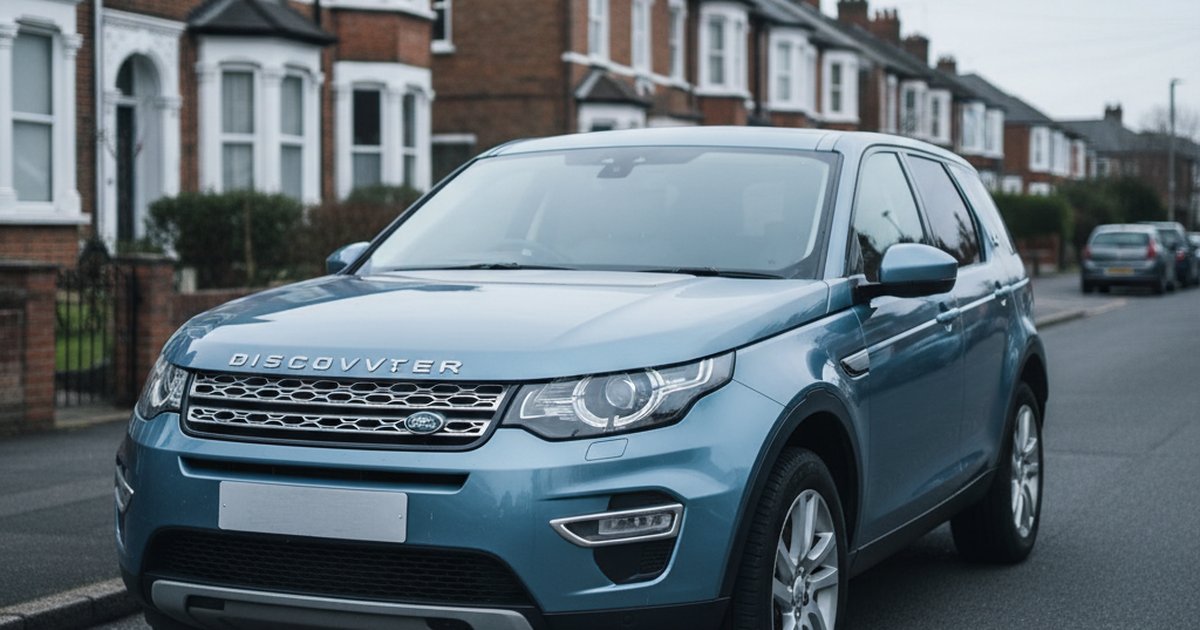
The Land Rover Discovery Sport arrived in 2014 as the spiritual successor to the Freelander, targeting families who wanted seven seats wrapped in a premium badge. Over 92,841 of these vehicles have now accumulated 672,434 MOT tests in the UK, giving us the most complete reliability picture you'll find anywhere.
The data reveals a troubling pattern. Early models from 2015-2016 score a middling 630-567 out of 1000 for reliability, but newer examples actually perform worse. The 2019 diesel manages just 494/1000, while the 2019 petrol scores an alarming 448/1000. For a car that still commands strong used prices, these numbers demand explanation.
We've analysed every MOT record from the DVSA database to tell you which Discovery Sports hold up and which years to avoid. The findings won't please Land Rover marketing.
TL;DR: The 2015 diesel (630/1000) is the best of a compromised bunch, but reliability declines as the model ages. 2019 examples score just 494-448/1000 despite being newer. Brake discs and tyres dominate defect lists across all years, while dangerous defect rates hit 39% on early 2014 models. If you need a premium seven-seat SUV, we'd suggest looking at rivals.
Which Discovery Sport Years Actually Hold Up?
The 2015 diesel scores 630/1000, making it the least problematic year in our dataset. Pass rates sit at 85.0%, and while that's hardly stellar, it's better than what follows. These early cars average 87,994 miles on the clock now, covering about 7,984 miles annually. That's gentle use for a family SUV, suggesting many serve as second cars or school run vehicles.
The 2014 diesel scores 677/1000 but only 85 vehicles exist in our data, making it statistically unreliable. More concerning is the 38.8% dangerous defect rate, nearly double what we see in later years. Early production issues likely explain this, and with most examples now over 82,000 miles, you're buying someone else's well-used project.
Petrol versions appear in tiny numbers. The 2017 petrol manages 569/1000 across just 346 vehicles, while 2018 and 2019 petrol models score 521 and 448 respectively. Lower annual mileage (around 6,700-7,000 miles) suggests these serve lighter duties, yet reliability still disappoints. What Car? owner satisfaction surveys consistently rank Land Rover near the bottom for dependability, and our MOT data confirms why.
Why Do Newer Models Score Worse?
Here's the uncomfortable truth: 2019 Discovery Sports score 494/1000 for diesel and 448/1000 for petrol, despite being four years younger than the 2015 models. First MOT pass rates tell the story. The 2015 cars achieved 86.7% first-time passes, but by 2019 that dropped to 81.0% for diesels and 83.2% for petrols.
These aren't high-mileage examples falling apart through abuse. The 2019 diesels average just 54,098 miles currently, with annual use of 8,906 miles. They're failing MOTs younger and with fewer miles than their predecessors. Land Rover introduced various updates and facelifts through the model's run, but none appear to have improved fundamental durability.
Key finding: Defects per test climb from 1.4 on 2015-2017 models to 1.5 on 2019 diesels. That might sound trivial, but it represents a 7% increase in issues per inspection. For context, a Honda CR-V from the same era averages around 0.9 defects per test.
The 2018 models sit in the middle with scores of 515/1000 for diesel and 521/1000 for petrol. First MOT pass rates dropped noticeably to 82.2% for diesels, suggesting quality control issues crept in during this production period. These cars still command prices around £18,000-£22,000, yet they're delivering reliability scores more typical of budget brands.
What Actually Goes Wrong?
Brake discs and tyres absolutely dominate every year's defect list. Between 20-27% of all MOT tests across all years flag worn or scored brake discs. That's excessive. The Discovery Sport's kerb weight hovers around 1,900kg, and those extra kilos punish brakes relentlessly. Expect to replace front discs and pads every 25,000-30,000 miles if the car sees regular use.
Tyre wear appears in 25-39% of tests, with 2019 diesels hitting the peak at 39%. The MOT data frequently mentions inner edge wear, suggesting alignment issues or suspension geometry problems. This isn't just expensive (four premium SUV tyres cost £600-800), it's also a safety concern that many owners clearly ignore until MOT time.
The 2014 models show particularly concerning patterns. Dangerous defect rates of 38.8% mean more than one in three vehicles presented a serious safety risk at some point. While this drops to 18-23% on newer models, that's still roughly double what we see on genuinely reliable SUVs. The RAC consistently lists Land Rover models among their most frequent callouts, particularly for electrical faults and suspension issues that don't always show in MOT data.
Brake pad replacement appears in 15-19% of tests across all years. Combined with the disc issues, you're looking at a complete brake overhaul every couple of years for regular users. Budget £800-1,200 for a full brake job at an independent specialist, more at Land Rover dealers.
Should You Choose Diesel or Petrol?
The petrol Discovery Sports cover significantly fewer miles. The 2019 petrol averages 6,992 miles annually versus 8,906 for the diesel equivalent. Lower mileage should mean better reliability, yet the 2019 petrol scores just 448/1000 compared to the diesel's 494/1000. That's genuinely poor for a car averaging under 7,000 miles a year.
Petrol versions show slightly lower dangerous defect rates (18-22% versus 23-33% for diesels), but this advantage evaporates when you consider the overall reliability scores. The 2018 petrol, at 521/1000, actually underperforms its diesel sibling's 515/1000 despite 2,000 fewer annual miles. Either the petrol engines have specific issues, or these cars attract owners who maintain them poorly.
Diesel models made up the vast majority of sales, which means better parts availability and more specialist knowledge when things go wrong. The 2015 diesel benefits from this volume effect, with over 15,700 vehicles generating 144,497 test records. Compare that to just 346 petrol examples from 2017, and you'll find more choice, better pricing, and mechanics who actually know the common faults.
For families covering 10,000+ miles annually, the diesel makes marginal sense despite reliability concerns. For lighter use, neither variant impresses enough to recommend confidently. The AA breakdown statistics consistently show Land Rover diesels struggling with DPF and EGR issues, problems that won't necessarily appear in MOT data until they cause complete failure.
How Do High-Mileage Examples Fare?
The 2015 diesels now showing 87,994 miles still achieve 85.0% pass rates, which suggests these cars can reach six figures if maintained properly. However, that's damning with faint praise. An 85% pass rate means 15 in every 100 tests end in failure, requiring rectification work before the vehicle can legally drive.
Dangerous defect rates decline as the cars age (from 33% on 2015 models to 19% on 2019s), but this probably reflects survivor bias rather than improving reliability. The worst examples get scrapped or permanently sidelined, leaving slightly better specimens to skew the statistics. The 2016 models, now averaging 77,608 miles, still score just 567/1000, which is mediocre for what should be the sweet spot of ownership.
Brake and tyre wear clearly accelerate with mileage, as you'd expect. But the Discovery Sport seems particularly vulnerable. Where a Toyota RAV4 might reach 50,000 miles on original brake discs, the Disco Sport needs replacements at 25,000-30,000. Multiply that difference over 100,000 miles and you're looking at several thousand pounds in extra maintenance.
What Will This Car Actually Cost to Run?
MOT failures average 15-16% across the model range, and the defect data shows brake jobs and tyres dominate expenses. A set of four tyres costs £600-800, brake discs and pads run £800-1,200, and you'll face both bills regularly. Add annual servicing at £300-500 (more at dealers), and a Discovery Sport easily consumes £2,000-2,500 annually beyond fuel and insurance.
Reliability scores in the 450-630 range put this car firmly in the expensive-to-maintain category. For comparison, a Skoda Kodiaq from the same period typically scores 700-750/1000, while a Mazda CX-5 pushes towards 800/1000. Those extra points translate directly into fewer garage visits and lower bills.
Budget reality: If you're considering a £20,000 Discovery Sport, set aside at least £2,500 annually for maintenance and repairs beyond routine servicing. High-mileage examples will demand more, particularly if service history has gaps.
Land Rover dealers charge premium rates (£120-150/hour labour), but independent specialists exist in most areas. Check Auto Trader listings carefully for full service history. Missing stamps should trigger hard negotiation or walking away entirely. These cars cannot tolerate neglect.
Found a year you like? A good year still hides a clocked odometer, outstanding finance or a past write-off. Before you hand over any money, check the exact Land Rover Discovery Sport.
Frequently asked questions
Is the Land Rover Discovery Sport reliable in the UK?
No. Reliability scores range from 630/1000 (2015 diesel) down to 448/1000 (2019 petrol). MOT pass rates sit at 84-87%, with 15-16% of tests ending in failure. Brake and tyre wear dominates defect lists, requiring expensive replacement every 25,000-30,000 miles.
Which Discovery Sport year is most reliable?
The 2015 diesel scores 630/1000 with an 85.0% MOT pass rate across 144,497 tests. It's the best performer, but that's relative to a generally unreliable model range. Newer 2019 examples score worse despite being younger.
Should I buy a diesel or petrol Discovery Sport?
Diesel models score marginally better and benefit from higher production numbers (better parts availability, more specialist knowledge). The 2019 petrol manages just 448/1000 despite covering only 6,992 miles annually. Neither option genuinely impresses for reliability.
What goes wrong with the Discovery Sport?
Brake discs appear worn or scored in 20-27% of all MOT tests across all years. Tyre wear (often inner edge) affects 25-39% of tests, peaking at 39% for 2019 diesels. Expect brake replacements every 25,000-30,000 miles at £800-1,200 per job.
How much does a Discovery Sport cost to maintain?
Budget £2,000-2,500 annually beyond fuel and insurance. Frequent brake jobs (£800-1,200), tyres (£600-800 per set), and regular MOT failures drive costs up. Land Rover dealer servicing adds £120-150/hour labour rates to these expenses.
Our Verdict
The Discovery Sport's MOT data reveals a car that struggles to match rivals for dependability. The 2015 diesel offers the best compromise, but even that manages just 630/1000 for reliability. Newer doesn't mean better here, with 2019 models scoring worse than their 2015 predecessors despite lower mileage. Factor in expensive brake and tyre wear patterns, and this premium badge comes with premium running costs that don't reflect premium reliability.
Before you commit to any Discovery Sport, check its complete MOT history on PlateInsight. Your first 5 checks are free, and you'll see exactly which faults appeared at which mileages. For a car this compromised, knowing the specific vehicle's history isn't optional, it's essential. The badge might say Land Rover, but the MOT records say buyer beware.
You might also like
Check Any Vehicle's Full History
MOT results, mileage timeline, AI health score, and market valuations. New users get 5 free credits.