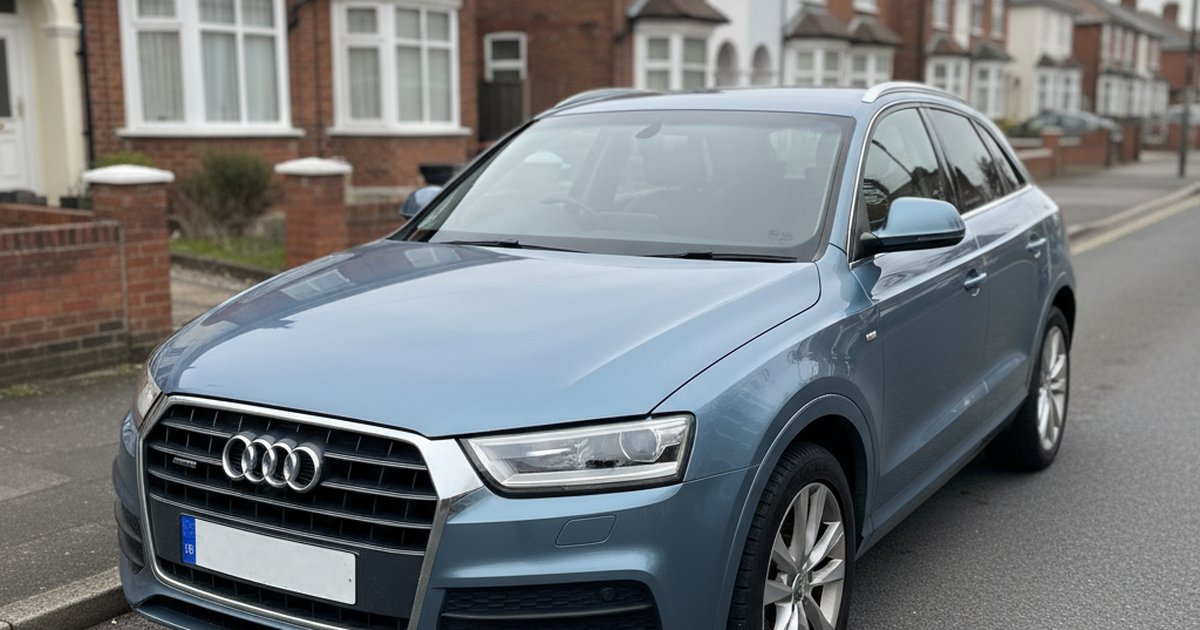
The Audi Q3 sits in that awkward middle ground where premium badge appeal meets mass-market expectations. Buyers want the four rings on the bonnet, but they also want the reliability of a Toyota. But do they get it?
We've analysed 891,343 MOT tests across 107,527 Audi Q3s to find out. The data reveals a model where fuel type makes a bigger difference than most buyers realise, and where certain model years show troubling patterns that Audi would rather you didn't notice.
TL;DR: Petrol Q3s consistently outperform diesels by 80-100 reliability points, with some petrol years scoring over 800/1000. Early diesels (2011-2016) show dangerous defect rates approaching 40%, while newer petrol models from 2017 onwards deliver the best balance of performance and dependability.
Does fuel type really matter that much?
Yes, and the gap is wider than you'd expect from a premium manufacturer. Across nearly every model year, petrol Q3s outscore their diesel equivalents by 70-120 reliability points. Take 2013 as an example: the petrol version scores 795/1000 while the diesel manages just 683/1000. That's not a rounding error, it's a fundamental difference in how these cars age.
The diesel story gets worse when you look at dangerous defects. The 2012 diesel Q3 has a dangerous defect rate of 39.4%, meaning two in five vehicles have flagged serious safety issues at some point. Compare that to the petrol equivalent at 29.2%, and you start to understand why we're cautious about recommending diesel Q3s from this era.
Annual mileage data tells part of the story. Diesel owners average 7,500-8,700 miles per year depending on the year, while petrol owners sit at 5,900-7,100 miles. These aren't taxi-spec diesels being thrashed, but they are working harder, and it shows in the MOT bay. The DVSA MOT data confirms what independent workshops have been saying for years: the Q3's diesel engines don't wear as gracefully as the petrols.
Should you avoid 2011-2014 models?
If you're looking at diesels from this period, the answer is probably yes. The 2012 diesel posts the worst reliability score in the entire dataset at 699/1000, paired with that 39.4% dangerous defect rate we mentioned. These are 12-13 year old cars now, sitting at around 109,000 miles, and they're showing their age in expensive ways.
Suspension components are the killer. From 2014 onwards, suspension arm pins and bushes become a recurring theme, affecting up to 18% of tests. That's not a simple fix - you're looking at several hundred pounds for parts and labour, and it's the kind of job that often reveals additional problems once the car is on the lift.
The 2011 models are actually slightly better than their 2012-2014 successors, which is unusual. The 2011 diesel scores 727/1000 versus 699/1000 for 2012, despite being older and having covered more miles. This suggests the 2012 model year introduced changes that didn't improve reliability. We'd still take a 2011 petrol (807/1000) over any early diesel, though.
Key point: First MOT pass rates on early diesels look decent (91-92%), but degradation accelerates after that initial test. The gap between first MOT and overall pass rates tells you these cars don't age well.
Which years deliver the best reliability?
The 2011 petrol Q3 tops the reliability charts at 807/1000, but you'll struggle to find good examples now. More realistically, the 2015-2017 petrol models offer the best compromise between age, availability and dependability. The 2015 petrol scores 710/1000, while 2016 and 2017 both sit around 700/1000.
What makes these years work? They've passed the early teething problems, they're not old enough to be falling apart, and they sit at sensible mileages (55,000-65,000 miles currently). The 2017 petrol shows particularly strong first MOT performance at 93.6%, suggesting build quality was solid from the factory.
If you must have diesel for the extra torque or longer motorway range, the 2019 diesel (701/1000) is your best bet. It's the only diesel in the entire dataset that breaks 700/1000 for reliability, and the dangerous defect rate has dropped to a more acceptable 16.4%. These cars are only just coming through their first MOTs now, so the real test is still ahead.
According to What Car? owner satisfaction data, 2017-2019 Q3s score consistently well for ownership experience, which aligns with what we're seeing in the MOT records.
What actually goes wrong?
Tyres dominate the defect lists across all years, appearing in 20-30% of tests. Before you dismiss this as routine maintenance, consider what it tells you about ownership patterns. Q3 buyers are running their tyres down to the legal limit and beyond, which suggests either cost-conscious ownership or simple neglect. Either way, it's a red flag when you're viewing a used example.
Brake discs are the second recurring theme, showing up in 13-20% of tests depending on year and fuel type. The 2017 and 2018 diesels are particularly bad for this, with 19-20% of tests flagging scored or pitted discs. Premium car, premium brake prices - you're looking at £300-500 for a front disc and pad replacement at an independent, more at an Audi dealer.
The suspension issues we mentioned earlier concentrate in the 2014-2016 period. Wishbone bushes and suspension arm pins wear excessively, leading to clunking noises and poor handling. This is a known weakness on the RAC's most common repairs list for premium compact SUVs of this era.
From 2018 onwards, we see an odd spike in 'ply or cords exposed' tyre failures, appearing in 17-20% of tests. This isn't just worn tyres, it's damaged ones. Whether this reflects changing tyre quality, different wheel sizes fitted to later cars, or harsher driving conditions is unclear, but it's worth checking carefully when you're kicking tyres on the forecourt.
How does usage pattern affect reliability?
The Q3 is interesting because it splits into two distinct ownership camps. Petrol models average 5,900-7,100 miles annually - these are school run cars, weekend drivers, second vehicles. Diesels sit at 7,500-8,700 miles per year, suggesting primary family transport doing regular longer trips.
Lower mileage doesn't automatically mean better condition. The 2013 petrol averages just 5,878 miles per year, yet still picks up 1.2 defects per test. Short journeys and low annual mileage can be harsh on modern engines, particularly direct injection petrols that never get hot enough to clear carbon buildup. We'd rather see a 70,000-mile Q3 that's done regular motorway runs than a 40,000-mile example that's never left town.
Current mileage data shows predictable patterns: early diesels are well past 100,000 miles now, while 2019 models sit at 42,000-50,000 miles. The sweet spot for buying is probably 50,000-70,000 miles on a 2016-2018 petrol - old enough to have depreciated, not old enough to need major expenditure.
Are newer Q3s any better?
The second-generation Q3 arrived in 2019, and early MOT data is cautiously encouraging. The 2019 petrol scores 670/1000 with a 92.4% pass rate, while the diesel manages 701/1000 at 91.5%. These are both improvements over the 2016-2018 period, though not dramatically so.
Dangerous defect rates have dropped significantly - the 2019 petrol is down to 14.4% compared to 30-40% on early diesels. This matters if you care about your family's safety, which presumably you do if you're buying a premium SUV.
The 2020 models in our dataset have limited test data (just 434 tests for the petrol), so treat those scores with caution. What we can say is that first MOT pass rates remain strong at 88-94%, suggesting Audi hasn't dropped build quality on the newer generation.
We're particularly impressed by how few defects per test the recent petrols show - just 1.0-1.1 issues per MOT for 2019-2020 cars. Compare that to 1.5-1.6 for the 2012-2015 diesels, and you're talking about genuinely more reliable engineering.
Found a year you like? A good year still hides a clocked odometer, outstanding finance or a past write-off. Before you hand over any money, check the exact Audi Q3.
Frequently asked questions
What is the most reliable Audi Q3 model year?
The 2011 petrol Q3 scores highest at 807/1000, but finding good examples is difficult. More practically, the 2015-2017 petrol models deliver the best balance of reliability (700-710/1000), availability and reasonable pricing.
Should I buy a diesel or petrol Audi Q3?
Petrol models consistently outscore diesels by 70-120 points across all years. Unless you're doing 12,000+ motorway miles annually, the petrol Q3 is the safer choice both mechanically and financially.
What are the common problems with the Audi Q3?
Tyres worn to legal limits (affecting 20-30% of tests), brake discs wearing and pitting (13-20% of tests), and suspension arm bushes failing on 2014-2016 models (up to 18% of tests). Early diesels also show high dangerous defect rates.
How many miles should an Audi Q3 last?
Petrol Q3s averaging 6,000-7,000 miles annually show strong reliability past 70,000 miles. Diesels doing 7,500-8,700 miles per year start showing significant issues after 90,000 miles, particularly on pre-2015 models.
Is the Audi Q3 expensive to maintain?
Yes. Brake disc replacement runs £300-500 at independents, suspension work is similar, and the frequent tyre wear seen in MOT data suggests running costs are higher than Japanese rivals. Factor this into your budget.
Our Verdict
The Audi Q3 isn't the reliability disaster some premium SUVs can be, but it's not a Honda CR-V either. Choose your model year carefully, favour petrol over diesel unless you have compelling reasons otherwise, and budget for higher than average maintenance costs. The badge comes with baggage.
Before you commit to any Q3, check its full MOT history on PlateInsight. Your first 5 vehicle checks are free, and you'll see exactly what that specific car has failed for, not just the model average. Sometimes the difference between a good Q3 and a basket case is just one careful owner.
You might also like
Check Any Vehicle's Full History
MOT results, mileage timeline, AI health score, and market valuations. New users get 5 free credits.