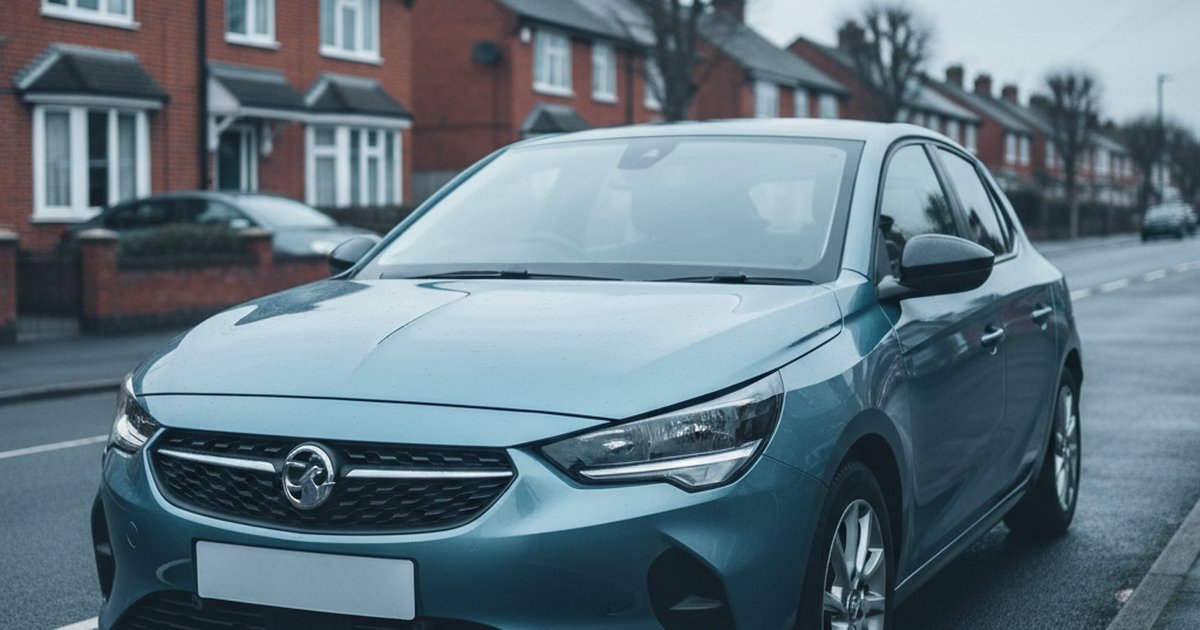
The Vauxhall Corsa is Britain's best-loved supermini, but not all model years are created equal. We've analysed 7,997,744 MOT tests across 719,447 vehicles to separate the dependable examples from the money pits.
The data tells a clear story: buy wrong and you'll face dangerous defect rates above 45%, with shock absorbers and suspension components failing at alarming rates. Buy right and you'll get an 80%+ pass rate with minimal drama. The difference between the best and worst years is stark, and it comes down to one critical transition: the move from the D generation (2006-2014) to the E generation (2014-2019).
Most buyers assume newer is better. The MOT records show that's not always true with the Corsa. Here we break down which years actually hold up, and which you should avoid entirely.
TL;DR: 2015-2016 petrol models are the sweet spot, with pass rates around 80% and reliability scores of 410-415. Avoid 2013-2014 D-generation cars (reliability scores 332-367) and any diesel unless you need the higher mileage capability. The 2010-2012 petrols are acceptable budget buys if you can verify maintenance history.
Why Does the 2014-2015 Transition Matter So Much?
The Vauxhall Corsa D (2006-2014) and Corsa E (2014-2019) look similar but are fundamentally different cars underneath. The MOT data exposes this brutally.
Take the 2014 petrol Corsa D: 74.9% pass rate, reliability score of 332, and a dangerous defect rate of 40%. Now look at the 2015 petrol Corsa E: 78.9% pass rate, reliability score of 410, and dangerous defects drop to 32.5%. That's a meaningful improvement across every metric that matters.
The pattern continues through 2016, where the petrol Corsa E achieves an 80.4% pass rate with a dangerous defect rate of just 28.2%. This isn't marginal - it's the difference between a car that's likely to need significant work at MOT time and one that typically sails through.
Critical point: The late D-generation cars (2013-2014) represent the worst of both worlds. They lack the improvements of the E generation but carry all the accumulated wear issues of an ageing platform. The 2013 petrol scores just 362 for reliability, with 45.2% of vehicles flagged for dangerous defects.
What changed? The E generation introduced better corrosion protection, improved suspension components, and more robust brake assemblies. You can see this in the defect patterns: shock absorber failures drop significantly, and coil spring fractures become less common. The DVSA MOT records show these improvements weren't marketing talk - they're measurable in real-world durability.
Should You Buy a Diesel Corsa?
The short answer: probably not, unless you're covering serious miles. The diesel Corsas consistently underperform their petrol siblings across almost every year.
Look at 2015, where the petrol scores 410 for reliability while the diesel manages 422. That seems like diesel wins, right? Wrong. The diesel's first MOT pass rate is 77.5% compared to the petrol's 84.5%. That 7-point gap at the critical first MOT tells you these engines develop issues faster than the statistics initially suggest.
The problem gets worse with the earlier D-generation diesels. The 2013 diesel has a first MOT pass rate of just 73.1% and picks up 2.1 defects per test on average. The 2012 diesel's first MOT pass rate is 77.4% - better, but still concerning for a three-year-old car.
Diesel owners are also covering considerably more ground. The 2017 diesel averages 9,278 miles annually compared to 5,748 for the petrol. Higher mileage means more wear, more DPF issues, and more opportunities for expensive failures. Unless you're regularly doing motorway runs that justify the diesel's better fuel economy, you're buying yourself problems.
The dangerous defect rates for diesels remain stubbornly high even in the better years. The 2016 diesel sits at 29% compared to 28.2% for the petrol - not much difference, but why take the risk when the diesel brings additional complexity?
Which Years Should You Actually Buy?
If you want a reliable Corsa, focus on 2015-2017 petrol models. These represent the sweet spot where the E generation's improvements have bedded in but you're not paying the premium for nearly-new metal.
The 2015 petrol is our top pick: 78.9% pass rate, 410 reliability score, and it averages just 1.6 defects per test. Current examples typically show 63,710 miles on the clock - well within sensible used car territory. These cars have now depreciated enough to represent genuine value, and the MOT history proves they can handle the miles.
The 2016 petrol improves further: 80.4% pass rate, 415 reliability score, dangerous defects down to 28.2%. First MOT pass rate of 85.4% confirms these cars were built properly from the start. With current mileage around 58,874, you're buying before the high-mileage issues typically begin.
The 2017 petrol looks appealing with its 82% pass rate and 89.2% first MOT pass rate, but the reliability score drops to 385. This is likely down to sample size and the fact these cars are only just entering their higher-mileage years. Still a solid choice, but we'd favour the proven 2015-2016 examples.
Budget buyers: The 2011 petrol isn't a bad shout if money is tight. Pass rate of 74.2%, reliability score of 421, and you'll find examples around 82,000 miles. Just budget for shock absorber work - 9.9% of tests flag oil misting on the dampers, which is the precursor to full failure.
Which Years Should You Avoid Completely?
Stay away from 2013-2014 D-generation cars. These are the worst performers in the entire dataset, and the numbers.
The 2013 petrol manages just 362 for reliability - the lowest score of any petrol Corsa. The first MOT pass rate of 77% means nearly a quarter of these cars needed work at their very first test. Dangerous defect rate: 45.2%. Over one in five tests (21.1%) flag worn tyres, suggesting owners are running these cars into the ground rather than maintaining them properly.
The 2014 petrol is marginally better but still poor: reliability score of 332, dangerous defects at 40%. These are end-of-generation cars built when Vauxhall was already focusing on the E replacement. Quality control suffered, and it shows in the MOT performance.
The 2014 diesel is even worse: 73.8% pass rate, 336 reliability score, and a staggering 27.1% of tests flag worn tyres. First MOT pass rate of 74.8% is dismal for a modern supermini. These cars are driven hard and maintained poorly, and you'll inherit that history when you buy.
Avoid the early D-generation diesels (2010-2012) entirely unless you enjoy visiting mechanics. The 2010 diesel shows 47.5% of vehicles with dangerous defects. That's nearly half the cars on the road posing a safety risk at some point in their MOT history. Coil spring fractures appear in 8% of tests - an expensive fix that suggests the suspension components are fundamentally inadequate for UK roads.
What Actually Goes Wrong With These Cars?
Tyres dominate the defect lists across all model years, but that's owner behaviour rather than car fault. The real reliability story is in the suspension and brake components.
Shock absorbers are the Achilles heel of D-generation Corsas. The 2011 petrol shows 9.9% of tests flagging oil misting - the early warning sign before total failure. By 2012, this has progressed to 9.1% of tests showing serious fluid leaks. The problem continues through 2013 (10.3% serious leaks on diesels) before the E generation finally addresses it.
Coil spring fractures plague the diesel models specifically. The 2010 diesel sees 8% of tests fail on broken springs, the 2012 diesel hits 9.7%, and the 2013 diesel reaches 10.1%. This suggests the diesel's additional weight and torque characteristics overwhelm the D-generation's suspension design. The E-generation largely solves this - you don't see coil springs appearing in the top defects for 2015 onwards.
Brake disc wear becomes the primary concern once you reach the E generation. The 2015 diesel shows 14.8% of tests flagging worn or pitted discs, the 2017 diesel hits 13%. This is actually positive - it means the suspension has stopped breaking and we're back to normal wear items. Brake discs are cheap and easy to replace compared to shock absorbers and springs.
According to What Car? reliability surveys, Corsa owners report better satisfaction with E-generation cars, which aligns perfectly with our MOT analysis. The mechanical improvements are real, not perceived.
How Hard Are Owners Driving These Cars?
Corsa ownership falls into two distinct camps, and the annual mileage data reveals which type of car you're looking at.
Petrol Corsas are city cars and second cars. Annual mileage sits consistently around 5,700-5,800 miles across all model years. The 2011 petrol: 5,788 miles annually. The 2015 petrol: 5,752 miles. The 2017 petrol: 5,748 miles. This is weekend shopping and school run territory, which partly explains why the better-maintained examples hold up well despite age.
Diesel Corsas tell a completely different story. The 2017 diesel averages 9,278 miles annually - 61% more than its petrol equivalent. The 2018 diesel: 9,936 miles annually. These are being used as proper daily drivers, often by people doing motorway commutes who bought the diesel for fuel economy.
This usage pattern creates a selection bias in the MOT data. Low-mileage petrols often belong to elderly owners or second-car households who maintain them diligently. High-mileage diesels belong to people who need cheap transportation and can't afford expensive repairs. The dangerous defect rates reflect this: 32.5% for the 2015 petrol versus 36.7% for the 2015 diesel, despite the diesel's higher reliability score.
Current mileage readings are instructive. A 2015 petrol typically shows 63,710 miles now, suggesting steady but not excessive use. A 2015 diesel shows 96,598 miles - 50% higher. If you're buying used, factor this in: the diesel has already lived a harder life.
What Does the First MOT Tell Us About Build Quality?
The first MOT is the moment of truth. A car arriving at its three-year test should pass easily if it's been built properly and maintained to schedule. The Corsa's first MOT pass rates expose which model years had manufacturing issues from day one.
The 2017 petrol achieves 89.2% first MOT pass rate - excellent for a supermini. The 2016 petrol hits 85.4%. These cars were assembled correctly and the early ownership experience was clearly positive.
Now compare the 2013 petrol: 77% first MOT pass rate. The 2013 diesel: 73.1%. These are dismal numbers for three-year-old cars. Nearly a quarter of 2013 petrols and more than a quarter of 2013 diesels needed remedial work at their very first MOT. That's not owner neglect over time - that's poor initial quality.
The pattern is consistent across the late D-generation. The 2012 diesel manages just 77.4% first MOT pass rate. The 2014 diesel: 74.8%. Vauxhall was struggling with quality control in the final years of the D platform, and buyers paid the price.
The early D-generation actually performs better at first MOT. The 2010 petrol hits 84.6%, the 2011 petrol reaches 85.5%. This suggests the platform was sound when launched but deteriorated as GM diverted resources to the replacement. The middle years (2012-2014) are where things fell apart.
If you're buying a Corsa that's approaching or just past its first MOT, check the full MOT history on the government website. A 2020-2022 car that needed significant work at three years old is a warning sign, regardless of how cheap it looks.
How Serious Are the Safety Issues?
The dangerous defect rates on D-generation Corsas are genuinely concerning. These aren't advisory notices - they're failures so severe the car cannot legally be driven until fixed.
The 2010 petrol: 47.5% of vehicles flagged with at least one dangerous defect in their MOT history. The 2012 petrol: 46.7%. The 2013 petrol: 45.2%. These are staggering numbers. For context, a well-engineered supermini from the same era should be under 35%.
What's causing these dangerous failures? Shock absorber failures are a major contributor - a leaking damper can lead to loss of control. Coil spring fractures can cause sudden suspension collapse. Brake disc corrosion severe enough to structurally weaken the disc. All of these appear repeatedly in the defect lists for D-generation cars.
The E generation improves markedly but isn't perfect. The 2015 petrol sits at 32.5% dangerous defect rate - still high by modern standards but a significant improvement. The 2017 petrol drops to 23.6%. The 2019 petrol reaches 14.3%, which is finally approaching acceptable territory.
The RAC breakdown data shows Corsa D models appearing frequently in callouts for suspension failures, which aligns with the dangerous defect patterns we're seeing in the MOT records. This isn't just MOT test pickiness - these are cars breaking down on the road.
If you're buying a D-generation Corsa, assume you'll need suspension work sooner rather than later. Budget £400-600 for shock absorbers and springs if they haven't already been replaced. Check the MOT history thoroughly - multiple dangerous defects over consecutive years suggests a car that's been poorly maintained and may have underlying structural issues.
Found a year you like? A good year still hides a clocked odometer, outstanding finance or a past write-off. Before you hand over any money, check the exact Vauxhall Corsa.
Frequently asked questions
What's the most reliable Vauxhall Corsa year?
The 2016 petrol Corsa E achieves the best balance with an 80.4% pass rate, 415 reliability score, and just 28.2% dangerous defect rate. The 2015 petrol is nearly as good at 78.9% pass rate and 410 reliability score.
Are Corsa D models reliable?
Early D-generation models (2010-2012) are acceptable if well-maintained, with reliability scores around 400-420. Late D-generation cars (2013-2014) are poor, scoring 332-367 with dangerous defect rates above 40%. Avoid the late D-generation entirely.
Should I buy a diesel Corsa?
Only if you're covering significant motorway mileage. Diesel Corsas consistently show worse first MOT pass rates (73-78% vs 84-89% for petrol) despite similar overall scores. The added DPF complexity and harder usage patterns make them riskier buys.
What goes wrong with Vauxhall Corsas?
D-generation cars suffer from shock absorber failures (9-10% of tests), coil spring fractures (8-10% on diesels), and brake disc corrosion. E-generation cars improved suspension durability but still see brake disc wear as the primary issue (9-15% of tests).
How many miles do Corsa owners typically drive annually?
Petrol Corsas average around 5,750 miles annually - they're used as city cars and second vehicles. Diesel Corsas average 8,000-9,900 miles annually, suggesting motorway commuter use and harder service life.
Is the Corsa E better than the Corsa D?
Significantly better. The E-generation (2014-2019) shows 5-8% higher pass rates, dangerous defect rates 10-15% lower, and fewer suspension failures. The 2015 E-generation marks a clear improvement over any D-generation year.
Our Verdict
The Vauxhall Corsa's reliability story is one of stark contrasts. Buy a 2015-2016 petrol E-generation car and you'll get dependable transport with minimal drama. Buy a 2013-2014 D-generation car and you're likely facing suspension repairs, dangerous defect flags, and regular MOT failures. The data from 7,997,744 tests.
Check any Corsa you're considering on PlateInsight before you buy. Our database draws from the same comprehensive DVSA records used in this analysis, giving you the full MOT history, outstanding recalls, and exact mileage verification. New users get 5 free vehicle checks - enough to compare several examples and avoid the problem years identified here. The best year to buy a Vauxhall Corsa is clear: 2015-2016 petrol. Everything else is compromise.
You might also like
Check Any Vehicle's Full History
MOT results, mileage timeline, AI health score, and market valuations. New users get 5 free credits.