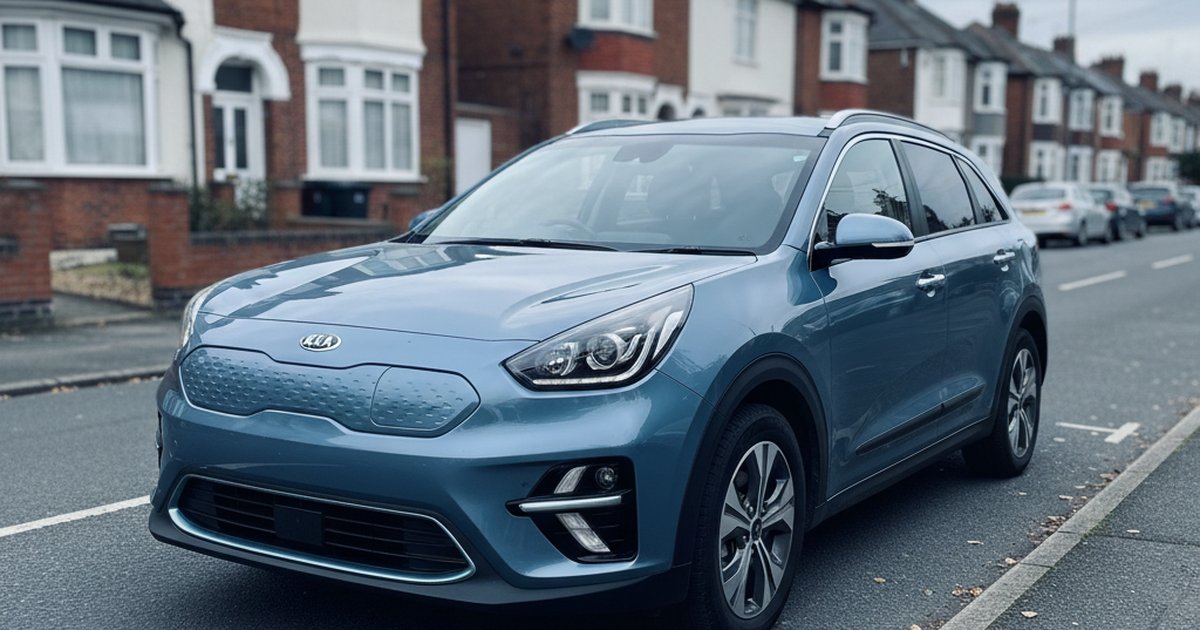
The Kia Niro landed in the UK as something genuinely different: a hybrid crossover that looked normal. No wacky Prius styling, no bizarre rear-end treatment. Just a sensible family car that happened to be electrified. Since 2016, Kia has sold it in hybrid, plug-in hybrid, and full electric variants, creating a confusing lineup where the same badge covers fundamentally different powertrains.
We've analysed 219,304 MOT tests across 49,213 Kia Niros to separate the reliable models from the troublesome ones. The data comes from PlateInsight's database of 261 million MOT records, and it tells a story that Kia probably won't like: their electric crossover has a serious tyre problem.
TL;DR: Kia Niro electric models (2016-2022) deliver 88-90% MOT pass rates with reliability scores around 530-550/1000. The 2022 petrol hybrid scores 662/1000 with a 93.9% pass rate. Every single year of electric Niro lists tyre wear as the number one defect, affecting up to 25.6% of tests. Brake discs wear consistently across all years.
Electric vs Petrol: Which Powertrain Wins?
The 2022 petrol hybrid Niro scores 662/1000 for reliability, significantly higher than any electric version. It achieves a 93.9% pass rate compared to the 2022 electric's 90.8%. The problem is that we only have 212 tests on 183 petrol vehicles. That's not enough data to declare victory.
What we can say is the electric models show remarkable consistency. From 2016 through 2022, every electric Niro scores between 514 and 553 out of 1000. Pass rates hover between 88.1% and 90.8%. This isn't brilliant, but it's predictable. You know what you're getting.
The consistency matters because it suggests Kia hasn't fundamentally changed the electric Niro's engineering over the years. The same strengths and weaknesses persist across seven model years. That's good for buyers who want to know that a 2017 model behaves similarly to a 2020, but bad because Kia apparently hasn't fixed the underlying issues.
Why Do Niro Tyres Wear So Badly?
Every single year of electric Niro, from 2016 to 2022, lists tyre wear as the top defect. Between 22.7% and 25.6% of MOT tests flag tyres worn close to the legal limit or worn on the edge. For context, that's roughly one in four tests.
The pattern is consistent: tyres wear unevenly, particularly on the edges. This suggests alignment issues or possibly suspension geometry that doesn't cope well with the instant torque delivery of electric motors. The Niro's regenerative braking system means drivers use the brake pedal less, which should extend brake pad life, but it concentrates all the stopping forces through the tyres during regen.
Owner impact: Budget £600-800 for a full set of tyres every 18-24 months if you're doing average mileage. Check alignment annually. Many Niro owners report getting just 15,000-20,000 miles from a set of tyres, well below the 25,000-30,000 you'd expect from a family car.
The second most common defect is tyres with minor damage, cracking or perishing. This affects 14-20% of tests depending on year. Combined with the wear issue, it means nearly half of all Niro MOTs involve some kind of tyre advisory or failure.
Which Years Should You Avoid?
The 2019 electric Niro scores lowest at 514/1000. It also shows a concerning jump in dangerous defect rate to 19.2%, up from 23.6% in 2018 but higher than any other year except 2016-2017. The DVSA MOT history data shows these 2019 models picking up more serious faults.
Avoid the earliest 2016-2017 models if you can. These have the highest dangerous defect rates (29.2% and 27.8% respectively) and the highest annual mileage, suggesting they've lived harder lives. The 2016 cars now show 65,130 miles on average, which is getting into the territory where hybrid batteries start to show degradation.
The sweet spot appears to be 2020-2021. These years deliver 89.8-90% pass rates with relatively low dangerous defect rates (12.3% and 9.0%). They average 7,450-7,823 miles annually, suggesting gentler use patterns. Most examples currently sit at 32,000-39,000 miles, which is young enough to avoid major wear items but old enough that initial depreciation has happened.
Do Brakes Last Longer on Electric Niros?
Yes and no. Brake pads do last longer thanks to regenerative braking, but brake discs still corrode and score. Between 5.7% and 9% of MOT tests flag worn, pitted or scored brake discs across all years. That's lower than many conventional cars, but it's not negligible.
The issue is that when you rarely use the brakes, the discs don't get the regular cleaning action of pad contact. Surface rust builds up, leading to pitting and scoring. Many Niro owners report being told at MOT time that their discs need replacing despite having plenty of pad material left.
Interestingly, the 2022 petrol hybrid shows 20.3% of tests flagging brake disc issues, significantly higher than the electric models. This suggests the petrol version uses its friction brakes more, possibly because it has a smaller battery and less regenerative capacity. It's one data point that contradicts the overall reliability advantage of the petrol model.
How Hard Are Owners Driving Niros?
The electric Niro attracts moderate-mileage drivers. Annual mileage ranges from 6,799 miles per year for 2016 models up to 8,479 for 2019s. That's well below the UK average of around 7,400 miles for all cars, suggesting these are primarily urban runabouts and short commuter cars rather than motorway miles machines.
The 2022 petrol hybrid tells a different story: 13,733 miles per year. That's nearly double the electric versions. Petrol hybrid buyers are using their Niros harder, possibly because they don't have range anxiety and can do longer journeys without charging stops. This higher annual mileage makes the petrol's better reliability score even more impressive, though again, we're working with limited data.
First MOT pass rates reveal an interesting pattern. The 2017 electric achieved 92.9% first-time pass rate, but this dropped to 88.2% by 2021. That's unusual. Normally, newer cars perform better at their first MOT because manufacturing quality improves. The declining first MOT performance suggests either Kia changed something in production that made the cars less robust, or the 2021 cohort includes more heavily-used examples (possibly ex-fleet cars hitting three years old).
What About Battery Degradation?
MOT tests don't measure battery capacity or degradation, so our data can't tell you how well Niro batteries hold charge over time. What we can say is that high-voltage electrical system faults don't appear in the top defects for any year. If batteries were failing catastrophically, we'd see it.
What Car? owner surveys suggest Niro batteries hold up reasonably well, with most owners reporting 80-90% capacity retention after five years. Kia's seven-year warranty on the battery pack (100,000 mile limit) provides some reassurance, though many used Niros you'll find today are approaching the end of that coverage period.
The steady mileage patterns we see in the data suggest these aren't cars that are being abandoned due to battery problems. If degradation was severe, you'd expect to see annual mileage declining over time as cars become less practical. Instead, it remains fairly consistent across model years.
Common Faults Beyond Tyres
Strip away the tyre issues and the Niro is mechanically straightforward. Brake disc wear appears consistently but not excessively. Suspension components, exhaust systems, and steering racks don't feature in the top defects for any year.
The 2019 model shows an unusual spike in 'tyre has ply or cords exposed' affecting 16.9% of tests. This is more serious than simple wear and suggests either a batch of poor-quality tyres fitted to 2019 cars, or possibly kerb damage from urban use. It's a red flag for that specific year.
Minor body damage and corrosion don't appear in the data, which is good news. The Niro's bodywork seems to hold up well to UK weather and road salt. The plastic wheelarch liners and undertray protection probably help here.
According to RAC breakdown data, Niros show average reliability for electrical faults and ancillaries. The 12-volt battery can fail (a common issue on EVs and hybrids where the 12V system gets less charging action), but it's not a widespread MOT problem.
Is Kia's Warranty Still Valid?
Kia's seven-year, 100,000-mile warranty is transferable and remains one of the best in the business. A 2017 Niro purchased today would still have warranty coverage until 2024, assuming it hasn't exceeded 100,000 miles. Check the service history carefully because the warranty requires annual servicing at Kia dealers.
Many used Niros will be out of warranty by now, particularly 2016-2018 models. This matters because hybrid and electric powertrains can be expensive to repair outside warranty. A replacement hybrid battery could cost £2,000-3,000, while electric motor repairs run £1,500-2,500. These aren't common failures based on our MOT data, but they're worth considering when buying an older Niro without warranty protection.
The warranty doesn't cover consumables like tyres and brake discs, which as we've established are the Niro's main weakness. You'll be paying for those regardless of warranty status.
Found a year you like? A good year still hides a clocked odometer, outstanding finance or a past write-off. Before you hand over any money, check the exact Kia Niro.
Frequently asked questions
Is the Kia Niro more reliable than a Toyota Prius?
Based on comparable MOT data, the Prius typically achieves 92-94% pass rates versus the Niro's 88-90%, suggesting the Toyota has a slight reliability edge. However, the Niro's consistent scores across years show it's predictable and not dramatically worse.
Why do Kia Niro tyres wear so quickly?
The instant torque of the electric motor combined with regenerative braking concentrates forces through the tyres. Edge wear suggests possible alignment sensitivity or suspension geometry that doesn't cope well with the powertrain characteristics. Budget for replacement every 15,000-20,000 miles.
Should I buy a high-mileage Kia Niro?
The data shows Niros with 60,000-65,000 miles still achieving 88% pass rates, so higher mileage isn't necessarily a deal-breaker. Check the battery warranty status and service history. Avoid anything approaching 100,000 miles without remaining warranty coverage.
Are Kia Niro brake discs a problem?
Brake disc wear affects 5.7-9% of MOT tests, less than many conventional cars but still notable. The discs corrode from lack of use due to regenerative braking. Expect to replace discs around 40,000-50,000 miles even if pads are fine.
Which Kia Niro has the best MOT pass rate?
The 2022 petrol hybrid achieves 93.9%, but this is based on limited data (212 tests). Among electric models, the 2022 electric scores best at 90.8%, followed by 2021 at 90.0%. Avoid 2018 which shows the lowest electric pass rate at 88.1%.
Our Verdict
The Kia Niro delivers predictable, moderate reliability with one glaring weakness: it eats tyres. If you can stomach the running costs of frequent tyre replacements and don't mind occasional brake disc corrosion, the 2020-2021 electric models represent solid used buys with decent warranty coverage remaining. The 2022 petrol hybrid looks promising but needs more real-world data before we can recommend it confidently.
Before committing to any Niro, check its full MOT history using PlateInsight. Our 5 free vehicle checks let you verify the specific car you're looking at, not just general model statistics. A Niro with careful owners who rotate tyres and maintain alignment will perform far better than these averages suggest. One with deferred maintenance and kerbed wheels will cost you a fortune in tyres alone.
You might also like
Check Any Vehicle's Full History
MOT results, mileage timeline, AI health score, and market valuations. New users get 5 free credits.