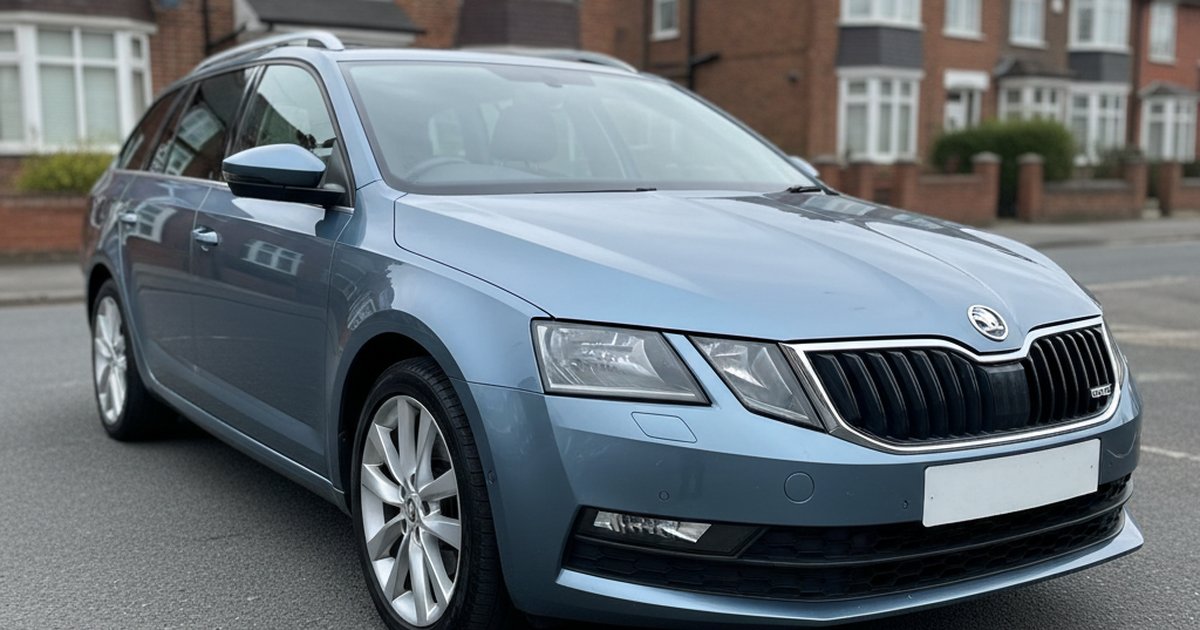
The Skoda Octavia has built a reputation as the thinking person's family car. Practical, understated, and cheaper to run than a comparable VW Passat despite sharing most of its engineering. But which years actually live up to that sensible image?
We've analysed 1,673,737 MOT tests across 187,035 Octavias to find out. The data reveals a clear pattern: petrol models from 2014-2016 are the sweet spot, while diesel versions from any era bring higher defect rates and maintenance headaches. Recent examples (2019 onwards) show a worrying drop in reliability scores that should make buyers pause.
TL;DR: Buy a 2014-2016 petrol Octavia for 87-89% pass rates and reliability scores up to 775/1000. Diesel versions consistently score 100+ points lower and rack up more defects per test. Avoid anything from 2019 onwards - reliability scores plummet below 650.
Petrol vs diesel: which fuel type wins?
This isn't even close. Across every model year, petrol Octavias outperform their diesel siblings by a substantial margin. The gap ranges from 40 to 130 reliability points depending on the year.
Take 2014 as an example: the petrol version scores 775/1000 with an 87.3% pass rate, while the diesel manages just 709/1000 and 84.0%. The petrol picks up 1.3 defects per test versus 1.6 for the diesel. That pattern repeats throughout the entire range.
The defect data tells the real story. Diesels consistently show higher rates of suspension wear, particularly anti-roll bar linkages and worn bushes. They also suffer more brake disc scoring and pad wear - unsurprising given diesel Octavias average 10,000-12,000 miles per year versus 7,000-8,000 for petrols. That's 40% more annual mileage putting strain on components.
Diesel ownership profiles skew heavily towards motorway miles and business use. Current odometer readings sit around 90,000-150,000 miles depending on age, while petrol versions typically show 60,000-100,000. If you're buying a diesel Octavia, you're almost certainly buying someone's high-mileage company car. Factor that into your budget for suspension refreshes and brake work.
Which years offer peak reliability?
The 2014-2016 petrol models represent the Octavia's high water mark. The 2014 petrol scores 775/1000 with just 1.3 defects per test. That's as good as it gets for this generation.
These cars benefit from mature engineering (the Mk3 launched in 2013) without the complexity creep that affects later models. The DVSA MOT data shows first MOT pass rates above 91% for 2014-2016 petrols, suggesting factory quality was excellent.
The 2013 petrol deserves a mention too: 748/1000 reliability and an 84.8% overall pass rate. It's the earliest year we'd recommend without reservation. Earlier cars from 2010-2012 show noticeably higher dangerous defect rates (35-37% compared to 26-29% for 2014-2016 petrols) and lower scores across the board.
Key point: First MOT pass rates drop off sharply after 2018. The 2019 petrol manages just 90.6% at its first test versus 93.2% for the 2017. By 2021, that drops to 83.8%. The newer the car, the worse it performs relative to age.
For diesel buyers (if you must), 2013-2014 represents the peak at 694-709 reliability points. Anything before 2013 dips below 650, and anything after 2016 trends downward despite lower mileage accumulation.
What goes wrong most often?
Tyres dominate the defect lists, but that's owner negligence rather than a car fault. More interesting is what breaks mechanically.
Shock absorbers are the Achilles heel across all Octavias. Every single model year lists shock absorber oil misting or leakage in its top three defects, affecting 16-23% of tests. This appears regardless of mileage - even low-mileage petrol examples show the same issue. Budget £300-500 for a full suspension refresh on any Octavia over seven years old.
Suspension bushes wear faster on diesel models, appearing as a critical defect in 17-19% of tests for 2011-2012 diesels. Petrol versions show this problem less frequently (10-11% of tests). The extra weight of the diesel engine and higher average mileage accelerate wear on these components.
Brake components tell a different story. Discs and pads appear in defect lists more often on diesel cars, particularly from 2014 onwards where brake pad wear affects 11-15% of tests. Petrol models show far less brake wear despite similar ages. This reflects the regenerative effect of engine braking on petrol cars versus the free-wheeling characteristics of modern diesels with stop-start systems.
One anomaly worth noting: 2017-2019 models show unusually high rates of tyre bulging and structural failure (12-20% of tests). This suggests either poor tyre quality fitted as original equipment or a pothole-related issue specific to those model years' wheel and suspension geometry.
Are dangerous defect rates a safety concern?
Yes, for early models. The 2010-2012 Octavias show dangerous defect rates of 35-38%, meaning more than one in three cars has flagged a dangerous fault at some point in its MOT history. That's alarmingly high.
These aren't statistical noise. The data comes from 400,000+ tests across 30,000+ vehicles for those model years alone. The dangerous defects primarily involve suspension components, brake system failures, and steering issues - exactly the sort of problems that cause accidents.
The trend improves substantially from 2013 onwards. Dangerous defect rates drop to 26-34% for 2014-2016 models, then fall further to 16-25% for 2018-2020 cars. The newest examples (2020-2022) show rates below 14%, though sample sizes are smaller.
Petrol models consistently show 2-4 percentage points fewer dangerous defects than equivalent diesel versions. The 2014 petrol's 28.7% dangerous defect rate compares favourably to the diesel's 36.1%. Given everything else we know about higher diesel mileage and harder use, this makes sense.
Why do 2019+ models score so poorly?
The 2019 Octavia marks a sharp drop in reliability scores - both petrol and diesel variants score just 611/1000, down from 650-674 for 2017-2018 models. By 2020, petrol versions drop further to 588, and the 2021-2022 cars barely scrape into the 400s.
These aren't old, worn-out cars. Most 2019 examples have just 50,000-83,000 miles and owners drive them gently (8,300-14,000 miles per year). First MOT pass rates tell the real story: 83.8% for 2021 petrols versus 93.2% for 2017 models. Something changed in production quality or component specification.
The defect patterns shift too. Pre-2019 cars fail mainly on wear items - tyres, brakes, suspension bushes. Post-2019 models show higher rates of structural tyre failures (bulging, ply exposure) affecting 20-26% of tests. That's not normal wear; that suggests inferior tyre quality or suspension geometry issues causing premature tyre damage.
The timing coincides with VW Group's push towards electrification and cost-cutting across the range. What Car? owner satisfaction surveys from this period noted increasing complaints about build quality and material specifications across Skoda's lineup.
Key point: If you're shopping for a nearly-new Octavia, you're better off finding a well-maintained 2016-2017 example than paying more for a 2020-2021 car. The older car will be more reliable and cost less to fix when things go wrong.
What do mileage profiles reveal about ownership?
Annual mileage patterns expose two completely different ownership demographics. Petrol Octavias average 6,800-7,300 miles per year across most model years. These are careful, low-use cars - second cars for families, retiree vehicles, suburban runarounds.
Diesel versions tell a different story: 10,500-13,950 miles per year depending on the model year. The 2019-2020 diesels push above 14,000 miles annually, suggesting company car or business use. Current odometer readings confirm this - 2015 diesels typically show 109,000 miles versus 73,000 for petrol equivalents of the same age.
This matters because it affects what you're buying. That tidy-looking 2016 diesel estate with full service history? It's probably covered 105,000 miles in six years of motorway commuting. Components are worn even if the bodywork looks fresh. The RAC breakdown data confirms that suspension, steering, and brake components wear proportionally to mileage, not age.
Interestingly, petrol Octavias from 2018 onwards show creeping annual mileage - up to 8,000-8,300 miles per year. Still gentle use compared to diesels, but higher than earlier petrols. This may reflect changing buyer demographics as diesel fell out of favour post-2017.
What's the best value buying strategy?
Find a 2014-2016 petrol Octavia with documented service history and reasonable mileage (under 70,000 miles). These cars offer the best combination of mature engineering, strong pass rates, and manageable maintenance costs.
The sweet spot is a 2015 petrol with 60,000-75,000 miles. You'll pay less than for a 2019 model but get a car that's genuinely more reliable (736 vs 611 reliability score). The 2015 petrol's 88.1% pass rate and 1.3 defects per test beat anything built after 2018.
Budget £500-800 for a suspension refresh regardless of which year you buy. Shock absorbers fail on all Octavias, and it's better to replace them preventively than wait for an MOT failure. Check service history carefully - these cars need annual servicing regardless of mileage. Low annual mileage doesn't mean low maintenance.
If you need a diesel (for genuine high-mileage use), look at 2013-2014 examples. Accept that you're buying a car with 120,000-140,000 miles and plan accordingly. Have a pre-purchase inspection done by a AA or RAC technician focusing on suspension, steering, and brake components.
Avoid 2019-2022 models entirely unless you're getting an exceptional deal. The reliability scores don't justify the asking prices. A 2021 Octavia with 47,000 miles scoring 486/1000 is objectively worse than a 2015 model with 73,000 miles scoring 736/1000, regardless of what the seller tells you about it being 'newer'.
Found a year you like? A good year still hides a clocked odometer, outstanding finance or a past write-off. Before you hand over any money, check the exact Skoda Octavia.
Frequently asked questions
Are Skoda Octavia diesel engines reliable?
Diesel Octavias score 100+ points lower than petrol versions across all model years (617-709 vs 684-775 for 2012-2016). They accumulate 40% more annual mileage (10,500-14,000 vs 6,800-7,300 miles/year), leading to higher suspension and brake wear. Only consider diesel if you genuinely need one for high-mileage motorway use.
What is the most reliable Skoda Octavia year?
The 2014 petrol Octavia scores 775/1000 with an 87.3% pass rate and just 1.3 defects per test. The 2015 and 2016 petrol models score 736-741/1000 with similar performance. These represent the peak of Octavia reliability before quality declined post-2018.
Should I buy a high-mileage Skoda Octavia?
Diesel Octavias typically show 90,000-150,000 miles depending on age due to business use (10,500-14,000 miles/year). Petrol versions average just 6,800-7,300 miles annually. High mileage isn't inherently bad, but factor in £500-800 for suspension work and expect more frequent brake and tyre replacement on diesels.
Why do Skoda Octavia shock absorbers fail so often?
Shock absorber oil misting or leakage affects 16-23% of MOT tests across all model years and fuel types. This appears even on low-mileage petrol examples. It's a known weak point in the design. Budget for replacement every 7-8 years regardless of mileage.
Is a newer Skoda Octavia better than an older one?
No. A 2015 petrol Octavia (736/1000 reliability, 88.1% pass rate) outperforms a 2020 model (588/1000, 89.9% pass rate) despite being five years older. Post-2018 models show declining first MOT pass rates (83-90% vs 91-93% for 2014-2017) and higher defect rates relative to age.
Our Verdict
The Octavia's reputation as a sensible family car holds up, but only if you buy the right years. Stick to 2014-2016 petrol models and you'll get genuinely reliable transport. Stray into diesel territory or chase after newer examples, and you're gambling with your maintenance budget. Before buying any used Octavia, run a DVSA MOT history check to see the actual test record. Better yet, use PlateInsight for instant access to comprehensive vehicle history - your first 5 checks are free, and you'll see exactly what defects have been flagged over the car's lifetime. The difference between a well-maintained 2015 and a neglected 2019 is substantial, and the data backs that up.
You might also like
Check Any Vehicle's Full History
MOT results, mileage timeline, AI health score, and market valuations. New users get 5 free credits.