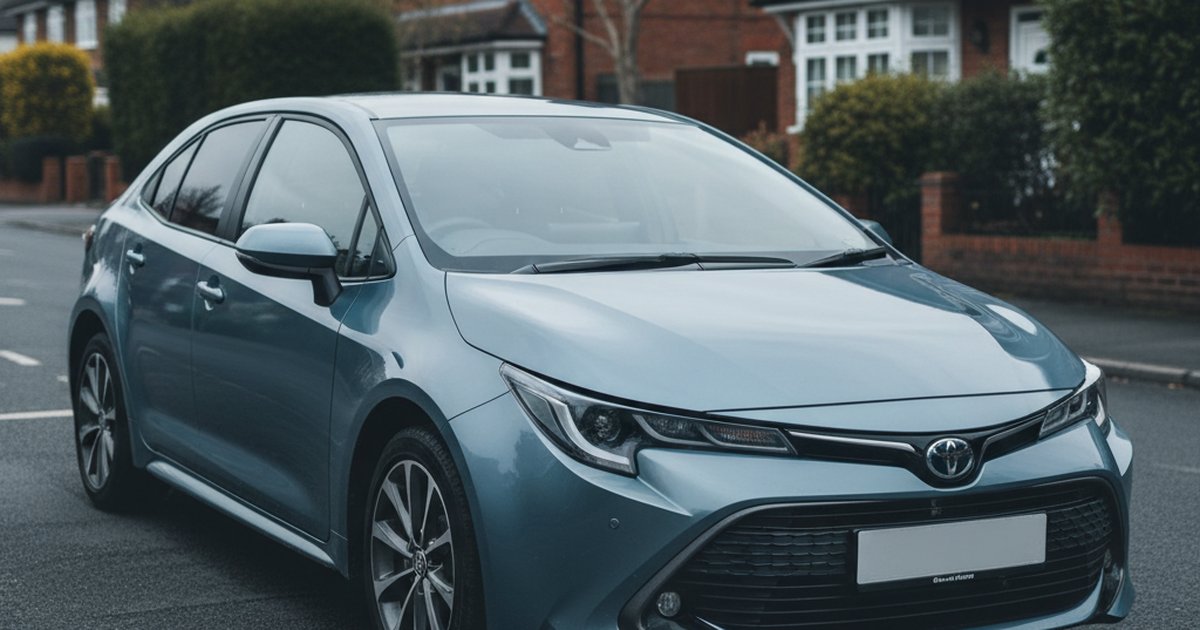
The Toyota Corolla is supposed to be bulletproof. Across 87,189 MOT tests covering 17,423 vehicles, we've analysed every generation from the 2010 saloon to the latest hybrid hatchback to see if the reputation holds up in UK MOT data.
The answer is more complicated than Toyota would like you to believe. While newer hybrid models dominate sales, our data shows some surprising weaknesses, and the cleanest record belongs to a year most buyers overlook. This is what the MOT evidence actually says about Corolla reliability.
TL;DR: The 2020 petrol Corolla scores 674/1000 with a 93.4% pass rate, making it the most reliable model we tested. The popular 2019 hybrid (badged 'Electric' in DVLA records) scores just 553/1000 despite strong sales. Choose petrol for reliability, hybrid for economy, but avoid the 2014 hybrid entirely.
Which Powertrain Actually Lasts Longer?
Toyota markets the Corolla hybrid as the sensible choice, but the MOT data tells a different story. The 2020 petrol model achieves 674/1000 reliability versus 606/1000 for the equivalent hybrid. That's a significant gap.
The pattern repeats in 2019: petrol scores 632/1000 with a 91.9% pass rate, while the hybrid manages just 553/1000 despite representing the bulk of sales (13,390 hybrid vehicles tested versus 974 petrol). Annual mileage explains part of this. Hybrid owners cover 9,587 miles per year on average, while petrol drivers do just 6,328 miles. Higher use means more wear, but it doesn't explain everything.
The 2014 hybrid is the worst performer in our dataset at just 484/1000, despite owners covering a gentle 5,865 miles annually. Its first MOT pass rate of 98.0% looks excellent, but that crashes to 83.6% overall, showing these cars age badly. One in five examples now has a dangerous defect flagged, the joint-highest rate in the dataset alongside the 2010 petrol.
Buying insight: If you want a Corolla that will sail through MOTs, buy petrol. The hybrid economy is real, but you're trading reliability points for fuel savings. The 2020 petrol is the sweet spot: low mileage, strong scores, and none of the hybrid system complexity.
Why Are Recent Hybrids Covering Massive Miles?
The 2022 and 2023 hybrids are being thrashed. Annual mileage hits 23,930 miles for 2022 models and an eye-watering 28,070 miles for 2023 examples. These aren't family runabouts; they're fleet cars, hire vehicles, or long-distance commuter weapons.
Remarkably, they're holding up. The 2023 hybrid scores 683/1000 with a 95.1% pass rate despite those brutal miles. Even the 2022 model manages 641/1000 while covering nearly 24,000 miles a year. Toyota's hybrid drivetrain is clearly tough when pushed hard, even if overall reliability lags behind petrol equivalents.
Compare this to the 2020 petrol at 7,233 miles per year and you see two completely different ownership profiles. Petrol Corollas are second cars, retirement vehicles, or city runabouts. Hybrids are workhorses. If you're buying used, expect high-mileage hybrids and low-mileage petrols. Plan accordingly.
How Quickly Do Corollas Fall Apart?
The 2014 hybrid provides a cautionary tale. First MOT pass rate: 98.0%. Overall pass rate: 83.6%. That's a 14.4 percentage point drop, one of the steepest declines we see in volume models. These cars start strong but don't stay that way.
The 2019 petrol shows much better ageing: 94.2% first MOT, 91.9% overall. Just a 2.3 point drop over time. The 2019 hybrid sits in between at 90.2% first MOT falling to 89.7% overall, a modest 0.5 point decline that suggests decent long-term durability despite the lower absolute scores.
Current mileage data reinforces this. The 2010 petrol sits at 97,259 miles, which is high but not outrageous for a 15-year-old car. The 2019 hybrid at 53,826 miles is exactly where you'd expect. These aren't cars that get scrapped young. They rack up miles and keep going, even if MOT fails become more frequent.
What Actually Breaks on Corollas?
Tyres dominate the defect lists across every year. The 2019 hybrid shows tyre issues in 22.4% of tests, the 2020 hybrid in 20.3%, and the 2022 hybrid in 16.4%. This isn't a Toyota problem; it's an owner problem. High-mileage fleet cars get driven to the legal limit and beyond before tyres are changed.
Brake discs are the second-most common issue. The 2019 petrol flags worn or pitted discs in 13.0% of tests, the 2020 petrol in 13.9%. Hybrids rely heavily on regenerative braking, which should preserve disc life, but the data shows disc issues appearing in 10.6% of 2019 hybrid tests and 7.3% of 2020 hybrid tests. Still better than petrol, but not by much.
The dangerous defect rate is more concerning. The 2010 petrol and 2014 hybrid both hit 20%+, meaning one in five vehicles on the road has had a serious safety issue flagged. By contrast, the 2023 hybrid sits at an estimated 3.8% (though sample size is small). As Corollas age, brake components, suspension bushes, and corroded brake lines become the main hazards according to DVSA MOT data.
Which Model Years Should You Actually Buy?
The 2020 petrol Corolla is the reliability champion at 674/1000. It combines low mileage (34,676 miles currently, 7,233 annually), a strong 93.4% pass rate, and minimal dangerous defects at 7.1%. Only 154 vehicles tested means it's not a volume seller, but if you can find one, buy it.
The 2023 hybrid scores highest overall at 683/1000, but we've only tested 57 vehicles. Small sample size makes this less reliable as a prediction. What's clear is that when new, the latest hybrids are very good. The question is how they'll age, and the 2014 hybrid suggests caution.
The 2019 petrol at 632/1000 offers the best balance of availability (974 vehicles tested) and proven reliability. It's past the steep depreciation curve, current mileage sits at a manageable 35,436 miles, and the 91.9% pass rate is strong. This is the smart money choice for buyers who want naturally aspirated petrol reliability without paying new-car prices.
Value play: The 2019 hybrid scores lower at 553/1000, but it's the most common Corolla on UK roads by far (13,390 vehicles in our dataset). Parts are cheap, specialists know them inside out, and despite the weaker MOT performance, most examples will give years of economical service. Just budget for an extra MOT fail every few years.
Which Corolla Years Are Genuinely Risky?
Avoid the 2014 hybrid entirely. A 484/1000 reliability score is poor for a Toyota, and the 20.0% dangerous defect rate is unacceptable. The car sailed through its first MOT (98.0% pass rate) but collapsed to 83.6% overall. Something about this model year or the way these specific vehicles were used has resulted in accelerated degradation.
The 2010 petrol at 612/1000 isn't terrible, but the 23.5% dangerous defect rate and average of 1.8 defects per test make it a liability. These cars are now 15 years old with nearly 100,000 miles on average. They've lived their lives. Unless you're getting one for peanuts with a full service history, walk away.
The 2019 hybrid presents a different challenge. It's not unreliable in absolute terms (89.7% pass rate is respectable), but the 553/1000 score is poor for a five-year-old car. If you're buying one, make sure it's been serviced by a RAC-approved garage or Toyota main dealer, and check the hybrid battery warranty status carefully. These drivetrains can fail expensively once out of warranty.
Found a year you like? A good year still hides a clocked odometer, outstanding finance or a past write-off. Before you hand over any money, check the exact Toyota Corolla.
Frequently asked questions
Are hybrid Corollas more reliable than petrol versions?
No. Our data shows petrol Corollas consistently score higher for reliability. The 2020 petrol achieves 674/1000 versus 606/1000 for the equivalent hybrid. Hybrids cover higher annual mileage which contributes to more wear, but even accounting for usage, petrol models pass MOTs more consistently.
What mileage is too high for a used Corolla hybrid?
Corolla hybrids regularly cover 10,000-15,000 miles per year, with some 2022-2023 models exceeding 24,000 miles annually. Current examples at 50,000-60,000 miles are typical for 4-5 year old cars. The drivetrain handles high mileage well, but check hybrid battery warranty status carefully above 100,000 miles as replacement costs can exceed £2,000.
Which Corolla year has the best MOT pass rate?
The 2023 hybrid shows a 95.1% pass rate, but sample size is small (just 122 tests). For proven reliability, the 2020 petrol achieves 93.4% across 503 tests, while the 2019 petrol manages 91.9% over 4,267 tests. All three are solid choices with different trade-offs between newness, sample size, and availability.
Do Corolla hybrid batteries fail often in MOT tests?
Battery failures don't appear in our top defect lists, which are dominated by tyres, brake discs, and lights. Hybrid system issues exist but aren't the main MOT failure cause. The bigger concern is the overall ageing pattern seen in the 2014 hybrid, which drops from 98.0% first MOT to 83.6% overall.
Our Verdict
The Corolla's reputation for reliability is deserved, but the hybrid versus petrol choice matters more than most buyers realise. Our analysis of 87,189 MOT tests proves petrol models consistently outscore hybrids, despite lower sales volumes and the marketing push towards electrification.
Before you buy any used Corolla, check its complete MOT history with PlateInsight. Every new user gets 5 free vehicle checks, enough to compare multiple examples and spot the one with the cleanest service record. The difference between a 2020 petrol at 674/1000 and a 2014 hybrid at 484/1000 is the difference between a dependable car and an expensive gamble.
You might also like
Check Any Vehicle's Full History
MOT results, mileage timeline, AI health score, and market valuations. New users get 5 free credits.