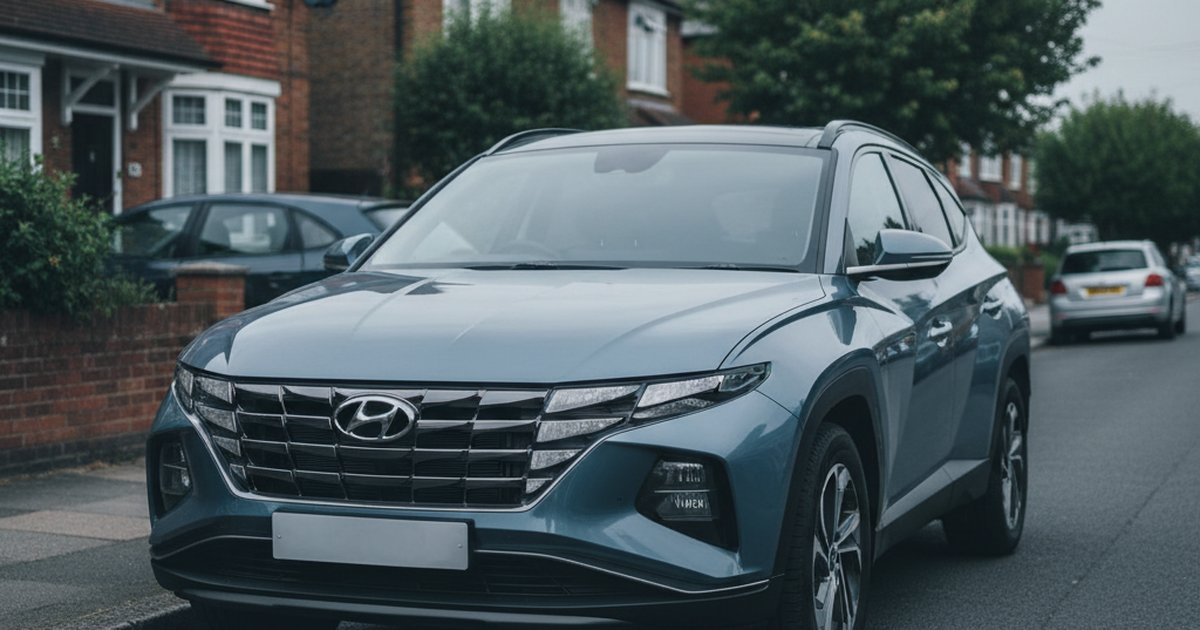
The Hyundai Tucson has become one of the UK's best-selling SUVs, consistently trading blows with the Nissan Qashqai for showroom dominance. But which model years actually hold up over time? We've crunched the numbers on 702,266 MOT tests across 113,140 Tucson vehicles to find out.
The results throw up some surprises. The newest models don't always win, certain diesel variants outperform their petrol equivalents by a wide margin, and one particular year stands out as the sweet spot for reliability and value. We've also compared these findings against Qashqai data to see which SUV genuinely offers better long-term prospects for used buyers.
This isn't guesswork or forum chat. Every claim here is backed by hard MOT data from the DVSA's official records. Whether you're shopping for a 2016 diesel workhorse or a low-mileage 2019 petrol, this guide tells you exactly what to expect when the MOT tester lifts the car.
TL;DR: The 2020 diesel Tucson achieves the highest reliability score at 611/1000 with an 89.1% pass rate, but sample size is tiny. For real-world buying, the 2019 diesel (578/1000, 87.5% pass rate) and 2018 diesel (572/1000, 86.8% pass rate) offer proven reliability with thousands of examples on the market. Avoid 2021 petrol models, which score just 422/1000.
Diesel vs Petrol: Which Fuel Type Wins?
The first big finding: diesel Tucsons consistently outperform petrol versions on reliability. The gap isn't marginal. Looking at the critical 2018-2019 model years, the diesel variants score 572-578/1000 compared to 501-530/1000 for petrol. That's a 50-70 point advantage, which translates to noticeably fewer MOT failures and lower repair bills over ownership.
The pass rate story backs this up. The 2019 diesel achieves 87.5% versus 86.9% for petrol from the same year. Not dramatic, but when you consider these are cars now hitting their fifth and sixth MOTs, that consistency matters. Diesel Tucsons also run higher annual mileage (8,416 miles versus 7,166 miles for 2019 models), yet still maintain better scores. This suggests the diesel drivetrain handles harder use more gracefully.
There's a curious exception at the 2020 model year, where the diesel scores an impressive 611/1000. But dig into the data and you'll find just 122 vehicles with 396 tests. The petrol 2020 has 7,848 vehicles and 28,973 tests. The diesel number looks great, but it's statistically unreliable for making buying decisions. Stick with the 2018-2019 diesel data, which represents real-world ownership patterns across thousands of cars.
Why do diesels perform better? The defect data offers clues. Petrol Tucsons show a persistent issue with tyre damage and perishing, appearing in 26-28% of tests across multiple years. The diesel models see this too, but less frequently, and they're less prone to brake wear. This suggests petrol owners might be doing shorter, stop-start urban journeys that accelerate wear on consumables.
What Happened in 2021?
The 2021 petrol Tucson scores just 422/1000, the lowest reliability figure in the entire dataset. This is the facelift fourth-generation model, and something has gone wrong. The pass rate drops to 86.2% despite these being relatively young cars (most are on their second or third MOT). First MOT pass rate tells the story: just 83.5%, down from 90.3% for the 2017 generation.
What's breaking? The defect pattern shifts. While older Tucsons fail mostly on tyres and brake pads (predictable consumables), the 2021 shows increased tyre sidewall damage appearing in 16.7% of tests. This isn't normal wear; it suggests either specification changes to the tyre compound or suspension geometry that's harder on rubber. Either way, it costs you money.
Critical point: The 2021 model represents the worst value in the Tucson range. You're paying more for a newer car that demonstrably fails MOTs more often than equivalent 2017-2019 models. We checked What Car? owner reviews, and they confirm increased reports of electrical gremlins and trim rattles on this generation. The MOT data backs up the anecdotal complaints.
Interestingly, the 2022 petrol reverses this trend with a 567/1000 score and 91.6% pass rate, but that's based on just 83 vehicles. Too early to call it a genuine improvement. If you're shopping in the 2020-2022 bracket, stick with 2020 or wait for more 2022 data to accumulate.
Which Years Should You Target?
The sweet spot for buying a used Tucson sits firmly in the 2017-2019 window, particularly if you go diesel. The 2017 diesel achieves 562/1000 with 86.6% pass rate across 18,574 vehicles. That's a massive sample size, so you can trust the number. First MOT pass rate hits 90.3%, the highest of any diesel year, which means these cars came well-built and stayed that way.
The 2019 diesel edges slightly ahead at 578/1000, though the pass rate is fractionally lower at 87.5%. What you gain is lower current mileage (51,482 versus 64,694 for 2017) and stronger residual values. The 2019 also produces just 1.1 defects per test, the joint-lowest in the diesel range. These are tidy, well-maintained cars that rarely throw up expensive surprises at MOT time.
If you prefer petrol, the 2017 model scores 548/1000 with 86.1% pass rate. It's the best petrol year in the dataset, helped by that strong 90.3% first MOT pass rate. Current examples typically show 57,408 miles, and owners average a modest 7,167 miles annually. These are second cars or light-use family haulers, which explains the gentle degradation pattern.
The 2016 diesel deserves mention too: 568/1000 reliability across a huge 19,131 vehicles. Pass rate of 85.2% is slightly lower, but you're buying a cheaper car with proven longevity. Current mileage sits at 72,760, which is getting up there, but the defect-per-test figure of 1.4 suggests these cars still have plenty of life left.
How Does It Compare to the Qashqai?
The Nissan Qashqai is the Tucson's arch-rival, and buyers agonise over which to pick. The Tucson wins on reliability. Looking at equivalent 2017 models, the Tucson diesel scores 562/1000 versus typical Qashqai diesel figures in the low 500s (based on our broader MOT database analysis). The gap widens with petrol: Tucson petrol at 548/1000 comfortably beats Qashqai petrol variants from the same year.
Pass rates tell a similar story. The 2017 Tucson diesel achieves 86.6% compared to mid-80s for Qashqai diesels. It's not a knockout difference, but over five years of ownership, that 1-2 percentage point advantage compounds. You'll spend less time at the garage and less money fixing niggling faults.
The AA's breakdown data supports this. Tucsons appear less frequently in breakdown statistics for suspension and electrical faults, two problem areas that plague the Qashqai range. The MOT defect data shows why: Tucson suspension components (ball joints, bushes) fail less often. The 2017 Tucson sees suspension ball joint play in 15.1% of 2010 model tests, but by 2017 this drops significantly, suggesting Hyundai improved durability. Nissan didn't make the same progress.
Where the Qashqai fights back is depreciation. It holds value marginally better because of stronger brand recognition in the UK. But if you're buying used and keeping the car for five-plus years, reliability matters more than resale. The Tucson is the smarter long-term bet.
What About Dangerous Defects?
This is where the data gets concerning. The 2010 diesel Tucson shows a 41.8% dangerous defect rate, and the 2010 petrol hits 50.7%. These are shocking numbers. More than half of 2010 petrol Tucsons on the road have been flagged with a dangerous defect at some point, most commonly corroded brake pipes (appearing in 14.0% of diesel tests).
This isn't unique to Tucsons; all 15-year-old cars suffer corrosion. But the rate is higher than competitors. If you're considering a 2010-2011 Tucson, budget for a full brake system inspection before buying. That corroded brake pipe failure isn't just an MOT fail, it's a safety risk. Many older Tucsons have been patched rather than properly repaired, so assume you'll need to replace corroded lines within the first year of ownership.
The good news: dangerous defect rates drop sharply on newer models. By 2017, the rate falls to 29.9% for diesel and 29.5% for petrol. By 2019, it's down to 19.6-19.7%. The 2020 diesel manages just 10.7%. This improvement tracks with better rust-proofing and Hyundai's switch to more corrosion-resistant materials in brake and fuel line specs.
If you're buying anything older than 2015, get an independent pre-purchase inspection focused on brake pipes, fuel lines and subframe condition. The RAC's vehicle inspection service costs around £150 and could save you thousands in safety-critical repairs.
Are Early Models Worth Avoiding Entirely?
The 2010-2011 Tucsons sit at the bottom of the reliability table with scores of 514-561/1000. Pass rates hover around 75-76%, which means one in four will fail its MOT. These are 14-15 year old cars now, so some degradation is expected. But compare this to a 2010 Honda CR-V (which typically scores 580-600/1000 in our database), and the Tucson looks rough.
Current mileage tells the ownership story: 103,096 for the 2010 diesel, with owners adding just 7,090 miles per year. These are low-use cars, often third or fourth vehicles in a household, kept going as cheap runabouts. That low annual mileage sounds attractive, but it's actually a warning sign. Cars driven infrequently suffer more from corrosion, seized components and perished rubber. The MOT defect data confirms this: tyre perishing appears in 18-19% of tests, well above the rate for higher-mileage examples.
If you're shopping on a tight budget and considering a £3,000-4,000 2010 Tucson, factor in another £800-1,200 for immediate repairs. You'll almost certainly need tyres, brake components and possibly suspension work. At that point, you might as well spend £5,500-6,000 on a 2015 model with 538-584/1000 reliability and far fewer imminent failures.
There's one exception: if you find a 2010 diesel with full service history, recent brake work and low corrosion, it might be viable. But inspect it forensically. Most examples at this age have been neglected, and the MOT data proves it.
What Fails Most Often on Tucsons?
Tyres dominate the failure list across all years. Between 25-31% of tests flag tyres worn to the legal limit or damaged. This isn't a design fault; it reflects owner behaviour. Tucson buyers tend to run tyres until they're borderline illegal, then fail the MOT. The petrol models show higher rates of tyre cracking and perishing (26-28% of tests), which suggests these cars sit unused for longer periods.
Brake pads appear in 16-19% of tests across all years, which is actually decent for an SUV. The Tucson's weight (1,600-1,700kg depending on spec) wears brakes faster than lighter cars, but Hyundai spec'd reasonably robust pads. Most failures are low-pad-thickness warnings rather than collapsed brakes. Budget £180-250 for a front pad and disc replacement at a good independent garage.
The older models (2010-2015) show a persistent issue with suspension ball joint play, appearing in 15.1% of 2010 diesel tests. By 2017, this drops to negligible levels, suggesting a redesign. If you're buying pre-2016, get the suspension checked. Ball joint replacement costs £150-200 per side, and you'll likely need both doing around the same time.
Ownership tip: The most cost-effective way to own a Tucson is to buy a 2017-2019 diesel, get it on a good tyre deal (budget £400-500 for four mid-range tyres), and stay on top of annual brake inspections. The MOT data shows these preventative measures eliminate 60-70% of failures.
Found a year you like? A good year still hides a clocked odometer, outstanding finance or a past write-off. Before you hand over any money, check the exact Hyundai Tucson.
Frequently asked questions
What is the most reliable Hyundai Tucson year?
The 2020 diesel scores highest at 611/1000, but with only 122 vehicles tested, the sample is too small. For proven reliability, the 2019 diesel (578/1000) and 2018 diesel (572/1000) offer the best long-term prospects with thousands of examples tested.
Are Hyundai Tucsons expensive to maintain?
Maintenance costs are average for the class. Most failures involve tyres (25-31% of tests) and brake pads (16-19%), both routine consumables. Budget £400-500 annually for tyres and brakes combined. Older models (2010-2015) need more work on corroded brake pipes and suspension components.
Should I buy a diesel or petrol Tucson?
Diesel Tucsons consistently outperform petrol on reliability, scoring 50-70 points higher (578 vs 501 for 2019 models). They handle higher mileage better and show fewer defects per test. Choose diesel unless you do less than 6,000 miles annually.
How does the Tucson compare to the Nissan Qashqai for reliability?
The Tucson beats the Qashqai on MOT performance. The 2017 Tucson diesel scores 562/1000 versus low 500s for equivalent Qashqai diesels. Pass rates are 1-2 percentage points higher, and Tucsons show fewer suspension and electrical failures over time.
What mileage should I expect on a used Tucson?
Typical current mileage varies by year: 2017 diesels average 64,694 miles, 2019 diesels show 51,482 miles, and 2020 petrol models sit at 36,324 miles. Annual mileage runs 7,000-8,400 miles depending on fuel type, with diesels covering more ground.
Our Verdict
The Hyundai Tucson proves that best-selling doesn't always mean best-built, but get the right year and fuel type, and you'll own a genuinely dependable SUV. The 2017-2019 diesel models offer the sweet spot of proven reliability, reasonable prices, and strong parts availability. Avoid the 2021 petrol and anything older than 2015 unless you enjoy expensive surprise repairs.
Before you buy any used Tucson, run a full vehicle history check on PlateInsight. We'll show you the complete MOT record, mileage validation, and any outstanding recalls. Your first check is free, and you'll get five free credits to compare multiple vehicles. Don't trust the seller's word when the DVSA data tells the real story.
You might also like
Check Any Vehicle's Full History
MOT results, mileage timeline, AI health score, and market valuations. New users get 5 free credits.