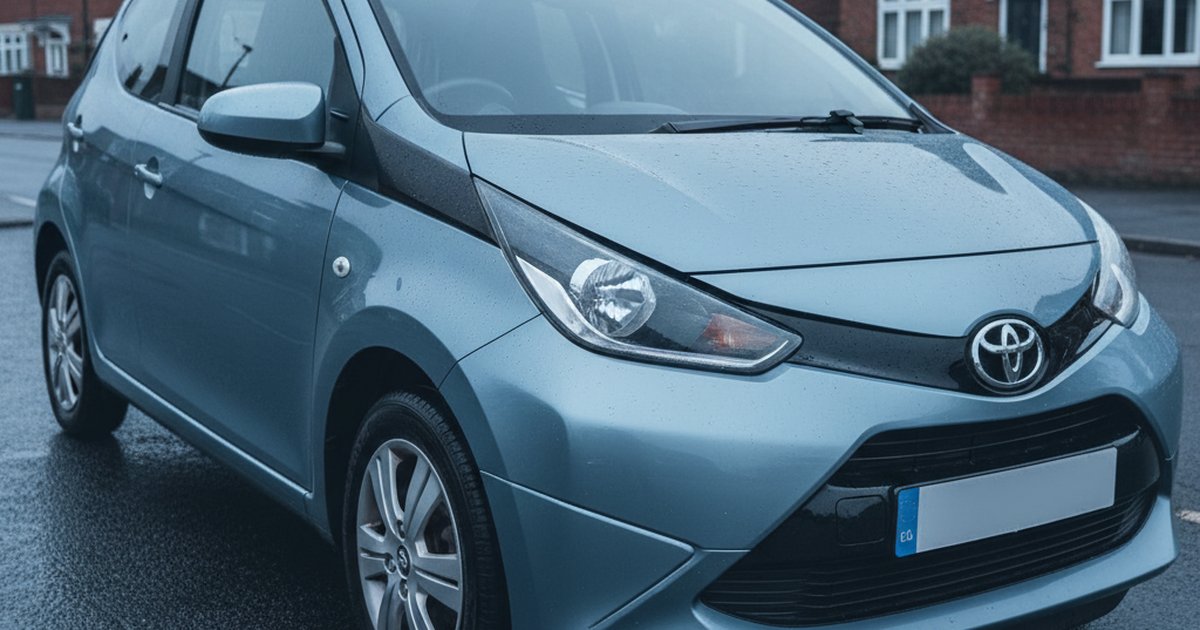
The Toyota Aygo has built a reputation as one of Britain's favourite budget city cars. Small, affordable to run, and allegedly bulletproof. But with 1,899,429 MOT tests across 224,171 vehicles in our database, we can move beyond the marketing brochures and look at the hard evidence. Is the Aygo genuinely reliable, or does its budget price tag come with hidden maintenance headaches?
The data tells a surprisingly complex story. While newer Aygos sail through MOTs with impressive ease, the older models reveal some concerning patterns. That dangerous defect rate of 43.1% on 2010 models? That's not a typo. We're going to explain what's going on, which years you should chase, and which ones to leave on the forecourt.
TL;DR: Aygo reliability improves dramatically with age. Early models (2010-2012) show dangerous defect rates above 40%, driven largely by corroded brake pipes. From 2015 onwards, pass rates hit 86%+ and the cars become genuinely dependable. Most Aygos cover just 4,500-4,900 miles annually, suggesting gentle use by city drivers who aren't thrashing them.
Are older Aygos actually dangerous?
The elephant in the room needs addressing. That 43.1% dangerous defect rate on 2010 models looks alarming, and it should. For context, the average small car typically sits around 15-20% for dangerous defects at this age. The 2011 and 2012 models aren't much better, at 42.0% and 40.1% respectively.
The culprit? Brake pipe corrosion. Look at the top defects for these early years and you'll see 'brake pipe corroded, covered in grease or other material' affecting 14.1% of 2010 tests, 14.4% of 2011 tests, and 13.7% of 2012 tests. This isn't a minor advisory. Corroded brake pipes are flagged as critical defects because they can fail catastrophically. If you're buying a pre-2013 Aygo, getting underneath to inspect the brake lines is non-negotiable.
The good news is this problem diminishes rapidly. By 2015, the dangerous defect rate drops to 32.3%. By 2017, it's down to 24.4%. The 2022 models sit at just 5.0%. Part of this is simply age, but it also suggests Toyota addressed some of the corrosion issues in later production runs or owners became more proactive about preventative maintenance once the pattern emerged.
Budget reality: An Aygo is cheap to buy, but those 2010-2012 examples may force you into expensive brake system work. Factor in £500-800 for a full brake pipe replacement if you're buying one of these early cars.
How much do owners actually drive them?
This is where the Aygo's ownership profile becomes clear. Annual mileage sits remarkably consistent across all model years: between 4,206 and 4,947 miles per year. Compare that to a typical family hatchback averaging 8,000-10,000 miles annually, or an SUV doing 12,000+. Aygo owners are doing half the national average.
What does this tell us? These are genuine city runabouts. School runs, shopping trips, commutes of a few miles. Very few Aygos are doing motorway slogs or long-distance work. That low annual mileage is actually a double-edged sword for used buyers. On one hand, lower mileage means less mechanical wear. On the other, cars that do short trips never fully warm up, which accelerates wear on exhausts, batteries, and oil systems.
The current mileage figures support this. A 2010 model typically has 77,543 miles today, while a 2015 sits at 51,809. These are entirely reasonable numbers for cars of this age, and it means there's plenty of life left in most examples. You're not buying a thrashed high-mileage shed.
Which years offer the best value?
The sweet spot is 2014-2016. The 2014 model achieves an 83.8% pass rate with a reliability score of 578/1000. The 2015 jumps to 86.5% pass rate and 609/1000 reliability. The 2016 hits 87.7% and 608/1000. These are genuinely solid numbers for a budget city car.
More importantly, dangerous defect rates fall off a cliff. The 2014 sits at 36.6%, the 2015 at 32.3%, the 2016 at 27.8%. You're still checking those brake pipes, but the risk profile becomes far more acceptable. Defects per test also drop from 1.9 on early models to 1.3-1.4 on these mid-2010s cars. That's fewer things going wrong at each MOT.
Pricing in the used market typically reflects age rather than reliability, which means 2014-2016 Aygos offer better value than their older siblings. You're paying perhaps £500-1,000 more than a 2011 model, but you're getting a car that's significantly less likely to hand you a costly MOT failure. According to Auto Trader listings, clean 2015 examples still trade under £7,000, which is strong value for a car averaging 86.5% MOT pass rate.
What about first MOT performance?
The first MOT happens at three years old and it's often revealing. A car that's been well-maintained should sail through. The Aygo generally does well here: first MOT pass rates range from 86.7% (2013 model) to 92.8% (2022 model). That's respectable.
But notice the gap between first MOT and overall pass rate. The 2010 model passes its first MOT at 88.2%, but the overall pass rate across its lifetime is just 78.5%. That's a 9.7 percentage point drop. The 2011 shows a similar pattern: 87.2% first MOT, 78.9% overall. What this tells you is that these cars degrade faster than average after that initial three-year period. The brake pipe corrosion, the suspension wear, the tyre deterioration, it all accelerates after year three.
Later models show much tighter gaps. The 2017 passes its first MOT at 92.2% and maintains an 88.8% overall rate, just a 3.4 point drop. The 2019 is even tighter: 91.3% first MOT, 89.8% overall. These cars age more gracefully.
What keeps failing MOT tests?
Tyres dominate every single model year. 'Tyre worn close to legal limit/worn on edge' appears in the top defects for all 13 years, affecting 15.6% to 20.5% of tests depending on the year. 'Tyre slightly damaged/cracking or perishing' is almost as common, hitting 27.2% of 2018 tests.
This isn't a design flaw. It's a consequence of ownership. People buy Aygos because they're cheap to run, and cheap tyres are part of that equation. Owners are stretching tyre life to the legal limit and beyond. If you're buying used, budget £200-300 for a fresh set immediately. Don't trust the previous owner's penny-pinching.
The other persistent issue is anti-roll bar linkage wear. Every year from 2011 to 2017 flags 'anti-roll bar linkage pin or bush worn but not resulting in excessive movement' in the top three defects. This affects 13-16% of tests. It's not catastrophic, but it's a known weak point. Replacement bushes are cheap (£20-40 per side), but factor in £100-150 labour at an independent garage.
Brake discs also feature heavily on newer models. From 2016 onwards, 'brake disc worn, pitted or scored' appears in top defects for every year. Again, this is wear-and-tear on a budget car. Discs and pads together will cost £150-250 depending on where you go.
Is the Aygo actually reliable then?
It depends entirely on which Aygo you buy. The pre-2013 models are objectively worse. Reliability scores sit in the 542-568 range, pass rates are sub-82%, and those dangerous defect rates are genuinely concerning. These are fine as a £2,000 runabout if you're handy with spanners and can handle the brake pipe replacement yourself. For everyone else, they're a false economy.
From 2014 onwards, the Aygo becomes a different proposition. Reliability scores climb into the 570-609 range (2014-2016 are the peak). Pass rates hit 83-87%, and while you're still dealing with worn tyres and suspension bushes, the frequency of serious issues drops noticeably. These are genuinely dependable city cars that will get you from A to B without drama.
The 2017-2019 models show slightly lower reliability scores (549-574) despite higher pass rates (88-90%). This seems counterintuitive, but it reflects the algorithm weighing severity of defects differently. The newer cars fail less often, but when they do flag issues, they're weighted more heavily. For practical purposes, anything from 2017 onwards is a safe bet.
Reality check: The Aygo is reliable if you buy smart. It's not a Toyota Yaris. It's a budget city car built to a price point, and the MOT data reflects that. Buy post-2014, inspect those brake pipes, replace the tyres, and you'll be fine.
How does it compare to competitors?
The Aygo shares its platform with the Peugeot 108 and Citroen C1, so you'd expect similar MOT patterns. Our data suggests the Aygo holds up marginally better, likely because Toyota ownership attracts more diligent maintainers. According to What Car? owner satisfaction surveys, Toyota consistently scores higher for perceived reliability, even when the mechanical reality is near-identical.
Against the Volkswagen Up or the Kia Picanto, the Aygo trades blows. The Up generally shows better corrosion resistance (German engineering, thicker metal), but older examples suffer electrical gremlins that plague MOTs. The Picanto benefits from Kia's seven-year warranty on newer models, which means better maintenance during the early years. On balance, a 2015-2017 Aygo is competitive with anything in the budget city car class.
Found a year you like? A good year still hides a clocked odometer, outstanding finance or a past write-off. Before you hand over any money, check the exact Toyota Aygo.
Frequently asked questions
What is the most common MOT failure on a Toyota Aygo?
Tyres worn to the legal limit or damaged by cracking and perishing. This affects 15-27% of tests depending on model year. Second most common is anti-roll bar linkage wear, followed by brake disc wear on newer models and brake pipe corrosion on pre-2013 cars.
Are Toyota Aygos expensive to maintain?
No. Parts are cheap because the platform is shared with Peugeot and Citroen. Most maintenance items (tyres, brakes, bushes) cost under £300 at an independent garage. The main cost risk is brake pipe replacement on pre-2013 models, which can hit £500-800.
Which year Aygo is most reliable?
The 2015 and 2016 models achieve the highest reliability scores (608-609/1000) with pass rates of 86-87%. They're old enough to be affordable but new enough to avoid the worst of the brake pipe corrosion issues.
How many miles do Toyota Aygos typically last?
With proper maintenance, 150,000+ miles is achievable. Current mileage data shows 2010 models averaging 77,543 miles with plenty still in service. The low annual mileage (typically under 5,000/year) means mechanical wear is minimal, though short trips can stress batteries and exhausts.
Should I buy a high-mileage Aygo?
Mileage matters less than age and maintenance history on an Aygo. A 2015 model with 80,000 motorway miles is often better than a 2011 with 50,000 city miles. Check for regular servicing, inspect brake pipes and suspension, and verify the MOT history using the DVSA's free checker.
Our Verdict
The Toyota Aygo is a smart budget city car buy if you shop carefully. Stick to 2014 and newer, inspect those brake pipes, and accept that tyres and minor suspension wear are part of ownership. You're getting a car that does 4,500 miles a year in gentle use, which means plenty of life remaining even in older examples. Want to check a specific Aygo before you buy? PlateInsight gives you 5 free vehicle checks. Enter the registration and you'll see the full MOT history, mileage timeline, and every defect ever recorded. Make the smart choice, not the cheap one.
You might also like
Check Any Vehicle's Full History
MOT results, mileage timeline, AI health score, and market valuations. New users get 5 free credits.