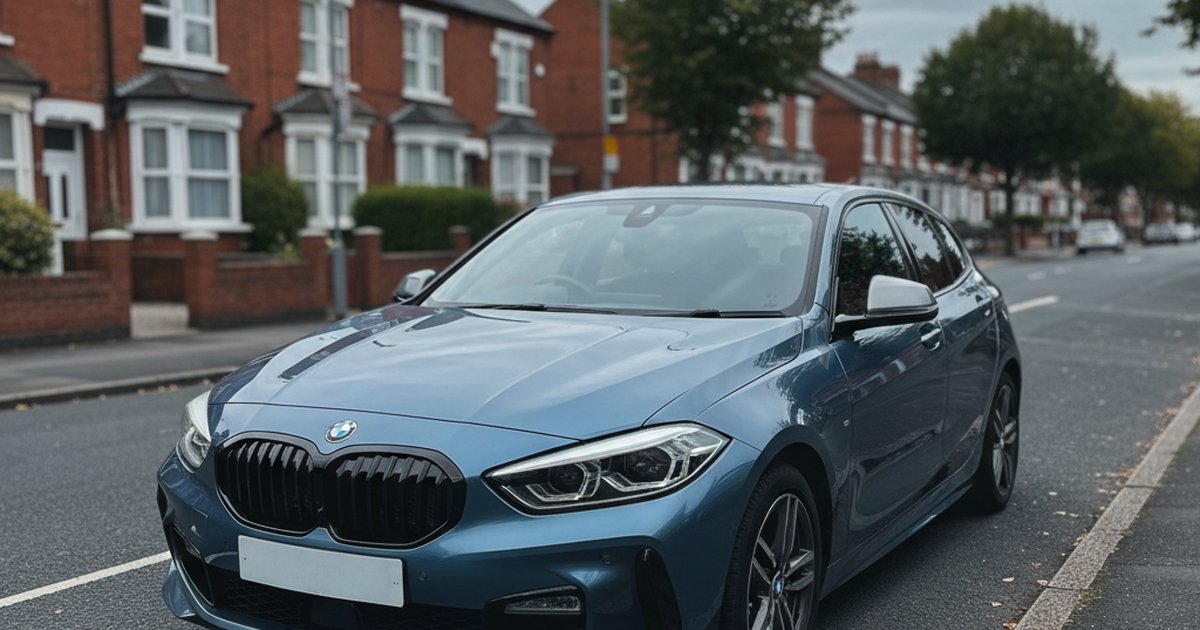
The BMW 1 Series has always been the oddball of the premium hatchback world. Rear-wheel drive in a front-drive segment, straight-six engines where rivals made do with fours, and a driving experience that actually justified the premium badge. But does that engineering integrity translate to reliability? We've analysed 737,891 MOT tests across 81,025 vehicles to find out which years deliver on BMW's promise and which fall short.
The data tells a clear story: petrol 1 Series models consistently outperform their diesel counterparts by a significant margin. We're talking about reliability scores that differ by 100 points or more in some years. The gap between best and worst years spans nearly 230 points on our 1000-point scale, which means your choice of model year matters enormously for long-term ownership costs.
TL;DR: Petrol 1 Series models from 2015-2016 are the sweet spot, with pass rates around 89-90% and reliability scores of 744-772. Avoid 2012-2013 diesels (reliability scores of 594-598) which show high dangerous defect rates near 50% and struggle with shock absorber failures.
Why do petrol models outperform diesels?
The reliability gap between petrol and diesel 1 Series models isn't marginal. Take 2012 as an example: petrol models score 667 while diesels manage just 594. The pattern repeats across nearly every year we examined. Diesel owners cover more ground annually (8,000-9,000 miles versus 5,400-7,400 for petrol), which partly explains the harder wear. But mileage alone doesn't account for the diesel models' dramatically higher dangerous defect rates.
Nearly half of all diesel 1 Series models from 2010-2013 have flagged at least one dangerous defect during their MOT history. The 2010 diesel sits at exactly 50%, while 2012 and 2013 diesels hover around 49-50%. Petrol models from the same years? They're running dangerous defect rates of 32-40%. That's not just a statistical quirk - it represents real safety issues that cost real money to fix.
The top failure culprit for diesels is shock absorber fluid leaks, appearing in 9-10% of tests for 2010-2011 models. Petrol variants rarely see this issue crack their top three defects. According to AA breakdown data, suspension component failures often cascade into other problems if left unaddressed, so catching these early matters.
Which years offer the best reliability?
The 2014 petrol 1 Series stands out with a reliability score of 772 and a pass rate of 87.3%. These cars were built during BMW's quality renaissance period, and it shows. They pick up just 1.1 defects per MOT test, lower than any other year in our dataset. The dangerous defect rate sits at a reassuring 31.9%, well below the diesel averages.
Right behind it, the 2015 petrol variant scores 767 with an even better 89.2% pass rate. These models show the lowest defect rate in the entire range at just 0.9 issues per test. First MOT pass rates of 90.6% prove these cars started strong and stayed that way. Owners average 6,736 miles annually, suggesting careful use rather than hard commuting.
The 2016 petrol is nearly as good at 744, maintaining that 90% pass rate and matching the low 0.9 defects per test. What's particularly impressive about 2014-2016 petrol models is their consistency - they don't show the degradation pattern visible in older cars. The gap between first MOT pass rate and overall pass rate remains tight, indicating these cars age gracefully.
Value tip: 2011 petrol 1 Series models score a respectable 710 and trade at a significant discount to 2014-2016 cars, making them the budget sweet spot if you want RWD BMW thrills without the newer car premium.
Which years should you avoid?
The 2014 diesel is an outlier catastrophe with a reliability score of just 546 - the worst in the entire dataset. Yes, the sample size is smaller at 1,392 tests, but that doesn't excuse a dangerous defect rate of 51.6%. More than half these cars have flagged serious safety issues. Walk away from 2014 diesels.
The 2012-2013 diesel models aren't much better, scoring 594 and 598 respectively. These represent the bulk of the diesel 1 Series market (270,516 tests between them), so you'll see plenty for sale. Don't be tempted. They both show dangerous defect rates near 50% and pick up 1.7 defects per test. Brake and suspension components wear aggressively, and according to What Car? owner satisfaction data, these years generate the most complaints about running costs.
Even among petrols, 2019 shows concerning trends with a reliability score of 584 despite being much younger. The first MOT pass rate of 89.7% looks decent, but watch for the defects pattern - brake pad wear appears in 12.4% of tests, the highest rate for any petrol model. These cars are being driven harder (7,226 miles annually), and it's taking a toll.
What goes wrong most often?
Tyres dominate the failure list across all 1 Series models. Edge wear appears in 19-31% of all MOT tests, with run-flat tyres on diesel models wearing particularly aggressively. The 2010 diesel records edge wear in 23.8% of tests specifically for 225/50/17 run-flats. These tyres cost £150-200 each to replace, so budget £600-800 for a full set.
Brake components are the second major expense. Pads and discs appear together in the top defects for nearly every year from 2012 onwards. The 2018 diesel shows brake pad wear in 14.4% of tests - higher than any other variant. Premium brake components for the 1 Series aren't cheap; expect £300-400 for pads and discs at an independent specialist, double that at a main dealer.
For diesels, shock absorbers are the killer. Fluid leaks appear in 9-10% of 2010-2011 diesel tests. Quality replacements run £400-600 for the pair fitted, and failed dampers often mask other suspension issues that only become apparent after replacement. The RAC notes that worn dampers accelerate tyre wear, creating a vicious cycle of escalating costs.
What mileage should you expect?
Diesel 1 Series models show significantly higher annual mileage than petrols. The 2018 diesel averages 9,028 miles per year, while its petrol equivalent manages 7,355. This 1,700-mile annual gap compounds over ownership, explaining why diesel examples accumulate wear faster. A 2012 diesel currently shows a median odometer reading of 110,503 miles; the petrol from the same year sits at 81,958.
Interestingly, petrol mileage has been increasing in recent years. The 2011 petrol averaged just 5,402 miles annually, but by 2017 that figure had risen to 7,131. This suggests changing ownership patterns - early petrol 1 Series buyers kept them as weekend cars, while more recent owners use them as daily drivers. That shift may explain why 2019 petrol reliability scores have dipped compared to 2015-2016.
Current mileage figures show diesels typically sitting around 56,000-71,000 miles for 2017-2019 cars, while petrols from those years range 45,000-59,000. If you're shopping for a used example, anything significantly above these medians deserves extra scrutiny during the pre-purchase inspection.
Does the generation change matter?
The second-generation F20 1 Series (2011-2019) forms the bulk of our dataset, but we see a clear quality evolution within that generation. Early F20 cars (2011-2013) suffer from teething issues that BMW gradually resolved. The jump from 2013 petrol (reliability score 690) to 2014 petrol (772) is striking - that's an 82-point improvement in a single model year.
BMW made running changes throughout F20 production, including revised suspension bushes, updated brake calipers, and improved tyre compounds for the run-flats. You can see the impact in the defects per test metric, which drops from 1.3 in 2013 petrol to 1.1 in 2014, then to 0.9 in 2015.
The third-generation F40 (2019 onwards) barely features in our MOT data yet, but early signs from 2019 models are mixed. That 584 reliability score for 2019 petrols suggests BMW may have prioritised tech and interior quality over mechanical robustness in the new platform. We'll need more MOT history to know for certain, but right now, late F20 models (2015-2017) look like the safer bet than early F40s.
What will it cost to run?
The difference between a good year and a bad year 1 Series translates to hundreds of pounds annually. A 2015 petrol with 0.9 defects per test and a 28.3% dangerous defect rate will sail through MOTs with minimal work. Budget £200-400 for tyres when needed, £150-250 for pads and discs, and maybe £100 for miscellaneous advisory items. Total annual MOT-related costs: £300-500 on average.
Compare that to a 2012 diesel with 1.7 defects per test and a 49.7% dangerous defect rate. You're looking at £400-600 for shocks when they leak, £300-400 for brakes more frequently, £600-800 for run-flat tyres, plus the labour to fix whatever dangerous defects the tester flags. Annual MOT costs could easily hit £800-1,200, and that's before factoring in the premium for diesel servicing.
Insurance and depreciation favour petrol models too. Diesels command a higher purchase price but depreciate faster as buyers wake up to the reliability gap. A 2013 diesel might cost £8,000, but a 2015 petrol at £10,000 will lose less value and cost less to maintain. Over three years of ownership, the petrol saves you money despite the higher entry price.
Found a year you like? A good year still hides a clocked odometer, outstanding finance or a past write-off. Before you hand over any money, check the exact BMW 1 Series.
Frequently asked questions
Are BMW 1 Series petrol or diesel models more reliable?
Petrol models are significantly more reliable, with scores typically 50-100 points higher than equivalent diesel years. Petrols also show dangerous defect rates around 30% versus 50% for diesels, and suffer fewer expensive component failures like shock absorber leaks.
What is the best year BMW 1 Series to buy for reliability?
2014-2016 petrol models offer the best reliability, with 2014 scoring 772 and 2015 scoring 767. These years show the lowest defect rates (0.9-1.1 per test) and highest pass rates (87-89%) in the entire range.
What are the most common BMW 1 Series MOT failures?
Tyre edge wear appears in 19-31% of tests, particularly on run-flat tyres. Brake pads and discs feature in 8-14% of tests depending on year. Diesel models specifically suffer shock absorber fluid leaks in 9-10% of 2010-2011 tests.
Should I avoid high mileage BMW 1 Series?
Diesels average 8,000-9,000 miles annually versus 5,400-7,400 for petrols. A 2012 diesel with 110,000 miles is typical, but anything over 130,000 deserves extra scrutiny. Petrol models with over 100,000 miles should show comprehensive service history.
Why do BMW 1 Series diesel models have higher dangerous defect rates?
Diesel models show dangerous defect rates of 47-52% for 2010-2013 years, nearly double the petrol rate. This stems from shock absorber failures, higher annual mileage stressing suspension components, and run-flat tyre degradation from harder use.
Our Verdict
The BMW 1 Series proves that premium badges don't guarantee premium reliability - but choosing the right year makes all the difference. Stick to 2015-2016 petrol models and you'll get genuinely dependable rear-wheel-drive thrills. Stray into diesel territory, especially 2012-2014, and you're gambling with suspension failures and dangerous defects. Before you buy any 1 Series, check its complete MOT history with PlateInsight. You get 5 free credits to verify exactly which defects your prospective purchase has accumulated over the years, because
You might also like
Check Any Vehicle's Full History
MOT results, mileage timeline, AI health score, and market valuations. New users get 5 free credits.