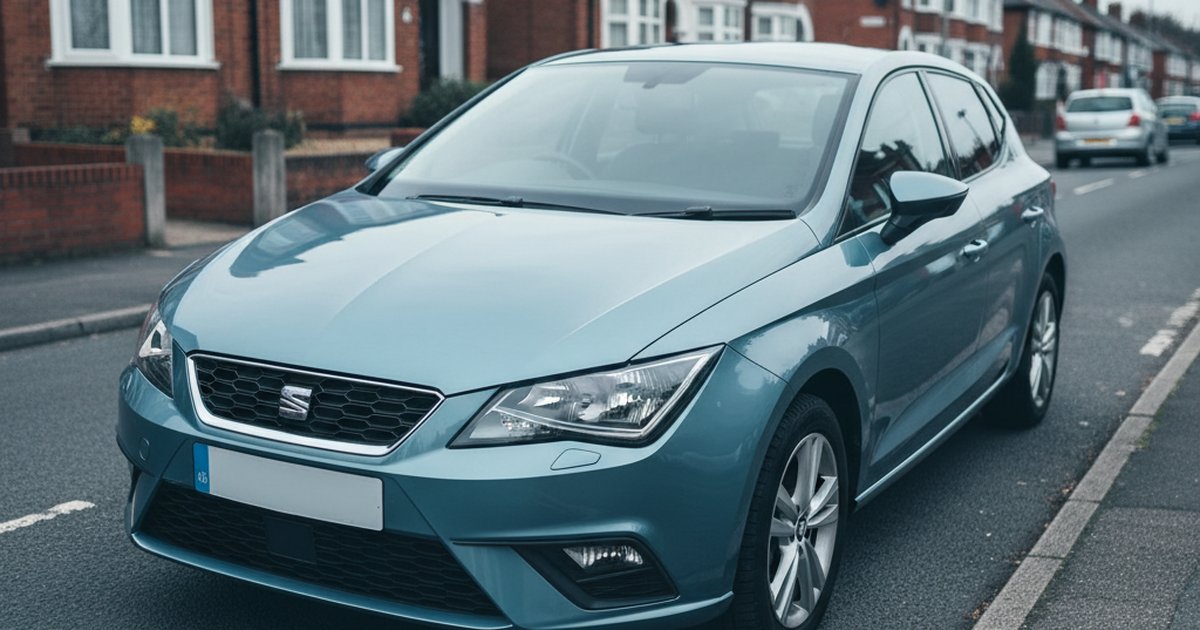
The SEAT Ibiza sits in that sweet spot between affordable and competent. Built on the same VW platform as the Polo, it should offer German engineering at Spanish prices. But does it actually hold up? We've analysed 1,820,900 MOT tests from 187,995 SEAT Ibizas to find out which model years you can trust and which ones will drain your wallet.
The picture is messier than you'd hope. While newer examples perform well, the middle years tell a different story. Diesel models consistently underperform their petrol siblings, and some year groups develop shockingly high dangerous defect rates. This is a car that can be brilliant or troublesome depending entirely on which variant and age you choose.
TL;DR: Buy petrol from 2019 onwards (528/1000 reliability, 87.9% pass rate) or early examples from 2010-2012 before suspension and shock absorber problems became endemic. Avoid diesel entirely. They score 100-150 points lower on reliability and 2013-2017 diesels have dangerous defect rates above 47%. The 2015 diesel is particularly dire at 327/1000 reliability.
Should you buy diesel or petrol?
This isn't even close. Petrol Ibizas consistently outscore diesel equivalents by significant margins. Take 2019 as an example: the petrol scores 528/1000 for reliability whilst the diesel limps to 509/1000. That's actually one of the smaller gaps. In 2015, the petrol scores 418/1000 whilst the diesel plummets to just 327/1000.
The defect picture tells the same story. Diesel Ibizas average 2.2 issues per MOT test from 2010-2016, compared to 2.0 for petrol. The real killer is dangerous defects. From 2010 to 2015, diesel models show dangerous defect rates between 47% and 51%. That means roughly half of all diesel Ibizas from this period have flagged at least one dangerous issue during MOT testing. Petrol models from the same years sit at 42-47%, which is still high but notably better.
Diesel owners also drive harder. Annual mileage sits around 8,000-8,500 miles per year for diesel versus 6,500-6,700 for petrol. These aren't gentle-use cars, and the higher loads show in the MOT results. Brake discs appear in the top three defects for nearly every diesel model year but rarely trouble petrol variants. If you're buying used, that matters. You're inheriting someone else's hard miles.
The data is clear: Petrol Ibizas are more reliable, develop fewer serious faults, and cost less to maintain. Unless you're covering 20,000+ miles annually, diesel makes no financial sense.
Which model years are most reliable?
The 2019 petrol Ibiza is the standout performer. With a reliability score of 528/1000 and an 87.9% MOT pass rate, this represents the sweet spot where DVSA MOT records show SEAT finally sorted the recurring suspension and shock absorber issues. Defects per test drop to just 1.0, and the dangerous defect rate falls to 17.4%,still not brilliant, but half what you'll find on 2013-2015 models.
The 2020-2022 petrol models continue this improvement, all scoring above 480/1000 with pass rates between 88-89%. Current mileage sits around 30,000-38,000 miles, meaning you're buying cars that haven't been hammered. These are the years to target if you want modern tech and minimal MOT drama.
Surprisingly, the very early cars also perform well. The 2010-2011 petrol Ibizas score 520-526/1000, matching or beating many newer models. Pass rates hover around 75-77%, which isn't spectacular but reflects their age. If you're shopping on a tight budget, an early example with full service history could be a smarter buy than a neglected 2014-2016 car. Just accept that at 92,000 miles median odometer reading, you're buying a car that needs sympathetic ownership.
Which years should you avoid?
The 2013-2017 period is where things turn sour. The 2013 diesel scores just 400/1000 for reliability with a 74.5% pass rate. That first MOT pass rate of 78.6% is particularly damning,even when nearly new, these cars struggled. By comparison, the 2019 petrol achieves 89.5% first MOT pass. That's an 11-point gap between a three-year-old diesel and a three-year-old petrol from different eras.
The 2015 diesel is the absolute nadir at 327/1000 reliability. Nearly half of all MOT tests flag dangerous defects. Shock absorbers with serious leaks appear in 18.8% of tests, and suspension bushes wear excessively in 16.1% of tests. This is a car that actively tries to bankrupt you.
Even the petrol models suffer during this period, though less severely. The 2013-2017 petrols score between 390-473/1000,not terrible, but well below the 520+ you'll get from 2010-2011 or 2019+ examples. Shock absorber failures plague these model years, appearing in 12-15% of tests. According to What Car? owner satisfaction data, this aligns with reported suspension complaints from the same period.
Avoid completely: Any diesel from 2013-2017, and especially the 2015 diesel. Even cheap examples will cost you more in repairs than you'll save on the purchase price.
What are the most common faults?
Tyres dominate the defect lists, appearing in 20-36% of all MOT tests depending on model year. This is partly routine wear, but the high incidence of edge wear suggests camber or tracking issues that owners ignore. Tyre bulges and structural failures appear in 10-17% of tests on 2016-2020 models, which is abnormal for a supermini. Either the suspension geometry is aggressive, or owners are mounting the wrong tyre pressures and hitting kerbs.
Suspension bushes are the real mechanical problem. Rear wishbone bushes appear in the top defects for nearly every model year, affecting 9-16% of tests. On 2011-2015 models, this becomes excessive wear rather than minor deterioration. The bushes debond or tear completely, requiring full arm replacement. Budget £200-300 per corner if you're buying a car from this era without recent suspension work.
Shock absorbers leak. Not occasionally,habitually. From 2013-2017, shock absorber failures appear in 12-15% of tests, with 'serious fluid leak' being the common description. This isn't age-related misting; these are catastrophic failures on cars that should still have serviceable dampers. The problem affects front and rear equally. A full set of quality replacements costs £400-600 fitted, so factor that into any purchase from these years.
Brake discs on diesel models corrode aggressively. They appear in 12-17% of diesel MOT tests but only 9-11% of petrol tests. The difference is usage pattern: diesel owners rack up motorway miles where brakes don't get worked hard, leading to surface rust and pitting. It's a design weakness rather than a defect, but you'll pay for new discs sooner on a diesel.
How many miles do owners actually cover?
Ibiza owners are gentle drivers. Petrol models average just 6,500-7,200 miles per year across all model years. Current median mileage on 2019 petrol cars is 42,276 miles,these are five-year-old cars with barely 40,000 on the clock. That low-mileage profile partly explains the improving MOT pass rates: owners aren't thrashing them.
Diesel tells a different story. Annual mileage sits at 8,000-9,600 miles per year, with the 2019 diesel averaging 9,642 miles annually. That's 35% higher than the petrol equivalent. These cars work harder, and the MOT data shows it. By the time a 2013 diesel reaches MOT age, it's typically covered 104,000 miles. The 2010 diesel sits at 114,000 miles median. You're buying high-mileage cars with worn-out suspension and dubious service histories.
The mileage spread also reveals ownership patterns. Early Ibizas (2010-2012) now show 85,000-115,000 miles, suggesting they're either still in daily use or have been relegated to second-car status. The 2017-2019 models sit at 40,000-56,000 miles,these are cherished purchases from younger drivers or families using them as city runabouts. That careful ownership shows in the superior pass rates.
Do newer models pass their first MOT?
First MOT pass rates improved dramatically over the production run. The 2010 petrol achieved 82.3% first MOT pass, whilst the 2023 petrol hits 89.3%. That's a seven-point improvement in initial build quality. The gap between first MOT and overall pass rate also narrows on newer cars, suggesting they degrade more gracefully.
Compare the 2010 diesel (81.5% first MOT, 74.2% overall pass) to the 2019 petrol (89.5% first MOT, 87.9% overall). The older car loses 7.3 percentage points between its first test and its lifetime average. The newer car loses just 1.6 points. That tells you the 2019 model maintains condition far better as it ages.
The 2015 diesel shows how badly things can go wrong. First MOT pass rate is just 74.7%,that's a three-year-old car with only 26% of examples sailing through their maiden test. By the time these cars reach higher mileages, the overall pass rate falls to 75.1%, but the damage is already done. A car that fails its first MOT at this rate is fundamentally flawed.
If you're buying a post-2018 Ibiza, you can reasonably expect it to pass its first MOT without drama. Anything older than 2016 requires a pre-purchase inspection and realistic budgeting for immediate repairs.
How common are dangerous safety failures?
The dangerous defect rates are frankly alarming. From 2010 to 2015, between 42% and 51% of all Ibizas have recorded at least one dangerous defect at some point in their MOT history. That's not a small minority of neglected examples,it's nearly half the entire fleet.
Diesel models are worse. The 2011-2013 diesels show dangerous defect rates above 50%. One in two diesel Ibizas from this period has had a dangerous failure. Even the 2016 diesel sits at 45.5%, and these are cars that should still be in their prime. The petrol models from the same years range from 42-45%, which is still unacceptably high but at least shows some restraint.
The dangerous defects typically involve suspension and braking components. Seriously corroded brake discs, excessively worn ball joints, and catastrophic shock absorber failures all appear regularly in the data. These aren't advisory items you can defer,they're immediate safety risks that require fixing before the car goes back on the road.
The good news is that post-2018 models show dramatic improvement. The 2019 petrol drops to 17.4% dangerous defect rate, the 2020 sits at 15.8%, and the 2022 falls to just 4.7%. SEAT clearly addressed the underlying quality issues, but it took them until the late 2010s to do it properly. If you're buying older, budget for unexpected safety-critical repairs.
Found a year you like? A good year still hides a clocked odometer, outstanding finance or a past write-off. Before you hand over any money, check the exact SEAT Ibiza.
Frequently asked questions
Are SEAT Ibiza models reliable compared to rivals?
The newest petrol Ibizas (2019+) are competitive, scoring 480-528/1000 reliability. However, 2013-2017 models score poorly (390-473/1000) and suffer high dangerous defect rates. The VW Polo from the same era typically outperforms equivalent Ibizas by 50-100 reliability points.
What's the most common MOT failure on SEAT Ibiza?
Tyre wear appears in 20-36% of tests, but the serious mechanical issue is suspension bushes (9-16% of tests) and shock absorber failures (12-15% on 2013-2017 models). Budget £200-300 per corner for bushes and £400-600 for a full set of dampers.
Should I buy a diesel SEAT Ibiza?
No. Diesel Ibizas score 100-150 points lower on reliability than petrol equivalents, have dangerous defect rates above 47% (2011-2015), and suffer premature brake disc corrosion. Unless you cover 20,000+ miles annually, petrol is cheaper to run and more reliable.
What mileage is too high for a used SEAT Ibiza?
Petrol models average just 6,500-7,200 miles per year, so a 2015 petrol with 70,000 miles is typical. Diesel models average 8,000-9,600 miles annually. Avoid any car with significantly higher mileage than these averages unless it has comprehensive service history proving suspension and damper replacements.
Which SEAT Ibiza year has the best first MOT pass rate?
The 2017 petrol achieves 89.3% first MOT pass rate, closely followed by 2019 (89.5%) and 2023 (89.3%). The 2015 diesel is worst at just 74.7%, meaning only three-quarters pass their maiden test at three years old.
Our Verdict
The SEAT Ibiza is a tale of two cars. Buy a 2019 or newer petrol model and you'll get a reliable, affordable supermini that should serve you well for years. Buy a 2013-2017 diesel and you've just signed up for a masterclass in expensive suspension and damper repairs. The numbers speak for themselves: reliability scores vary by over 200 points between best and worst model years, and dangerous defect rates swing from 4.7% to 51%.
Before you commit to any used Ibiza, run a PlateInsight vehicle check. You'll get the complete MOT history, mileage verification, and see exactly what's failed previously. We're backed by 261 million MOT records from the DVSA, so you're seeing the same data we used for this analysis. Every new user gets 5 free checks,enough to compare several candidates and spot the cars with hidden suspension issues before you hand over any money. Don't buy blind when the facts are right there.
You might also like
Check Any Vehicle's Full History
MOT results, mileage timeline, AI health score, and market valuations. New users get 5 free credits.