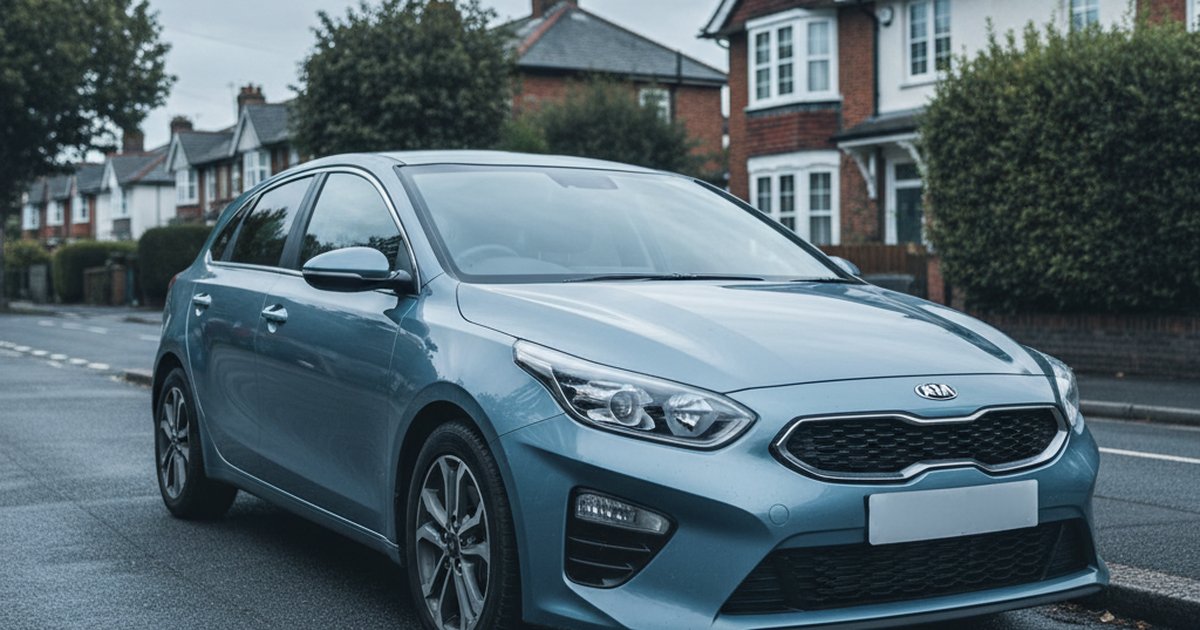
The Kia Ceed has become Britain's default alternative to the Golf. Sensible, practical, and backed by that famous seven-year warranty. But how do they actually hold up once the warranty expires and you're footing the bill? We've analysed 1,164,578 MOT tests across 116,716 Ceed models registered between 2010 and 2023 to find out.
The story here is remarkably consistent. Petrol Ceeds are measurably more reliable than their diesel counterparts, and the mid-decade models (2013-2018) represent the sweet spot. If you want a dependable family hatchback that won't drain your wallet in repairs, the data is clear about which versions to chase and which to leave on the forecourt.
TL;DR: Petrol Ceeds from 2013-2018 score 549-554 out of 1000 for reliability - genuinely impressive numbers for a mass-market hatchback. Diesels consistently lag 60-100 points behind their petrol siblings and rack up suspension and brake issues at a far higher rate. The 2011 diesel is particularly troublesome at just 325/1000.
Which Fuel Type Should You Choose?
The petrol versus diesel question has a definitive answer with the Ceed: buy petrol. Every single petrol model year outperforms its diesel equivalent, and the gap is not trivial. The 2013 petrol Ceed achieves 549/1000 reliability versus 436/1000 for the diesel equivalent. That 113-point chasm translates to fewer MOT failures, lower repair bills, and less hassle.
Diesel Ceeds also show alarming defect patterns. Take the 2011 diesel: suspension arm bushes appear in 24.6% of tests, and the dangerous defect rate hits 56.7%. Compare that to the 2014 petrol, where dangerous defects affect just 35.2% of vehicles. The diesel models average 2.3-2.6 defects per test through their first decade, while petrols stay closer to 1.9-2.4.
Annual mileage tells the story: Diesel Ceed owners average 8,000-9,000 miles annually, while petrol owners sit at 6,100-6,400 miles. The diesels are being worked harder, and it shows in the MOT results.
Unless you genuinely cover motorway miles for a living, the petrol Ceed is the rational choice. Lower purchase price, fewer problems, cheaper fixes when things do go wrong.
Which Model Years Are Most Reliable?
The golden era for Ceed reliability runs from 2013 to 2018 in petrol form. These six model years all score between 549 and 556 out of 1000, with pass rates hovering around 80-88%. The 2013 petrol leads the pack at 549/1000 with an 80% pass rate, while the 2017 and 2018 petrols push that pass rate to 87%.
First MOT performance is particularly revealing. The 2016 petrol achieves an 88.9% pass rate at its first test, suggesting the car was properly screwed together from the factory. Compare that to the 2013 diesel's 78.2% first MOT pass - a full 10 percentage points lower. The data from gov.uk's MOT checker shows this pattern repeating across the model range.
The 2014-2016 petrols represent peak Ceed. They score 550-556/1000, rack up just 1.3-1.4 defects per test, and maintain respectable current mileages without falling apart. A 2015 petrol with 67,000 miles is hitting its stride, not approaching end of life.
Which Years Should You Avoid?
The 2010-2011 diesels are dire. The 2011 diesel scores just 325/1000 - the worst reliability figure in the entire Ceed range. Its 70.7% pass rate and 56.7% dangerous defect rate make it a liability. Suspension components are failing at epidemic rates: ball joints show play in over a quarter of tests, and wishbone bushes are worn in another quarter.
The 2010 diesel is marginally better at 376/1000, but that's damning with faint praise. Both model years average 2.6 defects per test and show chronic tyre wear issues. When nearly a quarter of tests flag tyres worn close to the legal limit, you know these cars are being driven hard and maintained poorly.
Red flag: Any diesel Ceed from 2010-2012 with high mileage (over 120,000) is a gamble. The median mileage sits around 102,000-112,000 for these years, and they're accumulating serious wear items at an alarming rate.
Even among petrols, the 2010-2012 models lag behind. The 2010 petrol scores a respectable 474/1000, but that's still 75 points below what you get with a 2013. For the sake of £500-£1,000 in purchase price, buying newer makes financial sense.
What Are the Most Common Faults?
Tyres dominate the defect lists across all Ceed model years. Between 20-37% of tests flag tyres worn close to the legal limit or with uneven edge wear. This isn't a design flaw - it's a reflection of deferred maintenance and aggressive driving habits. Inner edge wear appears repeatedly, suggesting alignment issues that owners ignore until MOT time.
Brake components are the second major issue. Brake pads wearing thin appear in 10-14% of tests across most model years, while brake discs scored or pitted show up at similar rates. The discs are particularly problematic on diesels, where 12-16% of tests flag them as worn or weakened. This aligns with the higher annual mileage diesel owners rack up.
Suspension wear becomes critical on pre-2013 models. Anti-roll bar linkage ball joints fail frequently on early cars, with the 2010 petrol showing this defect in 21.5% of tests. Wishbone bushes on diesels perish and wear, creating play that requires replacement. By 2014 onwards, suspension defects drop notably - better materials or better assembly, the result is the same.
The dangerous defect rates deserve attention. The 2010-2011 diesels see over half of all vehicles flagged with at least one dangerous issue at some point. That number falls to 28-36% for mid-decade petrols, and drops below 25% for 2017-2018 models. According to RAC data, dangerous defects create genuine safety risks and should trigger immediate repairs.
How Many Miles Can You Expect?
Current mileage figures reveal how Ceeds age. The 2010 diesel sits at a median 112,831 miles now, accumulating 8,396 miles annually. That's steady motorway work - commuter spec. Petrol models from the same year show 87,700 miles at a gentler 6,135 miles per year. These are school run cars, weekend shopping trips, not sales rep mobiles.
The pattern holds across the range. A 2015 diesel averages 85,908 miles currently at 8,038 miles per year, while the petrol equivalent has covered just 67,542 miles at 6,364 annually. Diesel buyers rack up 25-30% more miles, which partly explains the reliability gap. More miles means more wear, more heat cycles, more stress on components.
For buyers, this creates opportunity. A 2016 petrol Ceed with 59,000 miles has been used lightly - likely one owner, garage kept, sensibly driven. That same car in diesel form with 78,000 miles has worked harder. Neither is high mileage for a Ceed, but the usage profile matters. We run this type of historical analysis for any UK vehicle through PlateInsight's MOT database.
Are the Latest Ceeds Worth Buying?
The 2019-2023 Ceeds show mixed signals. Petrol models from 2019 onwards score 442-505/1000 - measurably worse than the 2014-2018 generation's 549-556 range. Pass rates remain strong (86-89%), but the reliability score dip suggests these newer cars are picking up faults earlier in their lives.
The 2019 petrol's first MOT pass rate is 86.9%, down from 90.8% for the 2018 model. Something changed. Whether it's cost-cutting in components, more complex systems creating failure points, or early teething troubles, the newest Ceeds are not matching their predecessors for trouble-free motoring.
That said, dangerous defect rates continue falling. The 2022 petrol sees just 4.9% of vehicles flagged with dangerous issues, compared to 22-28% for older models. Safety systems work, but the cars accumulate minor niggles faster. For buyers, this means post-2019 Ceeds will likely need more frequent small fixes, even if they're less likely to strand you.
New car consideration: The seven-year Kia warranty covers these potential issues if buying nearly new. But once that warranty expires, you're facing potentially higher maintenance costs than a 2016-2018 model would incur at the same age.
What Should You Look For When Buying?
Check the tyres obsessively. With 20-37% of Ceeds showing tyre wear issues at MOT time, this is your biggest negotiating lever. Inner edge wear indicates poor alignment - budget £150-200 to fix that properly. If all four tyres are borderline legal, add £400 to your mental running costs immediately.
Examine brake discs and pads. Lift each wheel if possible and inspect the disc surface. Scoring and pitting are common on diesels after 60,000 miles. Surface rust is normal, but deep grooves or lips mean replacement soon. Brake pad thickness is harder to assess without removing wheels, but a test drive should reveal any issues - squealing, pulsing, or pulling under braking all signal problems.
Suspension clunks and knocks require investigation. Ball joints and bushes wear on early Ceeds, and replacement is labour-intensive. A clonk over bumps or when turning sharply could be a £300-500 bill. AA vehicle inspections can identify these issues before purchase.
Request the full MOT history through gov.uk's official checker or PlateInsight. Look for patterns - the same fault appearing repeatedly suggests an owner who patches rather than properly fixes problems. A clean history with consistent annual mileage indicates caring ownership. Erratic mileage or multiple failures signal trouble.
Found a year you like? A good year still hides a clocked odometer, outstanding finance or a past write-off. Before you hand over any money, check the exact Kia Ceed.
Frequently asked questions
Are Kia Ceeds expensive to maintain?
No, parts and labour costs are reasonable. Petrol Ceeds average 1.3-1.9 defects per MOT test, keeping annual maintenance bills modest. Tyres and brake components are the main wear items. Budget £400-600 annually for a well-maintained example.
Which is better - Kia Ceed diesel or petrol?
Petrol is measurably more reliable. Petrol models score 549-556/1000 for 2013-2018 years, while diesels lag at 436-520/1000. Diesels show higher defect rates, more suspension wear, and worse first MOT pass rates. Choose petrol unless you cover 15,000+ miles annually.
What is the most common problem with Kia Ceeds?
Tyre wear appears in 20-37% of MOT tests, particularly inner edge wear suggesting alignment issues. Brake disc scoring affects 10-16% of tests on diesels. Suspension ball joints and bushes wear on pre-2013 models. These are all maintenance issues rather than design flaws.
How many miles will a Kia Ceed last?
Petrol Ceeds easily exceed 100,000 miles with proper maintenance. The data shows 2010 petrols currently averaging 87,700 miles and still passing MOTs at 74.2% rates. Diesels reach higher mileages (110,000+) but with worse reliability scores and more frequent repairs needed.
Is a Kia Ceed as reliable as a VW Golf?
For 2013-2018 petrol models, yes. Ceed reliability scores of 549-556/1000 compete directly with equivalent Golf models. Early Ceeds (2010-2012) lag behind, and post-2019 models show declining scores. The mid-decade Ceed is genuinely Golf-competitive for dependability.
Our Verdict
The Kia Ceed proves that sensible hatchbacks can also be reliably engineered. Stick to petrol models from 2013-2018, prioritise full service history over low mileage, and you'll get Golf-rivalling reliability at Focus money. Avoid the early diesels entirely - life is too short for 56.7% dangerous defect rates and collapsing suspension components.
Before buying any used Ceed, check its complete MOT history with PlateInsight. Our database of 261 million MOT records reveals the true condition of any UK vehicle. New users get 5 free vehicle credits to start - enough to compare multiple Ceeds and find the genuinely reliable example. Make your next purchase data-driven, not guesswork.
You might also like
Check Any Vehicle's Full History
MOT results, mileage timeline, AI health score, and market valuations. New users get 5 free credits.