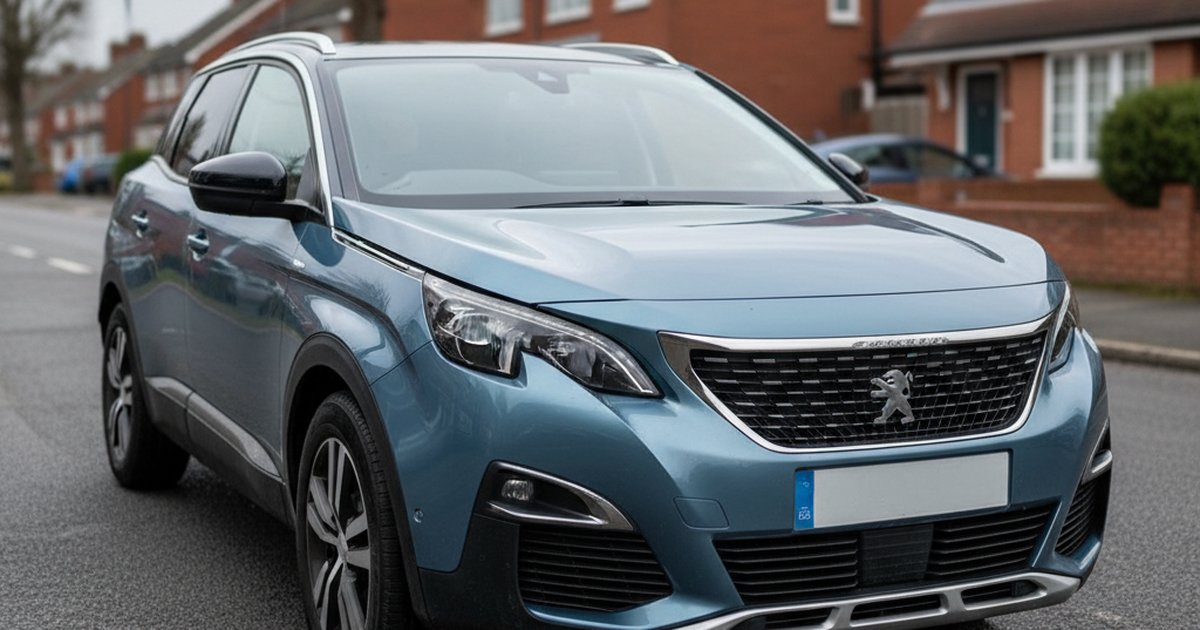
The Peugeot 3008 transformed from a sensible MPV into an award-winning crossover SUV in 2016, winning European Car of the Year in 2017. But does that award translate to dependable ownership? We've analysed 1,298,551 MOT tests across 137,076 vehicles to separate the reliable years from the problematic ones.
The short answer: yes, the second-generation 3008 (2016 onwards) is markedly more dependable than its predecessor, but even within that generation, some years shine while others stumble. The data reveals surprising patterns about which engines to choose, when the model hit its stride, and which years carry hidden risks.
TL;DR: Second-generation 3008s (2017-2022) score between 472-689/1000, with 2022 diesels hitting 689/1000 and 91.1% pass rates. First-generation models (2010-2016) struggle at 310-496/1000. Petrol variants consistently outperform diesels across both generations. The 2013 diesel scores just 310/1000 with a 73.1% pass rate - avoid.
Which generation should you buy?
The difference between first-generation (2009-2016) and second-generation (2016-present) 3008s is stark. Second-gen models deliver reliability scores 150-200 points higher and pass rates that jump from the low 70s into the mid-to-high 80s.
First-generation 3008s were perfectly competent family cars, but they age poorly. Most examples now sit around 90,000-110,000 miles, and they're showing their years. The 2010-2013 cohort averages 2.0-2.3 defects per test, and the dangerous defect rate sits above 50% for most years. That doesn't mean half of them are dangerous - it means over half have had at least one dangerous defect flagged at some point. Still troubling.
The second-generation model, launched in late 2016, changed everything. The 2017 petrol scores 544/1000 with an 86.6% pass rate, while the 2019 diesel hits 572/1000 with 87.0% pass. By 2022, diesels reach 689/1000. The engineering improvement is obvious in the data.
Key point: If you're shopping below £8,000, you're in first-gen territory. Accept that you're buying a car with higher running costs and more frequent repair bills. Over £10,000, you can access early second-gen models that offer substantially better prospects.
Should you choose petrol or diesel?
Across both generations, petrol 3008s consistently outperform their diesel counterparts. This isn't marginal - it's a clear pattern.
In the first generation, the 2012 petrol scores 483/1000 versus 434/1000 for the diesel. The 2014 petrol hits 487/1000 while the diesel manages 411/1000. Petrol owners cover fewer miles annually (around 6,300 miles versus 7,500 for diesels), which partly explains the gap, but the first MOT pass rates tell another story: petrol models consistently achieve 86-90% first-time passes, while diesels languish at 76-85%.
The second generation narrows this gap but doesn't eliminate it. The 2017 petrol achieves 544/1000 with a 93.9% first MOT pass rate, compared to 472/1000 and 90.2% for the diesel. By 2018-2019, both fuel types converge around 505-572/1000, but petrols maintain a slight edge in defect rates and dangerous failures.
Diesels make sense if you cover serious mileage - second-gen diesel owners average 8,000-8,500 miles annually versus 6,500-7,100 for petrol. But for typical family use, the petrol offers a quieter life. According to What Car? owner reviews, the 1.2 PureTech petrol also feels more refined around town than the diesel alternatives.
Which are the most reliable years?
The sweet spot sits between 2017 and 2022. Within that window, certain years stand out.
2019 diesel: 572/1000. This represents the first-gen diesel's peak reliability. Pass rates hit 87.0%, defect rates drop to 1.3 per test, and dangerous failures fall to 22.6%. Examples sit around 53,000 miles currently, making them low-mileage prospects for the year.
2020-2022 petrols: 540-607/1000. The newest petrols with MOT history deliver exceptional reliability. The 2020 petrol scores 540/1000 with an 89.5% pass rate and just 1.1 defects per test. Current examples show around 35,000 miles - barely run-in for a five-year-old car.
2022 diesel: 689/1000. The highest-scoring variant in the dataset. With a 91.1% pass rate and just 0.8 defects per test, these represent the pinnacle of 3008 dependability. The dangerous defect rate drops to 5.1%, less than half the rate of early second-gen models.
Key point: The 2017 petrol offers the best value proposition - early second-gen benefits, strong 544/1000 reliability, and prices that have depreciated heavily from new. You're getting European Car of the Year engineering without the premium.
Which years should you avoid?
Three model years stand out as problematic.
2013 diesel: 310/1000. The worst-performing variant in the entire dataset. Pass rates collapse to 73.1%, defect rates remain stubbornly high at 2.0 per test, and the first MOT pass rate falls to just 76.2%. This represents the low point of first-generation engineering. Examples now sit around 90,000 miles, precisely the point where major components start failing. Suspension bushes, brake discs, and worn tyres plague these cars.
2016 diesel: 361/1000. Transitional year troubles. Despite being part of the second generation, these early examples haven't benefited from the reliability improvements that came with the 2017 model year. Pass rates sit at 79.3%, barely better than late first-gen models. The first MOT pass rate of 84.4% suggests early quality issues that later years resolved.
2010 diesel: 379/1000. The eldest examples now carry over 110,000 miles and face the compounding effects of age and wear. More than half have logged dangerous defects at some point. At this age and mileage, you're buying someone else's problem unless you enjoy DIY repairs.
The data from gov.uk MOT checker confirms these patterns across individual vehicles - run any 2013 diesel registration and you'll find a history of advisory accumulation.
What goes wrong with the Peugeot 3008?
The defect patterns are remarkably consistent across all years. Tyres worn to the legal limit appear in 30-40% of all tests - the highest rate we've seen in any PlateInsight analysis. This isn't a 3008 problem, it's an ownership problem. People run these cars on worn tyres, probably because replacement costs sting on a family SUV.
Brake discs and pads appear in 13-18% of tests across all variants. The second-gen models particularly suffer from corroded brake discs, likely due to light use - owners average just 6,500-8,500 miles annually, which doesn't scrub the discs clean. This is confirmed by RAC breakdown data showing brake-related calls as common on low-mileage 3008s.
First-generation models develop worn suspension bushes, particularly the rear suspension arms. This appears in 13-21% of tests on 2010-2013 models. It's a wear item, not a design flaw, but it's expensive to rectify and often appears alongside other ageing components.
The 2012 electric variant (a plug-in hybrid, actually) shows an 53.7% dangerous defect rate despite a reasonable 77.4% pass rate. Sample size is tiny (just 121 vehicles), but it suggests the complexity of the hybrid system introduces additional failure points.
Later second-gen models suffer fewer mechanical issues but still battle the tyre-wear problem. Even the excellent 2022 diesel sees 30.6% of tests flag tyres worn close to the limit. This tells you more about 3008 owners than 3008 reliability.
How hard are owners driving these cars?
The 3008 serves two distinct owner profiles, visible in the mileage data.
Petrol owners are gentle users. First-gen petrols average 6,300-6,500 miles annually, with current examples sitting around 72,000-93,000 miles. Second-gen petrols run even lighter at 6,000-7,100 miles per year. The 2020 petrol shows a median current mileage of just 35,148 miles - barely 7,000 miles per year for a five-year-old car.
Diesel owners work these cars harder. First-gen diesels average 7,400-7,900 miles annually, rising to 8,000-8,500 for second-gen models. The 2023 diesel, admittedly a tiny sample, shows owners covering a remarkable 12,747 miles annually - genuine company car territory.
This usage pattern explains some of the reliability differential. Petrol models experience less wear because they're driven less aggressively and cover fewer miles in harder conditions. But it doesn't explain everything - the first MOT pass rates, measured when all cars are just three years old, show petrols consistently outperforming diesels even before mileage accumulation becomes a factor.
Do they degrade faster than average?
The first MOT provides a snapshot of build quality before wear and tear muddies the picture. The pattern here is revealing.
First-generation diesels start strong at 81-85% first MOT pass rates (2010-2012), then collapse to 76.2% for the 2013 model before recovering slightly. This mid-cycle quality dip coincides with the lowest overall reliability score, suggesting 2013 suffered from cost-cutting or component quality issues.
Second-generation models launch with a 90.2% first MOT pass rate for the 2017 diesel and an impressive 93.9% for the petrol. These are strong numbers, confirming that Peugeot's engineering overhaul delivered real-world benefits from day one.
The degradation rate varies by generation. First-gen models see pass rates fall from 81-85% at first MOT to 70-77% overall - a drop of 8-11 percentage points. Second-gen models hold up better, dropping from 87-94% first MOT to 83-92% overall - just 3-5 points of degradation.
This suggests second-gen 3008s age more gracefully. The engineering improvements aren't just making them more reliable when new - they're building in durability that pays dividends across the ownership cycle.
Found a year you like? A good year still hides a clocked odometer, outstanding finance or a past write-off. Before you hand over any money, check the exact Peugeot 3008.
Frequently asked questions
What is the most reliable Peugeot 3008 year?
The 2022 diesel scores 689/1000 with a 91.1% MOT pass rate and just 0.8 defects per test - the highest reliability score in our dataset. The 2019 diesel (572/1000) and 2017 petrol (544/1000) offer excellent reliability at lower prices.
Are Peugeot 3008 diesels reliable?
Second-generation diesels (2017-2022) are reliable, scoring 472-689/1000 with pass rates of 83-91%. First-generation diesels (2010-2016) struggle at 310-458/1000. The 2013 diesel should be avoided entirely at 310/1000 and 73.1% pass rate.
Is petrol or diesel better for Peugeot 3008 reliability?
Petrol variants consistently outperform diesels across both generations. First-gen petrols score 50-100 points higher, while second-gen petrols maintain a 10-70 point advantage. Petrols also achieve better first MOT pass rates (88-94% vs 76-90% for diesels).
What are the common problems with Peugeot 3008?
Tyres worn to the legal limit appear in 30-40% of all MOT tests - an ownership issue rather than a vehicle fault. Brake disc corrosion affects 13-18% of tests, particularly on low-mileage second-gen models. First-gen cars develop worn rear suspension bushes in 13-21% of tests.
Which Peugeot 3008 years should I avoid?
Avoid the 2013 diesel (310/1000, 73.1% pass rate), 2016 diesel (361/1000), and any first-generation diesel over 100,000 miles. The 2010 diesel scores just 379/1000 with over 110,000 miles on most examples and a 53.5% dangerous defect rate.
What mileage is too high for a Peugeot 3008?
Second-generation 3008s remain reliable into six figures if maintained properly. First-generation models become risky above 90,000 miles, particularly 2010-2013 diesels which show accelerating defect accumulation. Look for examples under 70,000 miles on first-gen cars.
Our Verdict
The Peugeot 3008's reliability improved dramatically between generations. The second generation lives up to its European Car of the Year billing, with scores climbing from 472/1000 in 2017 to 689/1000 by 2022. First-generation models offer budget access to the 3008 formula, but expect higher running costs and more frequent repairs, particularly on diesels.
Check any 3008 you're considering using PlateInsight's MOT history lookup. New users get 5 free vehicle checks to review service history, defect patterns, and mileage consistency. Given how many 3008s run on borderline tyres and corroded brakes, individual history matters as much as model-year averages.
You might also like
Check Any Vehicle's Full History
MOT results, mileage timeline, AI health score, and market valuations. New users get 5 free credits.