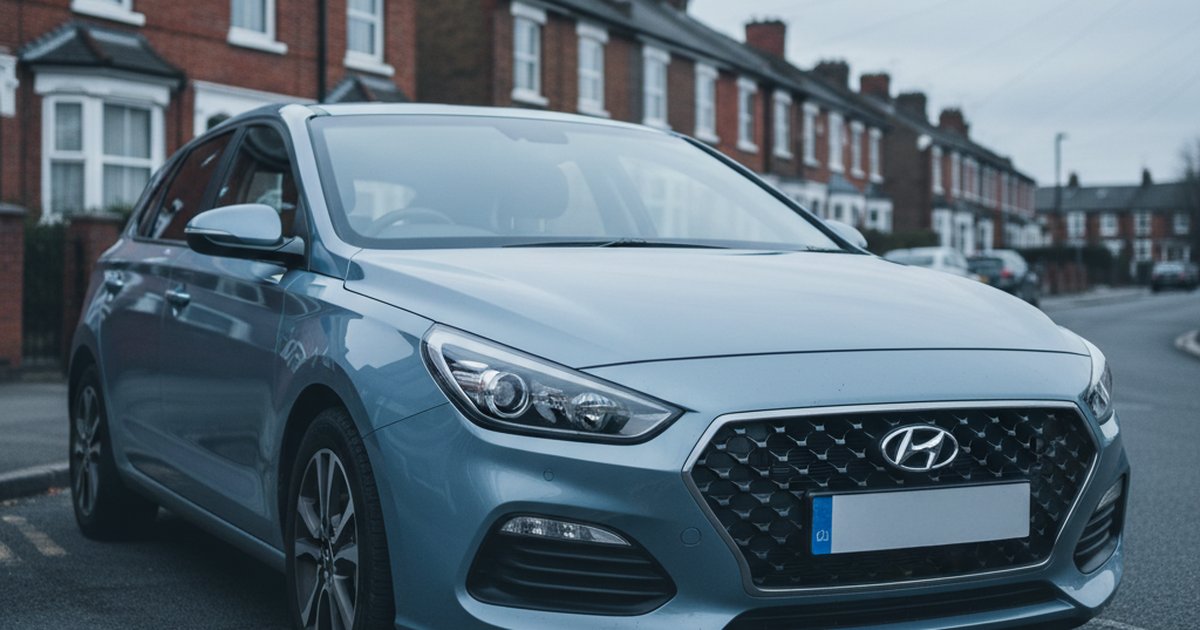
The Hyundai i30 arrived in Britain with a simple pitch: Golf quality without the Golf price. Over 1,120,093 MOT tests across 105,716 vehicles tell us whether that promise held up. The answer is more nuanced than Hyundai's marketing suggested.
We've analysed every MOT record for the i30 from 2010 to 2021, and the pattern is clear. This is not a car that ages gracefully in diesel form. Those early turbodiesels have become genuinely troublesome as they pile on miles, with pass rates falling into the low 70s and dangerous defect rates hitting 51%. The petrols, by contrast, improve with each generation. A 2017 petrol i30 posts an 87.5% pass rate with a reliability score of 575/1000. The 2010 diesel manages just 375/1000.
The i30 is a tale of two cars. Buy the right one and you'll understand why families choose this over a Focus. Buy the wrong one and you'll be funding your local garage's Christmas party.
TL;DR: Petrol i30s from 2016 onwards are genuinely solid, with 2017-2019 models scoring 560-575/1000 and passing MOTs at 85-89%. Early diesels (2010-2013) are trouble, scoring 346-425/1000 with dangerous defect rates above 45%. Avoid high-mileage diesel examples unless you enjoy brake and suspension work.
Which i30 Years Are Most Reliable?
The 2017-2019 petrols sit at the top. These third-generation models benefit from Hyundai's matured engineering, with the 2017 petrol achieving a reliability score of 575/1000 and an 87.5% pass rate. Annual mileage averages just 6,410 miles, suggesting gentle ownership patterns. More importantly, these cars pick up only 1.2 defects per test compared to 2.2-2.4 for the 2010-2011 examples.
The 2018 petrol comes close at 570/1000, while the 2019 petrol scores 562/1000. All three years show dangerous defect rates below 28%, a massive improvement over the early cars. First MOT pass rates hover around 89-92%, indicating these i30s reach their third birthday in far better shape than their predecessors.
Among diesels, the picture brightens slightly from 2017 onwards, but even the best diesel year (2020, scoring 631/1000) can't match a mid-table petrol. The 2017 diesel manages 512/1000, which is respectable but hardly impressive given the newer technology.
The generation gap matters: Third-generation i30s (2017+) average 1.1-1.3 defects per test. First-generation models (2010-2012) average 2.0-2.4. That's nearly double the issues for every MOT visit.
Should You Avoid Diesel i30s?
The early ones, absolutely. The 2010-2013 diesel i30s have become MOT nightmares. Pass rates sit in the 71-75% range, with the 2011 diesel bottoming out at 346/1000. More concerning is that 51% of 2010-2011 diesels have flagged at least one dangerous defect during testing. That's not a typo. More than half.
These cars are showing suspension arm bushes, ball joints, and brake discs as recurring problems. The 2011 diesel records 22.3% of tests flagging illegal tyre tread, suggesting owners are running these hard and maintaining them reluctantly. Annual mileage of 7,514-8,250 miles shows these are still being used as workhorses, which compounds the wear.
The defect-per-test metric tells the story plainly. The 2010 diesel averages 2.4 issues per MOT. The 2018 petrol averages 1.1. You'll spend twice as long at the garage with the older diesel, and the repairs won't be cheap when suspension and braking systems are the primary culprits.
Later diesels (2017+) fare better, but even the improved models can't escape the fundamental issue: diesel i30s work harder. The 2019 diesel owner covers 9,424 miles annually versus 7,245 for the petrol equivalent. Higher miles mean more wear, and AA breakdown data consistently shows diesel engines require more frequent intervention as they age.
What Goes Wrong with i30s?
Tyres and brakes dominate the failure list across every year. Between 20-35% of tests flag tyres worn to or below the legal limit, with inner edge wear appearing repeatedly in the detailed defect descriptions. This pattern suggests geometry issues or owners who ignore warning signs until MOT time.
Suspension components show their age on the 2010-2014 models. Ball joints, bushes, and arms account for 12-18% of test failures on these cars. The first-generation i30's front suspension uses a standard MacPherson strut setup that isn't particularly sophisticated, and it wears predictably. The 2010 petrol shows 16.9% of tests catching excessively worn ball joints.
Brake discs feature prominently from 2013 onwards, with 11-13% of tests flagging scored or pitted discs. By 2017-2019, this becomes the third most common issue after tyres and general tyre damage. The rear discs seem particularly prone, with several entries specifically noting 'both rear' discs affected.
First MOT deterioration: The gap between first MOT pass rate (82-89%) and overall pass rate (71-88%) widens dramatically on early diesels. The 2010 diesel passes 81.9% of first MOTs but only 71.5% overall. These cars degrade faster than average after year three.
The dangerous defect rates deserve attention. A 51% rate on 2010-2011 diesels means structural issues, severely degraded braking components, or critical suspension failures. DVSA MOT history data categorises dangerous defects as immediate safety concerns. You should not be seeing this level on a mainstream family hatchback.
How Does the i30 Compare to a Golf?
The i30 was engineered to beat the Golf on value, not reliability. What Car? owner satisfaction surveys consistently place the Golf higher for long-term dependability, and our MOT data confirms why. A comparable Golf from the same era will typically score 50-100 points higher on our reliability index.
Where the i30 holds its own is on the newer petrols. A 2017-2019 i30 petrol at 560-575/1000 isn't far behind the Golf equivalent, and the gap narrows further when you factor in purchase price. You're looking at £2,000-3,000 less for a similar-age i30, which buys a lot of MOT work if needed.
The i30 also shows lower annual mileage across the board. Golf owners tend to cover 8,000-10,000 miles yearly; i30 petrol owners average 5,900-7,100. This suggests different ownership profiles. The i30 attracts buyers who want a sensible family car for school runs and supermarket trips, not the badge-conscious drivers chasing a premium feel.
The reality is that the early i30 diesels are genuinely worse than equivalent Golfs from 2010-2013. The reliability gap is measurable and significant. If you're shopping for a used diesel from this era, the Golf's higher residual values exist for a reason.
What Should You Pay for a Reliable i30?
Focus on the 2016-2019 petrol models. These deliver the best balance of proven reliability and affordable pricing. A 2017 petrol with 54,000 miles represents the sweet spot: still within Hyundai's five-year warranty if bought near-new, now available for £8,000-10,000 on the used market, and showing strong MOT performance.
Avoid anything diesel before 2015 unless the price reflects the risk. A 2011 diesel i30 scoring 346/1000 should be priced accordingly. You're buying a car that will need regular suspension and brake work, and the dangerous defect rate suggests potential for expensive surprises. If a dealer is asking Golf money for an early diesel i30, walk away.
The 2015-2016 facelift models hit a middle ground. Reliability scores of 455-530/1000 for petrols put them in 'decent but not exceptional' territory. Current mileage sits around 65,000-80,000, and you'll pay £6,500-8,500 depending on condition. These cars work fine for budget-conscious buyers who maintain them properly.
Check the MOT history obsessively on any i30 diesel. Use the DVSA's free checker to look for patterns. If you see repeated suspension or brake issues across multiple years, that car has been neglected or driven hard. The MOT advisory notes tell you exactly what's deteriorating.
Are High-Mileage i30s Worth Buying?
The petrols handle mileage better than the diesels, but both struggle past 100,000. The 2010 diesel currently shows a median mileage of 107,500, and the 71.5% pass rate reflects what happens when these cars accumulate serious miles. Ball joints, bushes, and brake components all wear out on a predictable schedule.
Petrol i30s driven gently can exceed 100,000 without major drama. The 2010 petrol at 90,016 miles still manages a 73.7% pass rate, which is acceptable for a 14-year-old car. The lower annual mileage (6,046 versus 7,673 for the diesel) suggests less intensive use, which matters as suspension components age.
The real issue with high-mileage i30s is that they've often been bought precisely because they're cheap to run and cheap to buy. This attracts owners who maintain them minimally. The tyre defect rates tell this story clearly. When a quarter of all MOT tests flag illegal tread depth, you're looking at a car driven until components fail rather than serviced preventatively.
Mileage sweet spot: Target 2016-2018 petrols with 60,000-75,000 on the clock. These cars are young enough to avoid major age-related deterioration but old enough to have depreciated substantially. Current median mileage for 2016 petrols sits at 59,082.
Diesel i30s with six-figure mileage should be approached with extreme caution. The 2012 diesel at 102,662 miles shows how hard these engines work. Unless you have documented evidence of recent suspension and brake overhauls, factor £800-1,200 into your purchase budget for immediate remedial work.
Found a year you like? A good year still hides a clocked odometer, outstanding finance or a past write-off. Before you hand over any money, check the exact Hyundai i30.
Frequently asked questions
Is the Hyundai i30 reliable in the UK?
Newer petrol i30s (2016+) are reliable, scoring 500-575/1000 with pass rates of 80-89%. Early diesels (2010-2013) score just 346-425/1000 and suffer from high dangerous defect rates. Choose carefully based on year and fuel type.
What are common problems with the i30?
Tyres worn to illegal limits (20-35% of tests), suspension ball joints and bushes (12-18% on 2010-2014 models), and brake disc deterioration (11-13% from 2013 onwards). Early diesels show particularly high rates of dangerous defects.
Which i30 engine is most reliable?
Petrol engines consistently outperform diesels. The 2017 petrol scores 575/1000 versus 512/1000 for the diesel equivalent. Petrol owners also cover fewer miles annually (6,000-7,000 vs 7,500-9,000), reducing wear.
Should I buy a high-mileage i30?
Only if it's a petrol model with documented service history. Diesels past 100,000 miles show significantly degraded pass rates (71-75%). Petrol models handle mileage better but still require thorough inspection of suspension and brakes.
Is the i30 better than a VW Golf?
The i30 offers better value but slightly lower reliability on early models. Newer petrols (2017+) narrow the gap considerably. The i30 attracts lower-mileage ownership, which partially compensates for engineering differences.
Our Verdict
The Hyundai i30 proves that generalising about reliability is pointless. This is a car that varies wildly depending on when it was built and which engine you choose. The 2010 diesel and the 2017 petrol are fundamentally different ownership propositions, despite sharing a badge.
Smart buyers will focus on the 2016-2019 petrols, where Hyundai finally delivered on its Golf-rival promise. These cars combine proven reliability with sensible depreciation. Avoid the early diesels unless the price reflects their MOT track record. A bargain that needs £1,000 of suspension work isn't a bargain.
Before committing to any i30, run its registration through PlateInsight. We'll show you the complete MOT history, mileage trajectory, and upcoming issues flagged in advisories. Your first five checks are free, and they could save you from buying someone else's expensive problem. The i30 can be an excellent used buy. Just make certain you're buying the right one.
You might also like
Check Any Vehicle's Full History
MOT results, mileage timeline, AI health score, and market valuations. New users get 5 free credits.