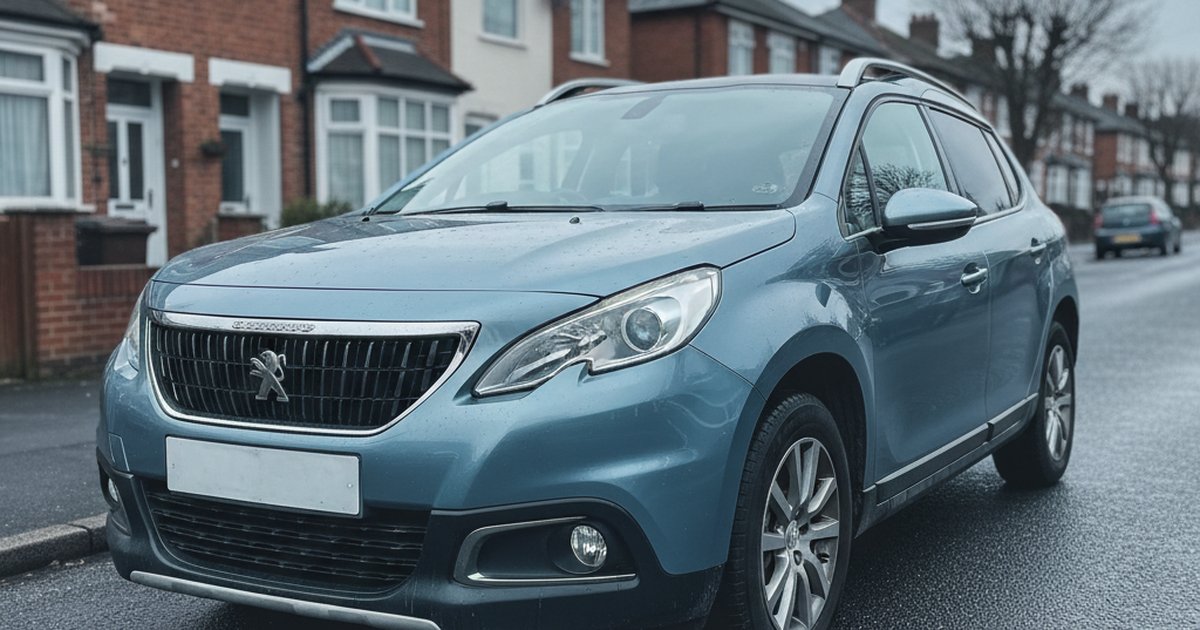
The Peugeot 2008 sits in that sweet spot where urban practicality meets affordable running costs. It's the kind of car that makes sense on paper for tens of thousands of UK buyers each year. But does it make sense when you're standing on a forecourt, weighing up a 2015 diesel against a 2018 petrol? That's where MOT data earns its keep.
We've analysed 837,836 MOT tests across 99,056 Peugeot 2008s to work out which model years hold up and which ones start falling apart the moment the warranty expires. The findings are more nuanced than you might expect. This isn't a simple 'buy petrol, avoid diesel' story, though there's an element of that. It's about understanding which specific years deliver genuine reliability and which ones will have you on first-name terms with your local garage.
TL;DR: Petrol 2008s consistently outperform diesels by 50-80 reliability points. The 2019 diesel (499/1000) is the standout diesel, while 2016-2017 diesels score a worrying 376-397. Petrol models from 2015-2019 all score 427-478, with 2019 the peak at 478/1000. Annual mileage tells the ownership story: petrol averages 5,800-6,100 miles yearly versus 7,100-7,600 for diesel.
Should You Buy Petrol or Diesel?
The numbers are clear. Every single petrol model year scores higher than its diesel equivalent. Sometimes the gap is modest (2013 petrol at 476 versus diesel at 448), but for 2016 and 2017 it widens into a chasm. The 2017 petrol scores 427 while the diesel limps in at 376. That's not a rounding error, that's a fundamental difference in how these powertrains age.
Petrol 2008s average 1.4-1.9 defects per MOT test. Diesels sit at 1.7-2.0. Doesn't sound like much until you multiply it across a decade of ownership. The dangerous defect rate tells a starker story: 2016 petrol sits at 26.6% while the diesel hits 33.5%. For context, any dangerous defect means your car cannot legally be driven until fixed.
The mileage patterns explain part of this. Diesel owners cover 7,100-7,600 miles annually. Petrol owners do 5,800-6,100. That's not just correlation, it's causation. People buy diesels to cover distance, then discover that modern diesel particulate filters despise short journeys. The 2008's diesel engines weren't designed for the urban crawl most buyers subject them to.
Usage reality: If you're doing under 10,000 miles a year, mostly around town, a diesel 2008 is the wrong tool for the job. The reliability data proves it across every model year.
Which Are the Most Reliable Model Years?
The 2019 petrol takes the crown at 478/1000, with an 86.5% pass rate and just 1.3 defects per test. Its dangerous defect rate of 14.3% is half that of earlier diesels. Most examples now sit around 39,600 miles, which for a five-year-old car suggests gentle ownership. First MOT pass rate of 89.9% confirms these cars were well-built from the factory.
The 2019 diesel (499/1000) is an outlier in diesel land. It's the only diesel to crack 480, with an 85.5% pass rate and 1.5 defects per test. Something changed in Peugeot's diesel calibration or component sourcing for 2019, because every diesel from 2013-2018 scores between 376 and 448.
Petrol models from 2015 (475/1000) and 2013 (476/1000) also deserve attention. The 2015 posts an 81.1% pass rate with just 1.7 defects per test. Current median mileage of 62,500 suggests plenty of life left. These earlier petrols cost less than 2019 models but deliver comparable reliability once you account for age.
Pass rates climb steadily through the petrol range: 78% for 2013, 82% by 2016, 86.5% for 2019. That's partly age, partly Peugeot learning from its mistakes. Either way, later petrols are measurably better cars.
Which Model Years Should You Avoid?
The 2016 and 2017 diesels are the problem children. The 2016 scores just 397/1000 with a dangerous defect rate of 33.5%. The 2017 diesel manages 376/1000, the lowest in the entire dataset. These aren't cars with minor niggles, they're cars that fail MOTs at an alarming rate.
Look at the defect patterns: 2017 diesel shows 30.4% of tests flagging worn tyres, 26.7% showing scored brake discs. The anti-roll bar linkage on 2013-2014 diesels appears in 14.7% of tests. That's a wear item that shouldn't be failing this frequently. According to RAC breakdown data, suspension component failures often cascade into steering and handling issues if left unaddressed.
The 2014 diesel (420/1000) isn't much better. Pass rate of 77.7%, dangerous defect rate of 41.1%. That's higher than any petrol equivalent by 7-8 percentage points. Current median mileage of 84,900 suggests these cars are approaching the expensive repair zone.
Even among petrols, the 2014 model (470/1000) lags behind 2015 and later years. The first MOT pass rate difference tells the story: 2014 petrol at 90.8%, but 2015 hits 89.1% despite being a year older when tested. Quality control improved between those model years.
What Goes Wrong Most Often?
Tyres dominate the failure list. Between 23.7% and 31.9% of MOT tests flag tyres worn to the legal limit or wearing unevenly on the edges. That's not a design flaw, that's owners running tyres until they're illegal. Edge wear points to tracking issues, which the 2008's compact dimensions and firm suspension exacerbate.
Brake discs appear in 18-27.5% of tests depending on year and engine. The 2018 diesel shows a troubling pattern: 27.5% of tests flag discs 'seriously weakened', not just scored or pitted. That's the difference between an advisory and a fail. Brake pads wearing to 80% appear in 12-14% of tests across all years.
The exhaust system causes problems on diesels. Insecure mountings (11.3% of 2014 diesel tests), minor leaks (14% of 2013 petrol tests). The exhaust mounting defect on 2019 diesels (13% of tests) suggests component quality remained inconsistent even in the best diesel year.
Anti-roll bar linkage failures on 2013-2014 models (14.7% of diesel tests) indicate worn ball joints. This is age-related wear accelerated by poor road surfaces. By 2017-2019, this defect drops off the top three list, replaced by tyre and brake issues. Cars aged out of the suspension problem zone into the consumables problem zone.
The DVSA MOT history checker shows these patterns persist across individual vehicles. Check any 2016 diesel and you'll likely see brake disc advisories building towards failures.
What Mileage Should You Target?
Current median mileage ranges from 26,900 miles (2021 petrol) to 87,400 (2013 diesel). The 2015 petrol sits at 62,500 miles, which for a nine-year-old car doing 5,800 miles annually is exactly where you'd expect it. These are low-mileage urban runabouts, not motorway munchers.
The annual mileage figures are more revealing than the total odometer reading. Petrol owners average 5,776 to 6,132 miles yearly. Diesel owners push 7,077 to 7,636 miles. That extra 1,500 miles annually adds up, but more importantly, it suggests different usage patterns. Diesel buyers likely intended to cover more ground, found they couldn't justify the running costs, and sold up.
For a 2017 petrol currently showing 50,800 miles, you're looking at a car that's done 5,936 miles annually. That's gentle use. The same year diesel at 62,700 miles has covered 7,342 miles yearly. Both are below national averages, but the diesel has worked harder.
When buying, target petrols between 40,000-70,000 miles from 2015-2018. You want cars that have been used enough to shake out factory defects but not so much that major components are near end of life. Diesels above 80,000 miles enter expensive territory unless service history is exemplary. What Car? owner surveys consistently show diesel DPF issues emerging around this mileage on urban-driven cars.
Does the First MOT Pass Rate Matter?
First MOT pass rates range from 83.8% (2021 petrol, small sample) to 90.8% (2014 petrol). Most years cluster between 86-90%. This tells you how well Peugeot built these cars new, before owner neglect enters the equation.
The gap between first MOT and overall pass rate reveals how cars age. The 2014 petrol: 90.8% first MOT, 79.4% overall. That's an 11.4 percentage point drop. The 2017 petrol: 90.1% first MOT, 83.2% overall. Just 6.9 points of degradation. Later petrols are ageing more gracefully.
Diesels show less consistency. The 2015 diesel: 86.8% first MOT, 78.9% overall (7.9 point drop). The 2016 diesel: 86.4% first, 79.9% overall (6.5 point drop). The 2017 diesel bucks the trend: 88.8% first, 81% overall (7.8 point drop). No clear pattern, which suggests diesel reliability is more dependent on individual ownership and maintenance than inherent build quality.
Use first MOT pass rate as a tiebreaker. If you're choosing between two similar cars, the one from a year with a higher first MOT pass rate (2017 petrol at 90.1%) probably left the factory with tighter tolerances than one from a lower year (2014 petrol at 90.8% despite being older when tested - this is actually older data, suggesting manufacturing improved).
What's the Smart Buying Strategy?
Buy a 2019 petrol if budget allows. You get the peak reliability score (478/1000), lowest defect rate (1.3 per test), and most refined version of the 2008. These cars are just coming off initial ownership, so you'll find well-maintained examples with full service history.
If 2019 pricing is too steep, a 2015 or 2016 petrol delivers 90-95% of the reliability at potentially 60-70% of the cost. The 2015 scores 475/1000, barely behind 2019. Current mileage around 62,500 means you're buying a car halfway through its useful life, not one about to need major work.
Avoid all diesels except the 2019 model (499/1000) if you absolutely need diesel economy. Even then, verify the car has done predominantly longer journeys to keep the DPF healthy. Urban-driven diesels from any year are trouble waiting to happen.
Steer clear of 2016-2017 diesels entirely. Reliability scores of 376-397, dangerous defect rates above 29%, and defect counts of 1.8 per test make these poor value even if prices seem tempting. The money you save upfront will vanish into repairs within two years.
Check the MOT history for any car showing repeated brake disc or exhaust issues. One advisory is normal, the same advisory appearing on consecutive tests suggests deferred maintenance or a car being run into the ground. PlateInsight's 5 free vehicle checks let you spot these patterns before you commit.
Found a year you like? A good year still hides a clocked odometer, outstanding finance or a past write-off. Before you hand over any money, check the exact Peugeot 2008.
Frequently asked questions
Is the Peugeot 2008 petrol engine reliable?
Yes. Petrol 2008s score 427-478/1000 across all model years, with 2019 reaching 478. Pass rates range from 78-86.5%, defects per test stay between 1.3-1.9, and dangerous defect rates are consistently lower than diesel equivalents. Petrol engines suit the 2008's typical urban usage pattern far better than diesels.
What is the most reliable Peugeot 2008 diesel year?
The 2019 diesel scores 499/1000, the only diesel to crack 480. It has an 85.5% pass rate, 1.5 defects per test, and a 14.2% dangerous defect rate. Every other diesel year scores between 376-448, making 2019 a significant outlier. Still, even the best diesel trails the 2019 petrol (478/1000).
What are the common faults on a Peugeot 2008?
Brake discs appear in 18-27.5% of MOT tests, tyres wear to the legal limit in 23.7-31.9% of tests, and exhaust mounting issues affect 11-14% of diesels. The 2013-2014 models show anti-roll bar linkage wear in 14.7% of tests. These are mostly age-related wear items rather than design flaws, but frequency is higher than comparable small SUVs.
Should I buy a high-mileage Peugeot 2008?
Depends on the engine. Petrol 2008s averaging 5,800-6,100 miles annually handle higher total mileage better than diesels averaging 7,100-7,600 miles yearly. A 2015 petrol at 70,000 miles is safer than a 2016 diesel at the same mileage. Above 80,000 miles, diesels enter expensive DPF and turbo replacement territory unless meticulously maintained.
How does the 2008 compare to rivals for reliability?
The petrol 2008's scores of 427-478/1000 place it mid-pack against rivals like the Nissan Juke and Renault Captur. The diesel scores of 376-448 are concerning, trailing most competitors. The 2019 petrol at 478/1000 is competitive, but earlier diesels fall well behind class leaders.
Our Verdict
The Peugeot 2008 is nothing spectacular, but the right model year with the right engine delivers honest, affordable transport. The 2019 petrol is the car to buy if you want reliability. The 2015-2016 petrols offer similar dependability at lower cost. Diesels, with that one 2019 exception, are a calculated gamble you'll probably lose.
Before you buy any 2008, check its MOT history. PlateInsight gives you 5 free vehicle checks to spot the difference between a well-maintained example and one that's been run ragged. The data is available. Use it.
You might also like
Check Any Vehicle's Full History
MOT results, mileage timeline, AI health score, and market valuations. New users get 5 free credits.