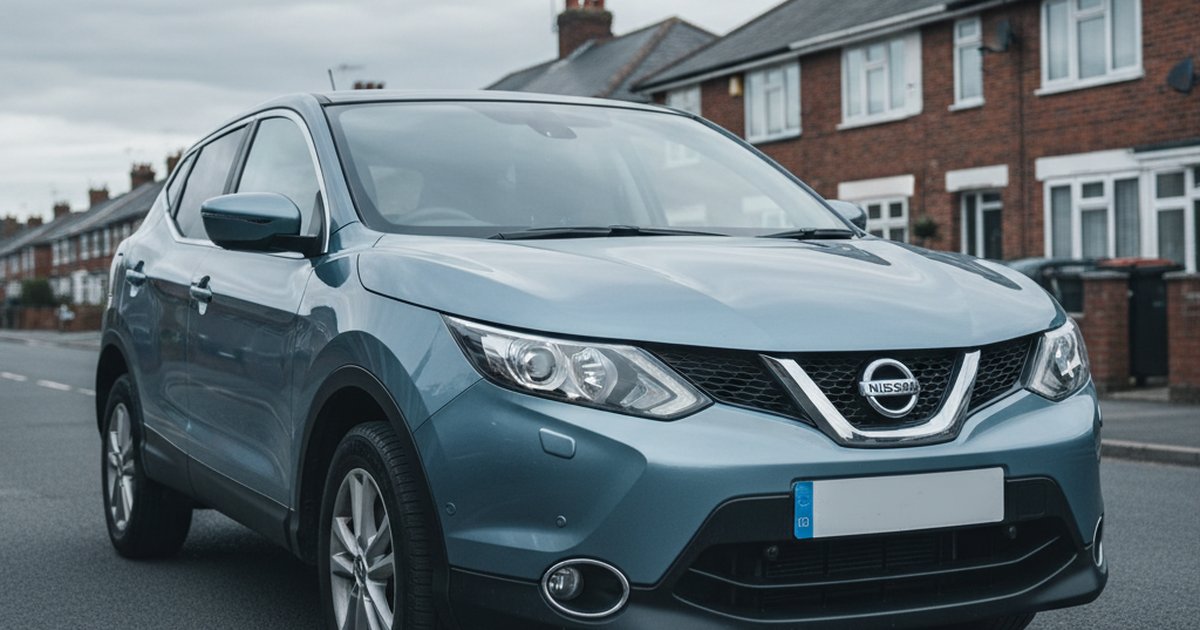
The Nissan Qashqai invented the crossover segment in the UK and remains Britain's most popular family car of this type. With over half a million examples on our roads, we've analysed 5,070,876 MOT tests across 536,759 vehicles to work out which years you should buy and which you should avoid.
The data reveals a clear story: petrol Qashqais are significantly more reliable than their diesel siblings, and the sweet spot for buying is 2014-2017. But there's more to it than that. We've crunched the numbers on pass rates, common faults, and ownership patterns to give you the full picture.
TL;DR: Petrol Qashqais score 508-609 out of 1000 for reliability across most years, while diesels languish at 356-530. The 2014 petrol model peaks at 609/1000 with an 83.1% pass rate. Avoid early diesels (2010-2013) which suffer chronic anti-roll bar and suspension wear. The 2017 petrol offers the best balance of reliability (560/1000) and value.
Should You Buy Petrol or Diesel?
The MOT data settles this debate decisively. Across every model year, petrol Qashqais outperform diesels by a significant margin. Take 2014 as an example: the petrol version scores 609/1000 for reliability with an 83.1% pass rate, while the diesel manages just 524/1000 despite an 80.1% pass rate. This pattern repeats year after year.
The diesel's problems run deeper than raw pass rates suggest. Early diesel models (2010-2013) show catastrophic dangerous defect rates, with the 2010 diesel recording 58.4% of vehicles flagged for at least one dangerous issue. That's not a typo. More than half of 2010 diesel Qashqais have had a dangerous defect at some point.
Petrol models average 6,400-6,700 miles per year according to the DVSA MOT history data, while diesels cover 7,900-8,600 miles annually. This tells us diesel Qashqais are working harder, which partly explains the reliability gap. But even accounting for higher mileage, diesels are simply more troublesome. Petrol models pick up 1.3-2.4 defects per test, while diesels range from 1.4-2.7.
Key point: Unless you're covering 15,000+ miles annually, the diesel's higher running costs and worse reliability make it a poor choice. Stick with petrol.
Which Years Offer the Best Reliability?
The 2014 petrol Qashqai represents the high-water mark. It scores 609/1000 for reliability, passes its MOT 83.1% of the time, and averages just 1.6 defects per test. These cars typically show 74,435 miles on the clock now, having covered a modest 6,498 miles per year. That's gentle use for a family crossover.
But don't sleep on 2015-2017 petrols. The 2015 model scores 598/1000, the 2016 hits 577/1000, and the 2017 manages 560/1000. Yes, the scores decline slightly, but these remain excellent results. More importantly, these later cars are younger with lower mileage. A 2017 petrol currently averages 52,584 miles versus 74,435 for the 2014.
The 2017 petrol deserves special mention. It achieved a remarkable 93.2% pass rate on its first MOT at age three, the highest in the dataset. Its dangerous defect rate sits at just 26.6%, half that of early models. If you want a nearly-new used Qashqai, this is your target.
For diesels, the picture improves after 2014. The 2014-2017 diesel models all score above 524/1000, with the 2015 peaking at 530/1000. They're acceptable if you must have a diesel, but they still can't match their petrol equivalents.
Which Years Should You Steer Clear Of?
The early diesel Qashqais (2010-2013) are best avoided entirely. The 2011 diesel bottoms out at just 356/1000 for reliability, the worst score in the entire dataset. These cars suffer from chronic suspension wear, specifically anti-roll bar linkages and ball joints that fail repeatedly. The 2010 diesel flags anti-roll bar issues in 32.8% of all tests.
Even if you find an early diesel that's been well maintained, you're fighting a losing battle. The 2010 diesel shows 119,685 miles on average now, having covered 8,236 miles annually. These are high-mileage, hard-working cars that have been through the wars. The dangerous defect rates alone should put you off: 58.4% for 2010, 57.4% for 2011, 55.2% for 2012.
The 2013 diesel represents a marginal improvement at 384/1000, but it's still well below acceptable. Wait until 2014 if you're considering a diesel at all.
For petrol buyers, there are no genuinely bad years. Even the 2010 petrol scores a respectable 499/1000. But if you're choosing between a 2010-2011 petrol and a 2014-2017 model at similar money, always take the later car. The improvement in reliability and safety is worth a few extra miles on the clock.
What Goes Wrong With the Qashqai?
Suspension components are the Qashqai's Achilles heel. Anti-roll bar linkages, wishbone bushes, and ball joints wear prematurely across all years. Early diesels see anti-roll bar issues in up to 35.1% of tests. Even the better petrol models flag suspension wear in 14-28% of tests.
The good news? These issues become less severe over time. The 2014 onwards models show significantly fewer suspension failures, suggesting Nissan improved the components. Suspension problems are also mostly routine or moderate defects rather than dangerous ones, so while they're expensive and annoying, they won't leave you stranded.
Tyres are the second major issue. Between 18-30% of all Qashqai MOT tests flag tyres worn close to the legal limit or worn unevenly. This isn't a design flaw; it's ownership behaviour. Qashqai drivers apparently don't check their tyres. The silver lining is that tyre wear is entirely preventable with basic maintenance.
Brake pads appear in 12-23% of tests across all years. Again, this is routine wear rather than a design problem. What matters is the rate: newer petrols flag brake issues in 16-19% of tests, while early diesels hit 20-23%. That gap reflects the harder life diesels lead.
One surprise: tyre damage from cracking and perishing shows up frequently in 2016-2019 models (14-23% of tests). This suggests these cars spend a lot of time parked, allowing tyres to degrade. It reinforces the gentle-use profile of petrol Qashqais.
How Are Qashqais Actually Used?
The mileage data reveals two distinct ownership groups. Petrol Qashqais are doing 6,000-6,700 miles annually, classic second-car or suburban commuter territory. These are school run vehicles, shopping cars, weekend family transport. Diesel models cover 7,900-8,600 miles per year, suggesting longer commutes or motorway work.
This usage pattern explains much of the reliability gap. Diesels with DPF (diesel particulate filter) systems hate short journeys and low speeds. They need regular motorway runs to regenerate the filter. Qashqai diesel owners are clearly using their cars hard enough to rack up higher mileage, but the damage is done.
Current mileage tells another story. The median 2014 diesel shows 93,202 miles now, while the 2014 petrol sits at 74,435 miles. That's nearly 20,000 miles difference on cars of identical age. If you're buying used, this means you'll find far more high-mileage diesels than petrols, another reason to favour petrol.
The first MOT pass rate gap is telling too. The 2014 petrol achieved 89.2% on its first test; the diesel managed 85.9%. Both are decent results, but they show these cars were already diverging in condition by age three. The diesels were already developing problems the petrols avoided.
Will Newer Qashqais Prove More Reliable?
The 2018-2021 data suggests yes. The 2019 petrol scores 570/1000 with an 89.3% pass rate and just 1.1 defects per test. The 2020 petrol hits 90.3% pass rate with only 1.0 defects per test. These are excellent numbers.
Dangerous defect rates plummet in newer cars: the 2019 petrol records just 16.4%, down from 40-50% for early models. Nissan has clearly improved quality control and component durability. The 2020 petrol sits at 11.4% dangerous defects, approaching the industry best-practice level.
We've got limited data on 2021-2022 models (small sample sizes make those scores less reliable), but early indicators are positive. The 2021 petrol maintains a 539/1000 score with 89.9% pass rate. The tiny 2022 electric sample (just 76 vehicles) shows a remarkable 762/1000 score with 97.6% pass rate, though it's too early to draw firm conclusions.
One caution: newer Qashqais still suffer tyre-related issues at similar rates to older models. That suggests the ownership demographic hasn't changed. People still aren't checking their tyres regularly. If you buy a newer Qashqai, budget for tyres more often than the handbook suggests.
Found a year you like? A good year still hides a clocked odometer, outstanding finance or a past write-off. Before you hand over any money, check the exact Nissan Qashqai.
Frequently asked questions
What is the most reliable Nissan Qashqai year to buy?
The 2014 petrol Qashqai is the most reliable, scoring 609/1000 with an 83.1% MOT pass rate. The 2015-2017 petrols are nearly as good and offer lower mileage.
Should I buy a diesel or petrol Qashqai?
Buy petrol. Across all years, petrol Qashqais score 50-100 points higher for reliability than equivalent diesels. The diesel's only advantage is fuel economy on long motorway journeys, but the maintenance costs wipe out any saving.
What are the common problems with the Nissan Qashqai?
Suspension components (anti-roll bar linkages, wishbone bushes, ball joints) wear prematurely, especially on 2010-2013 diesels. Tyres wear to the legal limit frequently due to poor owner maintenance. Brake pads are routine wear items appearing in 12-23% of tests.
Which Nissan Qashqai years should I avoid?
Avoid 2010-2013 diesels entirely. They score 356-384/1000 for reliability with dangerous defect rates above 50%. The 2011 diesel is the worst at 356/1000.
How many miles does a Nissan Qashqai typically cover per year?
Petrol Qashqais average 6,300-6,700 miles annually, while diesels cover 7,900-8,600 miles. This suggests petrols are used for local journeys while diesels handle longer commutes.
Is the Nissan Qashqai expensive to maintain?
Petrol models are reasonable to run, with routine brake and tyre costs. Diesels face higher bills due to suspension wear and DPF issues. Early diesels (2010-2013) are particularly expensive with chronic anti-roll bar and wishbone problems.
Our Verdict
The Nissan Qashqai proves you can have family practicality without sacrificing reliability, provided you choose the right model. Stick with petrol, aim for 2014-2017, and avoid early diesels. Want to check a specific Qashqai's full MOT history before you buy? Use PlateInsight's vehicle check to see its complete test record, mileage history, and any advisories. We're offering 5 free credits to new users, backed by the same 261 million MOT records that powered this analysis.
You might also like
Check Any Vehicle's Full History
MOT results, mileage timeline, AI health score, and market valuations. New users get 5 free credits.