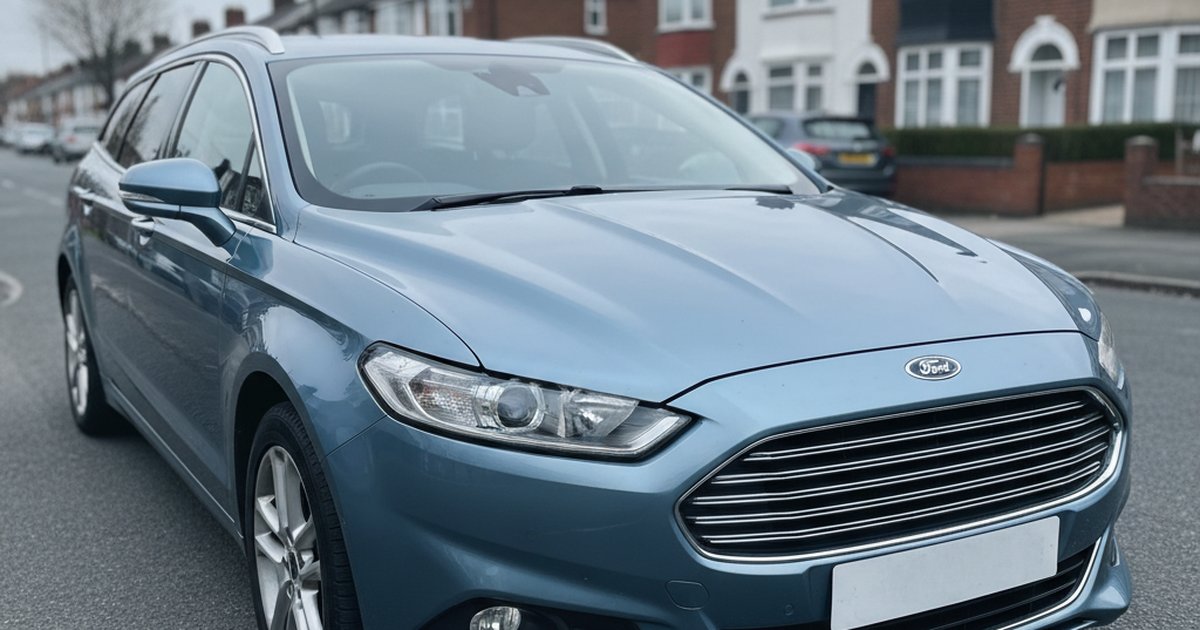
The Ford Mondeo is dead. Ford axed Britain's favourite fleet car in 2022, ending a 30-year run that saw it shift from '90s icon to unloved dinosaur. But the used market remains massive - we've analysed 1,714,139 MOT tests across 160,493 Mondeos to find which years are worth buying and which you should run from.
The data tells an uncomfortable story. While early Mk4 diesels soldier on with predictable high-mileage issues, the final-generation hybrids are failing MOTs at rates that make no sense for cars barely out of warranty. The sweet spot? 2015 petrol Mondeos, which post a reliability score of 701/1000 - the highest in the entire range. But that 50% dangerous defect rate on some diesel years should make you very nervous indeed.
TL;DR: 2015 petrol Mondeos are the reliability champions at 701/1000, averaging just 6,036 miles per year from gentle owners. The 2019-2021 hybrids are a disaster - scores plummeting to 468-484/1000 despite youth. Early diesels (2010-2012) pack dangerous defect rates around 50%, mostly worn suspension bushes that turn fatal. Buy a 2015-2017 petrol; avoid anything hybrid.
Which Ford Mondeo years are most reliable?
The numbers crown 2015 as the Mondeo's golden year, at least for petrol buyers. The 2015 petrol model scores 701/1000 for reliability with an 88.1% pass rate and just 1.1 defects per test. Compare that to the 2021 hybrid at 468/1000 and you see the problem with Ford's electrification strategy.
Petrol Mondeos consistently outperform diesels across every single model year. The gap is stark: 2012 petrol sits at 661/1000 versus 576/1000 for diesel. By 2017, petrol scores 634/1000 while diesel manages 626/1000. This contradicts the fleet-car wisdom that diesels age better. They don't - at least not in Mondeos.
Ownership profile matters: Petrol Mondeos average 6,000-7,000 miles per year. Diesels? 9,000-10,000. That 50% higher annual mileage on diesels means more wear, more failures, worse MOT records. You're buying someone's ex-company car that spent its life on the M1.
The 2015-2017 petrol window is your target. First MOT pass rates above 90%, dangerous defect rates below 30%, and current median mileages around 54,000-63,000 miles. These are genuinely low-use cars from private buyers who wanted a big Ford but didn't need the diesel.
Which years should you avoid?
Anything badged 'hybrid'. The 2019 electric Mondeo scores just 484/1000 - the worst in the entire dataset. The 2021 hybrid manages 468/1000. These are three-year-old cars failing MOTs at rates we'd expect from 15-year-old diesels. Ford's hybrid system in the Mondeo has not aged well.
The dangerous defect rates tell the real story. Early diesels (2010-2012) show 49-50% of vehicles flagging at least one dangerous defect during their MOT lifetime. Half the fleet. The DVSA defines dangerous defects as issues presenting 'a direct and immediate risk to road safety'. On Mondeos, that mostly means worn suspension bushes and corroded brake components.
The 2010-2012 diesels are particularly grim. The 2010 diesel averages 2.3 defects per test - nearly one issue for every MOT visit. Trailing arm bushes appear on 16.5% of tests. These are high-mileage workhorses (median 136,602 miles currently) that have been flogged to death and back.
The hybrid problem: Ford's hybrid Mondeos show a curious pattern. First MOT pass rates start strong (91.2% for 2015), then collapse to 82.2% by 2019 and 85.8% by 2021. Something about the hybrid system degrades faster than conventional drivetrains, despite lower annual mileage (8,000-11,000 miles per year).
What goes wrong with Mondeos?
Tyres dominate every single defect list. Between 20% and 40% of all MOT failures cite tyres worn close to the legal limit. Mondeos eat rubber, particularly on the inside edges - a telltale sign of worn suspension geometry that owners ignore until MOT day.
Suspension bushes are the second plague. Trailing arm bushes, anti-roll bar bushes, radius arm bushes - they all wear out between 80,000 and 120,000 miles. The 2011 diesel shows anti-roll bar bushes flagged on 18.1% of tests. This is expensive work - expect £300-500 for a full bush refresh at an independent.
Brake components follow a predictable pattern. Discs and pads appear on 10-18% of tests across all years. The hybrid models show particularly aggressive brake disc wear despite regenerative braking that should preserve them. The 2015 hybrid flags brake discs on 12.5% of tests - identical to conventional models that rely entirely on friction braking.
The defect count drops dramatically after 2015. Early Mk4 Mondeos (2010-2014) average 1.9-2.3 defects per test. By 2017-2018, that falls to 1.0-1.3 defects per test. Ford improved build quality, but by then the market had moved on to SUVs.
Should you buy diesel or petrol?
Petrol. Unambiguously. The reliability gap is consistent across every model year, the dangerous defect rates are 5-10 percentage points lower, and petrol Mondeos also come from better ownership backgrounds.
Look at annual mileage. Petrol Mondeos average 6,000-7,000 miles per year. These are second cars, family runabouts, occasional distance work. Diesel Mondeos average 9,000-10,000 miles per year - motorway munchers doing the Birmingham-to-Brighton grind five days a week.
Current median mileage tells the same story. A 2012 petrol Mondeo typically shows 88,506 miles. The diesel equivalent? 129,048 miles. That's an extra 40,000 miles of wear, corrosion, and abuse. According to AA fuel cost data, diesel might save you £300-400 annually if you're doing 15,000+ miles, but you'll pay that back in repair costs when the DPF clogs at 90,000 miles.
The DPF tax: Diesel Mondeos from this era all have diesel particulate filters. When they fail - and they will fail on high-mileage cars - you're facing £1,000-1,500 for replacement. Petrol models have no such liability. The diesel's fuel economy advantage evaporates the moment that warning light comes on.
Are hybrid Mondeos worth buying?
No. The data is brutal. The 2019 hybrid scores 484/1000 - worse than a 2010 diesel that's a decade older and has twice the mileage. Something about Ford's hybrid system in the Mondeo has aged appallingly.
First MOT performance shows the rot. The 2015 hybrid starts strong at 91.2% first-time pass rate, matching the petrol models. By 2019, that collapses to 82.2% - a nearly 10-point drop despite being just three years old at first MOT. The 2021 hybrid manages 85.8%, but with a reliability score of 468/1000, these are cars failing repeatedly.
The defect profile is strange. Hybrids should preserve brakes through regenerative braking, but they show identical brake disc wear rates to conventional models (12-15% of tests). Tyre wear is aggressive - 30-38% of tests cite worn tyres despite annual mileage around 9,000-11,000 miles, no higher than diesels. Something about the hybrid's weight distribution or torque delivery is murdering tyres and brakes.
Battery degradation remains unknown. These MOT records don't capture battery health, only mechanical defects. But when a 2020 hybrid scores 474/1000 - worse than a 2010 diesel with 136,000 miles - you have to question the long-term viability of Ford's hybrid tech in this application.
Can Mondeos handle high mileage?
Define 'handle'. They'll do 150,000 miles if you're religious about maintenance. They won't do it cheaply or without drama.
The 2010 diesels currently show median mileage around 136,602 miles with a 75% pass rate. That's survivable, but you're repairing something every 12-18 months. Bushes, discs, DPFs, injectors - high-mileage diesels are a rolling maintenance schedule. The dangerous defect rate of 49.2% means half these cars have had serious safety issues flagged at some point.
Petrol models age better at high mileage, but there aren't many high-mileage petrol Mondeos to study. The 2010 petrol sits at 102,588 miles currently - 34,000 miles less than the diesel equivalent. Petrol buyers simply don't rack up the distances, which explains the better reliability scores.
The 100,000-mile cliff: Mondeos start shedding bushes, mounts, and brake components after 100,000 miles. The data shows defect rates climbing sharply once cars pass this threshold. If you're buying a Mondeo with six-figure mileage, budget £1,000-1,500 for immediate work, then £500-800 annually for ongoing maintenance.
What should you pay for a Mondeo?
The market has collapsed. Auto Trader listings show 2015 petrol Mondeos - the best year in our data - selling for £6,000-8,000 with 60,000-80,000 miles. That's absurdly cheap for a car with a 701/1000 reliability score and 88% pass rate.
Diesels are cheaper still, but you're buying someone else's problems. A 2012 diesel with 110,000 miles might cost £4,500, but you'll spend £2,000 in the first year on bushes, DPF, and brakes. The apparent bargain becomes expensive very quickly.
Hybrids command a premium that's unjustified by the MOT data. Sellers want £12,000-15,000 for 2018-2019 hybrids citing 'low emissions' and 'hybrid efficiency'. The reliability scores say otherwise. You're paying a hybrid premium for a car that posts worse MOT results than a conventional petrol model from three years earlier.
Target a 2015-2017 petrol with 50,000-70,000 miles from a private seller. Pay £7,000-9,000 depending on trim. Run it for three years, spend £300-500 annually on maintenance, sell for £3,000. Total cost of ownership: £5,000-7,000 plus fuel. That's cheaper than leasing a Qashqai.
Found a year you like? A good year still hides a clocked odometer, outstanding finance or a past write-off. Before you hand over any money, check the exact Ford Mondeo.
Frequently asked questions
What is the most reliable Ford Mondeo year?
2015 petrol Mondeos score 701/1000 for reliability with an 88.1% MOT pass rate and just 1.1 defects per test. They average only 6,036 miles per year from gentle owners and show median current mileage around 63,073 miles.
Are diesel Mondeos reliable?
Diesel Mondeos are less reliable than petrol across all years. They score 550-640/1000 versus 600-700/1000 for petrol, rack up 50% more annual mileage (9,000-10,000 miles/year), and show dangerous defect rates around 50% for 2010-2012 models due to worn suspension bushes.
Should I buy a Ford Mondeo hybrid?
No. Hybrid Mondeos show the worst reliability in the range - 468-484/1000 for 2019-2021 models despite being just 3-5 years old. They fail first MOTs at higher rates than decade-old diesels and show aggressive tyre and brake wear that negates hybrid efficiency benefits.
What goes wrong with high-mileage Mondeos?
Suspension bushes (trailing arm, anti-roll bar) fail after 100,000 miles, appearing on 16-20% of MOT tests. Brake discs wear at 10-18% rates. Tyres wear unevenly on inside edges (20-40% of failures), indicating suspension geometry issues. DPFs on diesels fail around 90,000-120,000 miles costing £1,000-1,500.
How many miles do Mondeos last?
Diesel Mondeos routinely reach 130,000-140,000 miles but require constant maintenance after 100,000. The 2010 diesel shows median current mileage of 136,602 with a 75% pass rate. Petrol models last equally long but rarely exceed 100,000 miles as owners drive them less (6,000-7,000 miles/year average).
Our Verdict
The Mondeo is finished as a new car, but the used market offers genuine bargains if you know which years to target. The 2015-2017 petrol models represent peak Mondeo - reliable, well-built, and available for half what you'd pay for an equivalent Insignia or Passat. Just avoid the hybrids and the early high-mileage diesels, and you'll have a spacious, comfortable family car that won't bankrupt you on repairs. Use your PlateInsight free credits to check any Mondeo's specific MOT history before buying - five checks cost nothing, and they might save you from a £2,000 mistake with a DPF-dogged diesel.
You might also like
Check Any Vehicle's Full History
MOT results, mileage timeline, AI health score, and market valuations. New users get 5 free credits.