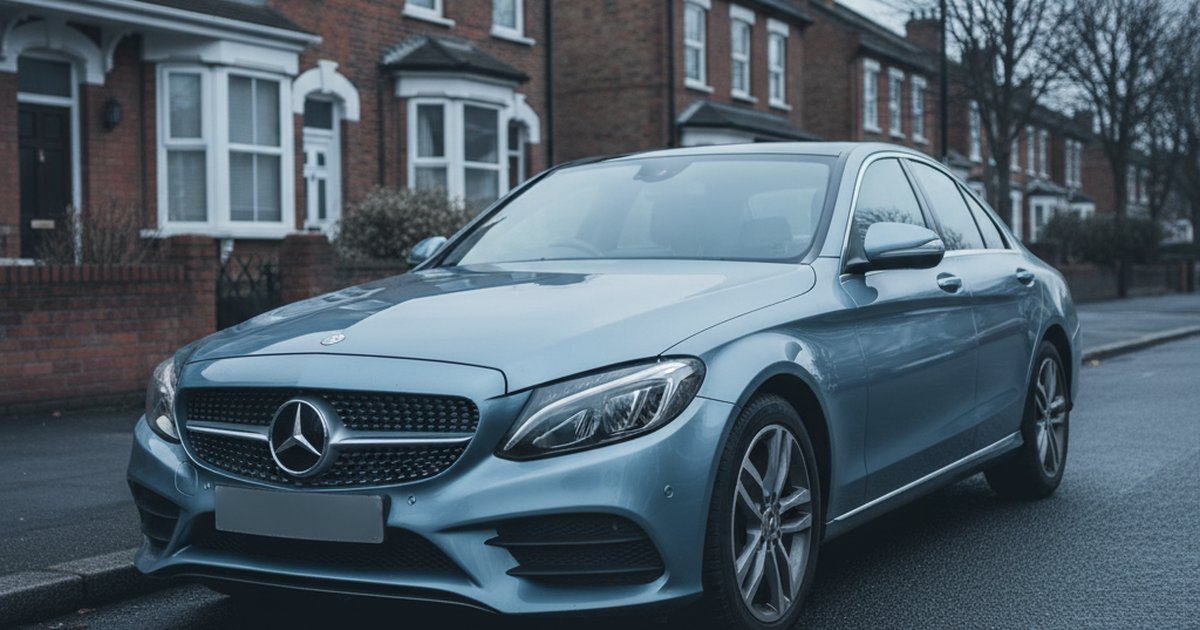
The Mercedes C-Class is Britain's favourite executive saloon, but across 2,919,624 MOT tests covering 324,401 vehicles, the data tells a story most buyers never hear. The difference between a solid W205 petrol and a corroded W204 diesel can mean the gap between 89% MOT pass rates and expensive brake pipe replacements.
We've analysed every C-Class MOT record from 2010 to 2021, comparing the W204 generation (2007-2014) against the W205 (2014-2021). The petrol versus diesel debate isn't just about running costs anymore. It's about whether you'll face dangerous brake corrosion or sail through MOTs year after year.
TL;DR: Petrol C-Class models consistently outperform diesels, with 2017-2019 petrols achieving 88-89% pass rates and reliability scores around 600/1000. Early W204 diesels (2010-2012) suffer from severe brake pipe corrosion, with dangerous defect rates hitting 44-47%. The W205 generation is measurably better, but diesel versions still trail petrols by 3-5 percentage points on MOT passes.
Should you buy petrol or diesel?
Petrol C-Class models pass their MOTs more reliably than diesels across every single year in our dataset. Take 2017 as an example. The petrol version posts an 88.9% pass rate with a reliability score of 618/1000, whilst the diesel manages just 86.6% and scores 577. That three-percentage-point gap appears consistently across the entire model range.
More telling is what fails. Diesels show brake pipe corrosion as their primary defect year after year, affecting over 20% of tests in early W204 models. Petrol versions see the same issue, but at lower rates. The 2010 diesel records a terrifying 43.4% dangerous defect rate. The petrol equivalent? Still high at 38.4%, but measurably better.
Diesel C-Class owners also drive harder. Annual mileage averages 8,000-8,500 miles across diesel variants, whilst petrols sit at 5,500-6,500 miles. Higher mileage means more wear, more MOT failures, more cost. If you're buying used, a petrol C-Class has typically lived a gentler life.
The mileage story: A 2015 diesel currently shows around 91,000 miles on the clock. The petrol equivalent? Just 68,000. That 23,000-mile difference explains much of the reliability gap between fuel types.
What's wrong with the W204 generation?
The W204 C-Class (2007-2014 facelift) suffers from one critical flaw: brake pipe corrosion. Across 2010-2012 diesel models, brake pipes appear as the top defect in every single year, affecting 20-22% of MOT tests. These aren't advisory notes. These are failures that ground your car until fixed.
The 2012 diesel records the worst dangerous defect rate in the entire dataset at 46.7%. Nearly half of all vehicles flagged at least one dangerous issue during testing. That's unacceptable for a premium German brand. The DVSA MOT history checker confirms these patterns across the UK fleet.
Corrosion affects the brake system comprehensively. Beyond pipes, you'll find corroded brake discs mentioned as a top-three defect in 2013-2014 diesels. The combination suggests Mercedes used materials that couldn't handle British road salt and damp conditions. By contrast, the W205 generation shows marked improvement in brake durability, though the problem never fully disappears.
Rear suspension arm bushes present another W204 weakness. They appear in the top defects for multiple years, particularly 2012-2015 models. Budget £300-400 for replacement bushes when they fail. Combined with brake work, you're looking at £800+ in MOT-related repairs on high-mileage W204 diesels.
Is the W205 generation better?
Yes, measurably. The W205 C-Class (2014-2021) represents genuine engineering progress. Compare a 2014 W204 diesel (83.6% pass rate, 643 reliability) against a 2017 W205 diesel (86.6%, 577 reliability). The pass rate improves, though reliability scores drop slightly due to the W205's complexity.
More importantly, dangerous defect rates fall dramatically. The 2017 diesel records 32.6% compared to 41-47% for early W204 diesels. That's a significant safety improvement. Petrol W205 models perform even better, with 2017-2019 variants achieving 88-89% pass rates and dangerous defect rates below 26%.
The defects per test metric tells the story. W204 diesels average 1.8-1.9 defects per MOT in 2010-2011. By 2017, the W205 diesel drops to 1.1 defects per test. That's fewer issues to fix, lower costs, less hassle. Petrol versions consistently run around 0.9-1.0 defects per test throughout the W205 era.
However, the W205 isn't perfect. Tyre wear remains excessive across all variants, with 33-42% of tests flagging tyres worn close to the legal limit. This appears to be a geometry or suspension setup issue rather than quality. Budget for premium tyres every 15,000-20,000 miles if you buy a C-Class.
Which years offer the best value?
For outright reliability, target 2017-2019 petrol C-Class models. The 2017 petrol achieves 88.9% pass rates, 618 reliability, and just 25.5% dangerous defects. Owners drive them gently at 5,875 miles per year. These cars currently sit around 50,000 miles, which means plenty of life left if you're buying at five to seven years old.
The 2019 petrol improves further to 89.5% pass rates and drops dangerous defects to 21.4%. First MOT pass rates hit 92.1% for 2017 and 89.4% for 2019, proving these cars arrive at their first test in excellent condition. If your budget stretches to a four or five-year-old C-Class, the 2017-2019 petrols represent the sweet spot.
Budget pick: The 2014-2015 petrol C-Class offers acceptable reliability (697-723 scores) at lower prices than newer models. Pass rates sit at 86-87%, and dangerous defect rates remain below 30%. These represent the final petrol W204 models before the W205 arrived.
Diesel buyers should focus on 2019-2021 models exclusively. The 2019 diesel achieves 88% pass rates with reasonable 603 reliability. Earlier diesels carry too much corrosion risk unless you can verify comprehensive service history and recent brake system replacement. Even then, you're buying someone else's problem.
Avoid 2020-2021 petrol models despite decent pass rates. Reliability scores plummet to 479-498, suggesting these newer cars develop faults earlier than expected. The sample size is smaller (544-6,232 tests), but the trend is concerning. Let these depreciate further before considering purchase.
Which engines should you avoid?
The data doesn't break down by specific engine codes, but clear patterns emerge. Four-cylinder diesels dominate the fleet and carry the highest failure rates. These are your bread-and-butter C220d models that rack up motorway miles. Corrosion issues plague them relentlessly.
Petrol variants show more consistent reliability regardless of displacement. The lower annual mileage (6,000 vs 8,500 miles) suggests these are often larger-capacity engines bought for refinement rather than economy. Six-cylinder C43 AMG and four-cylinder C200 petrols blend together in the data, but both fuel types outperform diesels across the board.
The hybrid and electric models appear from 2015 onwards. The C350e plug-in hybrid (listed as 'Electric' in the data) shows mixed results. The 2016 hybrid scores just 559 reliability despite an 86.8% pass rate. By 2017, reliability drops further to 535. These complex powertrains add maintenance costs without improving MOT performance.
Our advice: stick with conventional petrol engines. The C200 and C250 offer the best balance of performance and reliability. Avoid the C350e hybrid unless you're comfortable with potential battery system costs outside of MOT testing. Diesel engines made sense when fuel was £1 per litre. At current prices, with additional MOT failure risk, they're a false economy.
What actually fails on MOT tests?
Tyres dominate the failure list across every year and fuel type. Between 28% and 42% of tests flag worn or damaged tyres. The C-Class chews through rubber faster than rivals, likely due to wheel alignment issues or simply the performance-oriented suspension setup. This isn't a defect you can avoid through careful model selection. It's a running cost of C-Class ownership.
Brake components rank second. Pads and discs wear predictably, but the corrosion issue remains specific to diesels and early W204 models. If you're viewing a 2010-2012 diesel, crawl underneath and inspect brake pipes carefully. Surface rust is normal. Deep pitting and flaking that exposes bare metal means walk away. According to RAC breakdown data, brake failures can leave you stranded, so this isn't just an MOT concern.
Suspension bushes and ball joints appear in the top defects from 2012 onwards. These components wear gradually, creating play in the suspension. Replacement isn't catastrophically expensive (£200-400 typically), but multiple suspension faults compound costs quickly. A 2015 diesel showing worn rear bushes might need £600-800 in suspension work within 12 months.
The good news: engines and gearboxes rarely fail MOTs. No major powertrain defects appear in the top-three failures for any year. When C-Class models fail, they fail on consumables and corrosion, not fundamental mechanical issues. This makes pre-purchase inspections straightforward. Check brakes, tyres, and suspension. Ignore marketing chat about engine technology.
How does mileage affect reliability?
Current median mileages reveal the C-Class lifespan clearly. A 2010 diesel now shows 125,874 miles. That's 15 years of hard motorway work at 8,522 miles annually. Compare that to a 2010 petrol at 93,452 miles, driven just 6,157 miles per year. The diesel has covered 32,000 more miles, which translates to thousands of pounds in additional wear.
The annual mileage gap persists throughout the range. Even recent models show the pattern. A 2019 diesel averages 8,982 miles per year. The 2019 petrol? Just 6,931 miles. Diesel buyers typically need the car for work or long commutes. Petrol buyers use them for leisure or shorter journeys. This fundamental usage difference drives the reliability gap more than any engineering flaw.
High-mileage diesels aren't automatically bad purchases, but you must adjust expectations. A 2015 diesel with 120,000 miles has been thrashed compared to its design intent. Expect £1,000-1,500 in deferred maintenance within the first year of ownership. Lower-mileage examples command premium prices for good reason.
The sweet spot sits around 60,000-80,000 miles for petrols and 80,000-100,000 for diesels. At these ranges, major consumables (brake discs, suspension bushes) have been replaced once, but the car hasn't accumulated terminal corrosion. Check service history carefully. A 90,000-mile C-Class with no brake work in the records is a red flag, not a bargain.
Found a year you like? A good year still hides a clocked odometer, outstanding finance or a past write-off. Before you hand over any money, check the exact Mercedes C-Class.
Frequently asked questions
Should I buy a diesel or petrol Mercedes C-Class?
Petrol models consistently outperform diesels by 3-5 percentage points on MOT pass rates across all years. Petrols also accumulate 2,000-3,000 fewer miles annually, suggesting gentler ownership. Unless you genuinely cover 15,000+ motorway miles yearly, buy petrol.
Which Mercedes C-Class generation is more reliable?
The W205 (2014-2021) improves on the W204 (2007-2014) meaningfully. Dangerous defect rates drop from 43-47% in early W204 diesels to 25-33% in W205 models. Pass rates improve by 3-6 percentage points. The W205 represents genuine engineering progress, particularly in brake system durability.
What are the most common Mercedes C-Class MOT failures?
Worn tyres affect 28-42% of tests across all variants. Brake pipe corrosion plagues 2010-2012 diesels, appearing in 20-22% of tests. Suspension bushes and ball joints fail gradually from 2012 onwards. Budget £600-1,200 for typical MOT-related repairs on higher-mileage examples.
Is the Mercedes C-Class expensive to maintain?
Yes, compared to Japanese rivals. Expect £800-1,500 annually for servicing and MOT work on average-mileage examples. High-mileage diesels can cost £2,000+ in deferred maintenance during the first year of ownership. Petrol models cost less due to fewer corrosion issues and lower mileage.
What mileage is too high for a used Mercedes C-Class?
For petrols, 100,000 miles marks the point where major repairs become likely. For diesels, 120,000 miles is the ceiling unless you can verify recent brake system, suspension, and cooling system replacement. Current median mileages sit at 41,000-68,000 for 2017-2019 models, which represents the optimal buying range.
Our Verdict
The Mercedes C-Class remains a desirable executive saloon, but buyer discipline is essential. Our analysis of 2.9 million MOT tests proves that fuel type, generation, and mileage matter more than brand reputation. A 2018 petrol W205 will serve you reliably for years. A 2011 diesel W204 will drain your bank account through endless corrosion repairs.
Before buying any C-Class, run a PlateInsight check using our 261 million MOT records. Your first five checks are free. You'll see the exact MOT history, current mileage, and defect patterns for the specific car you're considering. Don't rely on the seller's word. Verify the data yourself. Visit PlateInsight now to check your potential purchase.
You might also like
Check Any Vehicle's Full History
MOT results, mileage timeline, AI health score, and market valuations. New users get 5 free credits.