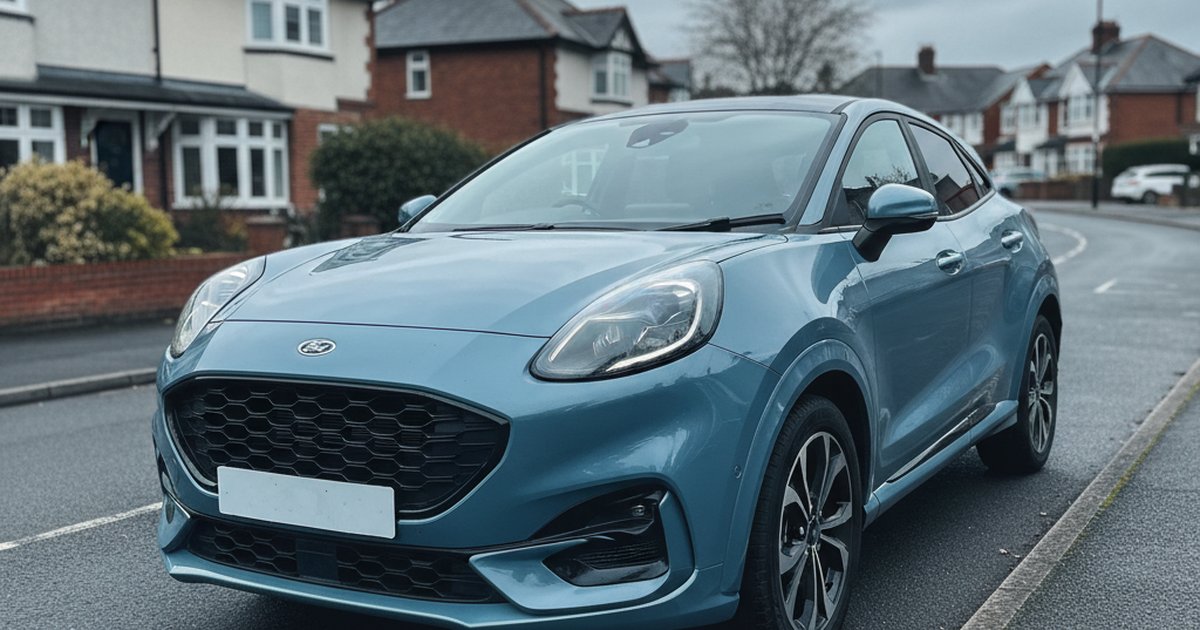
The Ford Puma's comeback as a compact crossover has been a sales hit, but what does the MOT data reveal about its reliability? We've analysed 800 MOT tests across 417 vehicles to find out what's actually failing on these trendy small SUVs.
The first generation of Puma tests (2020-2022 models) are now passing through their initial MOTs, giving us the earliest snapshot of real-world durability. The sample size is still growing, but patterns are already emerging that every potential buyer should know about.
TL;DR: Early Ford Puma MOT data shows pass rates hovering around 91-92%, with reliability scores in the mid-500s. Tyre wear dominates the defect list, appearing in roughly 25% of all tests. The dangerous defect rates are higher than expected for such a young car, particularly for 2020 models at 6.7%.
What actually fails on Ford Pumas?
Tyres are the overwhelming story here. Across all three model years, tyre-related defects account for the majority of MOT failures and advisories. We're seeing cracking, perishing, edge wear, and premature tread depth issues crop up in a quarter of all tests.
This isn't random. The Puma runs on 17 or 18-inch wheels with relatively low-profile tyres, and the aggressive styling means tight wheel arches. Owners are clearly catching kerbs or running tyres longer than they should. The 2022 models show tread depth failures in nearly 15% of tests, which is remarkably high for cars that were barely two years old at their first MOT.
Brake wear follows as the secondary concern. Disc scoring and pad wear appear across all model years, though it's more pronounced in the older 2020 examples. This fits the pattern: urban driving, heavier kerb weight than a traditional supermini, and owners who may not be familiar with when brakes need attention on a crossover versus a conventional hatchback.
Key point: If you're viewing a used Puma, check the tyres obsessively. Look for edge wear on the inner shoulders, cracks in the sidewalls, and uneven tread patterns. Budget £400-500 for a full set of replacements if they're marginal.
Which year performs best?
The 2021 and 2022 models edge ahead with 92% pass rates, compared to 90.5% for 2020. The defect rate per test drops as you move through the years: 0.8 issues per MOT for 2020 cars, down to just 0.4 for 2022 examples. This suggests Ford addressed some early production niggles.
More concerning is the dangerous defect rate. The 2020 Pumas show 6.7% of vehicles flagged with at least one dangerous issue during their MOT, compared to 4-5% for later years. For context, most mainstream family cars sit below 3% even after five or six years. Finding dangerous defects on three-year-old vehicles at this frequency points to either quality control gaps or harsh usage patterns.
The DVSA MOT checker data shows these dangerous defects cluster around brake issues and severely worn tyres, both of which owners should have caught earlier. It's not structural failings, but it does suggest some Puma owners aren't maintaining basic consumables properly.
How hard are owners driving these?
Annual mileage tells an interesting story. The 2020 cars average 7,152 miles per year, while 2021 examples drop to just 5,952 miles annually. Current odometer readings reflect this: 2020 Pumas typically show 32,000 miles, 2021s are at 23,000, and 2022s sit around 19,000.
These are clearly second cars or urban runabouts for many buyers. The low annual mileage explains some of the tyre issues: tyres degrade from age and UV exposure as much as from mileage. A Puma doing 6,000 miles a year might still need new rubber after four years simply from perishing, even if tread depth looks adequate.
The modest usage also means we're not seeing major mechanical failures yet. The 1.0-litre EcoBoost engine and seven-speed automatic gearbox haven't racked up enough miles to reveal long-term durability patterns. Most of these cars are still well within their initial ownership period and haven't been thrashed.
How does this compare to rivals?
Reliability scores in the mid-500s place the Puma squarely in average territory for its class. It's neither exceptional nor worrying. For comparison, the What Car? owner satisfaction surveys show similar small crossovers clustering in the same reliability band.
The first MOT pass rate around 91% isn't remarkable either way. It's competent without being outstanding. The Toyota Yaris Cross, for instance, achieves higher first-time pass rates, but costs more and lacks the Puma's driving appeal. The Nissan Juke sits in similar territory to the Puma for MOT performance.
What stands out is the concentration of issues around tyres and brakes, basic consumables that shouldn't dominate the failure list on such young cars. This suggests either Ford spec'd components that wear faster than ideal, or the ownership demographic isn't staying on top of maintenance. Probably a bit of both.
What should you look for when buying?
Inspect the tyres with genuine scrutiny. Don't just check tread depth, look for cracking in the sidewalls, uneven wear patterns, and damage to the inner edges. Many Pumas have already needed replacement tyres before their first MOT.
Check the brake discs for scoring. Run your finger across the disc surface (when cool) and feel for grooves or lips at the edge. If the previous owner delayed brake pad replacement, the discs will have suffered.
Ask for the full MOT history through the gov.uk checker. Look at advisory items from previous tests. If the same issues appear repeatedly without being fixed, walk away. A pattern of ignored advisories suggests an owner who only does the absolute minimum.
Service history matters more than you'd think for a car this young. The EcoBoost engine needs oil changes at the specified intervals. Any gaps in the service record should give you pause, especially if the car has been used for short urban journeys where oil degrades faster.
Key point: Budget an extra £500-800 in your first year of ownership for tyres and potentially brake work, even on a 2021 or 2022 model. The data shows these items crop up earlier than expected.
Found a year you like? A good year still hides a clocked odometer, outstanding finance or a past write-off. Before you hand over any money, check the exact Ford Puma.
Frequently asked questions
Is the Ford Puma a reliable car?
Early MOT data shows the Puma achieving 91-92% pass rates with reliability scores around 570-586 out of 1000. It's average for the class, neither outstanding nor problematic. The main issues centre on consumables like tyres and brakes rather than mechanical failures.
What are the common problems with Ford Puma?
Tyre wear dominates, appearing in roughly 25% of MOT tests. Cracking, perishing, and premature tread wear are all common. Brake disc scoring and pad wear are the secondary concerns. Most issues are maintenance-related rather than design flaws.
Which Ford Puma year is most reliable?
The 2021 and 2022 models show slightly better performance with 92% pass rates and fewer defects per test (0.4-0.6 versus 0.8 for 2020). The 2020 cars also have a higher dangerous defect rate at 6.7% compared to 4-5% for later years.
How many miles do Ford Pumas typically have?
Current odometer readings show 2020 Pumas averaging 32,370 miles, 2021 models at 23,397 miles, and 2022s around 19,297 miles. Annual mileage averages 6,000-7,000 miles, suggesting these are used as second cars or urban runabouts rather than high-mileage workhorses.
Our Verdict
The Ford Puma's early MOT data reveals a competent if unspectacular reliability picture. It's not failing catastrophically, but it's also showing higher rates of consumable wear than you'd ideally want on such young cars. The tyre issues in particular suggest either component choices that don't suit UK roads, or an ownership base that isn't maintaining them properly.
If you're considering a used Puma, treat it like any other purchase: verify the history, inspect the obvious wear items, and budget for immediate maintenance needs. The car itself isn't fundamentally flawed, but it does seem to need more attention to basic upkeep than some rivals.
Check any Puma you're interested in using PlateInsight's full MOT history lookup. Your first 5 vehicle checks are free, and you'll see every test result, advisory, and failure since the car was registered. It takes 30 seconds and could save you from buying someone else's neglected problem.
You might also like
Check Any Vehicle's Full History
MOT results, mileage timeline, AI health score, and market valuations. New users get 5 free credits.