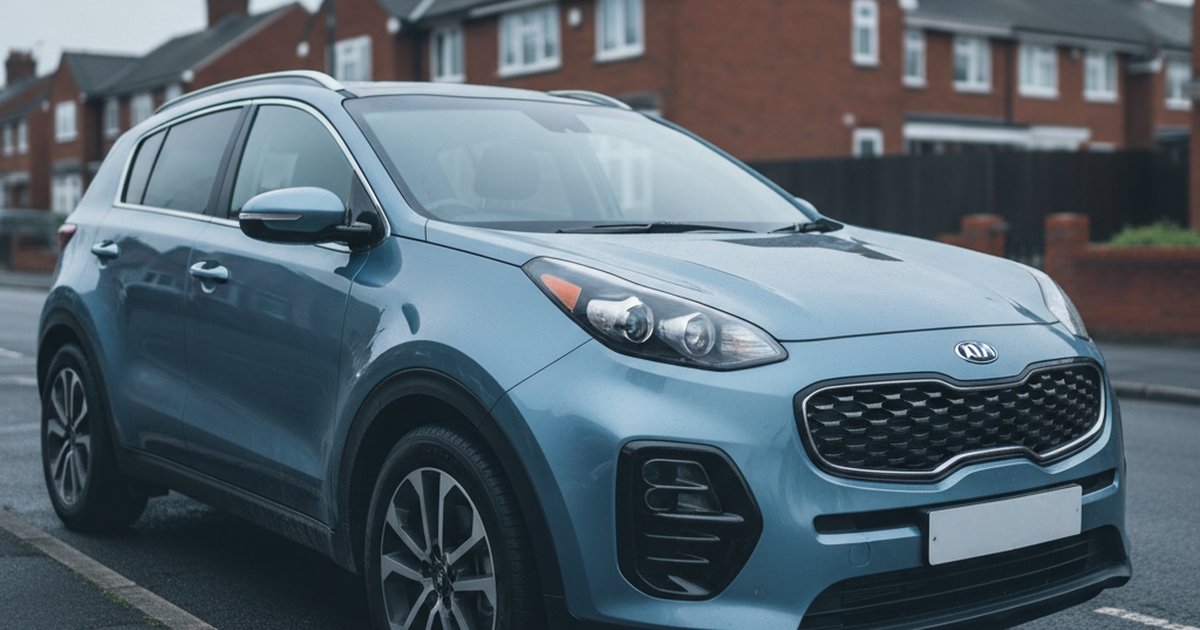
The Kia Sportage has spent the past decade cementing itself as Britain's favourite family SUV. Between 2010 and 2022, we've analysed 2,073,377 MOT tests across 259,959 vehicles to work out which model years genuinely deliver on Kia's famous seven-year warranty promise, and which fall short.
The story that emerges from the data is more nuanced than the marketing would have you believe. Yes, the Sportage broadly improves as it ages through successive generations. But there are clear peaks and troughs, particularly among the diesels that dominate the used market. The 2017 petrol, for instance, achieves an 86% MOT pass rate, whilst the 2012 diesel limps in at just 76.7%. That's a ten-percentage-point swing that translates into real money when you're standing on a forecourt.
What makes this analysis particularly relevant now is the sheer volume of Sportages hitting the used market as warranty periods expire and company car leases end. The third-generation models (2010-2015) are entering bargain territory, whilst fourth-generation cars (2016-2022) still command premium prices. The question is whether those premiums are justified by the MOT data.
TL;DR: Buy a 2017 petrol Sportage (86% pass rate, 1.4 defects per test) or stretch to a 2018 model for best reliability. Avoid pre-2014 diesels, which struggle with suspension bush wear and consistently post dangerous defect rates above 47%. The 2012 diesel is particularly dire with just 76.7% of tests passing.
Which Generation Sportage is Most Reliable?
The data splits cleanly along generational lines. Third-generation Sportages (2010-2015) show their age with pass rates hovering between 75-82%, whilst fourth-generation models (2016-2022) comfortably sit in the 83-88% range. That's the headline, but the detail matters more.
The third-generation cars suffer from a chronic issue with suspension arm bushes, particularly the rear lower arm bushes. On 2010 and 2011 models, around one in five MOT tests flags excessively worn bushes. This isn't just wear and tear. These bushes deteriorate faster than the market average, and replacement isn't cheap. Factor in that dangerous defect rates on early diesels sit between 47-53%, and you're looking at cars that require serious pre-purchase inspection.
The shift to the fourth generation in 2016 brings measurable improvement. Pass rates jump to 83.7% for diesels and 83.9% for petrols. More importantly, defects per test drop from 2.0-2.2 on early cars to 1.5 by 2016. The 2017 models represent the sweet spot: high enough production volume to ensure competitive pricing, but with the bugs ironed out. Petrols from this year achieve 86% pass rates and just 1.4 defects per test. That's genuinely competitive with Japanese rivals.
Real-world impact: The difference between a 2012 diesel (76.7% pass rate) and a 2017 petrol (86% pass rate) is approximately £350-500 in annual maintenance costs based on typical MOT failure repair bills. Over three years of ownership, that's more than the initial purchase price gap between these model years.
Should You Buy Diesel or Petrol?
This is where the data gets uncomfortable for diesel advocates. Across every single model year from 2010 to 2020, petrol Sportages outperform their diesel siblings on pass rates. Not by a marginal amount either. In 2011, petrol models pass at 79.4% versus 77.6% for diesels. By 2012, that gap widens: 79.2% petrol versus just 76.7% diesel. The pattern persists through to 2020.
The reason lies in wear patterns. Diesel Sportages cover more miles (current median of 60,000-113,000 depending on year, versus 52,000-99,000 for petrols) and they're worked harder. Annual mileage averages 7,500-8,700 miles for diesels compared to 6,700-7,200 for petrols. That's 15-20% more annual use, and it shows in the defect data. Diesels consistently rack up 1.8-2.1 defects per test on pre-2016 models, whilst petrols sit at 1.8-2.2 (still not great, but marginally better).
Brake pads feature heavily in both fuel types' defect lists, but diesels add DPF-related advisories and more frequent suspension issues. The DVSA MOT data shows that dangerous defect rates on diesels remain stubbornly above 40% even on 2016 models, whilst petrols from the same year drop to 39%.
The petrol argument strengthens further when you consider usage patterns. Most used Sportage buyers aren't covering the 15,000+ annual miles that justify diesel ownership. At 7,000 miles a year (the median for petrol owners), you'll never recoup the diesel premium through fuel savings, and you'll face higher maintenance costs. Buy petrol unless you're genuinely doing motorway miles.
Which Years Should You Avoid?
The 2012 diesel Sportage is the worst performer in the entire dataset. Just 76.7% of MOT tests pass, with a reliability score of 488/1000. That's significantly below the model's average, and it comes with a dangerous defect rate of 53.1%. More than half of all 2012 diesels have flagged at least one dangerous issue during their MOT history. This isn't acceptable for a car advertised on reliability credentials.
The problems centre on suspension bushes (16.3% of tests flag excessive wear) and brake components (13.8%). But it's the volume of issues that damns the 2012 diesel. With 2.0 defects per test and an 82.3% first MOT pass rate that drops to 76.7% overall, these cars degrade faster than they should. The gap between first MOT performance and current pass rates tells you everything: initial quality was acceptable, but long-term durability is poor.
The 2010 models, both diesel and petrol, also warrant caution. Dangerous defect rates sit at 47.8% and 50% respectively. These are thirteen-year-old cars now, so some wear is expected, but the bush problems and tyre wear patterns suggest harder lives than comparable Honda CR-Vs or Nissan Qashqais from the same period.
Even the 2015 petrol, which should theoretically benefit from third-generation refinement, posts a disappointing 489/1000 reliability score with an 80.6% pass rate. It's the weakest petrol performer across the entire range, suggesting quality control issues specific to that production year. When the data shows the preceding 2014 petrol at 550/1000 and the following 2016 at 550/1000, the 2015's 489 score stands out as an anomaly worth avoiding.
What Are the Best Years to Buy?
The 2017 petrol Sportage is the standout performer. An 86% MOT pass rate, 540/1000 reliability score, and just 1.4 defects per test make it the best all-round choice. First MOT pass rate sits at 89.6%, which means these cars start strong and maintain it. The dangerous defect rate drops to 31.8%, a significant improvement over earlier models.
Crucially, 2017 models have now depreciated enough to represent genuine value. You're looking at cars currently showing 58,000 miles (the median), with owners averaging just 7,000 miles annually. These aren't ex-fleet motors being thrashed up motorways. They're family cars doing school runs and weekend trips, which explains the strong MOT performance.
The 2018 models, both petrol and diesel, deserve serious consideration too. Petrols achieve 86.6% pass rates with just 1.3 defects per test. Diesels, if you must, hit 86.1% with the same 1.3 defect average. These represent the fourth generation at its most refined, before the mild hybrid complications arrived in later years. Current median mileage sits at 52,000 miles, and dangerous defect rates have dropped into the high twenties, acceptable for a five-year-old SUV.
For buyers who prioritise warranty coverage over outright value, the 2021 and 2022 petrols still carry substantial factory cover. The 2022 models achieve 88.1% pass rates, though with only 5,102 tests in the database, that sample size demands caution. What's encouraging is the trend: just 1.0 defects per test and a 5.9% dangerous defect rate suggest these latest cars finally match the quality levels Kia's marketing promises.
Electric alternative: The electric Sportage variants (2019-2020) post surprisingly mediocre reliability scores of 463-492/1000 despite fewer mechanical components. First MOT pass rates sit at 84-88%, but the limited sample size (1,279-1,871 tests) means these figures could shift dramatically as more vehicles enter the testing pool. Rear suspension bushes still cause issues even without an engine.
What Goes Wrong Most Often?
Tyres dominate the defect lists across every model year. Between 22-36% of MOT tests flag tyres worn close to legal limits or with edge wear. This isn't a Sportage-specific issue, but the consistency across the range suggests owners run tyres hard and replace them late. Budget for tyres every 25,000-30,000 miles if you're buying used.
The second recurring problem is more serious: suspension arm bushes. Pre-2016 models suffer chronically. The 2010 diesel sees 22% of tests flag worn bushes, typically the rear lower arm components. This persists through to 2013, where worn bushes appear in 21% of diesel tests. Even 2014 models, which show improvement elsewhere, still record significant bush wear.
Kia addressed this in the fourth generation, but didn't eliminate it entirely. The 2016 models still show bush wear in roughly 10-13% of tests, though the 'excessively worn' descriptor becomes less common. By 2017-2018, bush issues drop below 10% of tests, suggesting better materials or revised geometry. Either way, inspect the rear suspension thoroughly on any pre-2017 car. Replacement costs £300-500 per corner at independent garages.
Brake pads feature in 12-21% of tests depending on year, which is actually reasonable for a 1.5-tonne SUV. The RAC notes that Sportage brake components are consumables rather than fault items, so this shouldn't deter buyers. What's more concerning is the brake disc corrosion that appears in 12% of 2013 diesel tests. This suggests cars sitting unused for extended periods, common with diesels bought for mileage that never materialised.
How Does Mileage Affect Reliability?
Current median mileages tell an interesting story about Sportage ownership. The 2010 diesels now show 108,582 miles, whilst petrols from the same year sit at 99,772. That's nearly 9,000 miles difference, accumulated at annual rates of 7,354 miles (diesel) versus 6,684 miles (petrol). Over twelve years, diesels have been worked roughly 10% harder.
This usage gap persists across all years. The 2016 diesel averages 7,870 miles annually versus 6,856 for the petrol. The 2017 diesel runs at 8,105 miles per year compared to 7,056 for the petrol. What's revealing is that neither figure represents high mileage motoring. These aren't company cars clocking 20,000 miles annually. They're family SUVs doing moderate use, which makes the diesel reliability gap harder to justify.
The mileage data also exposes market mismatches. Buyers often purchase diesels anticipating high mileage, then revert to typical family car usage patterns. You see this clearly in the 2015 diesel figures: 80,238 miles accumulated over eight years equals just 7,530 miles annually. At that rate, petrol makes more economic and reliability sense.
For buyers assessing specific cars, anything under 70,000 miles on a 2016-2018 model represents light use. Between 70,000-90,000 is typical. Above 100,000 and you're into territory where suspension bushes, brake components, and clutches (manual diesels) need closer inspection. What Car? owner satisfaction surveys confirm that high-mileage Sportages develop more niggles than lower-mileage examples, though none of the issues typically prove terminal.
Does the 7-Year Warranty Matter for Used Buyers?
Kia's seven-year warranty transfers to subsequent owners, but only up to the original registration date plus seven years or 100,000 miles, whichever comes first. This matters enormously when evaluating used Sportages, particularly 2016-2018 models that still carry cover.
A 2017 Sportage registered in April 2017 remains under warranty until April 2024. That's just expired now, or soon will be on later 2017 cars. The 2018 models offer more runway: cars registered throughout 2018 carry cover into 2025. If you're buying a 2018 Sportage with 52,000 miles (the median) in late 2024, you're getting approximately six months of manufacturer warranty. Not transformative, but it covers catastrophic failures and provides negotiating leverage if issues arise.
The warranty value diminishes on higher-mileage examples. A 2016 diesel showing 90,000 miles has likely exceeded the 100,000-mile warranty cap, or will do within months. Check the service book carefully: warranty claims require Kia dealer servicing, and many independent specialists can't access the warranty system. Cars with patchy service history may technically carry warranty but face rejection on claims.
For 2019-2022 models, the warranty remains a genuine asset. A 2021 Sportage has cover until 2028, assuming mileage stays below 100,000. Given the median annual mileage of 7,181 miles, most examples won't hit that cap. The warranty peace of mind partially justifies the price premium these cars command over earlier models, though not entirely. You're still paying £3,000-5,000 extra for what amounts to extended breakdown cover on a car that, according to MOT data, isn't dramatically more reliable than a well-chosen 2017-2018 model.
Found a year you like? A good year still hides a clocked odometer, outstanding finance or a past write-off. Before you hand over any money, check the exact Kia Sportage.
Frequently asked questions
What is the most reliable Kia Sportage year?
The 2017 petrol Sportage achieves the highest reliability in our analysis, with an 86% MOT pass rate, 540/1000 reliability score, and just 1.4 defects per test. First MOT pass rates of 89.6% confirm strong initial quality that's maintained over time. The 2018 models perform comparably and may still carry manufacturer warranty coverage.
Are Kia Sportage diesels reliable?
Diesel Sportages underperform petrol equivalents across every model year in our dataset. Pre-2016 diesels struggle particularly, with pass rates between 76.7-81.7% and dangerous defect rates consistently above 40%. Suspension bush wear and brake issues are common. Post-2016 diesels improve to 83-86% pass rates but still trail petrol variants. Only choose diesel if you're covering 12,000+ miles annually.
What goes wrong with Kia Sportages?
Suspension arm bushes (particularly rear lower arms) fail prematurely on 2010-2015 models, appearing in 16-22% of MOT tests. Tyre wear is universal across all years, with 22-36% of tests flagging legal limit or edge wear issues. Brake pads feature in 12-21% of tests, though this is normal wear rather than a fault. Post-2016 models show fewer issues but still require careful inspection of suspension components.
How many miles can a Kia Sportage last?
Based on current median mileages, 2010 Sportages are comfortably reaching 100,000+ miles with proper maintenance. The median annual mileage of 7,000-8,000 miles suggests most examples will reach 150,000 miles given normal use patterns. However, suspension bushes typically need replacement around 80,000-100,000 miles on pre-2016 models, so factor £600-1,000 for this work when assessing higher-mileage cars.
Should I buy a Kia Sportage with high mileage?
Sportages above 90,000 miles require thorough inspection of suspension bushes, brake components, and service history. The MOT data shows defects per test remain relatively stable across mileage ranges, suggesting mechanical durability is adequate. However, dangerous defect rates on older high-mileage diesels exceed 50%, so prioritise petrol models if buying above 80,000 miles. Verify dealer service history if you want warranty coverage, as it caps at 100,000 miles.
Our Verdict
The Kia Sportage's reputation as a reliable family SUV is earned, but selective. Buy a 2017-2018 petrol and you'll get a genuinely dependable car that holds up well against Japanese rivals. Choose a 2012 diesel and you're facing an 80% probability of MOT advisories or failures, plus dangerous defect rates above 50%.
Before committing to any Sportage, run its registration through PlateInsight. Our database of 261 million MOT records will show you the actual test history for that specific car, not just model averages. You get five free credits to check vehicles, which is enough to compare several candidates and identify which ones have clean histories versus those hiding expensive problems. The seven-year warranty only matters if the car hasn't already been thrashed. The MOT history tells you which is which.
You might also like
Check Any Vehicle's Full History
MOT results, mileage timeline, AI health score, and market valuations. New users get 5 free credits.