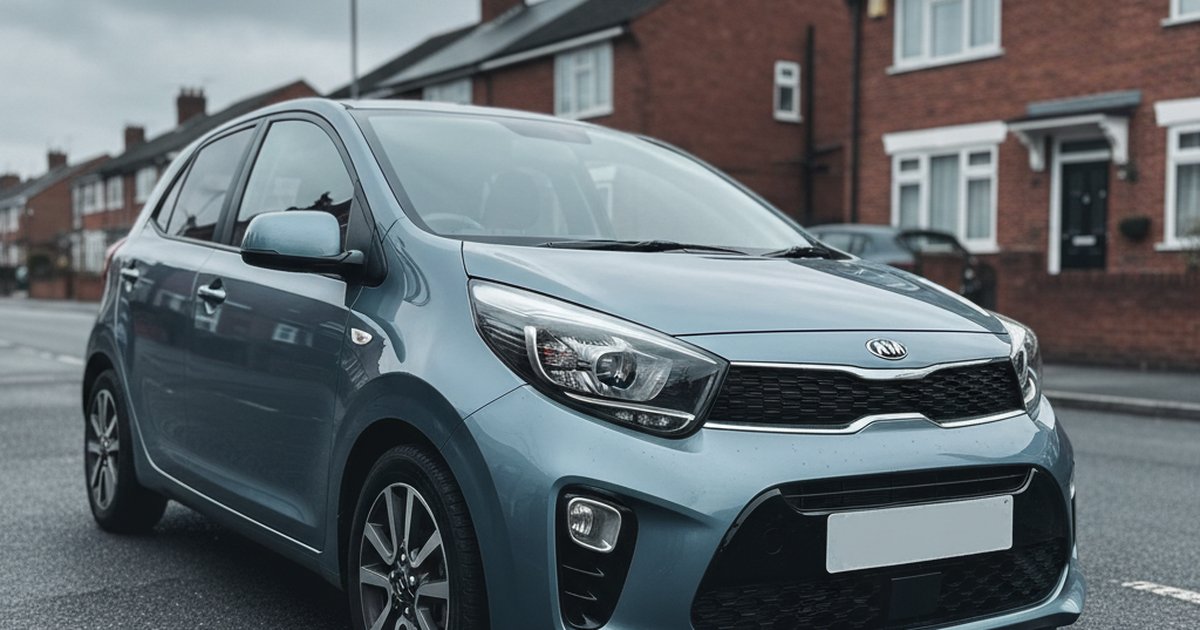
The Kia Picanto has carved out a solid reputation as a budget city car that actually lasts. Across 1,522,688 MOT tests covering 166,391 vehicles, we can now separate the genuinely reliable model years from the ones that will cost you.
This tiny Korean hatchback appeals to drivers who want low running costs and that generous 7-year warranty, but the MOT data reveals some surprising truths. The newest models are not always the safest bet, and some older Picantos have aged far better than expected.
We analysed every MOT test from 2010 to 2023 models to find which years deliver the best value and which ones you should skip. The results challenge some common assumptions about buying nearly-new versus older examples.
TL;DR: The 2017-2018 Picantos are the sweet spot, with pass rates hitting 86-88% and reliability scores of 488-511 out of 1000. Early models (2010-2012) suffer dangerous brake pipe corrosion affecting over 45% of vehicles. Avoid the 2019 model which inexplicably dips to 470/1000 despite lower mileage.
Which Picanto Years Are Most Reliable?
The 2018 Picanto tops the reliability chart at 511 out of 1000, with an 87.9% MOT pass rate and just 0.9 defects per test. This is the model year to hunt for. The 2015 edition comes close at 497, but the 2017 model (488) and 2014 model (491) also perform well above average.
What makes the 2017-2018 models stand out is the dramatic drop in dangerous defects. Just 14-21% of these cars have flagged a dangerous issue during testing, compared to 48-53% for 2010-2012 models. That is a huge improvement in fundamental safety and build quality.
The worst performer is the 2011 model at 386 out of 1000, closely followed by the 2010 at 398. These early cars average 1.9 defects per test and suffer particularly severe brake pipe corrosion. If you are buying a Picanto from this era, budget for a full brake system inspection and likely replacement.
Surprising finding: The 2019 model drops sharply to 470/1000 despite being newer and lower mileage than the 2017-2018 editions. First MOT pass rate also falls to 89.1% from 92.1% in 2017. We cannot identify a specific reason from the data, but it suggests either a production quality blip or a batch of problematic components.
What Actually Goes Wrong With Picantos?
Tyres dominate the failure list across all model years. Between 14-36% of tests flag tyre cracking, perishing or wear issues. This reflects the Picanto's ownership profile more than mechanical weakness. These are low-mileage city cars averaging just 4,000-4,600 miles annually, so tyres age out before they wear out. Many owners simply do not check them often enough.
Brake pipes are the serious concern, particularly on 2010-2013 models where 13-16% of tests find corroded pipes. This is a safety-critical defect that can lead to complete brake failure. The problem reduces dramatically from 2014 onwards, with brake pipes largely disappearing from the top defect lists by 2017. Kia appears to have addressed corrosion protection in the mid-2010s production run.
Brake pads show up consistently but these are routine wear items. Around 6-10% of tests flag pads needing replacement, which is normal for any car. The rate is actually lower on newer models (5.5% in 2019) compared to older ones (10.1% in 2015), suggesting the braking system is wearing better overall.
From 2020 onwards, suspension bushes start appearing in the top three defects at rates of 6-8%. These are not dangerous failures, just age-related wear on cars now approaching their fourth year. Still cheaper to fix than engine or gearbox issues.
How Does Mileage Affect Reliability?
Picanto owners barely drive these cars. Annual mileage sits between 4,000 and 4,600 miles across all model years. That is roughly a third of the UK average. Most examples are used for school runs, shopping trips and urban commuting. A 2010 model typically shows just 69,000 miles after 14 years on the road.
This light use partly explains the decent reliability scores, but it also creates specific problems. Low-mileage cars suffer from perished rubber components (tyres, brake hoses, suspension bushes) and corroded metal parts that would otherwise get replaced through normal wear. The 2010-2012 models particularly show this pattern, with brake pipe corrosion rates far exceeding what you would see on a car covering 12,000 miles annually.
The good news is that if you buy a well-maintained example, you are getting a car that has not been thrashed. The bad news is that service intervals are calendar-based, not mileage-based, and many owners skip servicing because 'it has only done 4,000 miles this year'. Always check the full service history, not just the MOT pass rate.
Should You Buy Early or Late Model Picantos?
The data makes this decision simple. Avoid 2010-2012 models unless you have confirmation that brake pipes have been replaced. These cars score 386-415 on reliability and have dangerous defect rates approaching 50%. You are buying into guaranteed remedial work on safety-critical components.
The 2013-2014 models represent the turning point. Pass rates jump from 76.5% (2012) to 78.9% (2013) to 81.9% (2014). Brake pipe issues reduce noticeably. If you want an older Picanto for maximum depreciation savings, start your search at 2013 onwards.
The 2015-2018 bracket is the sweet spot for most buyers. Reliability scores range from 459 to 511, pass rates sit at 84-88%, and dangerous defects drop to 14-34%. These cars are old enough to be affordable but new enough to avoid the corrosion epidemic. A 2017 model with 37,000 miles represents excellent value.
Post-2019 models are harder to judge because many have only been through one or two MOT tests. The limited data suggests they maintain good pass rates (88-91%) but reliability scores are inconsistent. The 2019 dip to 470 is concerning, while 2020 rebounds to 499. If you are buying nearly new, the Kia warranty should cover most issues anyway.
What Do First MOT Results Tell Us?
First MOT pass rates (at three years old) run 84-92% across the model range, which is respectable for a budget car. The 2017 model achieves the highest first-time pass rate at 92.1%, suggesting exceptional build quality for that production year.
The gap between first MOT pass rate and overall pass rate is revealing. A 2010 Picanto passed its first MOT 83.6% of the time but now only passes 74.7% of tests. That 9-percentage-point drop shows how these cars degrade as they age, primarily through corrosion rather than mechanical failure.
Compare that to the 2017 model: 92.1% first MOT, 86.6% current pass rate. Just a 5.5-point drop. This car is ageing much better, which supports our recommendation to focus on 2015-2018 models for the best long-term ownership experience.
What Should You Check Before Buying a Used Picanto?
Start under the car. On any Picanto built before 2015, get underneath and inspect brake pipes for corrosion. Surface rust is normal, but if you see flaking, pitting or any green/white corrosion deposits, walk away. Brake pipe replacement costs £300-600 depending on how many lines need replacing.
Check all four tyres for perishing, cracking and age. The sidewall has a four-digit date code (week and year of manufacture). If the tyres are over six years old, factor in £200-300 for a full set even if tread depth looks acceptable. Perished tyres fail MOTs and are dangerous in wet conditions.
Request the full service history, not just MOT certificates. Low annual mileage makes owners complacent about servicing, but a Picanto still needs oil changes every 12 months regardless of miles covered. Missing service stamps suggest the car has been neglected in other ways too.
Use the DVSA MOT history checker to review past test results. Look for recurring issues like brake pad advisories that never get fixed or the same tyre problems appearing year after year. This indicates an owner who does the bare minimum.
Test drive in varied conditions. City car or not, the Picanto should feel tight and responsive. Vague steering, spongy brakes or rattles from the suspension suggest worn bushes or other age-related degradation. These are not expensive fixes but they are bargaining points.
Found a year you like? A good year still hides a clocked odometer, outstanding finance or a past write-off. Before you hand over any money, check the exact Kia Picanto.
Frequently asked questions
What is the most reliable Kia Picanto model year?
The 2018 Picanto scores 511 out of 1000 for reliability with an 87.9% MOT pass rate and just 0.9 defects per test. The 2015 model (497/1000) and 2014 model (491/1000) are also strong performers.
Which Kia Picanto years should I avoid?
Avoid 2010-2012 models which score just 386-415 for reliability and have dangerous defect rates of 48-53%. Brake pipe corrosion is endemic on these early cars. The 2019 model also shows an unexplained reliability dip to 470/1000 despite lower mileage.
How many miles do Kia Picanto owners typically drive per year?
Picanto owners average just 4,000-4,600 miles annually across all model years. These are low-use city cars, which means age-related issues like tyre perishing and brake pipe corrosion matter more than high-mileage wear.
What are the most common Kia Picanto MOT failures?
Tyre problems (perishing, cracking, wear) affect 14-36% of tests depending on model year. Brake pipe corrosion is the serious issue on 2010-2013 models (13-16% of tests). Brake pads are routine wear items at 6-10% of tests.
Is a Kia Picanto reliable for long-term ownership?
Models from 2014 onwards are reliable long-term prospects with pass rates of 82-89% and reliability scores of 459-511. Earlier models (2010-2012) suffer significant corrosion issues that make them poor long-term bets.
Our Verdict
The Kia Picanto proves that budget does not have to mean unreliable, provided you choose the right model year. The 2017-2018 cars deliver the best combination of value and dependability, while anything before 2013 carries too much corrosion risk to recommend.
Before you buy any used Picanto, run a full history check on PlateInsight. Your first 5 checks are free, and you will see the complete MOT record including every defect and advisory from the car's life. A few minutes checking can save you hundreds in unexpected repairs.
You might also like
Check Any Vehicle's Full History
MOT results, mileage timeline, AI health score, and market valuations. New users get 5 free credits.