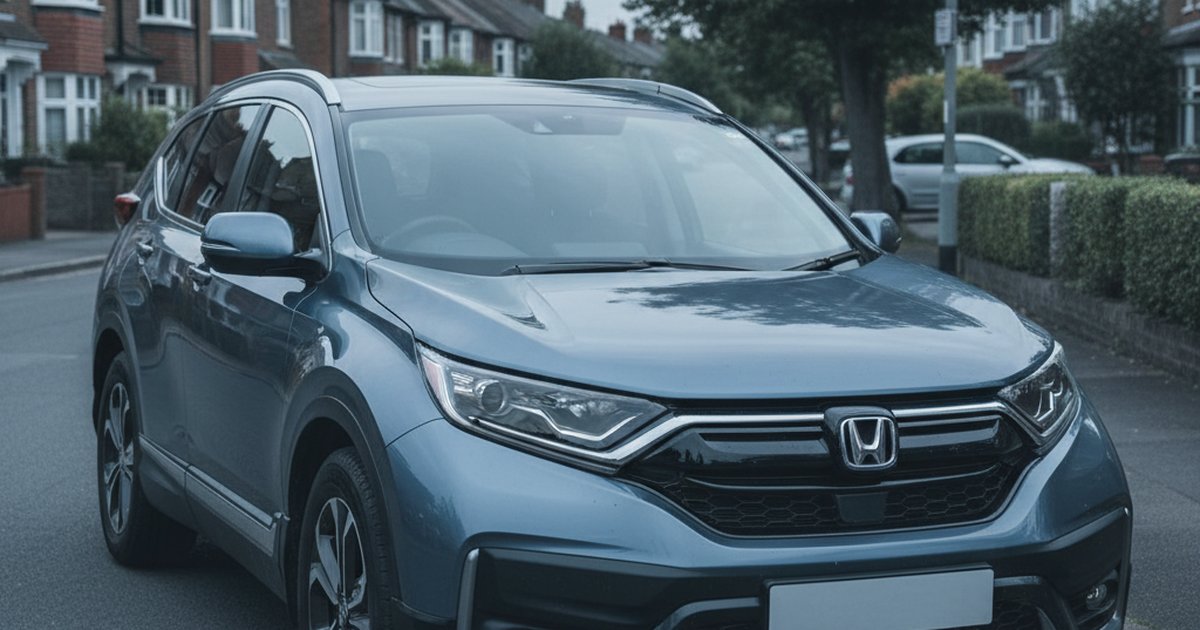
The Honda CR-V has been a staple of British driveways for years, promising reliability, practicality, and that elevated driving position families want. But with over 140,000 CR-Vs currently registered in the UK and 1,268,951 MOT tests in our database, the picture is more nuanced than Honda's marketing suggests.
We've analysed every MOT test result from the DVSA database to separate the genuinely dependable years from the ones that will have you on first-name terms with your local garage. The data reveals clear winners and some surprising weaknesses, particularly when comparing petrol, diesel, and the newer hybrid variants.
TL;DR: The 2013 petrol CR-V scores 797/1000 and passes 87.3% of MOTs - the sweet spot for reliability and price. The 2017 diesel scores just 678/1000 despite high first-MOT passes, suggesting rapid degradation. Avoid 2021 petrol models (581/1000) and be wary of hybrid/electric variants from 2020-2023, which show concerning reliability drops despite newer age.
Which years should you buy?
The 2013 petrol CR-V is the standout performer. With a reliability score of 797/1000 and an 87.3% pass rate across 70,271 tests, it proves Honda's naturally aspirated 2.0-litre engine hits its stride here. Current examples average 79,946 miles with owners covering just 6,367 miles annually - these are gentle-use family cars, not workhorses.
The 2010 petrol also deserves attention, scoring 815/1000. Yes, you're looking at 102,782 miles on average, but that score proves the third-generation CR-V ages well. At 6,610 miles per year, owners aren't thrashing them.
Petrol beats diesel: Across every year from 2010-2017, petrol CR-Vs score 20-40 points higher on reliability and pass 1-2% more MOTs. The diesel's extra torque comes with suspension wear and brake issues that petrol models avoid.
For newer buyers, the 2019 petrol (671/1000, 92.6% pass rate) represents the last of the purely combustion-engined models before Honda's hybrid push. It picks up fewer defects per test (0.7) than any diesel variant and costs less to run than earlier petrols.
Which years should you avoid?
The 2021 petrol CR-V scores just 581/1000 from 333 tests - the worst of any generation. This is Honda's transitional year where petrol became the minority option, and the small sample size reflects limited availability. Quality control appears to have slipped.
More concerning is the hybrid/electric story. The 2021 hybrid scores 610/1000, dropping to 609/1000 for the 2023 model despite being nearly new. These are cars with average mileage of just 22,000-30,000 miles failing MOTs at rates you'd expect from vehicles twice their age.
Dangerous defect warning: The 2010-2011 diesels show dangerous defect rates above 35% - meaning more than one in three vehicles has had a serious safety issue flagged at some point. That's among the worst we've seen for any mainstream SUV.
The 2017 diesel scores 678/1000 despite a strong 93.2% first-MOT pass rate. This six-point drop from first test to overall average signals rapid degradation - the complex diesel emissions equipment doesn't age gracefully. Factor in 7,741 miles per year (the highest of any CR-V) and you're looking at hard-worked examples with expensive problems brewing.
What fails most often on the CR-V?
Tyres dominate failure lists across every year and engine type. Between 17% and 26% of all CR-V MOT tests flag worn tyres, particularly inner edge wear on the front. This isn't random - Honda's geometry settings and the car's weight distribution create a predictable wear pattern that catches out owners who don't rotate tyres regularly.
Brake pads appear in 7-11% of tests depending on year, with diesel models consistently higher. The extra weight and regenerative braking systems on hybrids don't help - the 2019 hybrid flags brake issues in 11.3% of tests versus 9% for the petrol equivalent.
Anti-roll bar linkages plague the 2010-2013 models, appearing in 12-14% of diesel tests. The issue largely disappears from 2014 onwards, suggesting Honda revised the design. If you're buying a pre-2014 CR-V, budget for new drop links.
Diesel-specific problems: The 2015-2017 diesels show consistent brake and tyre wear issues at rates 2-3% higher than petrol. That's the weight penalty and higher annual mileage (7,741-8,056 miles/yr) at work.
How Does Mileage Affect CR-V Reliability?
Current mileage readings tell an interesting ownership story. The 2010 diesel averages 126,304 miles versus 102,782 for the petrol - a 23,000-mile gap. Yet the petrol scores 36 points higher on reliability (815 vs 779). High mileage doesn't kill CR-Vs; high annual mileage does.
Diesel owners average 8,022 miles per year on 2010 models, while petrol owners manage just 6,610. That lower annual use explains why petrol CR-Vs consistently score better despite comparable total mileage. These are school-run cars, not motorway cruisers.
The hybrid models show something different. The 2019 hybrid averages 7,276 miles annually - higher than the petrol's 6,766 - yet scores lower (646 vs 671). The added complexity of two powertrains doesn't deliver the reliability dividend buyers expect.
For buyers, this means a 90,000-mile petrol CR-V driven gently is a better bet than a 70,000-mile diesel that's done 10,000 miles every year. What Car? owner surveys confirm this pattern across Honda's range.
Are Newer CR-Vs Actually Better?
Not according to the MOT data. The 2013 petrol's 797/1000 score beats every year from 2018 onwards, including the 2023 hybrid at 609/1000. Pass rates improve marginally - 95.4% for 2023 versus 87.3% for 2013 - but reliability scores plummet.
The culprit is Honda's hybrid system. While the turbocharged 1.5 and 2.0 petrol engines in the 2017-2020 models are mechanically sound, adding electric motors, batteries, and complex power management creates new failure points. Defects per test stay low (0.5-0.7), but when things go wrong, they go expensively wrong.
First MOT versus long-term: The 2017 diesel passes its first MOT at 93.2% but scores just 678/1000 overall. That seven-point gap between first-test and overall reliability is among the worst for any CR-V, signalling rapid wear after warranty expires.
The 2018-2020 petrol and diesel models sit in an awkward middle ground - too new to be cheap, too old to have modern hybrid efficiency, and scoring in the mid-600s for reliability. You're better off going older (2012-2014) or much older (2010) for proven durability.
Petrol vs Diesel: Which CR-V Is More Reliable?
Petrol wins decisively. Across 2010-2018 (the years where both were sold in volume), petrol CR-Vs average reliability scores of 750/1000 versus 715/1000 for diesels. That's a consistent 35-point advantage backed by 471,000 MOT tests.
Diesels fail more often on brakes (10-11% of tests versus 7-9% for petrol) and suspension components. The 2011 diesel flags anti-roll bar wear in 14.3% of tests; the petrol manages 8.4%. This isn't surprising given diesel owners cover 1,500-2,000 more miles annually.
The dangerous defect gap is stark. 2010-2013 diesels show rates of 33-36%, while petrols sit at 26-34%. That translates to real safety risks - worn suspension, degraded brakes, and structural issues the DVSA flags as immediately dangerous.
For buyers, the diesel's fuel economy advantage (45-50 mpg versus 35-40 mpg for petrol) doesn't offset the higher failure rates and repair costs. Unless you're doing 15,000+ miles yearly, petrol makes more financial sense.
What About the Hybrid CR-V?
Honda's hybrid CR-V launches in 2019, promising 40+ mpg with petrol reliability. The MOT data tells a different story. The 2019 hybrid scores 646/1000 - 25 points below the petrol equivalent and 151 points below the best petrol CR-V from 2010.
Pass rates look acceptable at 93.4% for 2019, but reliability scores keep falling: 643/1000 for 2020, 610/1000 for 2021, 623/1000 for 2022, and 609/1000 for 2023. These are nearly-new cars with average mileage of just 22,000-30,000 miles posting scores you'd expect from decade-old vehicles.
Tyre wear plague: Hybrid CR-Vs flag tyre issues in 24-26% of all tests, matching or exceeding the diesel. The extra 200kg of batteries and electric motors creates the same inner edge wear pattern that plagued earlier models.
Brake pad wear affects 11.3% of hybrid tests versus 9% for petrol. Regenerative braking should reduce pad wear, but the MOT data suggests otherwise. Either the system isn't working as designed or the added complexity introduces new failure modes.
For buyers, the hybrid CR-V is a calculated risk. You're paying £3,000-5,000 more than petrol equivalents for efficiency gains that might disappear in repair costs. The 2013 petrol remains the smarter buy.
Found a year you like? A good year still hides a clocked odometer, outstanding finance or a past write-off. Before you hand over any money, check the exact Honda CR-V.
Frequently asked questions
What is the most reliable Honda CR-V year?
The 2010 petrol CR-V scores 815/1000 from 81,856 MOT tests, the highest of any year. The 2013 petrol (797/1000) offers similar reliability with lower mileage and wider availability.
Should I buy a diesel or petrol CR-V?
Petrol. Across 2010-2018, petrol CR-Vs score 35 points higher on reliability (750 vs 715/1000) and pass 1-2% more MOTs. Diesels show higher brake and suspension wear, particularly dangerous defect rates above 35% for 2010-2011 models.
Are Honda CR-V hybrids reliable?
No. The 2019-2023 hybrids score 609-646/1000, well below decade-old petrol models. Despite average mileage of just 22,000-30,000 miles, reliability scores keep falling year-on-year.
What goes wrong with the Honda CR-V?
Tyre wear (17-26% of tests), particularly inner edge wear on front tyres, is universal. Brake pads affect 7-11% of tests, anti-roll bar linkages on 2010-2013 models in 12-14% of cases, and diesels show consistent suspension wear.
Is high mileage a problem on CR-Vs?
Not if accumulated gently. A 100,000-mile petrol CR-V driven 6,000 miles annually scores better than a 70,000-mile diesel driven 8,000+ miles yearly. Total mileage matters less than annual use intensity.
Our Verdict
The Honda CR-V's reputation for reliability holds up, but only if you choose the right year and engine. The 2010 and 2013 petrol models deliver the dependability Honda promises, while diesels and hybrids introduce complexity that costs you at MOT time. Use your 5 free PlateInsight credits to check any CR-V's full MOT history before buying - our 261 million records from the DVSA reveal exactly which repairs you're inheriting.
You might also like
Check Any Vehicle's Full History
MOT results, mileage timeline, AI health score, and market valuations. New users get 5 free credits.