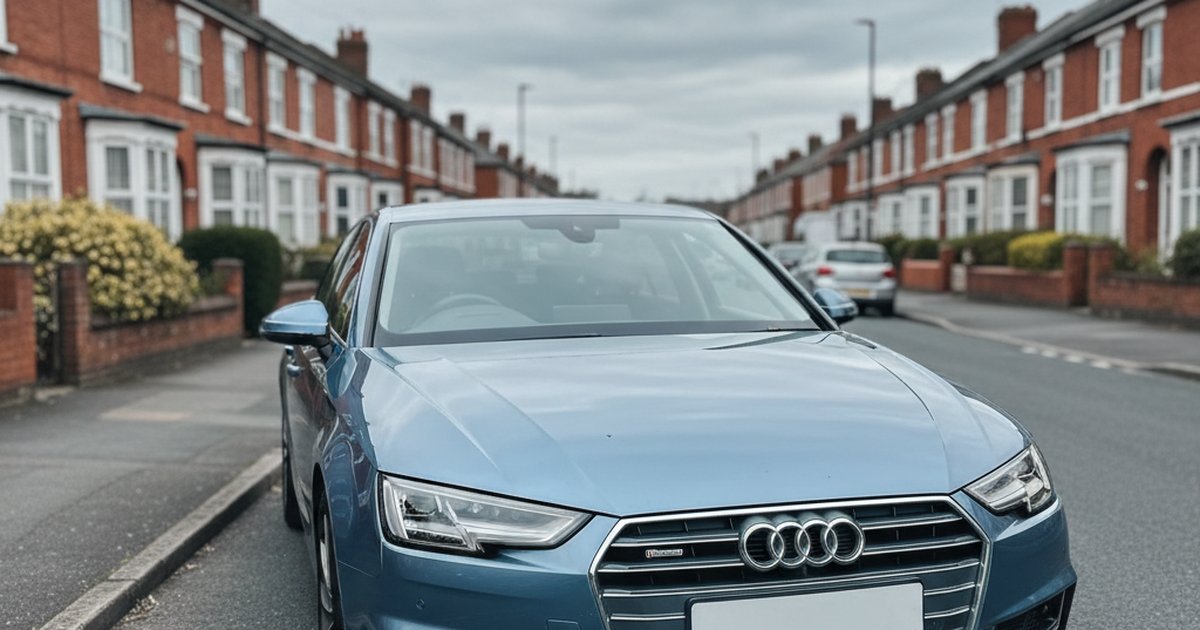
The Audi A4 has been the German brand's executive saloon workhorse for decades, competing directly with the BMW 3 Series and Mercedes C-Class. But which years deliver the premium badge without the premium repair bills? We've analysed 1,734,080 MOT tests across 191,451 vehicles to find out.
The picture is more nuanced than you might expect. While Audi's reputation for build quality holds reasonably well, there's a stark divide between petrol and diesel variants, and certain model years stand out as either bargains or money pits. The data reveals some surprising patterns about how these executive saloons age.
TL;DR: Petrol A4s consistently outperform diesels across every model year, with 2012 petrol variants hitting 813/1000 reliability versus just 711/1000 for diesels. Avoid 2015-2017 diesels (607-620/1000 scores) and late diesels with alarmingly high dangerous defect rates topping 40%. Best buy: 2012-2013 petrol models.
Petrol vs diesel: which should you choose?
This is not even close. Across every single model year in our dataset, petrol A4s score 60-100 points higher on reliability than their diesel counterparts. The 2012 petrol achieves 813/1000, while the 2012 diesel manages just 711/1000. By 2015, the gap becomes a chasm: petrol scores 721/1000 versus a dire 607/1000 for diesel.
The defect data tells the real story. Diesel A4s pick up 1.5-1.8 issues per MOT test, while petrols average 1.1-1.5. More concerning is the dangerous defect rate. The 2010-2015 diesel models show dangerous defects in 39-41% of vehicles at some point. That means two in five diesel A4s from this era have flagged a serious safety issue. Petrols fare better, typically in the 31-38% range for the same years.
Diesel buyers were clearly using these cars harder. Annual mileage for diesels sits around 9,000-10,500 miles per year, versus 6,300-7,900 for petrols. Higher mileage means more wear on suspension bushes, brakes, and those complex diesel emissions systems that plague modern oil-burners. RAC breakdown data consistently shows diesel particulate filters and EGR valves as common failure points on VAG diesel engines from this era.
The suspension tells its own tale. Diesel A4s show excessive wear on front suspension arms in 17-19% of tests for 2010-2011 models, compared to just worn bushes (not excessive) in petrols. That's the weight of the diesel lump and harder driving taking its toll.
Which years should you avoid?
The 2015-2017 diesels are where Audi's reliability reputation starts to unravel. Reliability scores plummet to 607/1000 for 2015 diesel, 621/1000 for 2016, and 620/1000 for 2017. These are B8.5 facelift models that should have been at their peak for refinement and durability.
What went wrong? The defect patterns shift noticeably. Brake pad failures jump to 13-15% of tests, suggesting either poor-quality components or more aggressive driving profiles. More tellingly, suspension bush wear becomes endemic. The 2016 diesel shows suspension issues flagged in 14.2% of tests, often affecting both sides simultaneously.
The 2014 diesel also underperforms at 647/1000, sitting well below the 710-731 scores of 2010-2012 diesels. Pass rates climb slightly (82.4% vs 79.8-81.6% for earlier years), but this appears to be owners keeping older cars roadworthy rather than genuine improvement. Current median mileage for 2014 diesels is 106,503 miles, and these cars are showing their age badly.
Avoid post-2017 petrols too: The 2018-2020 petrol models score just 564-578/1000, significantly worse than 2012-2014 petrols. First MOT pass rates drop to 88-89%, and tyre bulges appear in 10-11% of tests, suggesting quality control issues or specification changes that reduced durability.
What are the best years to buy?
The sweet spot is 2012-2013 petrol A4s. The 2012 petrol achieves 813/1000 reliability with an impressive 85.4% pass rate and just 1.4 defects per test. These B8 models had matured sufficiently to iron out early issues, but hadn't yet accumulated the high mileage that kills later examples.
First MOT pass rates confirm these were well-built cars: 90.7% for 2012 petrol versus the overall 85.4% pass rate. That 5-point gap suggests they age gracefully rather than falling apart after year three. Current examples sit around 90,600 miles, driven gently at 6,957 miles per year. These were owned by people who chose petrol for refinement, not diesel for motorway miles.
The 2012 petrol shows tyre wear in 20.2% of tests, but that's routine consumables. The real quality indicator is that suspension bushes appear worn (not excessively) in just 11.7% of tests, compared to 17.6% for the 2010 diesel. Less wear, less stress, better longevity.
If you must buy diesel, stick to 2010-2012 models before the rot set in. The 2010 diesel scores a respectable 731/1000, the highest diesel score in our dataset. But be prepared for those 40.7% dangerous defect rates and constant suspension bush replacements. According to What Car? owner satisfaction data, suspension noise is the most common complaint on diesel A4s from this generation.
How reliable are newer A4s?
Not as reliable as you'd hope. The 2018-2020 models, both petrol and diesel, show declining scores despite being newer. Petrol 2018-2020 models score 564-578/1000, well below the 686-813 range of 2012-2016 petrols. Even first MOT pass rates drop: 88.4-89.2% for 2018-2020 versus 89-90.7% for 2012-2013.
The defect patterns change character. Tyre bulges and structural failures appear with alarming frequency: 10.7% of 2018 petrol tests flag tyre bulges or ply exposure. That's not normal wear. It suggests either specification changes (lower-profile tyres on larger wheels) or quality issues with supplied tyres. The DVSA MOT data shows this pattern emerging across premium German brands from 2017 onwards.
Brake pad wear accelerates too: 13.3-15.4% of tests for 2017-2019 models versus 9.5-11.1% for 2012-2014. Either brake components got cheaper or driving profiles became more aggressive. Neither explanation flatters these newer cars.
The small sample sizes for 2021-2022 (318 and 126 tests respectively) mean we can't draw firm conclusions, but early indicators aren't promising. The 2021 petrol scores just 559/1000, continuing the downward trend. These B9 models should be hitting their stride, but they're starting weaker than B8 models finished.
What goes wrong with Audi A4s?
Tyres dominate the defect lists, but that's partly because A4 owners run them close to the limit. Across all years, 18-35% of tests flag tyres worn to the legal minimum. The newer the car, the worse this gets: 34.5% for 2019 petrol versus 18.3% for 2010 petrol. This reflects the A4's shift from sensible executive tool to style statement with aggressive wheel and tyre packages.
Suspension bushes are the real Achilles heel. Rear suspension arm bushes wear excessively on diesels (17.6% of 2010 diesel tests), moderately on petrols. These bushes handle the A4's longitudinal engine layout and rear-biased weight distribution poorly. Replacement isn't cheap: expect £400-600 at an independent, more at Audi.
Brake pads wear faster than rivals. The 2017-2019 models show brake pad advisories in 12.8-15.4% of tests. That's higher than comparable Auto Trader data for 3 Series and C-Class from the same period. Audi's quattro all-wheel-drive system (standard on many variants) means four-wheel brake servicing, not just fronts.
Corrosion appears on spring mounts in 8.2% of 2020 diesel tests. On a four-year-old premium car, that's poor. It suggests either inadequate rust protection or particularly aggressive winter salt exposure. Check the MOT history of any A4 for corrosion advisories, especially if it's spent time in Scotland or northern England.
How does mileage affect reliability?
Current median mileages tell a useful story about who buys what. Petrols sit at 42,000-106,000 miles depending on year, while diesels range from 53,000-139,000. That 33,000-mile difference explains much of the reliability gap.
Annual mileage patterns are even more revealing. Petrol A4 owners average 6,300-7,900 miles per year, typical of a car doing school runs and weekend trips. Diesel owners clock 9,000-10,500 miles annually, suggesting longer commutes or fleet use. Higher annual mileage accelerates wear on every component, but especially on diesel particulate filters and dual-mass flywheels that hate short trips.
The 2010 diesel with its 139,441 median current mileage is a warning sign. These cars have done serious work, and at 9,416 miles per year, they're still being driven hard. If you're looking at a 2010-2012 diesel pushing 150,000 miles, budget for suspension, brakes, and potentially expensive diesel emissions work.
Conversely, the 2012 petrol at 90,605 miles has been cherished. Driven at 6,957 miles yearly, it's a second car or retirement vehicle. These are the A4s that have been serviced on time, garaged, and hand-washed. They represent the best buying opportunity in the used market.
Found a year you like? A good year still hides a clocked odometer, outstanding finance or a past write-off. Before you hand over any money, check the exact Audi A4.
Frequently asked questions
Should I buy a petrol or diesel Audi A4?
Petrol, without question. Petrol A4s score 60-100 points higher on reliability across every model year. The 2012 petrol achieves 813/1000 versus 711/1000 for the diesel equivalent. Diesels show dangerous defects in 39-41% of vehicles from 2010-2015, compared to 31-38% for petrols.
What is the most reliable Audi A4 year?
The 2012 petrol A4 scores 813/1000, the highest in our dataset. It combines mature B8 engineering with low annual mileage (6,957 miles/year) and a strong 90.7% first MOT pass rate. Avoid post-2017 models, which score just 564-578/1000.
Are high-mileage Audi A4s reliable?
It depends on fuel type and service history. Diesel A4s at 120,000+ miles show extensive suspension bush wear (14-19% of tests) and brake pad failures (13-15% of tests). Petrol models fare better if they've averaged under 7,000 miles per year, but budget for suspension work on any A4 over 100,000 miles.
What goes wrong with Audi A4s?
Suspension bushes wear excessively, especially on diesels (17.6% of 2010 diesel tests). Brake pads wear fast across all variants (12.8-15.4% for 2017-2019 models). Newer cars suffer tyre bulges and structural failures in 10-11% of tests, suggesting quality or specification issues.
Our Verdict
The Audi A4 remains a capable executive saloon, but the data reveals a clear hierarchy. Stick to 2012-2013 petrol models for the best balance of reliability, refinement, and value. Avoid diesels from 2015 onwards unless you enjoy funding your local garage. Before buying any A4, run its registration through PlateInsight. You get 5 free credits to check MOT history, mileage consistency, and whether that suspiciously cheap diesel has a stack of suspension advisories waiting to drain your wallet. The premium badge is only worth it if the car underneath delivers.
You might also like
Check Any Vehicle's Full History
MOT results, mileage timeline, AI health score, and market valuations. New users get 5 free credits.