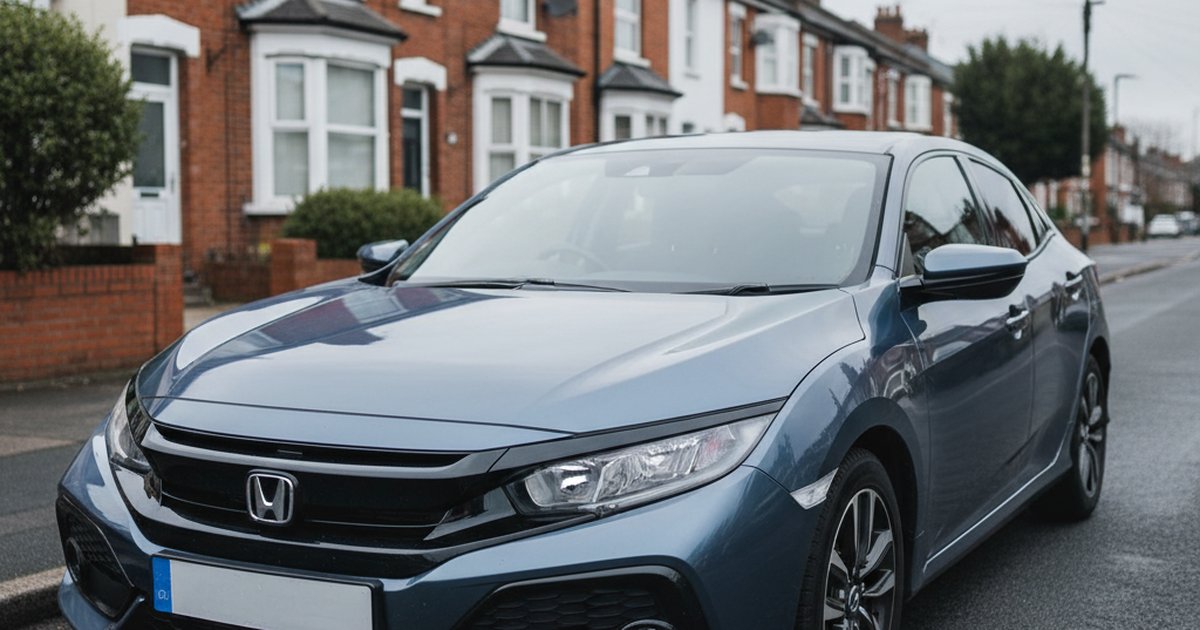
The Honda Civic has been an engineering benchmark for decades, but UK MOT data from 1,567,990 tests across 154,083 vehicles tells a more complex story than the legend suggests. Some model years are genuinely bulletproof. Others fail their MOTs at alarming rates, particularly diesel variants worked hard on motorways.
We've analysed every MOT test from DVSA records to identify which Civic years you should buy and which to avoid. The data reveals unexpected patterns: newer isn't always better, and petrol models consistently outperform their diesel counterparts by significant margins.
TL;DR: Buy a 2012-2016 petrol Civic for the best balance of reliability and value. The 2012 petrol variant achieves an 83.5% pass rate with a reliability score of 709/1000. Avoid 2010-2011 diesels and the 2022 model year, which shows worrying early failure patterns despite low mileage.
Which Civic years are actually reliable?
The 2012-2016 petrol Civics represent the sweet spot. The 2012 model stands out with a reliability score of 709/1000 and an MOT pass rate of 83.5%. Owners drive these gently (just 6,320 miles annually on average), and it shows in the MOT results. First MOT pass rates hit 90.6%, meaning these cars sailed through their initial tests with minimal issues.
The 2013-2015 petrols maintain this quality. Pass rates hover around 85-88%, and defects per test drop to just 1.1-1.3. Compare that to the 2010 petrol at 2.0 defects per test and you see why buying newer matters. Current mileage sits between 61,000 and 77,000 miles, meaning plenty of life left if you're buying now.
The 2016 petrol deserves special mention. It achieves an 88.5% pass rate with the lowest dangerous defect rate in the dataset at just 28.4%. These are safe, reliable cars that owners clearly maintain well. Annual mileage drops to 5,448 miles, suggesting many serve as commuter cars or second vehicles rather than high-mileage workhorses.
Usage pattern matters: Petrol Civics average 5,800-6,600 miles annually. Diesels cover 8,200-9,800 miles per year. The harder work shows in MOT results, with diesel pass rates consistently 3-5 percentage points lower than equivalent petrol models.
Should you buy a diesel Civic?
Diesel Civic owners work their cars harder, and the MOT data reflects the consequences. Every diesel variant shows higher annual mileage than its petrol equivalent. The 2010 diesel averages 8,688 miles yearly versus 6,620 for the petrol. This pattern continues across all years.
Pass rates tell the story. The 2010 diesel manages just 73.7% compared to 75.1% for the petrol. The 2011 diesel scores 73.7% against 75.5% for petrol. Even the stronger 2012-2014 diesels trail their petrol siblings by 3-4 percentage points. The dangerous defect rate hits 51.6% on 2010 diesels, meaning over half show at least one serious safety issue during their testing history.
Tyre wear dominates diesel defects in a way not seen on petrols. The 2012 diesel shows tyre issues in 22.8% of tests. By 2014, this rises to 24.2%. The 2018 diesel peaks at 34.2% of tests flagging tyre problems. Heavier kerb weights and harder driving patterns accelerate wear, particularly on front tyres carrying the engine weight.
If you need a diesel Civic, target 2012-2015 examples. These manage 80-85% pass rates, which is acceptable if not spectacular. Current mileage sits between 83,000 and 123,000 miles depending on year. Expect higher running costs than equivalent petrols, particularly for brakes and tyres.
Why do 2010-2011 models fail more often?
The eighth-generation Civic from 2010-2011 shows its age in MOT results. Pass rates struggle to reach 76% on petrols and dip to 73.7% on diesels. These cars now sit at 99,000-134,000 miles depending on fuel type, and wear patterns emerge clearly.
Shock absorbers appear in the top three defects for 2010 diesels, with 10% of tests flagging oil misting. This issue barely registers on newer models. Brake discs also deteriorate faster, with 8.5% of 2010 petrol tests noting weakened discs. The combination of age, mileage and hard use creates compounding problems.
The first MOT pass rate gap tells a revealing story. 2010 petrols passed their first MOT at 86.2%, but overall pass rates sit at 75.1%. That 11-point drop over subsequent years shows accelerated degradation. The 2012 petrol, by contrast, maintains just a 7-point gap between first MOT (90.6%) and overall performance (83.5%). Better engineering or gentler use? Probably both.
At current mileage levels, these early cars face expensive maintenance windows. Suspension bushes wear, brake components need replacement, and the dangerous defect rates above 42% mean serious safety issues crop up regularly. Unless you find an exceptionally well-maintained example at a bargain price, skip the 2010-2011 vintages.
Are the newest Civics actually worse?
The 2021-2022 data raises eyebrows. The 2022 petrol shows an 84.8% pass rate despite averaging just 38,098 miles and being barely three years old. More concerning, its first MOT pass rate drops to 82.1%, the lowest in the entire dataset. Something changed with these newest models.
Tyre wear appears in 42.9% of 2022 tests, far higher than any previous year. Brake pads show issues in 34.8% of tests. These are cars with under 40,000 miles displaying wear patterns you'd expect at 80,000. The annual mileage of 8,229 miles doesn't explain this; plenty of older models cover similar distances without the same failure rates.
Sample size matters here. We're looking at just 112 tests on 84 vehicles for 2022, compared to hundreds of thousands for older models. Small numbers can skew results. But the 2021 data (410 tests, 165 vehicles) shows similar patterns with an 86.1% pass rate and reliability score of just 432/1000. These aren't flukes.
The tenth-generation Civic introduced new technology and manufacturing processes. Early teething problems often emerge in MOT data before owner satisfaction surveys catch up. Give these models another two years of data before drawing firm conclusions, but current numbers suggest caution. The premium pricing on nearly-new Civics doesn't align with the reliability you're actually getting.
What actually goes wrong with Civics?
Tyres dominate the defect list across all years and fuel types. Every single variant shows tyre wear in at least 16% of MOT tests, with many exceeding 25%. Front tyres wear fastest, particularly on the outer edges. The front-wheel-drive layout and relatively heavy engines create uneven loading patterns that accelerate deterioration.
Brake pads rank second consistently from 2012 onwards. The 2014 diesel shows brake issues in 14.9% of tests, rising to 21.6% for the 2018 diesel. These aren't expensive fixes, but they're frequent. If you're budgeting for ownership, factor in brake pads every 20,000-30,000 miles on hard-driven diesels, slightly longer on gentler-use petrols.
Tyre cracking and perishing appears more on older models, particularly those from 2010-2013. This signals cars sitting unused for extended periods rather than mechanical failure. Low annual mileage compounds the problem: tyres age out before they wear out. The 2012 petrol data shows 8.9% of tests flag perishing, while newer models with similar usage patterns show lower rates as rubber compounds improve.
Dangerous defects deserve attention. The 44-52% dangerous defect rates on 2010 models include serious issues: exposed tyre cords, severely worn brakes, compromised suspension components. These aren't advisory notices you can ignore. By contrast, the 2020 petrols sit at just 10.8% dangerous defect rate. Age matters enormously for safety-critical components.
How do Civic owners actually use these cars?
The usage data reveals distinct owner profiles. Petrol Civic buyers treat these as local runabouts. Annual mileage rarely exceeds 6,800 miles, with the 2016 petrol averaging just 5,448 miles yearly. Current median mileage sits around 55,000-86,000 depending on year, meaning most will stay in service for another decade at current usage rates.
Diesel owners tell a different story. Annual mileage jumps to 8,200-9,800 miles, with the 2020 diesel hitting 9,745 miles per year. Current mileage ranges from 50,000 to 134,000 miles. These are motorway cars, company vehicles, or primary family transport doing school runs and long commutes. The harder work shows in every reliability metric.
The 2010 diesel sits at 133,733 miles currently. That's serious mileage, and MOT pass rates reflect the wear. The 2010 petrol reaches 99,732 miles, still substantial but covering 34,000 fewer miles than its diesel equivalent. This mileage gap persists across all years: diesels always show 20,000-40,000 more miles than equivalent petrols.
Interestingly, first MOT pass rates stay strong across both fuel types and all years. Even the 2010 diesel manages 83.1% at its first MOT. The degradation happens afterwards, as components age and wear accumulates. This suggests Civics leave the factory well-built, but maintenance quality varies enormously among owners.
Found a year you like? A good year still hides a clocked odometer, outstanding finance or a past write-off. Before you hand over any money, check the exact Honda Civic.
Frequently asked questions
What is the most reliable Honda Civic year in the UK?
The 2012 petrol Civic achieves the highest reliability score at 709/1000 with an 83.5% MOT pass rate. First MOT pass rates hit 90.6%, and average defects per test sit at just 1.3. Current examples average 86,334 miles with gentle annual use of 6,320 miles.
Should I buy a diesel or petrol Honda Civic?
Buy petrol unless you genuinely need diesel economy for high mileage. Petrol models consistently achieve 3-5% higher pass rates, show fewer defects per test, and have lower dangerous defect rates. Diesel Civics average 8,200-9,800 miles annually versus 5,400-6,800 for petrols, and the harder use shows in reliability metrics.
Which Honda Civic years should I avoid?
Avoid 2010-2011 diesel models (73.7% pass rates, 44-52% dangerous defect rates) and be cautious with 2021-2022 models showing early failure patterns. The 2010 diesel sits at 133,733 miles with significant wear on suspension, brakes and tyres.
What are the most common MOT failures on Honda Civics?
Tyre wear dominates, appearing in 16-42% of tests depending on year and fuel type. Brake pad wear ranks second (10-22% of tests), followed by tyre perishing on older models. Diesels show higher rates of both tyre and brake issues than petrols.
How many miles do Honda Civic owners typically drive per year?
Petrol Civic owners average 5,400-6,800 miles annually. Diesel owners cover 8,200-9,800 miles per year. The 2016 petrol shows the lowest at 5,448 miles yearly, while the 2020 diesel peaks at 9,745 miles annually.
Our Verdict
The Honda Civic legend holds true for specific years and fuel types, but MOT data reveals a nuanced picture. Target 2012-2016 petrols for proven reliability, avoid worn-out early diesels, and approach the newest models with caution until more test data emerges. Before you buy any used Civic, check its complete MOT history with PlateInsight. You get 5 free vehicle checks to review the actual test results, mileage progression and advisories for any car you're considering. The registration plate tells you everything you need to know.
You might also like
Check Any Vehicle's Full History
MOT results, mileage timeline, AI health score, and market valuations. New users get 5 free credits.