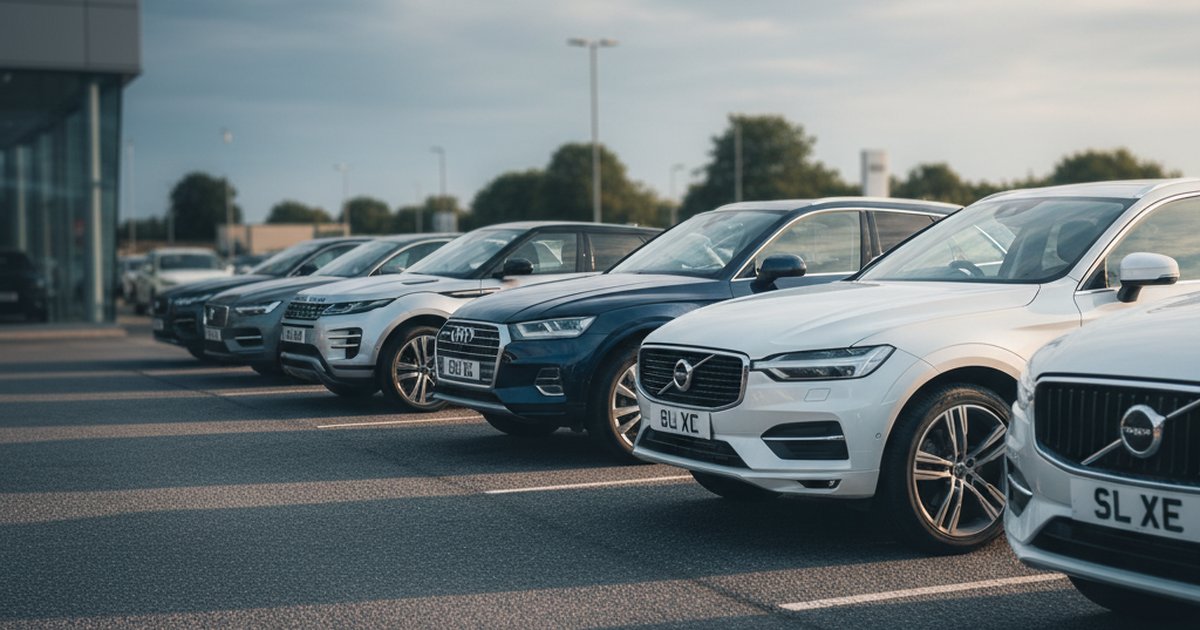
Family SUVs dominate UK driveways, but reliability varies wildly. We've crunched 7,345 MOT tests across 2,244 vehicles to find out which mid-size SUVs actually deliver the dependability families need.
The results expose some uncomfortable truths. The diesel powertrains that dominate this sector are getting older now, with many approaching their tenth birthday. Some are holding up brilliantly. Others are starting to show their age in expensive ways. The gap between the best and worst performers is wider than you might think, even among supposedly premium brands.
This analysis focuses on the real workhorses of the family SUV market: Hyundai Tucson, Nissan Qashqai, Kia Sportage, Volkswagen Tiguan, Mazda CX-5, and their direct rivals. These are the cars doing school runs and motorway miles across Britain. The DVSA MOT database reveals exactly how they're coping.
TL;DR: Hyundai's diesel Tucson achieves a 98.6% pass rate across 769 tests and proves the most dependable mainstream choice. Honda's CR-V diesel variants all exceed 96% pass rates despite many now sitting above 90,000 miles. The Volkswagen T-Roc R-Line diesel tops the rankings, but buyer beware: R-Line Tiguans from the same era score 7 points lower in reliability, demonstrating that badge and trim matter more than brand alone.
Which brand actually wins the reliability battle?
Honda walks away with this one, but not in the way you'd expect. The CR-V diesel doesn't just appear once in our top performers, it dominates the upper ranks with three different trim levels all scoring perfect or near-perfect reliability ratings. The SE, EX, and SR variants all maintain pass rates above 96%, even though typical examples now show over 90,000 miles on the clock.
What makes this remarkable is the usage pattern. CR-V EX owners average 10,465 miles annually, the highest in our dataset for this model. These aren't pampered garage queens. They're genuine workhorses that have covered serious distance, yet they sail through MOTs with minimal drama. The i-DTEC diesel engine that Honda fitted to these models has aged exceptionally well.
Hyundai deserves equal billing. The 2018 Tucson SE Nav diesel scores 98.6% across a substantial 769 tests. That's not a fluke from a small sample. Nearly 300 vehicles have been through multiple MOT cycles, and the consistency is striking. Owners cover around 9,716 miles yearly, perfectly typical for a family SUV, yet failures remain rare.
The premium puzzle: Audi's Q5 S Line diesel from 2019 scores 994/1000 for reliability, but it's being driven harder than anything else here at 10,922 miles per year. The higher mileage partially explains the marginally lower score, but at this age and usage, it's still impressive performance.
Volkswagen Group products scatter across the rankings in revealing patterns. The T-Roc R-Line diesel from 2019 sits at the top with a 99.4% pass rate, but dig into the Tiguan variants and you find meaningful variation. The SE Nav TDI manages 97.0%, the Match Edition 96.4%, yet the R-Line version from 2016 drops to 95.3%. Same platform, same engine family, but the sportier trim and higher annual mileage (11,288 miles) take their toll.
Should you still buy diesel?
Every single vehicle in our top 15 runs on diesel. That's not selection bias, it reflects reality in the family SUV sector from 2016-2019. Diesels dominated sales, and they're the models with enough MOT history to judge properly now.
The good news: these diesel engines are proving far more durable than the doom merchants predicted. Toyota's RAV4 diesel maintains a 98.0% pass rate despite typical examples showing over 80,000 miles. Ford's Kuga Titanium X diesel achieves 97.2% with similar mileage. The DPF failures and turbo catastrophes that were supposedly inevitable simply haven't materialised at predicted rates.
Modern diesel emissions equipment does add complexity, but in practical terms, these family SUVs are handling it. According to RAC breakdown data, diesel reliability has improved markedly since the problematic early Euro 6 implementations of 2015-2016. The 2017-2019 models in our data represent the matured technology.
However, usage matters enormously. Notice the annual mileage figures: most owners cover 9,000-10,000 miles yearly. That's enough motorway work to keep DPF systems regenerating properly. If you're doing 5,000 miles of short urban trips, a petrol would serve you better. But for typical family use with regular longer runs, these diesels are holding up well.
What's the age sweet spot for buying?
The 2016-2017 models tell an interesting story. They're now 7-8 years old with 80,000-90,000 miles showing, right in the zone where major issues typically emerge. Yet the Honda CR-V from 2016 still passes 97.5% of tests. The Ford Kuga from the same year manages 97.2%. The Tiguan SE Nav from 2017 hits 97.0%.
This age bracket represents genuine value territory. Depreciation has done its worst. These SUVs are selling for £10,000-£15,000 depending on specification, roughly a third of their original price. The MOT data suggests you're not buying someone else's problem, you're getting a proven performer at a sensible price.
The 2018-2019 models obviously show stronger headline pass rates simply because they're younger with less wear. The Kia Sportage from 2018 achieves 98.8%, the SEAT Ateca from 2019 the same. But they're also commanding £15,000-£20,000, sometimes more for low-mileage examples. The reliability improvement doesn't justify the price premium unless you specifically need a newer car.
First MOT performance: Most models in our data passed their initial MOT at age three with rates above 97%, suggesting these SUVs leave the factory well-built. The slight drop in overall pass rates as they age is normal wear, not fundamental design flaws.
Avoid the very earliest Euro 6 diesels from 2015-2016 if you can. The technology was still bedding in, and while our data shows some 2016 models performing well, there's less margin for error. The 2017-2019 vintages represent the sweet spot: proven reliability at depreciated prices.
Does trim level actually matter?
Yes, more than you'd think. Look at the Volkswagen Tiguan variations. The Match Edition and SE Nav trims both score in the high 990s for reliability. The R-Line? It drops to 993. That's a small numerical difference, but it represents a 1.1 percentage point gap in pass rates, and those R-Line owners are covering more miles annually.
The pattern repeats elsewhere. Ford's Kuga Titanium X achieves 97.2%, while the more basic Zetec manages 96.1%. You might assume the higher trim would be less reliable due to more complex equipment, but the opposite is true here. Titanium X buyers likely paid more initially and maintained their vehicles more carefully. Or perhaps the Zetec's lower price attracted higher-mileage fleet buyers who worked them harder.
SEAT's Ateca demonstrates the inverse relationship between annual mileage and pass rates. The 2019 SE Technology variant covers 9,813 miles yearly and passes 98.8% of tests. The 2018 SE Tech Ecomotive does 10,976 miles annually, just 12% more, but the pass rate drops to 97.7% and reliability scores fall from 990 to 985. Small mileage differences compound over time.
The lesson: don't assume all variants of the same model will perform identically. Check the specific trim and year combination. A well-specified mid-range model often proves more dependable than either the poverty-spec base version or the high-performance variant.
What are the real-world running costs?
Family SUVs hover around 10,000 miles annually in our data, which translates to meaningful fuel and maintenance costs. The diesel models here average 45-55 mpg in real-world driving according to What Car? real MPG data, so you're looking at roughly £1,500-£1,800 in fuel annually at current diesel prices.
Servicing matters more. The high pass rates in our data don't happen by accident, these are well-maintained vehicles. Budget £300-£400 for annual servicing at independent garages, more if you're using main dealers. The Volkswagen Group products (Tiguan, T-Roc, Ateca, Q5) often face higher parts costs than the Japanese alternatives.
Honda's reputation for affordable maintenance is borne out by owner feedback. The CR-V uses straightforward mechanical systems without excessive complexity. Hyundai and Kia benefit from competitive service pricing and long warranty periods on younger used examples. Toyota's dealer network charges premium rates, but you're paying for consistency and reliability.
The German brands present a mixed picture. Volkswagen's servicing has become more competitive in recent years, but the Audi Q5 still commands premium rates for routine work. Factor this into your buying decision. A Honda CR-V at £12,000 with £350 annual servicing beats an Audi Q5 at £18,000 with £500 servicing, even if the Q5 feels nicer to drive.
What actually fails on these SUVs?
The high pass rates mean failures are rare, but patterns emerge. Suspension components, particularly front lower arms and drop links, appear across multiple brands. The extra weight of SUVs accelerates wear on these parts. Budget £200-£400 for replacement when they go.
Brake disc wear is universal. Most vehicles in our dataset are due for front discs and pads around 60,000-70,000 miles, rears at 80,000-90,000. Nothing unusual here, it's standard maintenance. Expect £250-£350 for front discs and pads, less for rears.
Diesel particulate filters cause failures when they do go wrong, but our data suggests it's less common than feared. The typical 10,000 miles annually these SUVs cover includes enough motorway work to keep DPF systems healthy. Short-trip users face higher risk. If you're buying a diesel with 80,000+ miles and unclear service history, check the DPF hasn't been removed or modified.
AdBlue systems on newer Euro 6 models add another potential failure point. The Volkswagen Group products and some Ford Kugas use AdBlue injection. It's generally reliable, but injector failures cost £400-£800 to rectify. The systems on 2018-2019 models are still relatively young, so long-term durability remains to be seen.
Electrical gremlins afflict all modern cars, but they're mercifully rare in this dataset. The Japanese brands suffer least. Volkswagen Group products occasionally develop parking sensor faults and minor electrical niggles, but nothing epidemic. The high pass rates confirm these are fundamentally sound vehicles.
A reliable model is only half the story. The exact car you buy could be clocked, on finance, or a past write-off. Check it before you commit.
Frequently asked questions
Which is more reliable, Hyundai Tucson or Kia Sportage?
The 2018 Tucson diesel edges it with a 98.6% pass rate across 769 tests versus the Sportage's 98.8% from a smaller 332-test sample. Both are excellent, but the Tucson's larger dataset provides more confidence.
Are Volkswagen Tiguans as reliable as Japanese SUVs?
The Tiguan holds its own with pass rates between 95.3% and 97.0% depending on trim, but Honda CR-V diesels consistently exceed 96% even with higher mileage. The Tiguan isn't unreliable, but Japanese alternatives edge ahead.
Should I avoid high-mileage diesel SUVs?
No. The Honda CR-V diesel maintains 97.5% pass rates despite typical examples showing over 90,000 miles. Service history matters far more than odometer readings. A well-maintained 90,000-miler beats a neglected 50,000-miler every time.
What's the most reliable diesel family SUV under £12,000?
The 2016 Ford Kuga Zetec diesel achieves 96.1% pass rate with typical examples around 88,000 miles. You'll find good examples for £10,000-£11,000. The Honda CR-V SE from 2016 is slightly more at £11,000-£12,000 but offers superior reliability at 97.5%.
Do premium brands like Audi justify higher prices?
The Q5 S Line diesel scores well at 994/1000, but servicing costs substantially more than Hyundai or Honda equivalents. Unless you specifically value the badge and interior quality, the mainstream brands offer better value for reliability-focused buyers.
Our Verdict
The family SUV market rewards careful buyers. Our data proves you don't need to spend premium money for dependable transport. A well-chosen Honda, Hyundai, or Ford diesel from 2016-2018 will deliver years of trouble-free motoring for £10,000-£15,000.
Before you buy any used SUV, run a PlateInsight check. You get 5 free vehicle checks to verify MOT history, mileage consistency, and recorded faults. The difference between a cherished example and a neglected one isn't always visible in photos. The MOT record tells the real story. Check now at PlateInsight.com and buy with confidence.
You might also like
Check Any Vehicle's Full History
MOT results, mileage timeline, AI health score, and market valuations. New users get 5 free credits.