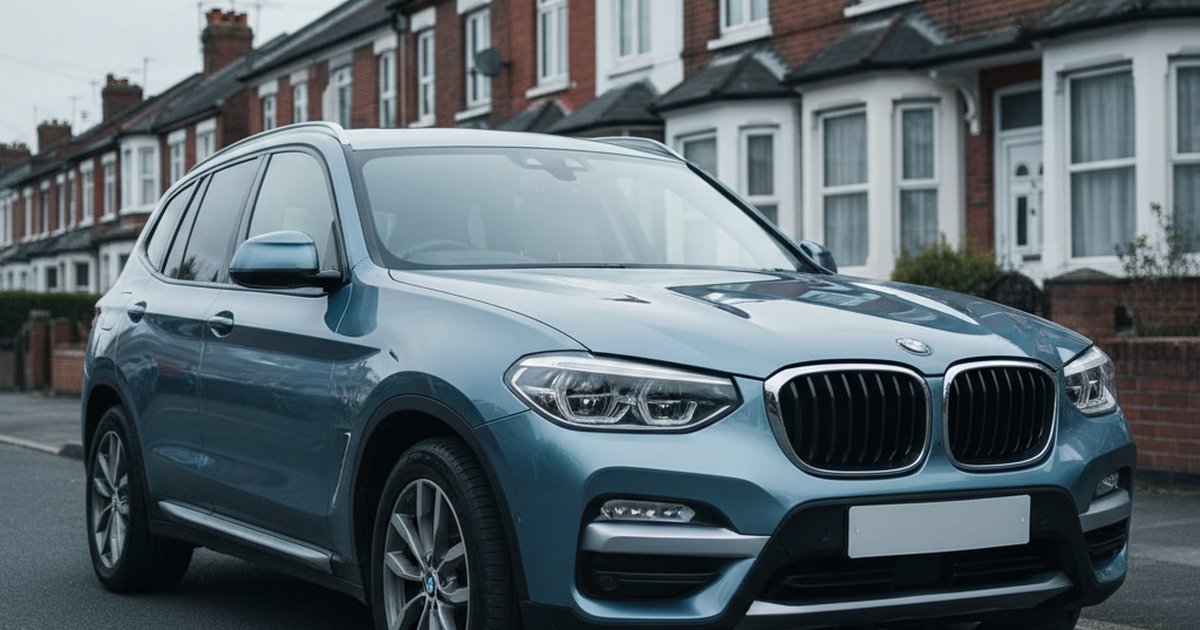
BMW has sold tens of thousands of X3s in the UK, and our database of 674,222 MOT tests across 82,086 vehicles tells us exactly which ones hold up and which don't.
The split is generational. The F25 (2010-2017) and G01 (2018 onwards) are different cars. The older models wear their mileage hard. The newer ones are genuinely more reliable, but the data throws up some surprises about which fuel type actually delivers.
TL;DR: The 2018 diesel X3 posts an 89.9% pass rate and racks up 8,464 miles annually. The 2012 petrol is a statistical unicorn with 85.8% pass rate but only 58 vehicles in our data. Avoid 2014-2016 diesels which score below 615/1000 for reliability despite decent pass rates.
BMW X3: Quick Answers
Which BMW X3 years should you avoid? Avoid the 2014-2016 F25 diesel X3s — all three years score under 615 out of 1000 for reliability despite respectable headline pass rates. The 2013 F25 is also weak due to high rates of suspension and brake faults at MOT.
What is the most reliable BMW X3 year? The 2018 diesel X3 (89.9% MOT pass rate) is the strongest year, covering the last of the F25 and the first G01 models. The 2019-2020 G01 xDrive20d diesels are close behind and offer the best balance of reliability, running costs, and age.
Are BMW X3s reliable? Yes, within limits. The G01 generation (2018+) averages 87-91% MOT pass rates, better than most German premium SUVs. Pre-2014 F25 models are showing their age, and diesels outperform petrols on both pass rate and reliability score in our UK MOT dataset.
How many miles can a BMW X3 do? Well-maintained X3 diesels regularly pass MOTs beyond 150,000 miles. The F25 diesels in our data average 9,000-11,000 miles per year, and MOT pass rates only start to drop noticeably once vehicles cross roughly 130,000 miles.
F25 vs G01 — which generation is better? The G01 (2018 onward) is clearly more reliable. It trims suspension and emissions defect rates significantly, and early-life MOT pass rates exceed 90%. Stick with G01 if budget allows; if buying F25, target 2016-2017 diesels only.
F25 vs G01: which generation is more reliable?
The generational split is stark. F25 models from 2010-2017 average around 82-85% pass rates, while G01 examples from 2018 onwards consistently break 89%. But the raw pass rate doesn't tell you everything.
What matters more is how these cars age. The F25 generation shows a clear degradation pattern. First MOT pass rates hover around 88-90%, then drop to the low 80s by the time these vehicles hit higher mileage cycles. The 2011 diesel, for instance, passes its first MOT at 89.7% but settles to 82.8% overall. That 7-point gap tells you the car gets fussier with age.
The G01 generation holds its ground better. The 2018 diesel maintains 89.8% on first MOT and 89.9% overall. The newer platform, improved electronics, and better rust protection are doing their job. According to What Car? owner satisfaction data, G01 buyers report fewer electrical gremlins than F25 owners.
Mileage patterns: F25 diesels average 7,700-8,100 miles annually. G01 diesels push that to 8,400-8,700. These newer cars are being worked harder yet holding up better.
Which diesel years should you target?
Diesels dominate X3 sales, so you need to know which years deliver and which ones don't. The sweet spot is 2018-2019. The 2018 diesel passes 89.9% of tests and picks up just 0.8 defects per MOT. Compare that to the 2013 diesel at 1.5 defects per test. You're looking at nearly half the hassle.
The worst years? 2014, 2015, and 2016. These F25 tail-enders post reliability scores of 609, 615, and 598 respectively. They're not terrible cars, but they're caught in that awkward phase where BMW was squeezing the last life out of the old platform while quality control slipped. Brake pad wear becomes a persistent issue, appearing in 13-15% of tests for these years.
The 2010-2011 early F25 models are actually better bets if you're shopping older. The 2011 diesel scores 719/1000 for reliability. It's a simpler car, fewer electronics to fail, and the initial build quality was tighter before BMW started cutting costs mid-cycle.
One troubling pattern across all diesel years: dangerous defect rates above 25%. The 2010-2013 models sit at 38-40%. Even the improved 2019 diesel still shows 13.6%. That's high compared to rivals. Most dangerous defects relate to tyre condition, which speaks to owner neglect rather than design flaws, but you need to factor this into your pre-purchase inspection. The DVSA MOT history checker will show you if the specific car you're viewing has a dangerous defect history.
Are petrol X3s worth considering?
Petrol X3s are rare. Our dataset includes just 58 examples from 2012, 1,799 from 2018, and around 4,000-5,000 across 2019-2021. These are not fleet cars. They're privately bought, gently used, and it shows in the mileage figures. The 2018 petrol averages just 6,707 miles annually compared to 8,464 for the diesel equivalent.
Pass rates are marginally better. The 2018 petrol hits 90.6%, the 2019 petrol reaches 91.0%, and the 2020 petrol tops out at 91.5%. But reliability scores don't match the pass rates. The 2020 petrol scores just 604/1000, lower than the 2020 diesel at 641/1000. Why? Small sample variance and the fact that petrol X3s often sit unused for long periods, which creates its own maintenance issues.
Tyre damage patterns are different. Petrol models show 12-15% rates of exposed ply or cords, suggesting these cars sit on driveways gathering weather damage rather than wearing tyres through use. Diesels show edge wear from actual driving.
If you're considering petrol, the 2019 model year offers the best balance. It posts 91.0% pass rate, scores 627/1000 for reliability, and has enough examples in the wild (3,978 vehicles) that you can actually find one to buy. The 2012 petrol, despite its impressive 85.8% pass rate, is statistically meaningless with only 58 vehicles.
What actually goes wrong with the X3?
Tyres dominate every single year's defect list. Between 20-31% of all MOT tests flag tyre wear. This isn't a design flaw. It's owners running premium rubber down to the legal limit because replacing a set of 18-inch tyres costs £600-800. The F25's rear-biased xDrive system wears the inside edges of front tyres, which you'll miss on a casual inspection.
Brake pads are the second-biggest issue. They appear in 7-15% of tests depending on year, peaking in 2015 at 15%. BMWs have always eaten pads, and the X3's weight doesn't help. Budget £300-400 for a full set fitted. If you're buying a higher-mileage F25, assume the pads need doing soon.
Beyond consumables, the F25 suffers from typical BMW electrical quirks. Parking sensors fail, iDrive systems freeze, and the automatic tailgate gets confused. None of this shows up in MOT data because it's not safety-related, but RAC breakdown data confirms these as common call-outs for 2012-2016 models.
The G01 is cleaner. Tyre wear still tops the list, but brake pad failures drop to 5-6% of tests for 2019 onwards. The newer ceramic-composite pads last longer. Dangerous defect rates halve between F25 and G01, falling from 38% to 13-15%.
How many miles is too many?
Current odometer readings tell you what you're likely to find on the used market. The 2010 diesel sits at a median 118,409 miles. The 2011 diesel shows 117,260. These are well-used cars. But they're still passing MOTs at 81-82%. BMW's B47 and N47 diesel engines are robust if maintained.
The danger zone is 2012-2014. These years show median mileages of 95,000-110,000, which should be fine, but reliability scores drop below 660. Something changes in how these specific years age. These were likely the heavy fleet years. Rental companies and business lease fleets hammered them, then dumped them at 3-4 years old. The second and third owners inherit deferred maintenance.
For G01 models, you're looking at much fresher stock. The 2018 diesel shows 57,342 miles, the 2019 sits at 51,080. These are cars with plenty of life left. X3s typically make it to 150,000-180,000 miles before major component failures, assuming proper maintenance. A 2018 with 60,000 miles is barely run in.
Petrol mileages are lower across the board. The 2018 petrol shows just 45,098 miles, the 2021 sits at 31,167. If you're buying petrol, you're buying a low-mileage car almost by default. That's good for mechanical wear, less good for rubber components that age regardless of use.
What should you actually buy?
If you have £15,000-20,000 to spend, target a 2018-2019 diesel. You'll find examples with 50,000-70,000 miles, full service history, and a realistic expectation of passing MOTs at 89-90% for the next five years. Check the tyres carefully during inspection, budget for pads within 12 months, and you'll have a solid premium SUV.
If your budget is tighter at £10,000-12,000, the 2011 diesel is the smart F25 choice. It scores 719/1000, the highest of any diesel year in our data. Yes, it'll have 110,000-130,000 miles, but at this price point you're accepting higher mileage anyway. Make sure it has proof of timing chain replacement (N47 engines need this around 100,000 miles) and walk away if the service history has gaps.
Avoid 2014-2016 diesels. They sit in a pricing dead zone where they're not cheap enough to justify the lower reliability scores, but not new enough to benefit from G01 improvements. The 2016 diesel scores just 598/1000 despite an 85.8% pass rate. That score reflects real-world ownership hassle.
Petrol buyers: Only consider petrol if you genuinely do under 7,000 miles annually. The 2019 petrol is the pick, but expect to pay a premium for rarity. Most petrol X3s sit at independent specialists with optimistic pricing.
Whatever you buy, use PlateInsight to check the specific car's MOT history before viewing. Our database includes all 674,222 tests, so you can see if that 2018 diesel you're eyeing has been passing cleanly or accumulating advisories. New users get 5 free vehicle checks, enough to vet your shortlist without commitment.
Found a year you like? A good year still hides a clocked odometer, outstanding finance or a past write-off. Before you hand over any money, check the exact BMW X3.
Frequently asked questions
Which is more reliable, the F25 or G01 X3?
The G01 (2018-onwards) is measurably more reliable, with pass rates of 89-91% versus 81-85% for the F25 (2010-2017). G01 models also show half the defect rate per test and lower dangerous defect rates.
Should I buy a diesel or petrol BMW X3?
Diesel if you cover over 8,000 miles annually. The 2018-2019 diesels pass 89-90% of MOTs and handle high mileage well. Petrol only makes sense for sub-7,000 mile annual use, and you'll pay a premium for rarity.
What mileage is too high for a used X3?
Diesel X3s routinely make 150,000+ miles with proper maintenance. Our data shows 2010-2011 models still passing 81-82% of tests at median mileages of 117,000-118,000. For G01 models, anything under 80,000 miles is conservative.
What are the most common X3 MOT failures?
Tyre wear dominates, appearing in 20-31% of all tests. Brake pads are second at 7-15% depending on year. These are consumable items, not design flaws, but budget £600-800 for tyres and £300-400 for pads when buying.
Is the 2011 BMW X3 a good buy?
Yes. It scores 719/1000, the highest reliability rating of any diesel year in our dataset. First MOT pass rate of 89.7% demonstrates good initial quality. Just verify timing chain replacement history before buying.
Our Verdict
The X3 market rewards research. The gap between a well-chosen 2018 diesel and a poorly-chosen 2015 diesel is thousands of pounds in running costs over three years. Our MOT database gives you the evidence to make that call. Check any X3 you're considering with PlateInsight before you view it. You get 5 free vehicle checks to start, which is enough to separate the properly maintained examples from the ones with advisory lists as long as your arm.
You might also like
Check Any Vehicle's Full History
MOT results, mileage timeline, AI health score, and market valuations. New users get 5 free credits.