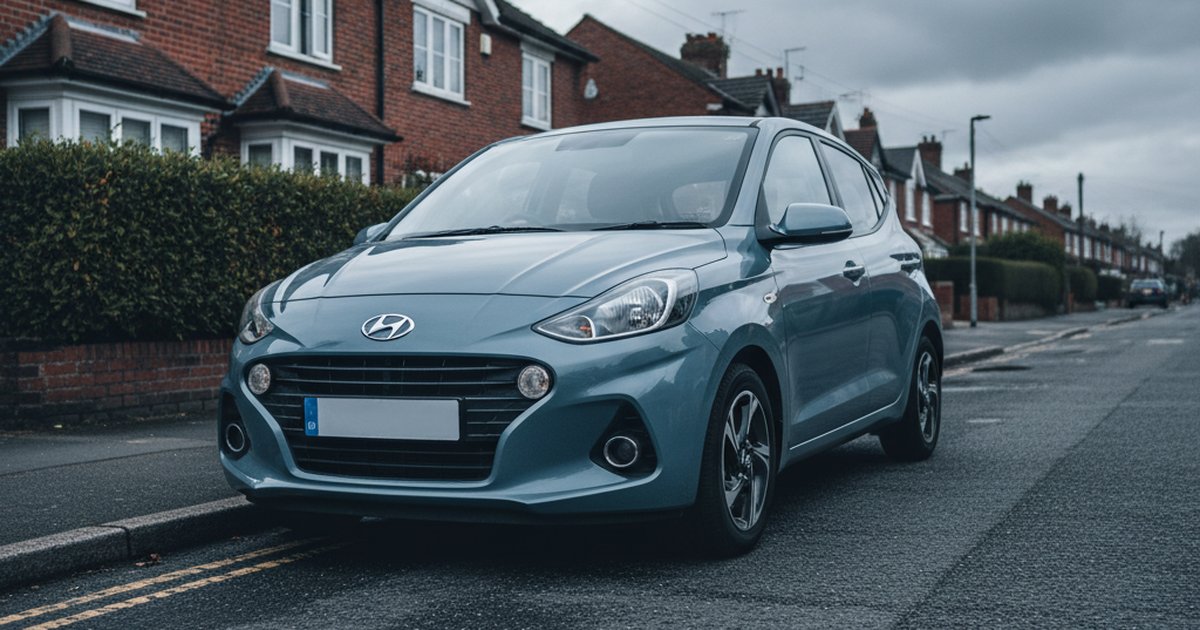
The Hyundai i10 has built a reputation as one of Britain's most reliable city cars, but our analysis of 2,246,253 MOT tests covering 219,724 vehicles reveals a more nuanced picture. This tiny Korean runabout is popular with urban drivers and retirees who rack up barely 4,300 miles a year on average. That gentle use should translate to excellent MOT records, yet pass rates hover in the high 70s to mid-80s - respectable, but not exceptional for such low-mileage cars.
The data tells a story of a car that starts strong but develops specific weaknesses as it ages. First MOT pass rates consistently sit above 85%, suggesting good build quality out of the gate. But the gap between that first test and the overall pass rate widens significantly on older models, pointing to age-related deterioration rather than heavy use.
Most striking is what fails: brake pipes corroded by road salt dominate the defect lists for 2011-2013 models, affecting nearly one in five tests. Tyres wear unevenly, particularly on the inner edges. These are preventable issues that tell us something about how these cars are maintained - or rather, how they're not.
TL;DR: The 2016-2017 i10s are your sweet spot, with pass rates above 85% and reliability scores around 520-536. Avoid 2012-2013 models where brake pipe corrosion is rampant (affecting 20% of tests). First-generation cars from 2010-2013 show dangerous defect rates above 37%, compared to just 12-16% for 2018-2019 models.
Which Years Should You Avoid?
The 2012 and 2013 i10s stand out for all the wrong reasons. Reliability scores of 436 and 406 respectively make them the weakest performers in the entire range. The culprit? Brake pipes. On 2012 models, 20% of all MOT tests flag corroded brake pipes - that's one in five cars with a critical safety defect. The 2013 model is barely better at 18.7%.
This isn't just about pass rates. The dangerous defect rate on 2012-2013 cars runs at 42.7% and 37%, meaning nearly four in ten of these vehicles have had at least one genuinely dangerous fault flagged over their lifetime. Compare that to a 2018 model at just 15.7%.
The 2021 model year also raises eyebrows, though for different reasons. With a reliability score of just 399 and a first MOT pass rate of 82.3% (the lowest in the range), these newest examples are underperforming. The sample size is small - just 346 tests from 130 vehicles - but the pattern is concerning. Either these cars had quality control issues, or they're being driven harder than usual for an i10.
Corrosion hotspot: If you're looking at any first-generation i10 (2008-2013), get underneath and inspect the brake pipes thoroughly. The DVSA MOT history checker will show you if previous tests flagged corrosion, which tends to be progressive.
What Are the Best Years to Buy?
The 2016 model emerges as the reliability champion with a score of 536 and an 85.9% pass rate. First MOT pass rate hits 90%, and dangerous defects drop to 27.2%. This represents the second-generation i10 at its peak - old enough to be affordable, young enough to avoid serious age-related issues.
The 2017 model runs it close with a reliability score of 519 and an impressive 87.1% pass rate. First MOT performance is even stronger at 91.1%. These cars are now hitting their sixth or seventh year, and the data suggests they're ageing well. Defects per test sit at just 1.2, compared to 1.8 for the 2010 model.
The 2015 model offers the best value proposition. Reliability score of 511, pass rate of 83.9%, and you're buying a car that's proven it can make it to nearly ten years old without falling apart. Current mileage sits around 49,300 - these cars have barely been used. Owners average just 4,352 miles a year, suggesting careful, local use rather than motorway hammering.
Between 2015 and 2017, you're looking at the sweet spot where Hyundai had ironed out the brake pipe corrosion issues but the cars haven't yet accumulated enough miles to develop age-related faults. What Car? owner satisfaction surveys consistently rank this generation of i10 highly for reliability.
How Does Low Mileage Affect Reliability?
There is a paradox here: i10 owners drive their cars very gently - averaging between 4,147 and 4,652 miles annually depending on year - yet pass rates don't reflect this light use. A car covering 4,300 miles a year is doing 350 miles a month. That's barely enough to keep the battery charged and oil circulated.
Low annual mileage can actually work against reliability. Short journeys mean engines never fully warm up, leading to condensation in the exhaust and oil system. It explains why brake pipes corrode despite the low mileage - cars sitting unused develop surface rust. The tyre issues tell the same story: tyres age out before they wear out, developing cracks and perishing rather than wearing smooth.
Look at the defect patterns. Tyres appear in nearly every year's top three faults, but it's not wear from hard use - it's cracking and perishing from age. On 2017 models, 13.2% of tests flag damaged or perishing tyres despite these cars averaging just 40,230 miles over seven years. These tyres are dying of old age, not overwork.
Low mileage warning: If you're buying an i10 with very low miles (under 3,000/year), check the service history carefully. Infrequent use means oil changes and brake fluid replacement become time-based rather than mileage-based. The RAC recommends oil changes at least annually even for low-mileage cars.
What Actually Fails on MOT Tests?
Brake pipes dominate the failure list for any i10 built before 2014. On 2011 models, 17.5% of tests flag corroded pipes. The problem is systemic - these pipes rust from the inside out in Britain's wet climate, and the i10's underside protection clearly wasn't up to the job in the early years.
Tyre wear patterns are revealing. Inner edge wear affects 23.4% of 2016 model tests, suggesting tracking issues or perhaps suspension geometry that's too aggressive for the gentle driving these cars see. This isn't dangerous, but it costs money - you'll replace tyres more often than the low mileage suggests you should.
Brake discs appear frequently from 2014 onwards, affecting around 20% of tests. They're scored and pitted but not seriously weakened - this is normal wear that any car would show. The difference is that i10 owners seem to drive until the MOT tester tells them to replace parts, rather than staying ahead of maintenance.
Notice what doesn't fail. Suspension components are remarkably absent from the top defects. Engine and gearbox issues barely register. This is fundamentally a robust mechanical package let down by consumables and corrosion protection.
Is the First Generation i10 Worth Buying?
The first-generation i10 (2008-2013) divides opinion. Pass rates sit in the high 70s, which sounds reasonable until you remember these cars average under 4,500 miles a year. A ten-year-old example will have covered around 65,000 miles - that's barely run in for most cars.
The 2010 model shows a dangerous defect rate of 51.3%. More than half of these cars have had something genuinely unsafe flagged at some point. That's a damning statistic for what's meant to be a simple, reliable city car. The 2011 model isn't much better at 45.9%.
But context matters. Many of these dangerous defects are the corroded brake pipes we've discussed - serious but fixable. If you're buying a 2010-2013 i10 that's had its brake pipes replaced in the last few years, you've dodged the main bullet. Check the MOT history thoroughly.
The first MOT pass rates on these early cars actually look decent - 87.7% for 2010, 87.9% for 2011. It's the gap between that first test and subsequent ones that tells the real story. These cars deteriorate faster than they should given the gentle use. By year seven or eight, the rot has literally set in.
For budget buyers, a 2010-2013 i10 with documented brake pipe replacement and full service history could represent decent value. But factor in the cost of addressing age-related issues. You're not buying a 70,000-mile car - you're buying a thirteen-year-old car that happens to have low miles.
How Reliable Is the Current Generation?
The third-generation i10 launched in 2020, and early data is mixed. The 2020 model looks promising with an 87.8% pass rate and just 9.3% dangerous defect rate - the lowest in the entire dataset. But the 2021 drop to 82.3% for first MOTs is puzzling.
With only 346 tests from 130 vehicles for 2021, we're working with limited data. Small sample sizes can skew results, but a first MOT pass rate of 82.3% is notably below the 86-91% range we see across most other years. Either Hyundai had a quality blip, or these particular cars are being used differently.
The defect patterns have shifted. Brake pipes have vanished from the top issues - Hyundai clearly addressed the corrosion protection. Tyre wear persists, but that's as much about owner behaviour as car design. The 2020 and 2021 models show far fewer defects per test (0.7-0.8) compared to early cars (1.7-1.8).
Realistically, we won't know the true reliability of 2020-2021 i10s until they hit five or six years old and accumulate more test history. The 2020 data looks encouraging, but the 2021 dip warrants caution. Wait another year or two for more data, or stick with the proven 2016-2017 models.
Found a year you like? A good year still hides a clocked odometer, outstanding finance or a past write-off. Before you hand over any money, check the exact Hyundai i10.
Frequently asked questions
What is the most reliable Hyundai i10 year?
The 2016 model achieves the highest reliability score at 536/1000, with an 85.9% MOT pass rate and 90% first MOT pass rate. Dangerous defect rates drop to 27.2% compared to over 40% on early models.
Do Hyundai i10s have brake pipe corrosion problems?
Yes, particularly 2011-2013 models where corroded brake pipes affect 17.5-20% of MOT tests. This is a critical safety issue. Later models from 2014 onwards show significantly reduced brake pipe problems as Hyundai improved corrosion protection.
How many miles does a Hyundai i10 typically cover per year?
i10 owners average just 4,147 to 4,652 miles annually depending on model year - around 350 miles per month. This gentle use pattern suggests city-only driving and explains why tyres often perish from age rather than wear out.
Are low-mileage Hyundai i10s more reliable?
Not necessarily. While i10s average very low annual mileage, pass rates are only in the high 70s to mid-80s. Low-mileage cars can suffer from condensation, battery issues, and age-related deterioration. Service history matters more than odometer reading.
What commonly fails on Hyundai i10 MOT tests?
Tyres (worn inner edges or perished from age) affect 17-23% of tests across all years. Brake discs (worn but not dangerous) appear in around 20% of tests from 2014 onwards. Early models suffer corroded brake pipes. Suspension and engine issues are rare.
Our Verdict
The Hyundai i10's reliability story is one of steady improvement. Early models suffer from corrosion issues that should have been addressed from day one, but from 2014 onwards, Hyundai got it right. The 2016-2017 models represent the best balance of reliability, age, and value.
What makes the i10 interesting is how it reveals the limitations of low-mileage ownership. These cars cover barely 4,300 miles a year, yet they're not showing the exceptional reliability you'd expect from such gentle use. Age matters as much as mileage, particularly for consumables like tyres and brake components.
Before buying any i10, run the registration through PlateInsight. You'll get the complete MOT history, revealing whether those brake pipes have been replaced and how well the previous owner maintained the car. We give you 5 free vehicle checks to get started - use them to compare multiple examples and find one with a clean bill of health.2 million MOT tests analysed for this model alone, you're making an informed decision rather than a gamble.
You might also like
Check Any Vehicle's Full History
MOT results, mileage timeline, AI health score, and market valuations. New users get 5 free credits.