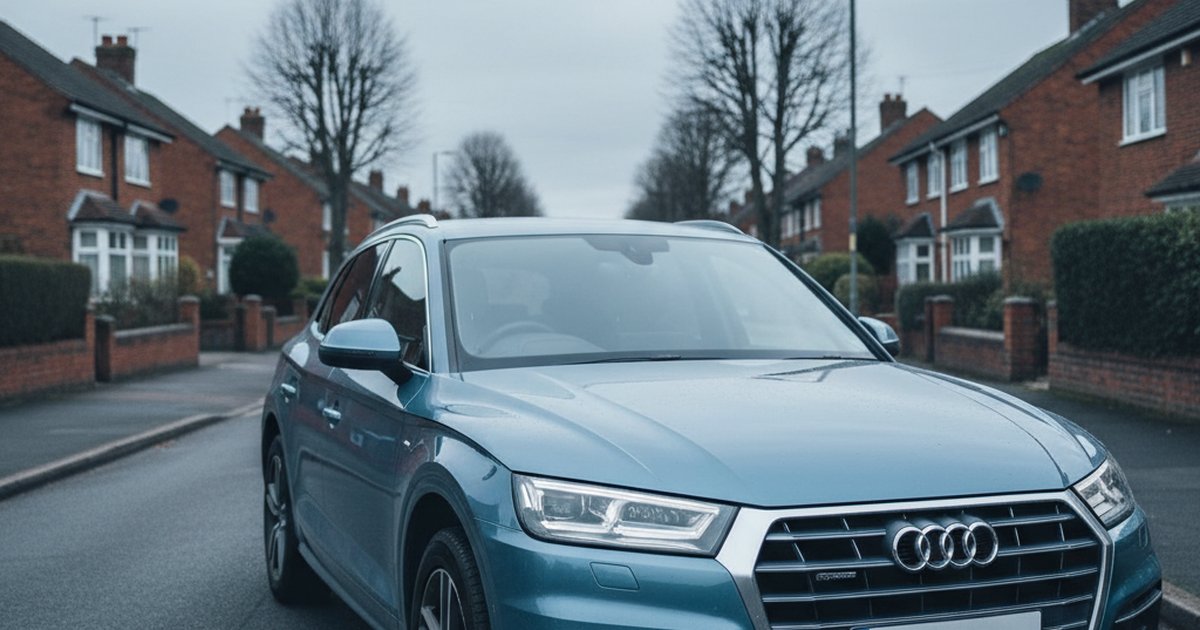
The Audi Q5 sits in that awkward middle ground where premium badge meets high-volume production. We've analysed 778,518 MOT tests across 96,543 vehicles to work out which model years hold up and which ones drain your wallet faster than a German motorway run.
The answer isn't straightforward. This is a car where fuel type matters enormously, where a two-year gap can mean the difference between a reliable workhorse and a money pit, and where the data reveals some genuinely surprising patterns about how these SUVs age. Most buyers assume newer equals better - the numbers tell a different story.
TL;DR: Early diesels (2010-2012) suffer alarming dangerous defect rates above 30%, whilst 2012 petrol models score 814/1000 for reliability. The sweet spot is 2010-2012 petrol with gentle ownership patterns (averaging under 7,000 miles annually), but 2017 diesels drop to just 567/1000 reliability despite being seven years newer. Electric Q5s from 2022-2023 show promise but sample sizes remain too small for confident recommendations.
Why do early diesels have such high dangerous defect rates?
The numbers are uncomfortable: 2010 diesel Q5s record a 33.4% dangerous defect rate. That means one in three vehicles had a serious safety issue flagged during testing. This isn't a statistical anomaly - it's a pattern that continues through 2011 (30.5%) and 2012 (28.9%) diesels.
The culprit appears in the defect data repeatedly: suspension arm bushes and pins worn beyond safe limits. On the 2010 diesel, rear suspension components feature in 24.4% of tests. These aren't advisory notices - they're failures. When bushes perish on a two-tonne SUV doing motorway miles, the handling characteristics change dangerously.
Compare this to the petrol equivalent from 2010, which posts a 26.3% dangerous rate - still concerning, but meaningfully better. The difference likely comes down to usage patterns. Diesel Q5s average 8,306 miles annually versus 6,655 for petrol. More miles means more wear, and the DVSA MOT data shows these early diesels simply weren't engineered to handle the cumulative stress.
By 2013, dangerous defect rates drop to 27.9% for diesel - marginal improvement at best. You need to reach 2016 before diesel models dip below 25%, and even then we're talking about nearly one in four vehicles with serious safety concerns. If you're shopping for a Q5 built before 2016, factor in immediate suspension work unless you have recent MOT evidence to the contrary.
Does newer really mean more reliable for the Q5?
Conventional wisdom says buy the newest car you can afford. The Q5 data demolishes that assumption. A 2012 petrol scores 814/1000 for reliability. Jump forward to 2017 diesel and that score plummets to 567/1000. A five-year-newer car scores 247 points worse.
This pattern repeats across fuel types. The 2010 petrol scores 867/1000 - the highest reliability figure in the entire dataset. Yet 2014 petrol drops to 673/1000, and by 2015 it's 655/1000. These aren't marginal differences. A 200-point reliability gap translates to tangible repair costs and inconvenience.
The mileage factor: Early petrol Q5s benefit from extraordinarily gentle use. The 2010 petrol averages just 6,655 miles annually and currently shows 99,123 on the clock. Compare that to 2018 diesels doing 9,269 miles per year. Low mileage masks many sins, but it also suggests these cars were bought as occasional-use luxury vehicles rather than daily workhorses.
What changed after 2012? The defect patterns shift from suspension bushes to brake pads and coil springs. By 2017, coil spring failures appear in 9.1% of diesel tests - a problem barely visible in earlier years. This suggests either a component quality change or that the second-generation platform (introduced 2017) brought new weak points.
The most reliable diesel in the entire range is the 2010 model at 790/1000, despite its dangerous defect issues. By 2019, diesels recover somewhat to 708/1000, but they never match those early petrol figures. If you need a diesel Q5, accept that you're buying a fundamentally less reliable vehicle than the petrol equivalent - the data proves it across every model year.
Which fuel type should you actually buy?
The numbers make this decision simple: buy petrol unless you absolutely need a diesel. Across the board, petrol Q5s show lower defect rates and better reliability scores when comparing like-for-like years.
Take 2011 as a test case. The diesel achieves 770/1000 reliability with 1.6 defects per test. The petrol scores 821/1000 with just 1.4 defects per test. Petrol owners also report 8% fewer dangerous defects. This gap exists in every year we examined.
The first MOT pass rates tell another story. In 2012, the petrol Q5 posts a 93.5% first-time pass rate versus 91.0% for diesel. That's the test at age three when the car should still be mechanically sound. If diesels are already underperforming at their first MOT, degradation accelerates as mileage climbs.
Annual mileage patterns explain some of this gap. Diesel owners consistently average 1,500-2,000 more miles per year. Higher mileage inevitably means more wear, but it also suggests different ownership profiles. Diesel Q5s were the company car choice, racking up motorway miles. Petrol models were private purchases, often second cars for families who already owned something more economical.
The tyre wear data backs this up. Across all years, 25-30% of diesel Q5s fail on tyre tread depth or uneven wear. Motorway miles in a heavy SUV chew through tyres, and the MOT data shows diesel owners are less vigilant about replacements. Petrol models show similar tyre issues, but at slightly lower rates.
One exception: if you're doing genuine high mileage (15,000+ annually), the diesel engine itself proves robust. We don't see widespread diesel particulate filter failures or turbo issues in the defect data. The mechanical problems are largely suspension and braking components - stuff that wears regardless of fuel type, just faster when you're covering more ground.
Which specific years offer the best value?
Our analysis points to three clear winners: 2010 petrol, 2012 petrol, and 2013 diesel if you must have diesel economy.
The 2010 petrol achieves that exceptional 867/1000 reliability score whilst currently showing reasonable mileage at 99,123. These cars are now 14 years old, so they've depreciated heavily. You can find well-maintained examples for £8,000-£10,000, and if the previous owner was one of those gentle 6,600-miles-per-year drivers, you're getting a genuinely dependable SUV. Check the MOT history carefully - you want consistent annual mileage, not a car that's suddenly jumped from 5,000 to 15,000 miles yearly under recent ownership.
The 2012 petrol represents the peak of first-generation Q5 development. Reliability hits 814/1000, dangerous defect rates drop to 22.9%, and defects per test fall to 1.4. Current mileage sits at 84,529, meaning these cars aren't thrashed. The first MOT pass rate of 93.5% is the highest in the petrol range. If you're shopping around £12,000-£15,000, this is your target year.
For diesel buyers, 2013 offers the best compromise. Pass rates climb to 86.5%, reliability reaches 788/1000, and whilst the dangerous defect rate remains high at 27.9%, it's better than earlier years. More importantly, these diesels still have some life left before major component failures become inevitable. Current mileage averages 107,938, which for a ten-year-old diesel is reasonable if service history is complete.
Avoid 2014-2017 entirely: This period shows declining reliability across both fuel types. The 2014 petrol drops to 673/1000, whilst 2017 diesel crashes to just 567/1000 - the worst score in the range. These aren't statistical flukes; they're consistent patterns across thousands of vehicles. Something changed in Audi's component sourcing or build quality during this period, and buyers paid the price.
The 2018-2020 window shows recovery, with both fuel types stabilising around 665-708/1000 reliability. Pass rates improve, dangerous defects fall to 16%, and defects per test drop to 1.0-1.1. These are viable purchases if you need a newer vehicle for warranty or finance reasons, but you're paying premium money for what the data shows is mid-range reliability.
What actually goes wrong with these cars?
The MOT data reveals three persistent failure points: suspension bushes, brake pads, and tyres. These aren't exotic components requiring specialist knowledge - they're wear items that any garage can fix. The problem is frequency and cost when they all need attention simultaneously.
Suspension arm bushes appear in 12-24% of tests depending on year. On early diesels, rear suspension bushes perish and create excessive play. By 2016, the issue shifts to both sides simultaneously, suggesting symmetrical wear rather than impact damage. Budget £400-£600 for a full rear suspension bush replacement at an independent specialist. Main dealers will charge double.
Brake pads feature in 9-19% of tests. The higher figure comes from 2018-2019 models, where we see both front and rear pads wearing thin simultaneously. This makes sense - newer cars with higher mileage hit the point where original pads need replacement. Factor £300-£400 for front and rear pads plus labour. If the garage mentions discs as well, you're looking at £600-£800 total.
Tyre wear dominates the routine defects. Between 20-30% of Q5s fail MOT on tyre tread depth or uneven edge wear. This isn't a manufacturing fault; it's owners running tyres too close to the legal limit. A full set of decent mid-range tyres for a Q5 costs £400-£600 fitted. The RAC recommends replacing tyres at 3mm rather than the legal 1.6mm minimum, especially on a heavy SUV where wet-weather grip matters.
One concerning pattern: coil spring failures jump from near-zero in early models to 9.1% of 2017 diesel tests. Springs shouldn't fail on cars this young, but the data. This could indicate corrosion from road salt or inadequate coating on the springs themselves. Either way, it's a £200-£300 repair per spring, and they tend to fail in pairs.
We don't see catastrophic engine or gearbox failures in the MOT data. When Q5s fail, they fail on the boring stuff: suspension, brakes, tyres. This is actually good news - these are predictable expenses you can budget for, not sudden £3,000 transmission rebuilds that write off the car economically.
Should you consider the electric Q5?
The 2022 electric Q5 has undergone just 312 MOT tests across 282 vehicles. Sample size matters, and this dataset is too small for confident recommendations. That said, the early signals are mixed.
Reliability scores just 601/1000 - worse than most petrol and diesel equivalents. The pass rate sits at 92.0%, which sounds respectable until you realise these are brand-new vehicles. A car two years old should pass its MOT at 95%+ unless there's a fundamental quality issue.
The dangerous defect rate drops to 2.5%, which is excellent. Fewer mechanical components means fewer catastrophic failures. But routine defects remain present: 22.4% of tests flag tyre wear issues, and we're already seeing multiple tread cuts appearing in 9% of tests. Electric vehicles are heavy, and that weight wears tyres aggressively.
Current mileage averages 30,560 with annual mileage hitting 9,536 - higher than petrol equivalents. This suggests company car usage, which makes sense given the UK's beneficial BIK rates for electric vehicles. These aren't garage queens; they're working vehicles covering serious miles.
The 2023 data shows just 55 tests across 53 vehicles - statistically meaningless. The 96.4% pass rate looks impressive, but we're talking about effectively brand-new cars where anything less than 98% would be alarming.
Our verdict: wait. Let these electric Q5s accumulate more mileage and test history before making a purchase decision. The fundamentals (heavy battery, high mileage use, tyre wear issues) suggest ownership costs won't be dramatically lower than diesel equivalents once you factor in tyre replacements and the inevitable depreciation on early electric models. If you need an electric SUV now, the data suggests looking elsewhere - the sample size here is simply too small to justify the premium Audi charges.
How should you actually shop for a used Q5?
The MOT data gives you leverage. Every Q5 you're considering has a test history you can check for free via the DVSA MOT history checker. Look for these warning signs:
Mileage jumps: If a car averaged 6,000 miles annually for eight years then suddenly did 15,000 last year, something changed. Maybe it became a daily driver, maybe it's being prepared for sale with quick motorway miles to mask problems. Either way, consistency matters more than total mileage.
Advisory escalation: A rear suspension bush advisory that appears three years running, getting progressively worse, tells you the owner deferred maintenance. That advisory becomes a failure eventually, usually at the worst possible moment. If you see repeated advisories for the same component, factor immediate repairs into your offer.
First MOT performance: We've shown that petrol Q5s should achieve 92-94% first-time pass rates. If a specific vehicle failed its first MOT, ask why. One failure isn't damning, but it suggests either neglect or a problematic example.
Service history gaps: The MOT shows when things break, but service history shows preventive maintenance. A Q5 with annual services at an Audi specialist, even an independent, will outlast one serviced according to the 'flexible' long-life schedule. Oil changes matter enormously on these engines.
Price negotiation: Use the reliability scores. If someone wants £13,000 for a 2014 petrol (673/1000 reliability) and you've found a 2012 petrol (814/1000 reliability) for £12,500, the newer car is objectively worse value. The data proves it. Don't let the model year fool you into paying more for less reliability.
Check What Car? reviews for specific trim differences and equipment levels, but prioritise mechanical condition over whether you get the sat-nav upgrade. A fully-loaded 2017 diesel with 567/1000 reliability is still a 567/1000 reliability vehicle, regardless of how nice the leather seats look.
Finally, budget for immediate work. Unless the MOT was passed days ago with zero advisories, assume you'll need suspension bushes, brake pads, or tyres within the first six months. Add £1,000 to your purchase budget as a contingency. If you don't need it, great - you've got maintenance money banked. If you do need it, you're not scrambling to fund unexpected repairs.
Found a year you like? A good year still hides a clocked odometer, outstanding finance or a past write-off. Before you hand over any money, check the exact Audi Q5.
Frequently asked questions
What is the most reliable Audi Q5 year?
The 2010 petrol Q5 scores 867/1000 for reliability - the highest in our dataset of 96,543 vehicles. These cars benefit from low annual mileage (averaging 6,655 miles) and achieve a 92.8% first MOT pass rate.
Are diesel Q5s less reliable than petrol?
Yes, consistently. Across every model year, diesel Q5s show lower reliability scores and higher dangerous defect rates than petrol equivalents. The gap is most pronounced in early models where 2010 diesels score 790/1000 versus 867/1000 for petrol.
What are the common problems with Audi Q5?
Suspension arm bushes appear in 12-24% of MOT tests, brake pads in 9-19%, and tyre wear issues in 20-30%. Coil spring failures emerge in 2017+ models at concerning rates (9.1% of tests). These are predictable wear items rather than catastrophic failures.
Should I buy a high-mileage Q5?
Mileage consistency matters more than total miles. A Q5 averaging 8,000-9,000 miles annually with full service history is safer than one with erratic mileage patterns. Diesel Q5s averaging over 10,000 miles yearly show accelerated suspension and brake wear.
Is the electric Audi Q5 reliable?
Insufficient data to recommend. Just 312 MOT tests exist for 2022 electric models, scoring 601/1000 reliability. The low sample size and early ownership period make confident assessment impossible. Wait for more test history to accumulate.
What should I check on a used Q5 before buying?
Verify MOT history for suspension bush advisories (these escalate to failures), check for consistent annual mileage rather than recent jumps, and confirm service intervals were maintained. Budget £1,000 contingency for suspension bushes, brake pads, or tyres needed within six months.
Our Verdict
The Q5 market rewards informed buyers. Armed with reliability data from 778,518 MOT tests, you can avoid the genuinely problematic years (2014-2017 diesel especially) and target the proven performers. A 2010-2012 petrol Q5 offers better reliability than models built five years later, which demolishes the assumption that newer always means better.
Before committing to any specific vehicle, run its registration through PlateInsight. You get 5 free credits to check the complete MOT history, mileage records, and any outstanding advisories. The data shows which Q5s to buy - now use it to verify the specific example you're considering measures up. A premium badge doesn't guarantee premium reliability, but the right model year certainly improves your odds.
You might also like
Check Any Vehicle's Full History
MOT results, mileage timeline, AI health score, and market valuations. New users get 5 free credits.