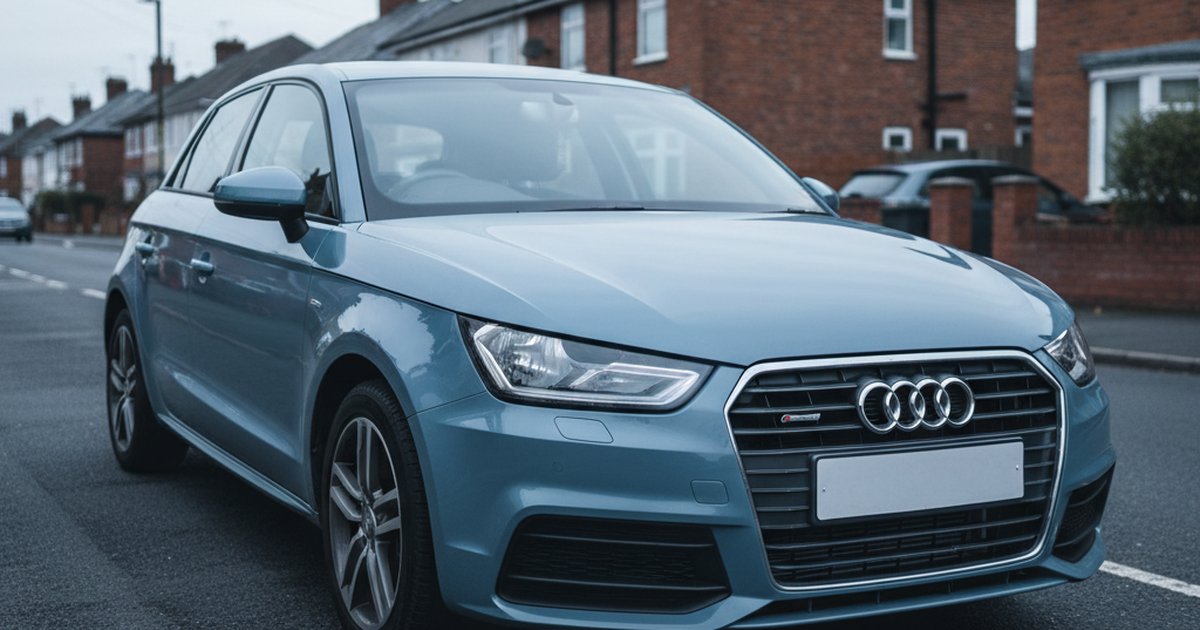
The Audi A1 sits in an awkward spot. It's a premium supermini that costs more than a Fiesta but offers less space than a Golf. Yet 227,135 UK owners have bought into the idea of a posh small car with four rings on the grille. We've analysed 1,938,452 MOT tests to work out whether they made a good decision.
The verdict is mixed. Petrol A1s hold up reasonably well, with pass rates climbing from 80.5% for 2010 models to 93.0% for 2023 examples. Diesels tell a different story - they're harder worked, more failure-prone, and age worse. The gap between fuel types is significant enough that it should guide your buying decision.
This is not a bulletproof car. Reliability scores peak at 674/1000 for early petrols and slide as low as 478/1000 for 2017 diesels. That puts the A1 behind rivals like the Mini Cooper and Volkswagen Polo in long-term durability. But the data also reveals sweet spots - certain years where Audi got it right.
TL;DR: Buy a 2014-2015 petrol A1 (reliability 641/1000, pass rates above 84%) and avoid anything diesel after 2016 (reliability drops to 478-499/1000). Early diesels pass just 78-80% of tests and rack up dangerous defects at alarming rates - over 52% flag at least one serious safety issue.
Should you buy petrol or diesel?
Petrol wins. Every single year, across every metric. The gap is smaller in newer models but it never closes.
Take 2014 as an example. Petrol A1s pass 84.9% of MOTs with a reliability score of 641/1000. The diesel version? Just 81.7% pass rate and 565/1000 reliability. Owners drive diesels harder - 7,482 miles per year versus 5,899 for petrol - and it shows. Nearly half (49.6%) of 2014 diesels have flagged dangerous defects at some point. That's shocking for a car that should still feel relatively modern.
The pattern holds across the model run. Diesel A1s consistently pick up more defects per test (1.8-2.0 versus 1.3-1.7 for petrol), suffer higher dangerous defect rates, and age more aggressively. By 2017, diesel reliability collapses to 478/1000 while petrol models sit at a more respectable 531/1000.
Part of this comes down to use case. Diesel A1 owners average 7,400-7,800 miles annually - typical urban commuter mileage that's too low for a diesel to stay healthy. The RAC has long warned against diesel engines in city cars, and this data proves them right. Short journeys don't let the DPF regenerate properly, leading to expensive failures.
Ownership reality: A 2016 diesel A1 currently sits at 72,722 miles doing 7,386 annually. A petrol equivalent has covered 57,088 miles at 6,006 per year. The diesel has worked 27% harder and shows 16% worse reliability (499 vs 577). That's the premium you pay for choosing the wrong engine.
Unless you need a diesel for high-mileage motorway work - and if you did, you'd buy a bigger car - stick with petrol. The reliability gap is too wide to ignore.
Which years offer the best reliability?
The sweet spot runs from 2014 to 2015 for petrol models. These years combine strong pass rates (84.9-86.3%) with respectable reliability scores (641/1000) and manageable mileage. Most examples currently show 64,000-68,000 on the clock - the Goldilocks zone where serious engine issues haven't emerged but you're not paying new-car money.
First-generation cars (2010-2011) score surprisingly well on reliability (670-674/1000 for petrol) but their age is catching up. Pass rates of 80-81% feel shaky for a premium brand. Dangerous defect rates above 43% mean nearly every other car on the road has had a serious safety flag at some point. Suspension bushes, brake discs, and worn tyres dominate the defect lists - all expensive fixes on a car approaching 90,000 miles.
The 2017-2019 petrol cohort looks tempting with pass rates climbing to 86-89%, but reliability scores drop to 525-557/1000. Something changed. Defect rates stay low (1.2-1.3 per test) but when things go wrong, they go properly wrong. Tyre issues spike - over a quarter of tests flag worn rubber, suggesting owners are stretching service intervals to cut costs.
Post-2020 models perform well statistically (90%+ pass rates, reliability around 552-568/1000) but you're still in heavy depreciation territory. A 2022 A1 with 21,000 miles will cost you £16,000-£18,000. A 2014 example with 65,000 miles is £7,000-£8,000 and delivers similar real-world reliability. The maths doesn't work unless you need the warranty.
Our pick: A 2015 petrol A1 balances age, reliability (641/1000), and value. Pass rates hit 86.3%, dangerous defects drop to 33.7% (low for the generation), and typical mileage sits at a manageable 64,765. Budget £8,000-£10,000 for a decent Sport or S line.
Which years should you avoid?
Any diesel from 2013 onwards deserves your scepticism. Reliability tumbles from a mediocre 596/1000 in 2011 to a dire 478/1000 by 2017. The 2016-2017 diesel A1 is particularly troublesome - reliability scores of 499 and 478 respectively put these cars in 'avoid' territory alongside French superminis and cheap crossovers.
The defect data tells the story. Over 34% of 2016 diesel tests flag illegal tyre tread depth - owners are either ignoring maintenance or can't afford it. Brake discs wear aggressively (17-18% of tests) and suspension bushes deteriorate faster than petrol equivalents. These are not cheap fixes on an Audi. A full brake and suspension refresh at an independent specialist will cost £800-£1,200. Do it at a main dealer and you're looking at £1,500+.
Early diesels (2010-2012) combine the worst of both worlds: old car problems with diesel-specific complications. Pass rates struggle to reach 80%, dangerous defect rates exceed 52%, and you're staring at 100,000+ miles. The 2011 diesel sits at 113,202 miles currently, averaging 7,764 annually. That's a lot of stress on a small 1.6 TDI engine.
The 2013 diesel trap: First MOT pass rate of just 86.5% (worst in the dataset for petrols and diesels combined) suggests quality issues from new. By the time these cars reach their third or fourth MOT, over 27% are failing on worn tyres alone. Reliability scores of 562/1000 confirm this is a model year to skip.
Even petrol models have weak points. The 2017-2018 generation drops to 525-531/1000 reliability despite healthy pass rates. Something in the build quality or component specification changed. Tyre wear accelerates and brake components don't last as long. When What Car? owner surveys flag similar issues with interior trim quality and electrical niggles from this era, you start to see a pattern.
What are the most common faults?
Tyres dominate every defect list, regardless of year or engine. Between 17-34% of all MOT tests flag worn, damaged or illegal rubber. This isn't an A1-specific problem - it's an owner problem. People buy premium badges then scrimp on maintenance. A set of four quality tyres costs £300-£400 fitted. Owners delay, run them to the legal limit, then fail MOTs.
Brake discs rank second. The pattern is consistent: 14-20% of tests reveal scored, pitted or excessively worn front discs. Audi fits decent brakes from factory but they're exposed to road salt, aggressive driving (because it's a 'sporty' car), and long service intervals. Expect to replace discs and pads every 40,000-50,000 miles. Budget £250-£350 for fronts at an independent.
Suspension bushes plague diesels more than petrols. Over 12-14% of diesel tests flag worn rear wishbone bushes. These fail gradually - you'll notice wandering steering, uneven tyre wear, and clunking over bumps before the MOT catches it. Replacement costs £200-£300 per side. The frustrating part? It's a known weakness. The AA technical teams have seen enough failed A1 bushes to consider it a design flaw rather than wear and tear.
Dangerous defects deserve special mention. The rate varies wildly - from 3.8% for 2022 models to 52-53% for 2011-2012 diesels. High rates don't mean the car is unsafe to drive today, but they confirm these vehicles have experienced serious safety-critical failures during their lifetime. Seized brake calipers, severed exhaust systems, and snapped suspension components all count as dangerous. One in two early diesels has had at least one of these issues flagged. That's poor for a car marketed on German engineering.
The tyre wear puzzle: Why do 30%+ of diesel A1s fail on worn tyres? Low annual mileage (7,400 miles) means owners think tyres last forever. They don't. Rubber perishes with age even if tread depth looks adequate. Add uneven wear from worn suspension bushes and you've got a recipe for MOT failures.
How does mileage affect reliability?
The data reveals two distinct ownership profiles. Petrol A1 buyers do 5,900-6,200 miles annually - classic second car territory. Diesels average 7,400-7,800 miles per year, suggesting daily commuter use. Neither profile is ideal for a small diesel engine that needs long runs to stay healthy.
Current mileage figures tell you what to expect when shopping. A 2015 petrol A1 typically shows 64,765 miles. Find one with significantly less (40,000-50,000) and you're looking at low-use, potentially garage-kept examples. Great for bodywork, risky for mechanical health. Cars that sit deteriorate in different ways - seized brake calipers, perished rubber seals, flat spots on tyres.
High-mileage A1s exist but they're rare. The 2011 diesel at 113,202 miles represents the upper end. Anything over 120,000 miles should be treated with extreme caution unless you've got comprehensive service history and a mechanical inspection. These are not Volkswagen Polos - they don't shrug off neglect.
First MOT pass rates provide early warning signals. The gap between first-time pass rates (86-92%) and overall pass rates (78-93%) shows how quickly these cars deteriorate. A 2013 diesel passes 86.5% of first MOTs but only 80.2% overall. That five-point slide happens between years 3 and 10 - exactly when you're shopping for a used example.
What should you look for when buying?
Start by checking MOT history on the government's free checker. Every A1 we've analysed has 8-14 MOT tests on record by now. You're looking for patterns: repeated advisories on the same component (worn bushes, scored discs), sudden mileage jumps that don't match service stamps, or dangerous defects that suggest poor maintenance.
Ignore mileage anxiety. A well-maintained 2014 petrol A1 with 75,000 miles and full service history beats a 2017 example with 30,000 miles and no documented maintenance. The data proves this - reliability scores correlate more strongly with build year and engine type than pure mileage. A 2014 model scores 641/1000 versus 531/1000 for 2017, despite being three years older.
Inspect the basics obsessively. Tyres should show even wear patterns - if the inner edges are worn but the outer tread looks new, the suspension geometry is off. Check all four brake discs for deep scoring or lipping. Worn bushes reveal themselves through clunking over speed bumps and vague steering feel. These are MOT failure points that cost real money to fix.
Service history matters more on an A1 than mainstream rivals. Audi's 'long life' service intervals (up to 20,000 miles) sound economical but they're hard on engines. Look for annual services regardless of mileage, fresh oil every 10,000 miles maximum, and evidence of brake fluid changes every two years. A car serviced by specialists rather than main dealers is fine - you're saving money that can go towards fixing the inevitable suspension and brake wear.
Red flags: No MOT history before 2018 on a 2015 car suggests it sat unused or was registered late. Multiple advisories for the same component that were never fixed (e.g. 'brake discs worn' in 2021, 2022, and 2023) point to deferred maintenance. Dangerous defects in the last two tests mean someone is driving this car hard and fixing it badly.
Budget for repairs. Even the best A1s need £500-£800 annually for maintenance beyond servicing. Tyres, brake pads, bushes, and consumables add up. If you're stretching to afford the purchase price, you can't afford the running costs. Buy the 2015 petrol for £8,000 and keep £2,000 in reserve, or buy a Toyota Yaris for £6,000 and spend nothing.
Found a year you like? A good year still hides a clocked odometer, outstanding finance or a past write-off. Before you hand over any money, check the exact Audi A1.
Frequently asked questions
Are Audi A1s reliable long-term?
Petrol models are acceptable with reliability scores of 525-674/1000 depending on year. Diesels are poor - scores drop to 478-562/1000 and dangerous defect rates exceed 50% for early examples. Neither competes with Japanese rivals for long-term durability.
What is the most reliable Audi A1 year?
2014 and 2015 petrol models score 641/1000 for reliability with 84-86% MOT pass rates. These years combine mature engineering with lower mileage (64,000-68,000 miles typically) and manageable dangerous defect rates (33-36%).
Should I buy a diesel Audi A1?
No, unless you do 15,000+ motorway miles annually. Diesel A1s average just 7,400 miles per year - too low for DPF health. Reliability scores are 10-20% worse than petrol equivalents and dangerous defect rates exceed 50% for models before 2015.
What are common Audi A1 MOT failures?
Worn tyres (17-34% of tests), scored brake discs (14-20%), and failed suspension bushes (12-14% on diesels). Early diesels also suffer high dangerous defect rates - over 52% have flagged serious safety issues at some point.
How many miles do Audi A1s typically last?
Well-maintained petrol examples reach 100,000+ miles with reasonable reliability. Diesels struggle past 90,000 miles without expensive repairs. Most A1s average 6,000-7,500 miles annually, so a 10-year-old car shows 60,000-75,000 miles.
Our Verdict
The Audi A1 is what happens when premium aspiration meets supermini economics. You're paying for the badge and the interior quality, not for bulletproof reliability. Our analysis of 1,938,452 MOT tests across 227,135 vehicles confirms this: petrol models are decent if you buy the right years, diesels are universally disappointing, and all A1s need more maintenance than their mainstream rivals.
If you want this car, buy a 2014-2015 petrol with full service history and budget for ongoing repairs. If you want actual reliability, buy a Mazda 2 or Toyota Yaris. They're less stylish but they won't nickel-and-dime you to death on bushes and brake discs.
Check any A1 you're considering with PlateInsight. You get 5 free vehicle checks to examine MOT history, mileage patterns, and defect records before you commit. Make sure you know what you're buying.
You might also like
Check Any Vehicle's Full History
MOT results, mileage timeline, AI health score, and market valuations. New users get 5 free credits.